Schakel over naar print
 Lees meer







































 Voor kunstwerken of reproducties die aan één zijde groter zijn dan 105 cm (ongeveer 41 inch), wordt de lijst als een losse set verzonden. Deze methode garandeert een veilige levering en voorkomt schade tijdens het transport.


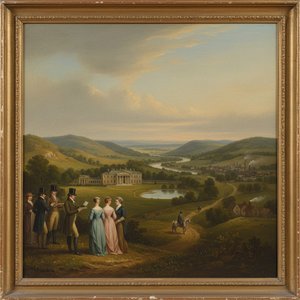
A Suffolk Visionary: Exploring Thomas Gainsborough’s “Mr Prowse”
Thomas Gainsborough’s “Mr Prowse,” completed in 1760, stands as a cornerstone of British landscape painting and a testament to the artist's remarkable ability to capture both visual beauty and psychological nuance. More than just a portrait of Thomas Prowse, a landowner from Compton Bishops, Somerset—a man whose likeness Gainsborough meticulously recreated—the canvas embodies a broader philosophical inquiry into the relationship between humanity and nature.
- Subject Matter: The painting depicts Prowse seated in a richly furnished room, bathed in soft light emanating from a window overlooking a tranquil meadow dotted with wildflowers. This juxtaposition is deliberate; Gainsborough wasn’t merely documenting a man's surroundings but suggesting that inner peace and contentment derive from harmony with the external world.
- Style: Gainsborough’s style—characterized by its understated elegance and meticulous observation—falls squarely within the Rococo tradition, albeit tempered by a growing interest in Neo-Classical ideals. Unlike the flamboyant ornamentation of earlier Baroque canvases, “Mr Prowse” prioritizes clarity of form and tonal gradation, creating an atmosphere of serene contemplation.
- Technique: Gainsborough employed oil paint on canvas with remarkable precision. He utilized thin glazes—layers of translucent pigment—to achieve subtle color variations and to imbue the scene with a luminous quality. The artist’s brushstrokes are delicate yet confident, conveying both textural detail and expressive emotion.
Historical Context: Painted during a period of significant social and intellectual transformation in Britain, “Mr Prowse” reflects the burgeoning Enlightenment spirit—a fascination with reason, empiricism, and the pursuit of knowledge. Gainsborough’s depiction of rural tranquility aligns with the prevailing sentiment that virtue resided not in opulent grandeur but in simplicity and moral integrity.
Symbolism: The meadow itself serves as a potent symbol of pastoral innocence and spiritual renewal. Wildflowers—often interpreted as emblems of humility and resilience—underscore the painting’s overarching message about finding solace in nature's restorative power. Furthermore, Prowse’s gaze—directed outwards toward the landscape—suggests that true fulfillment lies beyond material possessions.
Emotional Impact: “Mr Prowse” transcends mere visual representation; it evokes a profound emotional response in viewers. The painting’s tranquil atmosphere fosters feelings of calm serenity and contemplative reflection, inviting contemplation on themes of beauty, morality, and the human condition. It remains an enduring masterpiece—a timeless reminder that genuine happiness resides in embracing the natural world and cultivating inner harmony.
- Provenance: Currently housed at Gainsborough’s House in Sudbury, Ontario, Canada, “Mr Prowse” has traveled extensively throughout Europe during Gainsborough's lifetime, cementing its reputation as one of Britain’s most treasured artworks.
The painting’s enduring appeal lies not only in its aesthetic qualities but also in its ability to resonate with audiences across generations—a testament to Gainsborough’s genius and the timeless power of art to illuminate the human spirit.
Veelgestelde vragen
Welk kleurenpalet wordt gebruikt in "Portret van Thomas Prowse, van Compton Bishops" door Thomas Gainsborough?
Het kleurenpalet van "Portret van Thomas Prowse, van Compton Bishops" door Thomas Gainsborough wordt beschreven als Donkere tinten. Het is een beknopte beschrijving van de kleuren in het werk.
Waarvoor wordt het gebruik van "Portret van Thomas Prowse, van Compton Bishops" door Thomas Gainsborough aanbevolen?
Een reproductie van "Portret van Thomas Prowse, van Compton Bishops" door Thomas Gainsborough wordt aanbevolen voor Accentuerend. Dit advies is gebaseerd op het onderwerp, de sfeer en de kleuren van het werk.
Wanneer is "Portret van Thomas Prowse, van Compton Bishops" door Thomas Gainsborough gemaakt en bij welke stroming behoort het?
"Portret van Thomas Prowse, van Compton Bishops" werd in 1760 gecreëerd als een werk uit de British Romantic Landscape-stroming. De datum en de stroming verankeren het kunstwerk in de kunstgeschiedenis.
 Voorvertoning
 Verstuur
 Delen
Delen
 Details bekijken
 Gids
Gids

 Download
 Vergelijkbare items
 Röntgenonderzoek
 Diavoorstelling
 Vraag & antwoord
 Statistieken