Voorvertoning
 Verstuur
 Delen
Delen
 Details bekijken
 Gids
Gids

 Download
 Vergelijkbare items
 Röntgenonderzoek
 Diavoorstelling
 Vraag & antwoord
 Statistieken
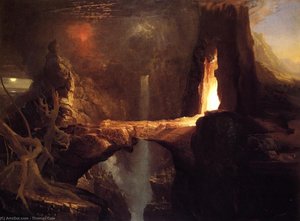
The Architect's Dream (detail)


 Lees meer
Giclée / Kunstafdrukken
Giclée- of canvasafdruk van museumkwaliteit met een snelle productie en flexibele afwerkingsmogelijkheden. ( Bestel handgeschilderde reproductie Schakel over naar digitale afbeeldingen)




P118B €10

P118H €10

P118W €10

P438Z €10

P508JH €12

P508YH €12

P805H €10

P805Z €10

P919BZ €10

P919G €10

P919XJ €10

P959ZH €10

P968JZ €12

W106C €8

W218G €10

W218JH €8

W218Y €10

W307PJ €10

W316G €10

W316PJ €8

W316Y €10

W398PJ €8

W4111J €10

W500HY €15

W500JH €15

W692G €12

W849H €8

W940BG €15

W953PJ €8




Kies uit onze vooraf ingestelde maten die overeenkomen met de originele verhoudingen van het kunstwerk.

Voer de gewenste breedte en hoogte in, passend bij uw lijst of muur. Een afdruk kan alleen worden ingekort en nooit groter worden gemaakt dan het origineel; een formaat met andere verhoudingen zal daarom een deel van de afbeelding verliezen. Wij sturen u een digitaal mockup ter goedkeuring voordat we tot drukwerk overgaan. De afbeelding op deze pagina toont niet de werkelijke uitsnede — dit is alleen te zien op het mockup.
Wereldwijde levering () binnen 2 weken in plaats van de standaard 4/5 weken. (4 november)

Gratis wereldwijde expressverzending

Hoogwaardig linnen canvas

Volledige verzendverzekering

Garantie op terugbetaling van invoerrechten

Garantie op exacte kleurweergave

Retourbeleid van 100 dagen (alleen bij defecten)

100% Geld-terug-garantie

Korting bij meerdere afnames
 De optie voor glas is alleen beschikbaar bij een formaat kleiner dan 110 cm.

The Architect's Dream (detail)
Giclée / Kunstafdrukken
Afmetingen reproductie
-


Eindtotaal
€ 72
A Vision of Architectural Grandeur
Thomas Cole's “The Architect’s Dream,” painted in 1840, isn’t merely a landscape; it’s an immersive architectural fantasy—a testament to the artist’s profound understanding of Western artistic history and his own creative vision. This monumental oil on canvas, now residing within the Toledo Museum of Art, immediately captivates with its sheer scale and meticulously rendered details, transporting the viewer into a realm where classical temples, Roman arches, and Gothic cathedrals coexist in an improbable yet strangely harmonious tableau.
At first glance, the painting appears to depict a serene vista—a tranquil harbor dotted with boats. However, closer inspection reveals a complex layering of architectural styles spanning millennia. Egyptian pyramids rise majestically alongside Doric Greek temples, Roman aqueducts stretch across the landscape, and Gothic arches frame the scene. This deliberate juxtaposition wasn’t simply an artistic flourish; it reflected the 19th-century fascination with classical antiquity and the revival of interest in ancient building techniques that was sweeping through Europe and America.
The Romantic Spirit and Cole's Artistic Journey
“The Architect’s Dream” is a quintessential example of the Hudson River School, an artistic movement characterized by its romanticized depictions of American landscapes. Unlike earlier European landscape painting, which often focused on historical or mythological subjects, the Hudson River School sought to capture the sublime beauty and spiritual essence of the American wilderness. Cole, deeply influenced by his travels in Europe—particularly Italy—brought this sensibility back to America, infusing it with a uniquely American perspective.
Cole’s artistic journey was marked by a deliberate rejection of academic conventions. He eschewed the polished techniques favored by established artists and instead developed a distinctive style characterized by loose brushwork, vibrant colors, and an emphasis on capturing atmospheric effects. This approach, combined with his deep knowledge of architecture and history, allowed him to create a painting that is both visually stunning and intellectually stimulating.
Symbolism and the Architect’s Dream
The central figure in “The Architect’s Dream”—a young man reclining on a stack of books—represents the architect himself. He embodies not just the profession but also the pursuit of knowledge, imagination, and artistic creation. His pose suggests contemplation and a deep connection to the past, while his hand holding a blueprint symbolizes the act of design and construction. The setting itself is laden with symbolism; the ruins evoke the decline of empires, while the vibrant colors and dynamic composition suggest the potential for renewal and rebirth.
The painting’s title—“The Architect’s Dream”—hints at its underlying theme: the power of imagination to transcend time and create enduring works of art. Cole wasn't simply depicting a collection of buildings; he was exploring the very nature of architectural history, questioning how past styles could inform and inspire future designs. The inclusion of Gothic elements, often associated with spiritual aspiration, subtly contrasts with the more secular grandeur of classical architecture, suggesting a broader vision of human creativity.
A Legacy of Vision
“The Architect’s Dream” remains one of Thomas Cole's most ambitious and captivating works. It is a testament to his artistic skill, intellectual curiosity, and profound understanding of the relationship between art, architecture, and history. More than just a beautiful painting, it offers a glimpse into the mind of an artist who dared to dream beyond the confines of his time—a dream that continues to resonate with viewers today.
Veelgestelde vragen
Aan welke kunstenaar wordt "The Architect's Dream (detail)" toegeschreven?
"The Architect's Dream (detail)" wordt toegeschreven aan Thomas Cole.
Hoe bekend is "The Architect's Dream (detail)" van Thomas Cole?
Het populariteitsniveau van "The Architect's Dream (detail)" door Thomas Cole is Iconic.
In welk jaar werd "The Architect's Dream (detail)" door Thomas Cole gemaakt?
"The Architect's Dream (detail)" door Thomas Cole werd gemaakt in 1840.
Biografie kunstenaar
A Pioneer of American Landscape Painting
Thomas Cole, een naam die synoniem staat voor de geboorte van een uniek Amerikaans kunstenaarschap, is een cruciale figuur in de schilderkunst van de 19de eeuw. Geboren in Bolton le Moors, Lancashire, Engeland, in 1801, bood zijn vroege leven weinig aanwijzingen voor de diepgaande impact die hij zou hebben op het artistieke landschap. Hij emigreerde met zijn familie naar de Verenigde Staten in 1818 en vestigde zich in Ohio, een reis die gekenmerkt werd door zelfontdekking en artistieke ontwaking. In eerste instantie werkte hij als reizende portretschilder – een gangbare beroepstooi op het moment – maar voelde al snel de aantrekkingskracht van de onstuimige schoonheid van het Amerikaanse wildernis. Deze verschuiving was niet alleen een verandering in onderwerp; het vertegenwoordigde een fundamentele afwijking van Europese artistieke tradities, die vaak gericht waren op historische of mythologische narratieven. Cole’s landschappen waren niet simpelweg afbeeldingen van de natuur; ze waren doordrenkt met een spirituele en allegorische diepte die resoneren met een natie die haar eigen identiteit vormde. Zijn verhuizing naar Catskill, New York, in 1825 bleek transformatief, waardoor hij zowel inspiratie als een permanente basis kreeg om de omliggende Hudson River Valley te verkennen – een regio die onlosmakelijk verbonden zou worden met zijn artistieke erfenis.De Hudson River School en Romantische Ideeën
Cole wordt terecht beschouwd als de stichter van de Hudson River School, een kunstbeweging gekenmerkt door haar romantische weergave van het Amerikaanse landschap. Echter, om hem simpelweg als “landschapschilder” te bestempelen, is ontoereikend. Zijn werk oversteg eenvoudigweg representatie; het was diep filosofisch, vaak onderwerpen aan de orde stellen zoals de relatie tussen mens en natuur, de passage van de tijd en de opkomst en ondergang van beschavingen. Beïnvloed door Europese Romantiek – met name de werken van Claude Lorrain en J.M.W. Turner – pasde Cole deze gevoeligheden aan een Amerikaanse context aan. Waar Europese Romantici vaak dramatische, sublime landschappen afbeeldden als een reflectie van innerlijke onrust, toonden Cole’s schilderijen vaak een gevoel van optimisme en goddelijke aanwezigheid in de natuurwereld. Hij zag in de immense omvang van het Amerikaanse wildernis een symbool van nationale potentieel en spirituele vernieuwing. The Oxbow (1836), wellicht zijn meest iconische werk, illustreert dit perfect – een weidse uitzicht die contrasteert met de onstuimige riviervallei en de gecultiveerde landbouwgrond, zowel het belofte als de uitdagingen van westward expansion.Allegorie en The Course of Empire
Hoewel hij bekend staat om zijn realistische weergaven van de natuur, strekte Cole’s artistieke ambitie zich verder uit dan pure landschapskunst. Hij gebruikte vaak allegorie om complexe morele en filosofische ideeën over te brengen. Dit wordt het meest krachtig gedemonstreerd in zijn monumentale serie The Course of Empire, gecreëerd tussen 1833 en 1836. De serie bestaat uit vijf doeken – “Savage State,” “Pastoral State,” “Arcadian State,” “Consummation” en “Destruction” – die de cyclische geschiedenis van een beschaving volgen, van zijn onschuldige oorsprong tot zijn onvermijdelijke ondergang. De schilderijen zijn niet alleen historische narratieven; ze dienen als waarschuwende verhalen over de gevaren van ongebreidelde ambitie en de kwetsbaarheid van menselijke prestaties. The Course of Empire resoneren diep met hedendaagse kijkers, weerspiegelend angsten over de snelle industrialisatie en westward expansion die het Amerikaanse landschap transformeerden. Het versterkte Cole’s reputatie als een visionaire kunstenaar in staat om fundamentele maatschappelijke zorgen uit te drukken via zijn kunst.Invloeden en Erfgoed
Thomas Cole’s vroege overlijden in 1848, op de leeftijd van 47, betekende een aanzienlijk verlies voor de Amerikaanse kunstwereld. Echter, zijn invloed bleef resoneren door generaties heen. Hij mentoriseerde direct Frederic Edwin Church, die zou worden een van de leidende figuren van de tweede generatie van de Hudson River School schilders. Zijn nadruk op waarneming vanuit de natuur, in combinatie met een diep persoonlijke en symbolische benadering van landschapskunst, legde de basis voor een uniek Amerikaans artistieke traditie.- Cole’s werk wordt voortdurend tentoongesteld in belangrijke musea in de Verenigde Staten, waaronder het New-York Historical Society, de National Gallery of Art in Washington D.C., en het Smithsonian American Art Museum.
- Zijn schilderijen zijn niet alleen historische artefacten; ze blijven krachtig evocatief en relevant vandaag de dag, waardoor kijkers worden aangemoedigd om na te denken over hun eigen relatie met de natuur en de blijvende vragen over de plaats van de mensheid in de wereld.
- Het Thomas Cole National Historic Site in Catskill, New York, bewaart zijn huis en atelier, waardoor bezoekers een glimp opdoen van het leven en werk van deze opmerkelijke kunstenaar.

Thomas Cole
1801 - 1848 , Verenigd Koninkrijk
Belangrijkste feiten
- Artistic Movement Or Style: Hudson River School
- Artists Or Movements Influenced By This Artist: ['Asher B. Durand']
- Date Of Birth: 1 februari 1801
- Date Of Death: 11 februari 1848
- Full Name: Thomas Cole
- Nationality: Amerikaans
- Notable Artworks:
- The Course of Empire
- The Oxbow
- Place Of Birth: Bolton, Verenigd Koninkrijk
Gerelateerde artikelen

John Constable's Top 25 Meesterwerken: Landschappen die de Ziel Raaken | OriginalUniqueArt
Ontdek de 25 mooiste schilderijen van John Constable, meester van de Engelse Romantiek. Van idyllische landschappen tot iconische Hay Wain – bewonder zijn techniek en emotie. Museumkwaliteit reproducties & decoratie op OriginalUniqueArt.com.

Evocations of Place: A Historical Journey Through Landscape Art
Explore the rich history of landscape art with OriginalUniqueArt. Discover renowned artists, movements like Impressionism & Romanticism, and expert guidance for collecting timeless pieces. Find your perfect serene escape today!

Romantische Landschappen: Top 10 Meesterwerken voor een Sfeervol Interieur | OriginalUniqueArt.nl
Ontdek de 10 meest iconische meesterwerken van de Romantiek! Reis door de tijd met Caspar David Friedrich, Turner & Delacroix. Laat je inspireren en vind museumkwaliteit kunst reproducties voor een sfeervol interieur op OriginalUniqueArt.com.

The Sublime and the Picturesque: Exploring Emotion & Nature in Romantic Landscape Painting
Explore the emotional power of Romantic landscape painting! Discover the sublime & picturesque traditions, key artists like Friedrich & Cole, and find your perfect artwork at OriginalUniqueArt.
Thomas Barker of Bath: Landscape Painting & Societal Reflection in Early 19th-Century England
Explore the life & work of Thomas Barker of Bath, a key figure in 19th-century English Romanticism. Discover his Parisian success, iconic paintings like 'The Bride of Death', and lasting artistic legacy. Learn more at OriginalUniqueArt.