Romanticism
Study, a man's face (Thomas Cole)
Thomas Cole (1801–1848) maakte Study, a man's face. Het behoort tot de Romanticism-stroming.

 Voorvertoning

 Met de hand geschilderd olieverfwerk
 Verstuur
 Delen
 Informatieblad


 Download
 Vergelijkbare items
 Röntgenonderzoek
 Diavoorstelling
 Vraag & antwoord

 Statistieken
Study, a man's face, in het kort
- Titel
- Study, a man's face
- Kunstenaar
- Thomas Cole (1801–1848)
- Geboren in [jaar]
- Bolton, Verenigd Koninkrijk
- Beweging
- Romanticism
- Onderwerp
- portrait, study, sketch, male face, pencil drawing, monochromatic
Wat stelt Study, a man's face voor?
A Glimpse into Character: Thomas Cole's "Study, a Man's Face"
This evocative pencil sketch by Thomas Cole offers an intimate study of an older gentleman, capturing a moment of quiet contemplation. More than just a portrait, it’s a window into the artist’s process and a testament to his keen observational skills. Executed with remarkable economy of line, this work provides a fascinating insight into the mind of one of America's most important landscape painters, revealing a sensitivity that extended beyond grand vistas to the subtle nuances of human expression. The subject, rendered in shades of gray and white against a cream-colored background, exudes an air of wisdom and experience, inviting viewers to ponder his life story.Style & Technique: A Preparatory Sketch
Cole’s “Study, a Man's Face” exemplifies the style of a preparatory sketch or study. It isn't intended as a finished artwork in itself but rather as an exploration of form and likeness before embarking on a larger composition. The technique is characterized by quick, gestural pencil strokes – hatching and cross-hatching are skillfully employed to create shading and suggest volume without resorting to elaborate blending. This direct approach lends the piece a sense of immediacy and authenticity; it feels like a captured moment, a fleeting observation brought to life with remarkable efficiency. The artist’s mastery lies in his ability to convey depth and character using only lines and subtle tonal variations. The materials used – simple pencil on paper – further emphasize the work's raw and unadorned nature.Historical Context & Cole's Artistic Journey
Created during a period of burgeoning American artistic identity, this study reflects Thomas Cole’s broader engagement with portraiture alongside his celebrated landscape paintings. Born in England and later immigrating to the United States, Cole became a pivotal figure in the Hudson River School movement, known for its romantic depictions of the American wilderness. While renowned for his grand allegorical landscapes like "The Course of Empire," this sketch reveals another facet of his artistic practice – a dedication to capturing individual character with precision and sensitivity. It provides valuable insight into how Cole approached portraiture, likely informing his larger works by establishing a foundation of detailed observation.Symbolism & Emotional Resonance
The aged appearance of the subject immediately suggests wisdom, experience, and perhaps even a touch of melancholy. The sketch-like style itself contributes to an emotional impact; it conveys a sense of immediacy and intimacy, as if we are privy to a private moment. The limited color palette reinforces this feeling of quiet contemplation, drawing attention to the interplay of light and shadow across the man’s face. While seemingly simple, the work evokes a profound sense of human dignity and invites viewers to connect with the subject on an emotional level, prompting reflection on the passage of time and the richness of lived experience.Hoogwaardige afbeeldingen van Study, a man's face
Publiek domein: de kunstenaar is overleden in 1848.
Thomas Cole, Study, a man's face. Publiek domein
Vragen over Study, a man's face, beantwoord
Wat stelt "Study, a man's face" voor?
"Study, a man's face" door Thomas Cole toont: portrait, study, sketch, male face, pencil drawing, monochromatic, head, older man.
Is "Study, a man's face" vrij van auteursrecht?
Wat betreft het auteursrecht valt "Study, a man's face" onder bevindt zich in het publiek domein - de auteursrechten zijn verlopen.
Wie heeft "Study, a man's face" gemaakt?
"Study, a man's face" wordt toegeschreven aan Thomas Cole.
Bij welke kunststroming behoort "Study, a man's face" door Thomas Cole?
"Study, a man's face" door Thomas Cole behoort tot de Romanticism-stroming. Deze stroming biedt de stilistische context van het werk.
Tot welke periode in de carrière van Thomas Cole behoort "Study, a man's face"?
"Study, a man's face" vertegenwoordigt de Early Period van Thomas Cole.
Waarom heeft het kunstwerk "Study, a man's face" deze auteursrechtelijke status?
"Study, a man's face" van Thomas Cole is bevindt zich in het publiek domein - de auteursrechten zijn verlopen. De auteursrechten worden berekend vanaf het jaar van overlijden van de kunstenaar; Thomas Cole is overleden in 1848.
Hoe verhoudt "Study, a man's face" zich tot het oeuvre van Thomas Cole?
Binnen het oeuvre van Thomas Cole past "Study, a man's face" binnen de Romanticism-stijl, samen met de thema's van emphasis on observation & detail., likely influenced by academic drawing., preparatory study for larger works., demonstrates cole's drawing skills., illustrates his focus on realism., exploration of individual character., reflects early 19th-century portraiture..
Is "Study, a man's face" typerend voor het werk van Thomas Cole?
De terugkerende thema's van Thomas Cole omvatten emphasis on observation & detail., likely influenced by academic drawing., preparatory study for larger works., demonstrates cole's drawing skills., illustrates his focus on realism., exploration of individual character., reflects early 19th-century portraiture.; "Study, a man's face" richt zich op portrait, study, sketch, male face, pencil drawing, monochromatic, head, older man.
Over de kunstenaar, Thomas Cole

1801–1848, Verenigd Koninkrijk
Thomas Cole
Het Leven en de Kunst van Thomas Cole Geboren op 1 februari 1801 in Bolton le Moors, Lancashire, Engeland, begon het leven van Thomas Cole ver verwijderd van de landschappen die uiteindelijk zijn naam zouden definiëren. In 1818 emigreerde zijn familie naar de Verenigde Staten, op zoek naar een nieuw begin in een land van uitgestrekte, onontdekte territoria. In die vroege jaren was hij een man van vele ambachten; hij werkte als graveur en vond vanaf 1822 uiteindelijk stabiel werk als portretschilder. Hij was grotendeels autodidact en ontwikkelde zijn oog door observatie en het bestuderen van boeken, in plaats van door een formele academische opleiding.
Ook van Thomas Cole
 De Oxbow
 De droom van de architect1840
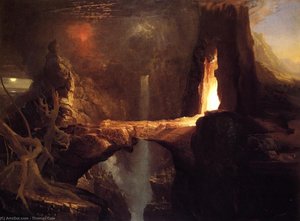 Verdrijving. Maan en Licht1828
 Een uitzicht op Florence vanuit San Miniato1837
Essays over Study, a man's face
 The Soul of the Sketch: Unveiling the Raw Beauty and Creative Intimacy of Artist StudiesDiscover the profound intimacy of artist studies. Explore how raw sketches and preparatory works capture the true soul of Impressionism, fr…
 Defining the American Sublime: The History and Legacy of the Hudson River SchoolMaster the history of the American Sublime and the Hudson River School. Explore the legacy of Cole and Church now.
 Francis Bacon's Top 25 Meesterwerken: Intensiteit & Emotie voor uw Interieur | OriginalUniqueArtOntdek de 25 meest iconische schilderijen van Francis Bacon, meester van emotie & abstract expressionisme. Leer over zijn leven, stijl en d…