
 Bekijk op ware grootte
 Verstuur
 Delen
Delen
 Details bekijken

 Download
 Vergelijkbare werken
 Röntgenonderzoek
 Diavoorstelling
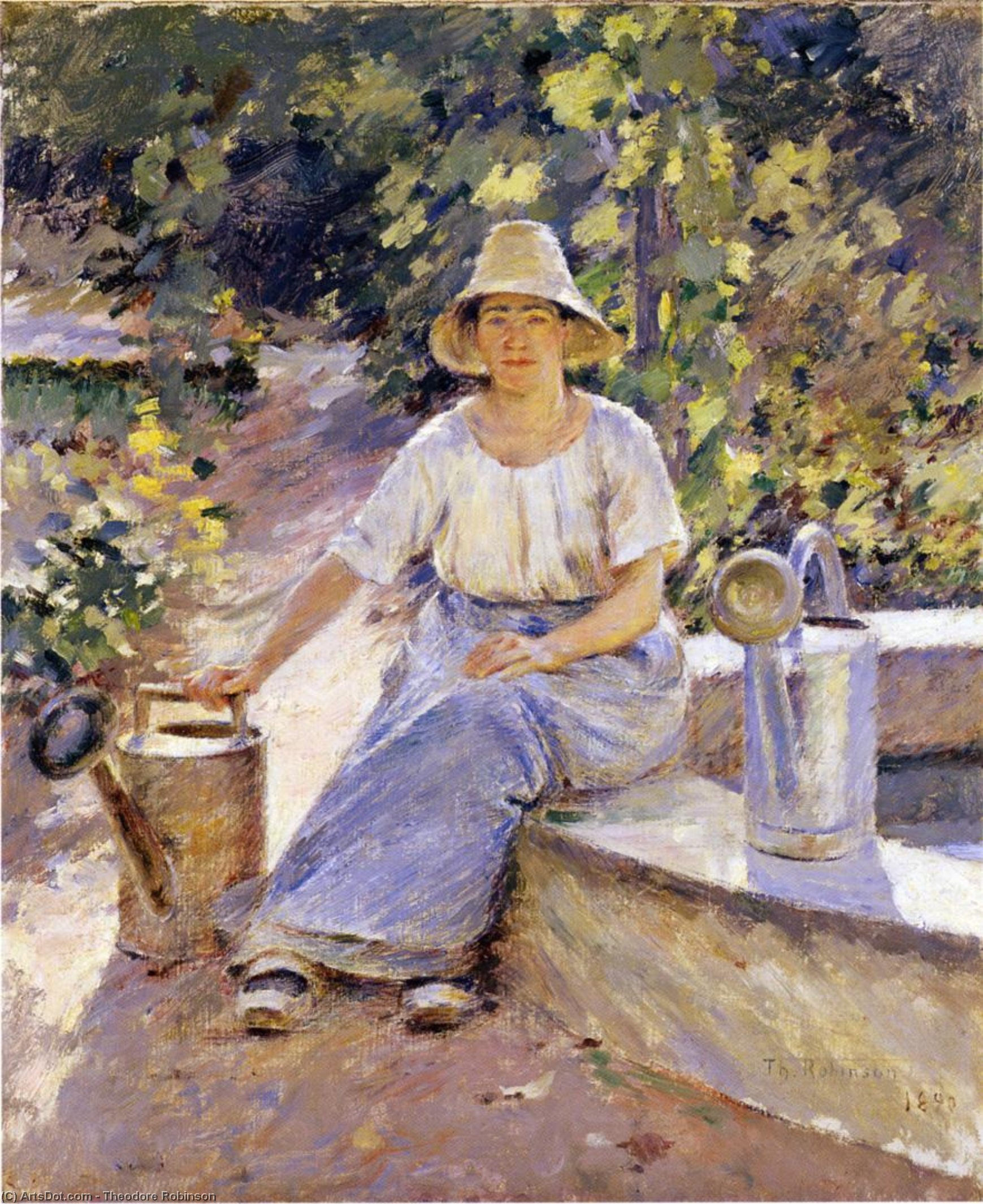
Watering Pots


 Lees meer
Giclée / Kunstafdrukken
Giclée- of canvasafdruk van museumkwaliteit met een snelle productie en flexibele afwerkingsmogelijkheden. ( Bestel een handgeschilderde reproductie van dit verzamelobject Naar afbeelding wisselen)




P118B $10

P118H $10

P118W $10

P438Z $10

P508JH $12

P508YH $12

P805H $10

P805Z $10

P919BZ $10

P919G $10

P919XJ $10

P959ZH $10

P968JZ $12

W106C $8

W218G $10

W218JH $8

W218Y $10

W307PJ $10

W316G $10

W316PJ $8

W316Y $10

W398PJ $8

W4111J $10

W500HY $15

W500JH $15

W692G $12

W849H $8

W940BG $15

W953PJ $8




Kies uit onze vooraf ingestelde maten die overeenkomen met de originele verhoudingen van het kunstwerk.

U kunt uw eigen afmetingen opgeven om in een specifieke lijst of ruimte te passen. Als de door u gekozen maat niet overeenkomt met de proporties van het originele kunstwerk, zullen wij de afbeelding bijsnijden of uitbreiden met een gespiegelde of effen rand. Een digitaal mockup wordt ter goedkeuring naar u verzonden voordat de productie begint.
Houd er rekening mee dat de preview op het scherm de werkelijke bijsneding of uitbreiding niet weergeeft. Alleen de mockup toont de uiteindelijke compositie nauwkeurig.
Hoewel aangepaste maten beschikbaar zijn, raden wij aan een afmeting uit de vooraf bepaalde lijst te kiezen om de originele proporties te behouden.
Wereldwijde levering () binnen 2 weken in plaats van de standaard 4/5 weken. (8 augustus)

Gratis wereldwijde expressverzending

Hoogwaardig linnen canvas

Volledige verzendverzekering

Garantie op terugbetaling van invoerrechten

Garantie op exacte kleurweergave

60 dagen retourbeleid (alleen bij defecten)

100% Geld-terug-garantie

Korting bij meerdere afnames
 De optie voor glas is alleen beschikbaar bij een formaat kleiner dan 110 cm.

Watering Pots
Giclée / Kunstafdrukken
Formaat reproductie
-


Totaalprijs
$ 81
Beschrijving verzamelobject
A Moment of Serene Reflection: Theodore Robinson’s “Watering Pots”
Theodore Robinson's "Watering Pots," painted in 1890, isn’t merely a depiction of a woman tending to plants; it’s a profound meditation on the quiet beauty of rural life and the delicate balance between humanity and nature. This evocative work, rendered in the burgeoning Impressionistic style that Robinson embraced after his formative years in Europe, offers a glimpse into a world steeped in tranquility and imbued with a subtle spiritual resonance. The painting captures a fleeting moment – a woman seated upon a weathered stone wall, her hands gently guiding water towards a collection of potted plants nestled beneath her care.
Robinson’s artistic journey is particularly compelling. Initially trained within the more rigid confines of the National Academy in New York, he sought liberation from academic constraints, drawn to the luminous landscapes and atmospheric effects championed by Monet and Pissarro. His time spent in Giverny, living alongside Monet, proved transformative, instilling in him a deep appreciation for capturing the ephemeral qualities of light and color – a hallmark of his mature style. “Watering Pots” exemplifies this shift; it’s less concerned with precise representation and more focused on conveying an emotional response to the scene.
The Language of Light and Color
Technically, "Watering Pots" showcases Robinson's masterful command of Impressionistic techniques. He employs a broken color palette—small, distinct brushstrokes of blues, greens, and browns—to build up layers of light and shadow. The dappled sunlight filtering through the trees creates an atmospheric haze, lending the scene a sense of depth and mystery. Notice how he uses subtle variations in tone to define the forms – the rough texture of the stone wall, the delicate leaves of the plants, and the soft curves of the woman’s figure. The overall effect is one of luminous softness, as if the painting itself breathes with the quiet rhythm of nature.
Robinson's use of color is particularly noteworthy. He avoids harsh contrasts, favoring instead a harmonious blend of hues that evokes a feeling of serenity and contentment. The greens are not vibrant or saturated but rather muted and earthy, suggesting a deep connection to the soil and the natural world. The blues and browns contribute to the painting’s overall sense of stillness and contemplation.
Symbolism and Narrative
Beyond its aesthetic qualities, “Watering Pots” is rich in symbolic meaning. The act of watering plants represents not just sustenance but also nurturing, care, and a connection to life's cycles. The woman herself embodies a quiet strength and resilience – she’s not actively engaged in labor but rather immersed in a meditative state, tending to her surroundings with gentle grace. The presence of the various potted plants—a diverse collection of herbs, flowers, and foliage—could be interpreted as a symbol of abundance, growth, and the interconnectedness of all living things.
Furthermore, the setting – a stone wall overlooking a natural landscape – suggests a retreat from the complexities of urban life. It’s a space for reflection, solitude, and communion with nature. The painting invites us to pause, breathe deeply, and appreciate the simple pleasures of existence.
A Legacy of American Impressionism
“Watering Pots” stands as a significant work in the development of American Impressionism. Robinson’s ability to capture the subtle nuances of light and color, combined with his evocative use of symbolism, firmly established him as one of the leading figures in the movement. His paintings resonate deeply with viewers today, offering a timeless reminder of the beauty and tranquility that can be found in the natural world. Reproductions of this captivating artwork provide an accessible way to bring Robinson’s vision into any home or office, fostering a sense of peace and connection to the earth.
Further Research: For more information about Theodore Robinson and “Watering Pots,” we recommend visiting WikiArt and the Wikipedia entry on Theodore Robinson.
Biografie van de kunstenaar
A Pioneer of American Light: The Life and Art of Theodore Robinson
Theodore Robinson, a name perhaps less immediately recognizable than those of Monet or Renoir, nevertheless occupies a pivotal position in the story of American art. Born in rural Vermont in 1852, his journey was one of persistent artistic seeking, culminating in a unique synthesis of European Impressionism and distinctly American sensibilities. His life, though tragically cut short at the age of forty-four, left an enduring legacy as a key figure in bringing the shimmering light and broken color of France to a new generation of American painters. Robinson’s early years were marked by frequent relocation; his family moved to Wisconsin when he was just three years old, and he briefly studied art in Chicago before venturing east to New York City in 1874. There, he enrolled at the National Academy of Design and the Art Students League, laying a foundation in traditional techniques that would later be brilliantly transformed by his experiences abroad. These formative years were also shaped by practical necessity; Robinson often supplemented his artistic pursuits with teaching positions, a task he found draining due to chronic asthma which plagued him throughout his life.From Realism to the Allure of Giverny
Robinson’s initial artistic inclinations leaned towards realism, mirroring the prevailing tastes of the time. He favored scenes of quiet domesticity and agrarian life, depicting figures engaged in everyday activities with a meticulous attention to detail. Think of images of farmers working their fields, or families gathered around a hearth – these were the subjects that initially drew him. However, a turning point arrived in 1884 when he embarked on an extended stay in France. It was here, in the idyllic countryside surrounding Paris, that his artistic vision underwent a profound shift. He settled in Giverny, becoming intimately acquainted with Claude Monet and absorbing the principles of Impressionism firsthand. This wasn’t merely a stylistic adoption; it was a complete reimagining of how light, color, and atmosphere could be captured on canvas. Monet's guidance proved invaluable, encouraging Robinson to embrace a more spontaneous approach, focusing on the fleeting effects of light and shadow rather than precise representation. The influence is palpable in works like *Giverny 1*, *Giverny 2*, and *Giverny 3*, where dappled sunlight filters through trees, creating an ethereal quality that transcends mere depiction. He didn’t simply copy Monet; he filtered the Impressionist aesthetic through his own American lens, retaining a sense of structure and form that distinguished his work from its French counterparts.A Bridge Between Worlds: Sharing the Vision
Robinson's significance extends beyond his individual paintings; he served as a crucial conduit between the European avant-garde and the burgeoning American art scene. His position in Giverny placed him at the center of an American artistic colony, allowing him to share his newfound knowledge and enthusiasm with fellow painters like Julian Alden Weir and John Henry Twachtman. He became a passionate advocate for Impressionism, tirelessly demonstrating its techniques and principles to those who sought his guidance. This role as a mentor and interpreter was particularly important in a time when American art was still largely dominated by academic traditions. His influence is evident in the work of many artists who visited Giverny, helping to establish an American Impressionist style that was both indebted to French innovations and uniquely its own. He brought back not just techniques but also a philosophy – a way of seeing and responding to the world around him.Major Achievements and Artistic Style
Robinson’s most celebrated works are undoubtedly those created in Giverny, where he spent the most productive years of his career. These landscapes—often characterized by their muted colors, atmospheric haze, and subtle shifts in light—are a testament to his ability to capture the essence of a place rather than its literal appearance. His paintings aren’t bold or dramatic; instead, they possess a quiet dignity and an almost meditative quality. The use of broken color, inspired by Monet, creates a shimmering effect that evokes the feeling of sunlight filtering through foliage. He was particularly adept at depicting water—lakes, rivers, and ponds—transforming them into luminous surfaces reflecting the sky above. His work stands apart from many other American Impressionists because he retained a strong sense of composition and structure, avoiding the sometimes-disordered brushstrokes of his contemporaries. Robinson’s legacy is found in his ability to synthesize European artistic trends with his own unique vision, creating a distinctly American form of Impressionism.Later Years and Lasting Legacy
Returning to America in 1892, Robinson sought to apply his Impressionist vision to the landscapes of his native country. He worked alongside Weir and Twachtman at Cos Cob, Connecticut, a thriving art colony, and painted scenes along the canals of New York State before eventually settling in Vermont, hoping to recreate a Giverny-like environment closer to home. However, his health continued to deteriorate, and he faced increasing financial hardship. His final years were marked by isolation and struggle, culminating in his death in 1896. Ironically, many of his paintings remained unsold during his lifetime, only gaining recognition after his passing. Today, Theodore Robinson’s work is held in major museum collections, including the Metropolitan Museum of Art, a testament to his enduring artistic merit. His meticulous diaries, preserved at the Frick Art Reference Library, offer invaluable insights into his creative process and intellectual life. Robinson's legacy is a testament to the enduring appeal of light, color, and the pursuit of artistic truth.- Notable Works: Giverny 1, Giverny 2, Giverny 3, La débâcle (1892)
- Influences: Claude Monet, John La Farge, Carolus-Duran, Jean-Léon Gérôme
- Artistic Movement: American Impressionism

Theodore Robinson
1852 - 1896 , Verenigde Staten van Amerika
Snelle feiten
- Artistic Movement Or Style: Impressionisme
- Artists Or Movements Influenced By This Artist: ['Amerikaans Impressionisme']
- Artists Who Influenced This Artist: ['Monet']
- Date Of Birth: 1852
- Date Of Death: 1896
- Full Name: Theodore Robinson
- Nationality: Amerikaans
- Notable Artworks:
- Giverny 1
- Giverny 2
- La débâcle
- Place Of Birth: Irasburg, USA
Gerelateerde artikelen
Claude Monet's Top 25 Meesterwerken: Kleur, Licht & Impressionisme | OriginalUniqueArt
Ontdek de 25 meest iconische werken van Claude Monet! Duik in de wereld van impressionisme, kleur en licht. Van Waterlelies tot Zonsopgang – bekijk de meesterwerken & vind perfecte kunst voor jouw interieur op OriginalUniqueArt.com.

Paul Cézanne's Top 25 Meesterwerken: Kleur, Vorm & De Basis van Modern Art | OriginalUniqueArt
Ontdek de 25 meest iconische schilderijen van Paul Cézanne! Duik in zijn kleurrijke wereld, leer over impressionisme & post-impressionisme en bewonder meesterwerken als 'De Baders'. Vind museumkwaliteit reproducties & interieurinspiratie op OriginalUniqueArt.com.

Katsushika Hokusai's 25 Meesterwerken: Japanse Kunst voor uw Interieur | OriginalUniqueArt
Ontdek de 25 meesterwerken van Katsushika Hokusai, de Japanse Ukiyo-e kunstenaar! Reis door zijn iconische prints zoals 'The Great Wave' en Mount Fuji. Vind museumkwaliteit reproducties & inspiratie voor uw interieur op OriginalUniqueArt.com.
Top 10 Landschappen in de Kunstgeschiedenis: Schilderijen & Decoratie Inspiratie
Ontdek de top 10 landschapschilderijen van Monet, Van Gogh & meer! Duik in de geschiedenis en betekenis achter deze iconische kunstwerken. Vind museumkwaliteit reproducties & interieurinspiratie op OriginalUniqueArt.com.

John Constable's Top 25 Meesterwerken: Landschappen die de Ziel Raaken | OriginalUniqueArt
Ontdek de 25 mooiste schilderijen van John Constable, meester van de Engelse Romantiek. Van idyllische landschappen tot iconische Hay Wain – bewonder zijn techniek en emotie. Museumkwaliteit reproducties & decoratie op OriginalUniqueArt.com.

