De Stijl · 1928
Composition with half values (Theo van Doesburg, 1928)
Theo van Doesburg (1883–1931) maakte Composition with half values. Het dateert uit 1928. Het behoort tot de De Stijl-stroming. Het is gemaakt van Oil On Canvas. Het is te vinden in Kunstmuseum Basel in Bazel, Zwitserland. De afmetingen zijn 50 × 50 cm.
- 1928
- Oil On Canvas
- 50 × 50 cm
- Kunstmuseum Basel, Bazel

 Voorvertoning

 Met de hand geschilderd olieverfwerk
 Verstuur
 Delen
 Informatieblad


 Download
 Vergelijkbare items
 Röntgenonderzoek
 Diavoorstelling
 Vraag & antwoord

 Statistieken
Composition with half values, in het kort
- Titel
- Composition with half values
- Kunstenaar
- Theo van Doesburg (1883–1931)
- Geboren in [jaar]
- Utrecht, Nederland
- Datum
- 1928
- Medium
- Oil On Canvas
- Afmetingen
- 50 × 50 cm
- Te zien in
- Kunstmuseum Basel, Bazel, Zwitserland
- Beweging
- De Stijl
- Periode
- Modern
- Onderwerp
- abstract, geometric, composition, rectangles, primary colors, de stijl
Wat stelt Composition with half values voor?
Composition with Half Values: A De Stijl Masterpiece
Theo van Doesburg's "Composition with half values," created in 1928, stands as a pivotal work within the De Stijl movement. This oil on canvas painting exemplifies the artist’s dedication to geometric abstraction and his exploration of visual harmony through carefully balanced forms and colors. Housed in the Kunstmuseum Basel, Switzerland, this piece is more than just an aesthetic arrangement; it's a testament to a revolutionary artistic philosophy.
The De Stijl Movement and Its Principles
To fully appreciate "Composition with half values," understanding the De Stijl movement is crucial. Founded in 1917 by Piet Mondrian and van Doesburg, De Stijl (meaning “The Style” in Dutch) aimed to create a universal artistic language based on pure abstraction. The movement rejected representational art, believing that it distracted from underlying mathematical principles of harmony and order. Key tenets included:
- Geometric Forms: A preference for straight lines, squares, and rectangles over curves or organic shapes.
- Primary Colors: Limited palette consisting primarily of red, yellow, blue, black, white, and grey.
- Spatial Relationships: Emphasis on the relationships between forms and colors to create a sense of balance and dynamism.
- Rejection of Perspective: A flattening of space, eliminating traditional perspective techniques.
De Stijl artists believed that by reducing art to its essential elements, they could reveal universal truths about the universe and contribute to a more harmonious society.
Analyzing "Composition with Half Values"
The painting itself is a striking example of these principles. It features a grid-like structure dominated by rectangular shapes in muted blues and whites. A large, vibrant blue square disrupts the otherwise orderly arrangement at the top, while a yellow rectangle anchors the composition at the bottom. The interplay between these elements creates a dynamic tension.
The title "Composition with half values" refers to van Doesburg's exploration of visual balance. He sought to create compositions where opposing forces – like color and shape – were in equilibrium, representing a sense of harmony. While Mondrian favored strict right angles, van Doesburg later reintroduced diagonals into his work, as seen here, pushing the boundaries of De Stijl’s established rules.
Symbolism and Emotional Impact
Although abstract, "Composition with half values" evokes a range of emotions. The rigid geometry can convey a sense of order and control, while the contrasting colors introduce an element of surprise and visual excitement. The painting's lack of representational imagery encourages viewers to engage directly with the forms and colors themselves, prompting introspection and contemplation.
Beyond its aesthetic qualities, the artwork symbolizes a search for universal harmony and balance through reduction to fundamental geometric elements. It reflects a broader cultural shift towards abstraction in the early 20th century, as artists sought new ways to express their ideas and challenge traditional artistic conventions. "Composition with half values" remains a powerful testament to the enduring legacy of De Stijl and its profound influence on modern art and design.
In welk museum bevindt Composition with half values zich?
Kunstmuseum Basel
Bazel, Zwitserland
De Oorsprong en Geschiedenis van het Kunstmuseum Basel De geschiedenis van het Kunstmuseum Basel vindt haar wortels in de verwerving van het Amerbach Kabinet. Deze collectie, die het fundament van de instelling vormde, werd in 1671 aangekocht door de stad Bazel en de Universiteit van Bazel. De beslissing om deze werken toegankelijk te maken voor het publiek, vestigde het museum als de eerste publieke kunstcollectie van zijn soort.


Hoogwaardige afbeeldingen van Composition with half values
Publiek domein: de kunstenaar is overleden in 1931.
Theo van Doesburg, Composition with half values (1928), Kunstmuseum Basel. Publiek domein
Vragen over Composition with half values, beantwoord
In welk museum is het originele werk "Composition with half values" te zien?
"Composition with half values" door Theo van Doesburg is te zien in Kunstmuseum Basel, Bazel, Zwitserland. De vermelding van het museum heeft betrekking op het originele werk, niet op reproducties.
In welk jaar werd "Composition with half values" gemaakt?
"Composition with half values" dateert uit 1928. Deze datum plaatst het werk binnen de carrière van Theo van Doesburg en het betreffende tijdperk.
Met welke techniek is "Composition with half values" gemaakt?
Het medium van "Composition with half values" door Theo van Doesburg is Oil On Canvas. Reproducties zijn bedoeld om de uitstraling van deze techniek weer te geven.
Wat zijn de werkelijke afmetingen van "Composition with half values" door Theo van Doesburg?
Het originele werk "Composition with half values" door Theo van Doesburg heeft de afmetingen 50 x 50 cm.
Wat stelt "Composition with half values" door Theo van Doesburg voor?
De onderwerpen van "Composition with half values" zijn abstract, geometric, composition, rectangles, primary colors, de stijl, grid, minimalism.
Is de afbeelding van "Composition with half values" door Theo van Doesburg vrij van auteursrecht?
"Composition with half values" door Theo van Doesburg valt onder bevindt zich in het publiek domein - de auteursrechten zijn verlopen. Deze status bepaalt hoe de afbeelding van het werk mag worden gereproduceerd.
Aan welke kunstenaar wordt "Composition with half values" toegeschreven?
"Composition with half values" wordt toegeschreven aan Theo van Doesburg.
Bij welke kunststroming behoort "Composition with half values" door Theo van Doesburg?
De kunststroming die verbonden is aan "Composition with half values" door Theo van Doesburg is De Stijl. Deze classificatie plaatst het werk binnen een context van verwante kunstenaars en kunstwerken.
Tot welke periode in de carrière van Theo van Doesburg behoort "Composition with half values"?
Binnen de carrière van Theo van Doesburg valt "Composition with half values" in de Mature Period. Deze fase helpt om het werk te vergelijken met andere werken van de kunstenaar.
Over de kunstenaar, Theo van Doesburg

1883–1931, Nederland
Theo van Doesburg
The Architect of Abstraction: A Life in Geometric Harmony Theo van Doesburg, born Christian Emil Marie Küpper in Utrecht on August 30, 1883, wasn’t merely a painter; he was a revolutionary force who fundamentally reshaped the landscape of modern art. His journey began not within the familiar embrace of Impressionism or Post-Impressionism, but amidst their fading echoes – initially mirroring styles reminiscent of Vincent van Gogh, both in the raw emotion conveyed and the directness of his brushstrokes. However, this early phase served as a crucial, almost instinctive, prelude, a necessary stepping stone towards the radical transformation that would define his enduring legacy. A pivotal moment arrived in 1913 with an encounter that irrevocably altered his artistic trajectory: Wassily Kandinsky’s *Rückblicke*.
Ook van Theo van Doesburg
 Counter composition XV1925
 Rhythm of a Russian Dance
 Troelstra1910
 Study for Composition VIII (The Cow)1918
Essays over Composition with half values
 Geometry with Purpose: Distinguishing Suprematism from ConstructivismMaster the differences between Suprematism and Constructivism with our expert guide. Discover the soul of the Russian avant-garde now.
 De Stijl and Bauhaus: Distinguishing Two Pillars of Modern DesignMaster the distinctions between De Stijl and Bauhaus design. Explore the history of these modern pillars now.
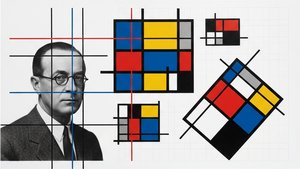 Theo van Doesburg: Pioneering De Stijl & the Evolution of Neo-PlasticismExplore the revolutionary De Stijl movement & Neo-Plasticism with our expert guide. Discover Piet Mondrian, Theo van Doesburg, and the last…