

 Bekijk op ware grootte
 Verstuur
 Delen
Delen
 Details bekijken
 Gids voor studentenkunstwerken

 Download
 Vergelijkbare items
 Röntgenonderzoek
 Diavoorstelling
 Statistieken
Rani

 Lees meer
De kunstwerken die op deze pagina worden weergegeven, zijn beschermd door de auteursrechtwetgeving, wat betekent dat het ons wettelijk niet is toegestaan om identieke reproducties te maken of te verkopen. Deze bescherming wordt gehandhaafd onder internationale overeenkomsten zoals de Conventie van Bern en door nationale wetgeving, waaronder de bepalingen van de Amerikaanse auteurswet - Titel 17. Alle rechten voorbehouden. Reproduceren of distribueren van afbeeldingen is niet toegestaan zonder uitdrukkelijke schriftelijke toestemming van WahooArt.com en de rechthebbenden.
Als een respectvol en legaal alternatief bieden wij op maat gemaakte, handgeschilderde kunstwerken aan die geïnspireerd zijn op het origineel. Onze bekwame en professionele kunstenaars bestuderen zorgvuldig de stijl, sfeer en artistieke essentie van het origineel om een nieuw, uniek werk te creëren dat dezelfde emotie oproept – terwijl het een op zichzelf staande, originele creatie blijft.
Deze methode voldoet volledig aan de auteursrechtwetgeving, omdat het niet gaat om het kopiëren of dupliceren van het beschermde kunstwerk. In plaats daarvan is er sprake van een creatieve herinterpretatie — een nieuw schilderij dat door het origineel wordt geïnspireerd, maar er niet identiek aan is.
Handgemaakte olieverfreproductie
Met de hand geschilderd in olieverf op canvas in uw gewenste maat en lijst, op bestelling gemaakt door onze kunstenaars. ( Schakel over naar print Schakel over naar digitale afbeeldingen)




































Kies uit onze vooraf ingestelde maten die overeenkomen met de originele verhoudingen van het kunstwerk.

Voer de breedte en de hoogte in die u nodig heeft, passend bij uw lijst of uw muur. Dit is handgeschilderd, dus bij een afmeting met een andere vormverhouding kan de kunstenaar iets meer rondom het schilderij schilderen of juist iets meer weglaten — u kiest zelf. Wij sturen u een digitaal mockup ter goedkeuring voordat het schilderwerk begint. De afbeelding die op deze pagina wordt getoond, is niet het uiteindelijke resultaat — alleen de mockup geeft dit weer.
Na de bestelling zal het team van OriginalUniqueArt.com per e-mail contact opnemen met de klant voor instructies en een mockup-voorbeeld sturen.
Wereldwijde levering () binnen 3 tot 4 weken in plaats van de standaard 5 weken. (22 oktober). Zonder concessies aan de kwaliteit.

Gratis wereldwijde expressverzending

Hoogwaardig linnen canvas

Volledige verzendverzekering

Garantie op terugbetaling van invoerrechten

Garantie op exacte kleurweergave

Retourbeleid van 100 dagen (alleen bij defecten)

100% Geld-terug-garantie

Korting bij meerdere afnames
 De optie voor glas is alleen beschikbaar bij een formaat kleiner dan 110 cm.

Rani
Reproductiemethode
Formaat reproductie
-


Totaalprijs
€ 263
Vragen & Antwoorden
Is er een diavoorstelling beschikbaar voor "Rani" door Subodh Gupta?
De diaporama van "Rani" is te bekijken op de Diavoorstelling pagina van het kunstwerk.
Hoe kan ik de afbeelding van "Rani" door Subodh Gupta downloaden?
"Rani" door Subodh Gupta kan worden gedownload via de Downloaden-pagina van het kunstwerk, als een download van een digitale afbeelding in hoge resolutie.
Waar kan ik een voorproefje van "Rani" bekijken?
Om een reproductie van "Rani" door Subodh Gupta te bekijken, opent u de Voorvertoning pagina van het kunstwerk.
Biografie van de kunstenaar
The Alchemy of the Everyday: The Visionary World of Subodh Gupta
In the quiet, dust-moted landscapes of Khagaul, Bihar, a journey began that would eventually reshape the global perception of contemporary Indian art. Born in 1964, Subodh Gupta’s early life was steeped in the textures of rural India—a world where the rhythms of tradition and the necessity of survival were inextricably linked. His formative years, marked by the loss of his father and a childhood spent navigating the simplicity of village life, instilled in him a profound reverence for the mundane. This deep-seated connection to the elemental is the heartbeat of his mature practice. Before he was an international icon, Gupta was a student of the tangible, finding inspiration in the way light hit a steel plate or how the communal ritual of eating bound a community together. His education at the College of Arts & Crafts in Patna provided the technical foundation, but it was the lived experience of India’s shifting social fabric that provided his true medium.
Gupta’s artistic language is one of transformation, where the humble becomes monumental. He possesses a singular ability to take the ubiquitous—stainless steel tiffin boxes, milk pails, bicycles, and thali pans—and elevate them into profound sculptural statements. These are not merely objects; they are vessels of memory and symbols of a nation in flux. By meticulously arranging mass-produced utensils into sweeping, geometric installations, Gupta invokes the spirit of Minimalism while imbuing it with a heavy, cultural weight. To a viewer in the West, these gleaming steel structures might appear as exotic artifacts of a distant land; yet, to those familiar with the Indian household, they are intimate, domestic echoes of daily life. This duality allows his work to act as a bridge, navigating the complex tensions between local tradition and the relentless tide of globalization.
Symbolism and the Sculptural Narrative
The power of Gupta’s work lies in its capacity to hold contradictory truths simultaneously. His sculptures often function as icons of both sustenance and scarcity, reflecting the economic transformations of modern India. In his most celebrated installations, such as the monumental Untitled (Chimta), the repetition of steel trays creates an imposing visual rhythm that mirrors the sheer scale of India's population and its collective identity. There is a sacredness in his use of materials; by incorporating elements like rice, spices, or even cow dung, he touches upon the ritualistic nature of Indian life, where food and earth are deeply intertwined with faith and survival.
As his career progressed, Gupta’s focus underwent a subtle but significant evolution. While his early fame was built upon the pristine, reflective surfaces of new stainless steel, he began to gravitate toward found objects that bore the scars of previous ownership. This shift introduced a poignant layer of human narrative into his work. The scratches, dents, and patinas on these weathered items serve as traces of lives lived, turning inanimate utensils into vessels of storytelling. Through this lens, his art becomes an exploration of migration and dislocation, capturing the essence of individuals moving through a world that is constantly being redefined by economic and social shifts.
A Global Legacy and Artistic Significance
Subodh Gupta’s ascent to the pinnacle of the contemporary art world has been nothing short of meteoric. Often referred to with reverence as a towering figure in Indian art, his presence in major international institutions—from the Tate Modern in London to the Venice Biennale—has cemented his status as a global messenger. His ability to translate local vernacular into a universal aesthetic has allowed him to transcend cultural boundaries, making him one of the most influential artists of his generation.
The historical significance of Gupta’s contribution can be summarized through several key pillars of his impact:
- Redefining Materiality: He successfully challenged the hierarchy of sculptural materials, proving that the most common, mass-produced objects can carry immense conceptual and aesthetic weight.
- Cultural Translation: His work serves as a vital medium for exploring how Indian identity is negotiated within the context of a globalized, interconnected world.
- The Intersection of Ritual and Modernity: By utilizing everyday objects to evoke ancient rituals, he creates a dialogue between the historical past and the industrial present.
- Global Representation: He has been instrumental in bringing the complexities of contemporary Indian social reality to the forefront of the international art discourse.
Today, as Gupta continues to live and work in New Delhi, his practice remains an ongoing investigation into the soul of the everyday. He remains an artist who does not merely observe the world but reconstructs it, one steel spoon at a time, inviting us all to find the extraordinary within the ordinary.
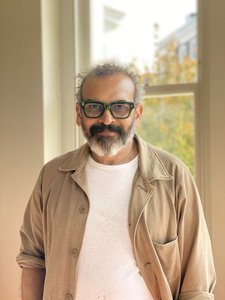
Subodh Gupta
1964 - , India
Snelle feiten
- Full Name: Subodh Gupta
- Nationality: Indian
- Date Of Birth: 1964
- Place Of Birth: Khagol, India
- Notable Artworks:
- Rani
- The Other Thing (Chimta)
- High Life
- Artistic Movement Or Style: Contemporary art
- Artists Or Movements Influenced By This Artist: ['Bharti Kher']