American modernism · 1924
Lucky Strike (Stuart Davis, 1924)
Stuart Davis (1892–1964) maakte Lucky Strike. Het dateert uit 1924. Het behoort tot de American modernism-stroming. Het is gemaakt van Oil On Canvas. De afmetingen zijn 46 × 61 cm.
- 1924
- Oil On Canvas
- 46 × 61 cm

 Voorvertoning

 Met de hand geschilderd olieverfwerk
 Verstuur
 Delen
 Informatieblad


 Download
 Vergelijkbare items
 Röntgenonderzoek
 Diavoorstelling
 Vraag & antwoord

 Statistieken
Lucky Strike, in het kort
- Titel
- Lucky Strike
- Kunstenaar
- Stuart Davis (1892–1964)
- Geboren in [jaar]
- Philadelphia, Verenigde Staten
- Datum
- 1924
- Medium
- Oil On Canvas
- Afmetingen
- 46 × 61 cm
- Beweging
- American modernism
- Periode
- Modern
- Onderwerp
- tobacco box, newspaper, rectangular forms, blue, green, yellow
Wat stelt Lucky Strike voor?
Identification of Lucky Strike by Stuart Davis
We are looking at Lucky Strike, a work from 1924 by the American painter Stuart Davis. This piece emerged during a period when Davis was establishing his presence within the modernist movement, moving away from the urban realism of his early training toward a more structured, fragmented language. It is a quiet encounter with the visual language of the 1920s.
Born in 1892 in Philadelphia, United States, Davis brought a specific sensibility to his compositions, often drawing from the textures of everyday life. In this particular work, he focuses on the geometry of consumer objects, specifically a box of Lucky Strike roll-up tobacco. The subject matter reflects the shifting landscape of an increasingly industrial and commercial society.
The painting captures a moment of stillness through a series of overlapping planes and shapes. It is a direct engagement with the material culture of his era, presented through a lens that prioritizes the arrangement of forms over a traditional, realistic depiction of the objects themselves.
Composition and Visual Elements
The arrangement of "Lucky Strike" is notably asymmetrical, creating a sense of movement that feels both deliberate and spontaneous. Rectangular forms dominate the visual field, echoing the industrial geometry of the objects depicted. These shapes are layered and overlap one another, establishing a subtle sense of depth despite the work's overall flatness. At the heart of this arrangement, the 'Lucky Strike' box is positioned centrally, acting as a visual anchor that commands immediate attention within the fragmented space.
A muted color palette of blues, greens, yellows, and browns defines the surface. Rather than blending these tones, the artist applies them in distinct blocks or planes, which reinforces the structural, geometric nature of the composition. Strong, defined lines delineate each shape, providing sharp edges that emphasize the interplay between the various forms. On the section representing the newspaper, extensive hatching creates a tactile, textured effect that contrasts with the smoother application of color elsewhere.
The perspective here is shallow and somewhat distorted, eschewing traditional spatial representation in favor of immediate visual impact. Depth is achieved not through receding lines, but through the strategic layering of objects and variations in color intensity. This approach creates a flattened, modern sensibility that prioritizes the arrangement of planes over a realistic depiction of three-dimensional space.
Technique and Materials Used
In this work, Davis utilizes oil paints applied to what is likely a primed canvas. The surface is characterized by a deliberate flattening of space, eschewing traditional depth in favor of a more immediate, modern arrangement. He achieves this through the use of bold color blocks and sharp, defined outlines that delineate the various geometric forms. This approach emphasizes the structural qualities of the objects rather than their three-dimensional volume.
Texture is introduced through specific application methods rather than through heavy impasto. You will notice the use of hatching, particularly within the newspaper section, which creates a tactile, rhythmic quality. This technique provides a subtle contrast to the smoother, more uniform planes of color found elsewhere in the composition. The interplay between these hatched areas and the solid blocks of pigment gives the surface a nuanced, layered presence.
Artistic Style and Influences
The aesthetic language of this work is deeply rooted in the principles of Cubism and Synthetic Cubism. You can see this in the way the composition is fragmented into overlapping planes and geometric shapes. Rather than seeking a realistic representation of space, the artist utilizes a shallow, somewhat distorted perspective. This approach allows for a layering of forms that prioritizes visual impact over traditional depth. The sharp, defined lines and the use of hatching on the newspaper section suggest a deliberate move toward abstraction while maintaining a connection to the physical world.
There is a strong sense of American Modernism at work here, particularly in how the piece engages with the realities of the 1920s. The subject matter focuses on the textures of consumer culture and the rhythms of everyday life. By incorporating elements like the tobacco box and newspaper headlines, the work reflects the industrial age and the rise of mass production. It captures a specific moment of urban modernity, where commercialism and daily existence begin to merge into a new, fragmented visual reality.
Related Works by Stuart Davis
To understand the trajectory of Davis's development, one might look toward his earlier explorations. His 1915 painting, Rocks, Gloucester, offers a glimpse into a different period of his evolution. This work belongs to a phase where his focus remained closer to the urban realism and everyday subjects that characterized his early aesthetic sensibilities. It provides a quiet point of comparison to the more fragmented, commercial-focused compositions that would define his later years.
As his style matured, he moved toward the abstraction of still lifes and landscapes. His 1928 work, Odol (Modernism), exemplifies this shift by blending recognizable imagery from popular culture with more abstract forms. This period saw him increasingly engaging with the visual language of the modern age. Later, in 1956, he produced Tropes de Teens, a piece that reflects his continued engagement with contemporary themes through a highly developed lens.
His later output also includes The Mellow Pad, a significant work that draws inspiration from the rhythmic energy of jazz. These various pieces, from his early studies to his later, more complex abstractions, illustrate a career spent navigating the intersection of high art and the everyday objects of American life.
Hoogwaardige afbeeldingen van Lucky Strike

Auteursrechtelijk beschermd: deze bestanden zijn uitsluitend voor persoonlijk gebruik en vormen geen licentie voor herpublicatie.
Stuart Davis, Lucky Strike (1924).
Stuart Davis (1892–1964), Lucky Strike, 1924, oil on canvas. Afbeelding: OriginalUniqueArt.com.
Veelgestelde vragen over Lucky Strike
In welk jaar werd "Lucky Strike" door Stuart Davis gemaakt?
"Lucky Strike" dateert uit 1924. Deze datum plaatst het werk binnen de carrière van Stuart Davis en het betreffende tijdperk.
Met welke techniek is "Lucky Strike" gemaakt?
Het medium van "Lucky Strike" door Stuart Davis is Oil On Canvas. Reproducties zijn bedoeld om de uitstraling van deze techniek weer te geven.
Wat zijn de afmetingen van het originele "Lucky Strike" door Stuart Davis?
Het originele werk "Lucky Strike" door Stuart Davis heeft de afmetingen 46 x 61 cm.
Wat stelt "Lucky Strike" voor?
De thema's die aanwezig zijn in "Lucky Strike" door Stuart Davis omvatten tobacco box, newspaper, rectangular forms, blue, green, yellow, brown, hatching. Samen vatten zij de onderwerpen van het kunstwerk samen.
Behoort "Lucky Strike" door Stuart Davis tot het publiek domein?
Wat betreft het auteursrecht valt "Lucky Strike" onder nog steeds auteursrechtelijk beschermd.
Wie is de kunstenaar achter "Lucky Strike"?
De kunstenaar achter "Lucky Strike" is Stuart Davis. Het werk is gecatalogiseerd onder de naam van Stuart Davis.
Bij welke kunststroming behoort "Lucky Strike" door Stuart Davis?
"Lucky Strike" is een werk uit de American modernism. De stroming geeft de artistieke traditie aan waartoe het werk behoort.
Uit welke fase van de carrière van Stuart Davis is "Lucky Strike"?
"Lucky Strike" vertegenwoordigt de Mature Period van Stuart Davis.
Hoe oud was Stuart Davis toen "Lucky Strike" werd gemaakt?
Toen "Lucky Strike" werd gemaakt in 1924, was Stuart Davis - geboren in 1892 - 32 jaar oud.
Over de kunstenaar, Stuart Davis
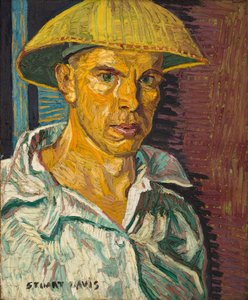
1892–1964, Verenigde Staten
Stuart Davis
Stuart Davis: Een Pionier van Amerikaanse Modernisme Stuart Davis werd geboren Edward Stuart Davis op december 7, 1892, in Philadelphia aan ouders Edward Wyatt Davis en Helen Stuart Davis. Zijn beide ouders waren kunstenaar. Zijn vader was de art editor van *De Philadelphia Press*, terwijl zijn moeder een beeldhouwer was. Deze familiale achtergrond voedde onmiskenbaar zijn vroegste interesse voor kunst.
Ook van Stuart Davis
 Odol
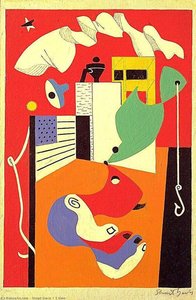 T View1951
 Sixth Avenue El1931
 Arboretum by Flashbulb
Essays over Lucky Strike
 De centrale blikvanger: hoe één abstract schilderij de sfeer en compositie van een ruimte bepaaltOntdek hoe één abstract schilderij uw interieur transformeert. Expert advies over kleurpsychologie, historische context & investeringspoten…
 Spontaneity and Matter: Distinguishing CoBrA from Art InformelJean Dubuffet mixed sand, tar, and gravel into his 1947 works to create sculptural surfaces. Why did post-war artists reject traditional or…
 Stuart Davis: Modernist Abstraction & the Vibrant Spirit of the Jazz AgeExplore the vibrant world of Stuart Davis, a pioneer of American Modernism. Discover his jazz-inspired paintings, signature style & investm…