
 Voorvertoning
 Verstuur
 Delen
Delen
 Details bekijken
 Gids
Gids

 Download
 Vergelijkbare items
 Röntgenonderzoek
 Diavoorstelling
 Vraag & antwoord
 Statistieken
Edward Sabine (1788–1883)

- 128.0 x 102.0 cm


 Lees meer
Giclée / Kunstafdrukken
Giclée- of canvasafdruk van museumkwaliteit met een snelle productie en flexibele afwerkingsmogelijkheden. ( Bestel handgeschilderde reproductie Schakel over naar digitale afbeeldingen)




P118B €10

P118H €10

P118W €10

P438Z €10

P508JH €12

P508YH €12

P805H €10

P805Z €10

P919BZ €10

P919G €10

P919XJ €10

P959ZH €10

P968JZ €12

W106C €8

W218G €10

W218JH €8

W218Y €10

W307PJ €10

W316G €10

W316PJ €8

W316Y €10

W398PJ €8

W4111J €10

W500HY €15

W500JH €15

W692G €12

W849H €8

W940BG €15

W953PJ €8




Kies uit onze vooraf ingestelde maten die overeenkomen met de originele verhoudingen van het kunstwerk.

Voer de gewenste breedte en hoogte in, passend bij uw lijst of muur. Een afdruk kan alleen worden ingekort en nooit groter worden gemaakt dan het origineel; een formaat met andere verhoudingen zal daarom een deel van de afbeelding verliezen. Wij sturen u een digitaal mockup ter goedkeuring voordat we tot drukwerk overgaan. De afbeelding op deze pagina toont niet de werkelijke uitsnede — dit is alleen te zien op het mockup.
Wereldwijde levering () binnen 2 weken in plaats van de standaard 4/5 weken. (6 november)

Gratis wereldwijde expressverzending

Hoogwaardig linnen canvas

Volledige verzendverzekering

Garantie op terugbetaling van invoerrechten

Garantie op exacte kleurweergave

Retourbeleid van 100 dagen (alleen bij defecten)

100% Geld-terug-garantie

Korting bij meerdere afnames
 De optie voor glas is alleen beschikbaar bij een formaat kleiner dan 110 cm.

Edward Sabine (1788–1883)
Giclée / Kunstafdrukken
Afmetingen reproductie
-


Eindtotaal
€ 72
A Portrait of Victorian Dignity: Stephen Pearce’s Edward Sabine
Stephen Pearce's "Edward Sabine," painted in 1855, is more than just a likeness; it’s a carefully constructed tableau of Victorian society and the burgeoning spirit of scientific exploration. The painting depicts Sir Edward Sabine (1788–1883), a prominent Irish astronomer, scientist, ornithologist, and explorer, standing before an implied landscape – a subtle suggestion of the Arctic wilderness that defined much of his distinguished career. Pearce’s masterful handling of light and shadow, combined with a keen eye for detail, elevates this portrait beyond a simple representation, transforming it into a compelling narrative of intellect, observation, and the pursuit of knowledge.
Pearce, a Royal Academician known particularly for his equestrian portraits, demonstrates a remarkable versatility here. He eschews the overly formal poses typical of many Victorian sitters, instead presenting Sabine with an air of quiet contemplation. The subject’s gaze is direct yet not confrontational, inviting the viewer into his world of scientific inquiry. Notice the subtle turn of his head and the slight furrow in his brow – details that convey a sense of deep thought and intellectual engagement. The composition itself is carefully balanced, drawing our attention to Sabine's face while simultaneously hinting at the vastness of the Arctic regions he explored.
Technique and Style: A Masterclass in Victorian Portraiture
Painted during a period of significant scientific advancement – the era of Darwin’s “Origin of Species” was just around the corner – "Edward Sabine" reflects the prevailing intellectual climate. Pearce's technique is characterized by a meticulous attention to detail, particularly evident in the rendering of Sabine’s clothing and the subtle textures of his face. He employs a rich palette of browns, greys, and ochres, creating a sense of depth and atmosphere that anchors the portrait within its historical context. The use of sfumato – a technique borrowed from Renaissance masters – softens the edges and creates an ethereal quality, lending the painting a timeless elegance.
Pearce’s background at Sass's Academy and under Sir Martin Archer Shee clearly informed his approach to portraiture. He skillfully captures Sabine’s character—a man of intellect and experience—through subtle gestures and expressions. The lighting is particularly noteworthy; Pearce utilizes chiaroscuro – the dramatic contrast between light and dark – to sculpt Sabine’s features and create a sense of three-dimensionality, drawing the viewer's eye directly to his face.
Symbolism and Context: Arctic Exploration and Victorian Values
The painting is deeply rooted in the context of 19th-century exploration. Sir Edward Sabine played a crucial role in the search for Sir John Franklin’s lost expedition, meticulously analyzing meteorological data and contributing significantly to understanding the challenges faced by Arctic explorers. The subtle suggestion of an arctic landscape behind Sabine—a carefully rendered backdrop rather than a literal depiction—symbolizes his connection to this challenging environment and his dedication to unraveling its mysteries. The inclusion of elements like clocks and books further reinforces the theme of intellectual pursuit and scientific investigation, hallmarks of Victorian values.
Furthermore, Pearce’s decision to portray Sabine in a dignified yet approachable manner reflects the Victorian emphasis on respectability and social standing. The portrait serves as both a celebration of Sabine's accomplishments and a testament to the importance of intellectual pursuits within the framework of Victorian society. It is a window into a world where scientific discovery was intertwined with notions of honor, duty, and the advancement of knowledge.
A Timeless Reproduction: Bringing Pearce’s Vision to Life
Reproducing "Edward Sabine" today offers an opportunity to appreciate not only Pearce's artistic skill but also the historical context in which it was created. A high-quality hand-painted reproduction captures the painting’s rich textures, subtle nuances of light and shadow, and evocative atmosphere with remarkable fidelity. Whether displayed in a study, library, or art gallery, this artwork serves as a powerful reminder of the enduring legacy of scientific exploration and the captivating beauty of Victorian portraiture.
Veelgestelde vragen
Waar kan ik een gids vinden voor "Edward Sabine (1788–1883)"?
De gids voor "Edward Sabine (1788–1883)" is de Informatieblad-pagina van het kunstwerk – een printbaar informatieblad waarop het kunstwerk wordt getoond met het bijschrift, de bronvermelding en de identificatietabel (kunstenaar, data, medium, originele afmetingen, collectie).
Onder welke pseudoniemen of andere namen is Stephen Pearce bekend?
Andere namen waaronder Stephen Pearce, maker van "Edward Sabine (1788–1883)", bekend is, zijn onder andere Stephen van Pearce.
Welke kunstenaar en welke stijl staan achter "Edward Sabine (1788–1883)"?
"Edward Sabine (1788–1883)" werd gecreëerd door Stephen Pearce in de Victorian Portraiture-stijl. De kunstenaar en de stroming bepalen de traditie van het werk.
Biografie kunstenaar
Early Life and Artistic Foundations
Stephen Pearce, born in the heart of London on November 16, 1819, at King’s Mews, Charing Cross, entered a world subtly interwoven with England’s regal fabric. As the sole child of Stephen Pearce, a clerk within the Department of the Master of Horse, and Ann Whittington, his upbringing was steeped in service to the Crown—a connection that would profoundly resonate throughout his artistic journey. This proximity instilled not merely decorum but access to subjects that defined much of his early career: the magnificent horses of the Royal Mews. Formal training commenced at Sass’s Academy in Charlotte Street, a respected institution for aspiring artists, followed by rigorous study at the prestigious Royal Academy Schools beginning in 1840. A pivotal moment arrived in 1841 when he became a pupil of Sir Martin Archer Shee, a prominent portraitist whose influence shaped Pearce's approach to capturing likeness and character. These formative years laid the groundwork for a career balancing meticulous technique with an evolving artistic sensibility.A Versatile Career: Portraiture, Equine Art, and Literary Circles
Pearce’s professional life unfolded across decades, marked by remarkable versatility. From 1842 to 1846, he served as an amanuensis—a secretary—to the celebrated novelist Charles Lever. This period offered unique immersion into literary circles, broadening his understanding of narrative and character development – skills that subtly informed the psychological depth of his portraiture. His initial artistic successes centered on paintings of favored horses within the Royal Mews, exhibited at the Royal Academy in 1839 and again in 1841, establishing him as a skilled animalier. A sojourn to Italy around 1849 proved transformative, refining his aesthetic sensibilities before he resumed regular contributions to Burlington House exhibitions upon his return to England. His style underwent noticeable evolution; early works displayed metronomic precision with pronounced shadowing, while later paintings embraced greater freedom and fluidity in technique. He wasn’t confined by genre, moving seamlessly between capturing the nobility of a prized stallion and the nuanced personality of a prominent Victorian gentleman.The Arctic Chronicles: A Defining Commission
It was through a unique confluence of artistic talent and historical circumstance that Pearce truly distinguished himself: his involvement in documenting the era’s fervent interest in Arctic exploration. Perhaps most notable is “The Arctic Council discussing a plan of search for Sir John Franklin” (1851), commissioned by Colonel John Barrow. This large-scale painting, depicting leading figures strategizing the rescue mission for the ill-fated explorer Sir John Franklin, captured the public’s imagination and served as a poignant reminder of the perils and heroism inherent in polar expeditions. The work is not merely a historical record but a carefully constructed drama, each figure rendered with individual character and contributing to the overall sense of anxious deliberation. Pearce's meticulous attention to detail—the subtle expressions on the faces of the participants, the precise positioning of their bodies—mirrored his dedication to capturing authentic emotion and psychological nuance. Beyond this monumental work, Pearce became renowned for his equestrian portraits, particularly those of masters of foxhounds, harriers, and prominent horse owners like the Earl of Craven and members of families such as the Dukes of Bedford. “Coursing at Ashdown Park” (1869), a sprawling landscape featuring approximately sixty equestrian figures, stands as a testament to his skill in depicting both human subjects and their noble steeds within a dynamic setting. He also created numerous half-length portraits of Arctic explorers—Sir Robert McClure, Sir Leopold McClintock, Captain Penny—commissioned by Barrow and Lady Franklin, many residing today in the National Portrait Gallery.Legacy and Historical Significance
Pearce’s artistic vision was shaped by 19th-century British art's prevailing currents. His training under Sir Martin Archer Shee firmly placed him within the tradition of formal, academic portraiture that dominated the era. The enduring popularity of equestrian subjects reflected a broader cultural fascination with horses and horsemanship, particularly among the aristocracy and landed gentry. Simultaneously, his Arctic paintings demonstrated engagement with contemporary events—the scientific exploration of the polar regions—and tapped into the public’s intense interest in these daring expeditions. His ability to capture accurate likenesses, combined with sensitivity and precision in portraying human figures and animals, earned him respect within artistic circles. The National Portrait Gallery holds an impressive collection of forty-four portraits by Pearce, including two self-portraits, underscoring his substantial contribution to British portraiture. He passed away on January 31, 1904, at Sussex Gardens, West London. His legacy endures through the substantial body of work he left behind, preserved in public collections like the National Portrait Gallery, offering a captivating glimpse into Victorian society and British art during his lifetime. The meticulous detail, historical significance, and evocative power of his paintings continue to resonate with audiences today, solidifying Stephen Pearce’s place as a noteworthy figure in 19th-century artistic history. His work provides invaluable insights into Victorian society, documenting the lives of prominent individuals and capturing the spirit of exploration that characterized the age—a chronicler of his time, translating social status, scientific endeavor, and personal narratives onto canvas.
Stephen Pearce
1819 - 1904 , Verenigd Koninkrijk
Belangrijkste feiten
- Artistic Movement Or Style: Victorian portraiture
- Artists Who Influenced This Artist: ['Sir Martin Archer Shee']
- Date Of Birth: 1819-11-16
- Date Of Death: 1904-01-31
- Full Name: Stephen Pearce
- Nationality: British
- Notable Artworks:
- The Arctic Council
- Coursing at Ashdown Park
- Place Of Birth: London, UK
Gerelateerde artikelen
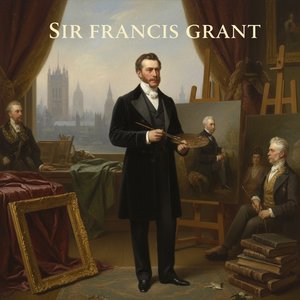
Sir Francis Grant: Portraiture, Patronage & Victorian Society
Explore the life & work of Sir Francis Grant, a leading Victorian portraitist. Discover his aristocratic clientele, role at the Royal Academy, and enduring artistic legacy. Learn about art patronage in 19th-century Britain.
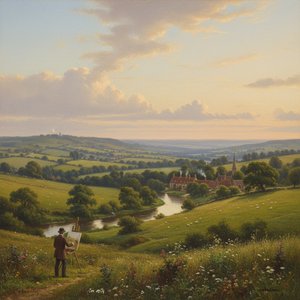
Edward Wilkins Waite: A Victorian Vision of Surrey's Serene Landscapes & Artistic Legacy
Explore the serene landscapes of Edward Wilkins Waite (1854-1924), a prolific Victorian painter celebrated for his depictions of Surrey's countryside. Discover his artistic influences, career highlights & collecting guide.
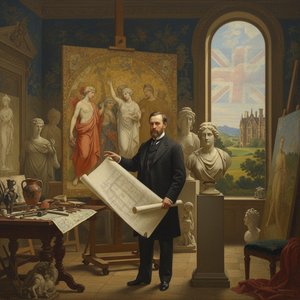
Sir Edward Poynter: Aestheticism, Archaeology & Victorian Identity
Explore the captivating world of Sir Edward Poynter, a leading figure of Aestheticism & Victorian art. Discover his archaeological narratives, iconic paintings like 'Day Dream Fine,' and lasting influence on British art history.

Edward Hopper's Top 25 Meesterwerken: Kunst, Verhalen & Sfeer voor je Interieur
Ontdek de top 25 meesterwerken van Edward Hopper! Duik in de wereld van Amerikaans realisme, iconische diners & verstilde hotelkamers. Kunst kopen? Vind hoogwaardige reproducties & interieurinspiratie op OriginalUniqueArt.com.
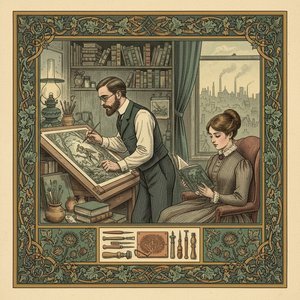
The Refined Aesthetic of Victorian Illustration: A Study in Narrative & Technique
Explore the captivating world of Victorian illustration! Discover Pre-Raphaelite influences, key artists like Rossetti & Stephens, and the era's rich narrative detail. A deep dive for art enthusiasts.
