
 Voorvertoning
 Verstuur
 Delen
Delen
 Details bekijken
 Gids
Gids

 Download
 Vergelijkbare items
 Röntgenonderzoek
 Diavoorstelling
 Vraag & antwoord
 Statistieken
Sunflowers


 Lees meer
Giclée / Kunstafdrukken
Giclée- of canvasafdruk van museumkwaliteit met een snelle productie en flexibele afwerkingsmogelijkheden. ( Bestel handgeschilderde reproductie Schakel over naar digitale afbeeldingen)




P118B €10

P118H €10

P118W €10

P438Z €10

P508JH €12

P508YH €12

P805H €10

P805Z €10

P919BZ €10

P919G €10

P919XJ €10

P959ZH €10

P968JZ €12

W106C €8

W218G €10

W218JH €8

W218Y €10

W307PJ €10

W316G €10

W316PJ €8

W316Y €10

W398PJ €8

W4111J €10

W500HY €15

W500JH €15

W692G €12

W849H €8

W940BG €15

W953PJ €8




Kies uit onze vooraf ingestelde maten die overeenkomen met de originele verhoudingen van het kunstwerk.

Voer de gewenste breedte en hoogte in, passend bij uw lijst of muur. Een afdruk kan alleen worden ingekort en nooit groter worden gemaakt dan het origineel; een formaat met andere verhoudingen zal daarom een deel van de afbeelding verliezen. Wij sturen u een digitaal mockup ter goedkeuring voordat we tot drukwerk overgaan. De afbeelding op deze pagina toont niet de werkelijke uitsnede — dit is alleen te zien op het mockup.
Wereldwijde levering () binnen 2 weken in plaats van de standaard 4/5 weken. (4 november)

Gratis wereldwijde expressverzending

Hoogwaardig linnen canvas

Volledige verzendverzekering

Garantie op terugbetaling van invoerrechten

Garantie op exacte kleurweergave

Retourbeleid van 100 dagen (alleen bij defecten)

100% Geld-terug-garantie

Korting bij meerdere afnames
 De optie voor glas is alleen beschikbaar bij een formaat kleiner dan 110 cm.

Sunflowers
Giclée / Kunstafdrukken
Afmetingen reproductie
-


Eindtotaal
€ 72
A Symphony of Gold and Light
In the delicate dance of pastel strokes, Stanisław Wyspiański’s Sunflowers emerges as a breathtaking testament to the vitality of nature and the expressive power of the Young Poland movement. Created around 1895, this masterpiece captures more than just a botanical subject; it encapsulates a moment of luminous brilliance where light and organic form converge. The artwork presents a vibrant assembly of sunflowers, each rendered with a unique personality. Some heads bow heavily under the weight of their own golden petals, while others reach upward, seeking the sun, creating a rhythmic, undulating composition that guides the viewer’s eye through a lush, textured landscape of color. The interplay of varying sizes and orientations lends the piece an almost cinematic depth, making the floral arrangement feel as though it is breathing within its frame.
The technique employed by Wyspiański is nothing short of masterful, utilizing the soft, velvety medium of pastel to achieve a range of textures that are both tactile and ethereal. Unlike the rigid lines of traditional realism, this work embraces a fluid, almost impressionistic approach where colors bleed into one another with a gentle grace. The artist uses layers of warm ochre, deep amber, and brilliant cadmium yellow to build a sense of sun-drenched warmth, contrasted against subtle shadows that provide structural integrity to each bloom. This mastery of light and shadow—often referred to as polychromy in his larger architectural works—allows the sunflowers to appear as if they are radiating their own internal glow, a quality that makes the piece feel remarkably alive.
Symbolism and the Soul of Kraków
To understand Sunflowers, one must look toward the historical heart of Kraków and the turbulent, beautiful era of Polish Symbolism. Wyspiański was a polymath whose work was deeply intertwined with the national identity of Poland. In this botanical study, the sunflower serves as more than mere decoration; it becomes a symbol of resilience, vitality, and the cyclical nature of life. The way the flowers are depicted—some in full, glorious bloom and others perhaps beginning to wilt—mirrors the themes of growth and decay that permeated the artistic consciousness of the late 19th century. There is an inherent emotional depth here, a quiet strength found in the persistence of nature, which resonates deeply with those who find beauty in the transient moments of existence.
For the discerning collector or interior designer, this artwork offers a profound sense of warmth and organic elegance. It possesses a rare ability to anchor a room, providing a focal point that is both sophisticated and comforting. Whether placed in a sunlit gallery or a contemporary living space, the Sunflowers brings with it an aura of historical prestige and artistic soul. A high-quality reproduction of this piece allows one to invite the spirit of the Young Poland movement into their home, offering a timeless connection to a genius who saw the divine in the simplest petals of a garden. It is an investment in beauty, a celebration of light, and a permanent window into a golden era of Polish art.
Veelgestelde vragen
Hoe oud was Stanisław Wyspiański toen "Sunflowers" werd gemaakt?
Toen "Sunflowers" werd gemaakt in 1895, was Stanisław Wyspiański - geboren in 1869 - 26 jaar oud.
Hoe wordt het kleurenpalet van "Sunflowers" door Stanisław Wyspiański beschreven?
Het kleurenpalet van "Sunflowers" door Stanisław Wyspiański wordt beschreven als Neutrals. Het is een beknopte beschrijving van de kleuren in het werk.
Wat is de dominante kleur van "Sunflowers" door Stanisław Wyspiański?
De dominante kleur van "Sunflowers" door Stanisław Wyspiański is Sap Green (#68624d).
Biografie kunstenaar
De Ziel van Jong Polen: Het Leven en de Visie van Stanisław Wyspiański
In het mistige, historische hart van Krakau kwam een uniek genie naar voren om het culturele landschap van een natie die hunkerde naar identiteit te herdefiniëren. Stanisław Wyspiański was niet louter een schilder; hij was een polymath, een visionair wiens creatieve geest leven inademde aan de Young Poland-beweging. Geboren in 1869, was zijn korte maar schitterende leven een wervelwind van artistieke verkenning die de kloof overbrugde tussen de delicate esthetiek van de Art Nouveau en de diepe, vaak turbulente lagen van het Pools Symbolisme. Het bestuderen van Wyspiański is getuige zijn van een man die probeerde de essentie van een ziel te vangen—zowel de individuele als de nationale.
Zijn ontwikkeling als kunstenaar was diep geworteld in de rijke, academische tradities van zijn opleiding, maar hij bezat een aangeboren rebellie tegen de rigide beperkingen van het realisme. Zijn werk begon te pulseren met een nieuwe vorm van energie, die sterk putte uit de levendige volksmotieven van het Poolse platteland en de ingewikkelde, organische lijnen die kenmerkend zijn voor de Secessionistische stijl. Deze versmelting creëerde een visuele taal die uniek voor hem was: een delicaat evenwicht tussen botanische precisie en een spookachtige, metaforische zwaarte. Hij zag de wereld niet alleen zoals deze verscheen, maar ook zoals deze aanvoelde, waarbij hij elk bloemblad en elk portret doordrenkte met een gevoel van kosmische betekenis.
Een Meester van Licht en Symboliek
Wyspiański’s meesterschap reikte veel verder dan het canvas en drong door tot de architectuur van heilige ruimtes. Hij wordt wellicht het meest gevierd om zijn adembenemende glas-in-loodramen, die licht transformeerden tot een medium voor spirituele verhalen. In deze werken wordt kleur zelf een personage, waarbij diepblauw en vurig amber door het glas dansen om thema's van martelaarschap, wedergeboorte en nationale volharding op te roepen. Zijn vermogen om licht te manipuleren stelde hem in staat om meeslepende omgevingen te creëren waarin de grenzen tussen de fysieke wereld en het symbolische rijk begonnen te vervagen.
Naast zijn beeldende kunst waren zijn literaire bijdragen even monumentaal. Als toneelschrijver en dichter gebruikte hij het podium om complexe wandtapijten van de Poolse geschiedenis en mythologie te weven. Zijn beroemdste drama, Het Huwelijk, staat als een hoeksteen van de Poolse literatuur; een meesterwerk dat een enkele nacht van viering gebruikt om de sociale en politieke angsten van een natie onder verdeling te ontleden. Door zijn geschriften verkende hij de spanning tussen traditie en moderniteit, waarbij hij symboliek gebruikte om de traagheid van de intellectuele elite te bekritiseren, terwijl hij tegelijkertijd de rauwe, onverzettelijke geest van het boerenvolk vierde.
De Nalatenschap van een Visionair
De historische betekenis van Stanisław Wyspiański ligt in zijn rol als cultureel architect. Hij creëerde niet alleen kunst; hij hielp bij het construeren van een visuele en literaire identiteit voor een volk dat streefde naar soevereiniteit. Zijn invloed is terug te vinden in verschillende cruciale prestaties:
- Integratie van Kunstvormen: Hij doorbrak de barrières tussen schone kunsten, toegepaste kunst, literatuur en theater, waardoor een verenigde esthetische ervaring ontstond.
- Nationaal Symbolisme: Hij verhief Poolse volksmotieven tot het niveau van hoge kunst, waardoor ze centraal kwamen te staan in het moderne nationale bewustzijn.
- Innovatie in de Art Nouveau: Zijn gebruik van vloeiende, organische lijnen en expressieve kleurenpaletten hielp de Poolse interpretatie van de Art Nouveau-beweging te definiëren.
- Blijvende Dramatische Impact: Zijn toneelstukken worden wereldwijd opgevoerd en dienen als diepgaande verkenningen van de menselijke psychologie en politieke strijd.
Hoewel zijn leven op tragische wijze werd beëindigd op drieëttachtigjarige leeftijd, blijft de genialiteit van zijn oeuvre onvervaard. Wyspiański liet een nalatenschap na die voortdurend blijft resoneren en inspireren, een getuigenis van de kracht van kunst om zowel een spiegel voor de samenleving als een baken voor haar toekomst te dienen. Zijn werk blijft een essentiële pelgrimstocht voor iedereen die de diepgaande kruising van schoonheid, tragedie en nationale identiteit wil begrijpen.

Stanisław Wyspiański
1869 - 1907 , Polen
Belangrijkste feiten
- Artistic Movement Or Style: Pools Symbolisme, Young Poland
- Date Of Birth: 1869
- Date Of Death: 1907
- Full Name: Stanisław Wyspiański
- Nationality: Pools
- Notable Artworks:
- Glas-in-loodwerken
- Het Huwelijk
- Place Of Birth: Krakau, Polen
Gerelateerde artikelen
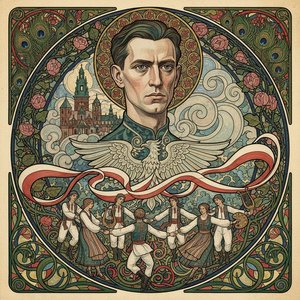
Stanisław Wyspiański: Symbolism, National Identity & the Polish Secession
Explore the life & work of Stanisław Wyspiański, a pivotal figure in Polish Symbolism and the Young Poland movement. Discover his iconic paintings, dramas, and stained glass designs reflecting national identity & artistic innovation.

The Soft Power of Pastel: A Connoisseur's Guide to History, Technique, and the Art of Texture
Explore the ethereal beauty of pastel art. From Renaissance origins to Impressionist mastery, discover the history, technique, and velvety textures that define this luminous medium in our expert guide for art connoisseurs.
Top 10 Meesterwerken Gedomineerd door 'Chrome Geel': Kunst voor uw Interieur
Ontdek de top 10 beroemde schilderijen gedomineerd door 'Chrome Geel'! Van Gogh, Monet en meer. Leer over kunststijlen & technieken. Museumkwaliteit reproducties voor uw interieur op OriginalUniqueArt.com
Top 10 Meesterwerken Gedomineerd door Okergeel: Kunst voor uw Interieur
Ontdek de top 10 beroemde schilderijen gedomineerd door okergeel! Van Gogh, Rembrandt & Vermeer – leer hun verhaal en bewonder warme kleuren in kunst. Vind museumkwaliteit reproducties voor uw interieur op OriginalUniqueArt.com.

The Subtleties of Pastel: A Comprehensive Exploration of Technique, History & Emotional Resonance
Explore the captivating world of pastel art! Discover its rich history, Impressionistic masters like Degas, emotional power & unique techniques. Find museum-quality reproductions at OriginalUniqueArt.