

 Voorvertoning
 Verstuur
 Delen
Delen
 Details bekijken
 Gids
Gids

 Download
 Vergelijkbare items
 Röntgenonderzoek
 Diavoorstelling
 Statistieken
Young Rimbaud
 Spray Paint
- WallArt
- Australian Modernism
 Contemporary
 152.0 x 122.0 cm
 Canberra Museum and Gallery
 Lees meer
De kunstwerken die op deze pagina worden weergegeven, zijn beschermd door de auteursrechtwetgeving, wat betekent dat het ons wettelijk niet is toegestaan om identieke reproducties te maken of te verkopen. Deze bescherming wordt gehandhaafd onder internationale overeenkomsten zoals de Conventie van Bern en door nationale wetgeving, waaronder de bepalingen van de Amerikaanse auteurswet - Titel 17. Alle rechten voorbehouden. Reproduceren of distribueren van afbeeldingen is niet toegestaan zonder uitdrukkelijke schriftelijke toestemming van WahooArt.com en de rechthebbenden.
Deze methode voldoet volledig aan de auteursrechtwetgeving, omdat het niet gaat om het kopiëren of dupliceren van het beschermde kunstwerk. In plaats daarvan is er sprake van een creatieve herinterpretatie — een nieuw schilderij dat door het origineel wordt geïnspireerd, maar er niet identiek aan is.
Giclée / Kunstafdrukken
Giclée- of canvasafdruk van museumkwaliteit met een snelle productie en flexibele afwerkingsmogelijkheden. ( Bestel handgeschilderde reproductie Schakel over naar digitale afbeeldingen)




P118B €10

P118H €10

P118W €10

P438Z €10

P508JH €12

P508YH €12

P805H €10

P805Z €10

P919BZ €10

P919G €10

P919XJ €10

P959ZH €10

P968JZ €12

W106C €8

W218G €10

W218JH €8

W218Y €10

W307PJ €10

W316G €10

W316PJ €8

W316Y €10

W398PJ €8

W4111J €10

W500HY €15

W500JH €15

W692G €12

W849H €8

W940BG €15

W953PJ €8




Kies uit onze vooraf ingestelde maten die overeenkomen met de originele verhoudingen van het kunstwerk.

Voer de gewenste breedte en hoogte in, passend bij uw lijst of muur. Een afdruk kan alleen worden ingekort en nooit groter worden gemaakt dan het origineel; een formaat met andere verhoudingen zal daarom een deel van de afbeelding verliezen. Wij sturen u een digitaal mockup ter goedkeuring voordat we tot drukwerk overgaan. De afbeelding op deze pagina toont niet de werkelijke uitsnede — dit is alleen te zien op het mockup.
Wereldwijde levering () binnen 2 weken in plaats van de standaard 4/5 weken. (25 oktober)

Gratis wereldwijde expressverzending

Hoogwaardig linnen canvas

Volledige verzendverzekering

Garantie op terugbetaling van invoerrechten

Garantie op exacte kleurweergave

Retourbeleid van 100 dagen (alleen bij defecten)

100% Geld-terug-garantie

Korting bij meerdere afnames
 De optie voor glas is alleen beschikbaar bij een formaat kleiner dan 110 cm.

Young Rimbaud
Giclée / Kunstafdrukken
Afmetingen reproductie
-


Eindtotaal
€ 71
A Visionary Encounter: The Spirit of Young Rimbaud
In the vast landscape of twentieth-century Australian modernism, few works possess the haunting, ethereal magnetism of Sir Sidney Robert Nolan’s “Young Rimbaud.” Created in 1982, this monumental canvas serves as a profound dialogue between two restless spirits: the Australian master of myth, Nolan, and the French symbolist poet, Arthur Rimbaud. The painting is far more than a mere portrait; it is an evocative exploration of the subconscious, capturing the very essence of poetic transcendence. As one gazes upon the face of the young poet, there is an immediate sense of stepping into a dreamscape where the boundaries between reality and imagination begin to dissolve.
The subject matter draws its lifeblood from Rimbaud’s seminal work, Illuminations—a collection Nolan himself revered as a "book of miracles." Through this piece, Nolan attempts to translate the linguistic magic of Rimbaud's prose into a visual language. The face, appearing with eyes closed in a state of deep introspection or perhaps spiritual trance, invites the viewer to contemplate the internal world of the visionary. It is an invitation to experience what Rimbaud famously called the "systematic derangement of the senses," making the artwork a centerpiece for those who find beauty in the profound and the mysterious.
Technique and the Geometry of Constraint
What distinguishes “Young Rimbaud” from traditional portraiture is Nolan’s daring embrace of spray paint. By the early 1980s, Nolan had moved toward this medium to achieve a level of immediacy and textural complexity that traditional oils could rarely provide. The spray technique allows for a soft, atmospheric layering of color, creating a nebulous quality that mirrors the ephemeral nature of thought and memory. This method lends the work an almost cinematic depth, where colors bleed into one another with a ghostly, luminous grace.
Interwoven with this fluid application is a striking use of geometric structure. A deliberate, cage-like frame surrounds the central visage, acting as a powerful visual metaphor. This geometric constraint represents the "cage" of rational thought and the physical limitations of the human condition that Rimbaud so often sought to escape through his verse. For the discerning collector or interior designer, this tension between the soft, sprayed textures and the sharp, structural lines provides a sophisticated visual rhythm, making it an intellectually stimulating addition to any curated space.
A Legacy for the Modern Collector
To possess a reproduction of such a significant work is to bring a piece of art history into the contemporary home. Nolan’s ability to weave together the harsh realities of his Australian upbringing with the high-minded symbolism of European literature creates a universal appeal. The painting does not merely decorate a room; it anchors it, providing a focal point that sparks conversation and emotional resonance. Whether placed in a minimalist gallery setting or a richly textured study, “Young Rimbaud” radiates an aura of intellectual depth and artistic courage.
For those seeking to invest in art that transcends trends, this work offers a timeless connection to the era of the Angry Penguins and the evolution of modernism. It is a masterpiece of texture, a triumph of medium, and a soulful tribute to the power of the written word, rendered in the vibrant, experimental spirit of one of Australia's greatest legends.
Veelgestelde vragen
Aan welke kunstenaar wordt "Young Rimbaud" toegeschreven?
"Young Rimbaud" wordt toegeschreven aan Sir Sidney Robert Nolan.
Welke stemming en emotie komen samen in "Young Rimbaud"?
In "Young Rimbaud" gaat een Calm sfeer gepaard met een Melancholic emotie.
Bij welke kunststroming behoort "Young Rimbaud" door Sir Sidney Robert Nolan?
"Young Rimbaud" is een werk uit de Australian Modernism. De stroming geeft de artistieke traditie aan waartoe het werk behoort.
Biografie kunstenaar
A Life Painted in Myth and Landscape
Sir Sidney Robert Nolan, born in Melbourne in 1917, stands as a monumental figure in 20th-century Australian art. His journey was not one of conventional artistic training but rather an explosive emergence from the working-class streets of St Kilda into a world of vibrant imagination and relentless experimentation. Nolan wasn’t simply a painter; he was a visual storyteller, a mythmaker who wrestled with Australia's history, its landscapes, and its very identity. From his early days as a runner for an illegal betting ring to his eventual acclaim on the international stage, Nolan’s life was marked by a restless energy and a refusal to be confined by artistic norms. He absorbed influences from diverse sources – the poetry of Rimbaud, the spatial innovations of Cézanne, the raw emotion of Danila Vassilieff – yet forged a style uniquely his own, one that resonated with a distinctly Australian sensibility. His early exposure to the harsh realities of Melbourne life and the allure of its underbelly would profoundly shape his artistic vision, imbuing his work with a sense of both defiance and vulnerability.The Shaping of an Iconoclast
Nolan’s formative years were steeped in intellectual ferment. The Heide Circle, centered around patrons John and Sunday Reed, proved pivotal. This haven for artists and writers fostered a spirit of radical experimentation and provided Nolan with crucial support during his developing phase. It was at Heide that he encountered kindred spirits – Albert Tucker, Joy Hester, Arthur Boyd – all grappling with the challenge of creating a distinctly Australian modernism. The influence of modernist literature, particularly the Symbolist poets, cannot be overstated. Rimbaud’s call for a “systematic derangement of the senses” became a guiding principle for Nolan, liberating him from representational constraints and encouraging him to explore the emotional power of color, form, and symbolism. His early works demonstrate this influence, often featuring fragmented figures and dreamlike landscapes that hint at deeper psychological truths. He wasn’t interested in merely depicting reality; he sought to capture its essence, its underlying emotions, and its hidden narratives. This period also saw Nolan experimenting with various media, from stage design for the Ballet Russes to commercial art, each experience contributing to his growing technical prowess and artistic vocabulary.Early Influences and Artistic Development
Nolan’s artistic education began informally, fueled by a fascination with European avant-garde movements. He devoured books on Picasso, Klee, Matisse, and the Surrealists—artists who championed spontaneity and emotional expression as antidotes to rationalism. These influences profoundly shaped his stylistic choices, informing his use of bold colors, simplified forms, and evocative imagery. His early paintings reflected a preoccupation with themes of alienation and psychological complexity, mirroring the anxieties of the interwar years. Simultaneously, he honed his skills in commercial art—producing advertising campaigns for Fayrefield Hats—developing precision and technical mastery that would later serve him well in his more ambitious projects. The Heide Circle provided Nolan with an invaluable intellectual community where he could debate ideas and push boundaries alongside fellow artists who shared his vision of a new Australian art.The Iconic Ned Kelly Series
Nolan’s most celebrated achievement is undoubtedly the *Ned Kelly* series, begun in 1946 and continuing until his death in 1992. This monumental undertaking—consisting of 1.620 canvases—transformed the legend of Ned Kelly into a visual exploration of Australian history and identity. Rather than portraying Kelly as a heroic outlaw, Nolan depicted him as an enigmatic figure encased in armor, confronting the vastness of the Australian landscape. The series’s distinctive technique—characterized by flattened planes of color and bold brushwork—became synonymous with Nolan's artistic style. He deliberately avoided traditional representational conventions, prioritizing emotional impact over literal accuracy. This stylistic choice resonated deeply with audiences and cemented Kelly’s image as a symbol for Australia’s rebellious spirit and its complex relationship with its past. The series is considered one of the most important artworks of the 20th century.A Legacy of Visionary Art
Sir Sidney Nolan died in London in 1992, leaving behind an extraordinary body of work that continues to inspire artists and scholars alike. His paintings—spanning landscapes, portraits, and mythological narratives—are held in major museums worldwide, testifying to the enduring power of his artistic vision. He was recognized as a Fellow of the Royal Academy (RA) in 1987 and awarded Companion of the Order of Australia (AC) in 1988—honors reflecting his contribution to Australian culture and art history. Nolan’s influence extends beyond his own oeuvre, shaping the aesthetic sensibilities of subsequent generations of artists who embraced experimentation and sought to express profound emotional truths through innovative visual language. His legacy remains as a testament to the transformative potential of art—a force capable of capturing the spirit of an era and illuminating the complexities of human experience.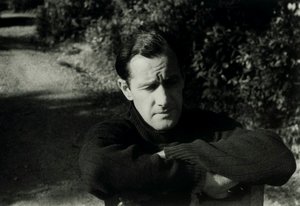
Sir Sidney Robert Nolan
1917 - 1992 , Australië
Belangrijkste feiten
- Artistic Movement Or Style: Modernisme
- Artists Who Influenced This Artist:
- Rimbaud
- Cézanne
- Kandinsky
- Klee
- Date Of Birth: April 22, 1917
- Date Of Death: November 28, 1992
- Full Name: Sir Sidney Robert Nolan
- Nationality: Australisch
- Notable Artworks:
- Ned Kelly serie
- Carriers of Horses
- AFL Serie
- Place Of Birth: Melbourne, Australia
Gerelateerde artikelen

The Frame as Argument: An Expert Guide to Selecting the Perfect Frame for Your Art
Master the art of presentation with our expert guide on choosing the perfect frame. Learn how to enhance your artwork's value, complement your interior design, and ensure long-term preservation through professional framing techniques for collectors and enthusiasts alike.
The Frame as Argument: How the Right Frame Completes or Ruins a Painting
Discover how the perfect frame acts as a silent partner to Impressionist masterpieces. Explore expert insights on selecting frames that enhance light, texture, and historical value for your collection.

Inlijsten: Hoe Kies Je de Juiste Lijst voor Kunstwerken? Een Expertgids
Ontdek hoe je de perfecte lijst voor je kunstwerk kiest met onze expertgids. Leer over stijlen, materialen en professionele tips voor een prachtige presentatie. Laat je inspireren!
Beyond the Canvas: Framing as a Catalyst for Value & Aesthetic Impact in Luxury Art Reproduction
Discover how expert framing elevates your art investment & interior design. Explore museum-quality options, bespoke sizing, and preservation techniques for discerning collectors. Enhance value & aesthetic impact with OriginalUniqueArt.
Framing Perception: A Comprehensive Guide to Selecting Frames that Enhance Interior Styles and Artwork Value
Elevate your space with expert art framing guidance! Discover how to choose frames that enhance artwork & interior design, protect valuable pieces, and create stunning displays. Trusted advice for designers & collectors.


