

 Bekijk op ware grootte
 Verstuur
 Delen
Delen
 Details bekijken
 Gids voor studentenkunstwerken

 Download
 Vergelijkbare items
 Röntgenonderzoek
 Diavoorstelling
 Statistieken
Ern Malley
 Oil On Board
- Australian Modernism
 1973
1973 122.0 x 122.0 cm
 Art Gallery of South Australia
 Lees meer
Giclée / Kunstafdrukken
Giclée- of canvasafdruk van museumkwaliteit met een snelle productie en flexibele afwerkingsmogelijkheden. ( Koop handgeschilderd kunstwerk Schakel over naar digitale afbeeldingen)




P118B $10

P118H $10

P118W $10

P438Z $10

P508JH $12

P508YH $12

P805H $10

P805Z $10

P919BZ $10

P919G $10

P919XJ $10

P959ZH $10

P968JZ $12

W106C $8

W218G $10

W218JH $8

W218Y $10

W307PJ $10

W316G $10

W316PJ $8

W316Y $10

W398PJ $8

W4111J $10

W500HY $15

W500JH $15

W692G $12

W849H $8

W940BG $15

W953PJ $8




Kies uit onze vooraf ingestelde maten die overeenkomen met de originele verhoudingen van het kunstwerk.

U kunt uw eigen afmetingen opgeven om in een specifieke lijst of ruimte te passen. Als de door u gekozen maat niet overeenkomt met de proporties van het originele kunstwerk, zullen wij de afbeelding bijsnijden of uitbreiden met een gespiegelde of effen rand. Een digitaal mockup wordt ter goedkeuring naar u verzonden voordat de productie begint.
Houd er rekening mee dat de preview op het scherm de werkelijke bijsneding of uitbreiding niet weergeeft. Alleen de mockup toont de uiteindelijke compositie nauwkeurig.
Hoewel aangepaste maten beschikbaar zijn, raden wij aan een afmeting uit de vooraf bepaalde lijst te kiezen om de originele proporties te behouden.
Wereldwijde levering () binnen 2 weken in plaats van de standaard 4/5 weken. (26 september)

Gratis wereldwijde expressverzending

Hoogwaardig linnen canvas

Volledige verzendverzekering

Garantie op terugbetaling van invoerrechten

Garantie op exacte kleurweergave

Retourbeleid van 100 dagen (alleen bij defecten)

100% Geld-terug-garantie

Korting bij meerdere afnames
 De optie voor glas is alleen beschikbaar bij een formaat kleiner dan 110 cm.

Ern Malley
Giclée / Kunstafdrukken
Formaat reproductie
-


Totaalprijs
$ 81
The Haunting Echoes of Ern Malley
Sidney Nolan’s “Ern Malley” isn't merely a painting; it’s a portal into the fractured psyche of an Australian legend, a haunting meditation on identity, loneliness, and the elusive nature of self. Completed in 1973, this monumental oil-on-board work captures a figure both recognizable and profoundly enigmatic – Ern Malley, a fictional poet created as part of a deliberate and audacious hoax by James McAuley and Harold Stewart. Yet, within its deceptively simple composition lies a complex tapestry of symbolism, reflecting the anxieties and artistic currents of post-war Australia.
Nolan’s style here is distinctly rooted in his signature “Outback” series, but with a crucial shift. While earlier Kelly paintings focused on the heroic figure battling external forces, Malley embodies an internal struggle. The subject, rendered in bold, almost brutal brushstrokes of ochre, crimson, and deep indigo, dominates the canvas. His face is a study in weathered resilience – a prominent scar bisects his cheekbone, hinting at a life lived hard, while his eyes, shadowed beneath a wide-brimmed cowboy hat, hold an expression of profound melancholy. The background isn’t a vast, romantic Australian landscape; instead, it's a claustrophobic, almost oppressive interior space – a suggestion of confinement and the weight of unspoken words.
The Genesis of a Fiction
The story behind “Ern Malley” is as compelling as the painting itself. In 1943, during the throes of World War II, McAuley and Stewart, frustrated by the prevailing trends in Australian art – particularly the experimentalism of the Angry Penguins group – devised a brilliant, subversive hoax. They created a complete persona – Ern Malley – including a biography, poems, and even a tragic backstory, all fabricated within a single day. The intention was to expose the perceived pretentiousness of modernism by mimicking its style while simultaneously undermining it. Harris, the influential editor of Angry Penguins, fell for the ruse, publishing Malley’s work with enthusiastic praise, effectively cementing the hoax's place in Australian art history.
Despite its origins as a deliberate deception, “Ern Malley” transcends its initial purpose. Nolan, deeply affected by the poem’s unsettling atmosphere and the fabricated life of the poet, continued to explore the character long after the hoax was revealed. He painted numerous variations on the theme, each offering a slightly different perspective on Malley's internal landscape. This sustained engagement with the fictional figure speaks volumes about Nolan’s artistic process – his ability to imbue a constructed persona with genuine emotional resonance.
Symbolism and Emotional Resonance
The painting is rich in symbolic detail, inviting multiple interpretations. The cowboy hat, a ubiquitous symbol of Australian identity, here feels burdened by the weight of loneliness and regret. The scar on Malley’s face represents both physical hardship and the indelible marks of experience. The dark interior space suggests a retreat from the outside world – a place of introspection and perhaps even self-imposed exile. The muted color palette contributes to the painting's somber mood, evoking a sense of quiet desperation.
Beyond its immediate symbolism, “Ern Malley” taps into deeper themes of alienation, identity, and the search for meaning. It’s a portrait not just of a fictional poet, but of the human condition itself – a reflection on the complexities of selfhood and the enduring struggle to find one's place in the world. The painting’s power lies in its ability to evoke a profound sense of empathy for this enigmatic figure, prompting viewers to contemplate their own experiences of isolation and uncertainty.
A Timeless Masterpiece
“Ern Malley” remains a pivotal work in Sidney Nolan's oeuvre and a cornerstone of Australian art history. Its enduring appeal lies not only in its striking visual impact but also in its layered complexity and emotional depth. Reproductions, meticulously crafted to capture the nuances of Nolan’s original technique, offer a remarkable opportunity to bring this haunting masterpiece into your home or office – a testament to the power of art to provoke thought, evoke emotion, and transcend time.
Biografie van de kunstenaar
A Life Painted in Myth and Landscape
Sir Sidney Robert Nolan, born in Melbourne in 1917, stands as a monumental figure in 20th-century Australian art. His journey was not one of conventional artistic training but rather an explosive emergence from the working-class streets of St Kilda into a world of vibrant imagination and relentless experimentation. Nolan wasn’t simply a painter; he was a visual storyteller, a mythmaker who wrestled with Australia's history, its landscapes, and its very identity. From his early days as a runner for an illegal betting ring to his eventual acclaim on the international stage, Nolan’s life was marked by a restless energy and a refusal to be confined by artistic norms. He absorbed influences from diverse sources – the poetry of Rimbaud, the spatial innovations of Cézanne, the raw emotion of Danila Vassilieff – yet forged a style uniquely his own, one that resonated with a distinctly Australian sensibility. His early exposure to the harsh realities of Melbourne life and the allure of its underbelly would profoundly shape his artistic vision, imbuing his work with a sense of both defiance and vulnerability.The Shaping of an Iconoclast
Nolan’s formative years were steeped in intellectual ferment. The Heide Circle, centered around patrons John and Sunday Reed, proved pivotal. This haven for artists and writers fostered a spirit of radical experimentation and provided Nolan with crucial support during his developing phase. It was at Heide that he encountered kindred spirits – Albert Tucker, Joy Hester, Arthur Boyd – all grappling with the challenge of creating a distinctly Australian modernism. The influence of modernist literature, particularly the Symbolist poets, cannot be overstated. Rimbaud’s call for a “systematic derangement of the senses” became a guiding principle for Nolan, liberating him from representational constraints and encouraging him to explore the emotional power of color, form, and symbolism. His early works demonstrate this influence, often featuring fragmented figures and dreamlike landscapes that hint at deeper psychological truths. He wasn’t interested in merely depicting reality; he sought to capture its essence, its underlying emotions, and its hidden narratives. This period also saw Nolan experimenting with various media, from stage design for the Ballet Russes to commercial art, each experience contributing to his growing technical prowess and artistic vocabulary.Early Influences and Artistic Development
Nolan’s artistic education began informally, fueled by a fascination with European avant-garde movements. He devoured books on Picasso, Klee, Matisse, and the Surrealists—artists who championed spontaneity and emotional expression as antidotes to rationalism. These influences profoundly shaped his stylistic choices, informing his use of bold colors, simplified forms, and evocative imagery. His early paintings reflected a preoccupation with themes of alienation and psychological complexity, mirroring the anxieties of the interwar years. Simultaneously, he honed his skills in commercial art—producing advertising campaigns for Fayrefield Hats—developing precision and technical mastery that would later serve him well in his more ambitious projects. The Heide Circle provided Nolan with an invaluable intellectual community where he could debate ideas and push boundaries alongside fellow artists who shared his vision of a new Australian art.The Iconic Ned Kelly Series
Nolan’s most celebrated achievement is undoubtedly the *Ned Kelly* series, begun in 1946 and continuing until his death in 1992. This monumental undertaking—consisting of 1.620 canvases—transformed the legend of Ned Kelly into a visual exploration of Australian history and identity. Rather than portraying Kelly as a heroic outlaw, Nolan depicted him as an enigmatic figure encased in armor, confronting the vastness of the Australian landscape. The series’s distinctive technique—characterized by flattened planes of color and bold brushwork—became synonymous with Nolan's artistic style. He deliberately avoided traditional representational conventions, prioritizing emotional impact over literal accuracy. This stylistic choice resonated deeply with audiences and cemented Kelly’s image as a symbol for Australia’s rebellious spirit and its complex relationship with its past. The series is considered one of the most important artworks of the 20th century.A Legacy of Visionary Art
Sir Sidney Nolan died in London in 1992, leaving behind an extraordinary body of work that continues to inspire artists and scholars alike. His paintings—spanning landscapes, portraits, and mythological narratives—are held in major museums worldwide, testifying to the enduring power of his artistic vision. He was recognized as a Fellow of the Royal Academy (RA) in 1987 and awarded Companion of the Order of Australia (AC) in 1988—honors reflecting his contribution to Australian culture and art history. Nolan’s influence extends beyond his own oeuvre, shaping the aesthetic sensibilities of subsequent generations of artists who embraced experimentation and sought to express profound emotional truths through innovative visual language. His legacy remains as a testament to the transformative potential of art—a force capable of capturing the spirit of an era and illuminating the complexities of human experience.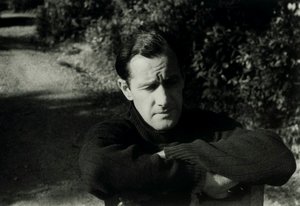
Sir Sidney Robert Nolan
1917 - 1992 , Australië
Snelle feiten
- Artistic Movement Or Style: Modernisme
- Artists Who Influenced This Artist:
- Rimbaud
- Cézanne
- Kandinsky
- Klee
- Date Of Birth: April 22, 1917
- Date Of Death: November 28, 1992
- Full Name: Sir Sidney Robert Nolan
- Nationality: Australisch
- Notable Artworks:
- Ned Kelly serie
- Carriers of Horses
- AFL Serie
- Place Of Birth: Melbourne, Australia
Gerelateerde artikelen

Sidney Herbert Sime: A Visionary of British Fantasy Art – Exploring the Grotesque and Sublime
Explore the captivating world of Sidney Herbert Sime, a visionary British fantasy artist. Discover his unique style, partnership with Lord Dunsany, and enduring legacy through OriginalUniqueArt.
Top 25 Meesterwerken van Henri Matisse: Kleur, Vorm & Emotie voor uw Interieur
Ontdek de top 25 meesterwerken van Henri Matisse! Duik in de wereld van Fauvisme, kleurrijke composities & expressieve kunst. Vind museumkwaliteit reproducties en decoratie-inspiratie op OriginalUniqueArt.com. Exploreer de collectie online!
Charles Marion Russell: Capturing the American West Through a Romantic Lens
Explore the captivating world of Charles Marion Russell, 'the cowboy artist.' Discover his life, iconic paintings, advocacy for Native Americans, and investment potential. A guide for discerning art collectors.


