

 Verstuur
 Delen
Delen
 Details bekijken

 Download
 Vergelijkbare items
 Diavoorstelling
 Stats
StatsSufferers from the Floods
 Black and White Photography
- Photo
- Victorian Social Documentary
 1878
1878- 19th Century
 Victoria and Albert Museum
 Lees meer
Handgemaakte olieverfreproductie
Met de hand geschilderd in olieverf op canvas in uw gewenste maat en lijst, op bestelling gemaakt door onze kunstenaars. ( Switch to Print Switch to Digital Image)




































Kies uit onze vooraf ingestelde maten die overeenkomen met de originele verhoudingen van het kunstwerk.

U kunt uw eigen afmetingen invoeren om in een specifieke lijst of ruimte te passen. Als de door u gekozen maat niet overeenkomt met de verhoudingen van het originele beeld, zullen we het kunstwerk bijsnijden of het schilderij uitbreiden met extra handgeschilderde elementen. Een digitale mockup wordt ter goedkeuring naar u verzonden voordat de productie begint.
Houd er rekening mee dat de preview op het scherm niet de werkelijke uitsnede of uitbreiding weergeeft. Alleen de mockup toont de uiteindelijke compositie nauwkeurig.
Hoewel aangepaste afmetingen mogelijk zijn, raden we aan een maat uit de vooraf gedefinieerde lijst te selecteren om de originele verhoudingen te behouden.
Na de bestelling zal het team van OriginalUniqueArt.com per e-mail contact opnemen met de klant voor instructies en een mockup-voorbeeld sturen.
Wereldwijde levering () binnen 3 tot 4 weken in plaats van de standaard 5 weken. (8 september). Zonder concessies aan de kwaliteit.

Gratis wereldwijde expressverzending

Hoogwaardig linnen canvas

Volledige verzendverzekering

Garantie op terugbetaling van invoerrechten

Garantie op exacte kleurweergave

Retourbeleid van 100 dagen (alleen bij defecten)

100% Geld-terug-garantie

Korting bij meerdere afnames
 De optie voor glas is alleen beschikbaar bij een formaat kleiner dan 110 cm.

Sufferers from the Floods
Druktechniek
Afmetingen reproductie
-


Eindtotaal
$ 300
A Window Into Victorian Hardship
In the hauntingly beautiful photograph “Sufferers from the Floods,” created by the polymath Sir Joseph John Thomson in 1878, we are invited to step through a temporal portal into the heart of a struggling London. This is not merely a photographic record; it is a profound piece of visual storytelling that captures the raw, unvarnished reality of life following the devastating Great Flood of 1878-79. Through Thomson’s lens, the streets of London become a stage for human resilience, where the damp, atmospheric gloom of the flood-stricken districts is rendered with such clarity that one can almost feel the chill of the Victorian mist.
The composition draws the viewer into a quiet, communal moment of survival. A group of individuals is gathered outside what appears to be a rag shop, their figures huddled together against the elements. The presence of a woman cradling a baby serves as a poignant emotional anchor, evoking deep themes of maternal care and the vulnerability of the family unit amidst societal upheaval. There is a subtle, gripping tension in the way the subjects occupy the space—some engaged in hushed conversation, others simply observing their surroundings—creating a narrative of shared endurance that transcends the decades separating us from this moment.
Mastery of the Woodburytype Process
What elevates this work from simple documentation to a masterpiece of early photographic art is Thomson’s masterful use of the Woodburytype process. Patented in 1864, this sophisticated technique utilized pigmented gelatin to produce images of extraordinary tonal richness and permanence. Unlike many contemporary methods that could appear flat or grainy, the Woodburytype allowed Thomson to capture an incredible depth of shadow and a seamless gradation of light. This technical precision is vital to the artwork's impact; it allows for the subtle textures of the damp cobblestones, the weathered surfaces of the buildings, and the weary expressions on the faces of the Londoners to emerge with a lifelike, almost tactile quality.
For the discerning collector or interior designer, this photograph offers a unique aesthetic opportunity. The monochromatic palette, characterized by its deep, velvety blacks and luminous highlights, provides a sophisticated focal point for any curated space. It possesses a timeless elegance that complements both classical and modern minimalist interiors, offering a sense of historical gravity and intellectual depth. To display such a reproduction is to invite a conversation about the intersection of science, art, and the enduring human spirit.
A Legacy of Observation and Empathy
The historical significance of this piece is inextricably linked to the dual nature of its creator. Sir Joseph John Thomson is globally renowned as the physicist who discovered the electron, yet in "Sufferers from the Floods," we witness his identity as a compassionate social observer. His scientific training likely informed his meticulous approach to composition and light, but his humanist empathy drove him to document the human cost of natural disaster. He did not seek to merely record an event; he sought to illuminate the anxieties and struggles of the most vulnerable populations during a period of profound economic inequality.
Every element within the frame—from the placement of the two bottles that add a touch of visual intrigue to the quiet presence of a chair in the background—contributes to a larger tapestry of Victorian life. This artwork stands as a testament to the power of photography to act as both a scientific instrument and an emotional mirror, capturing the fleeting shadows of history and preserving them with a permanence that continues to move and inspire viewers today.
Biografie van de kunstenaar
A Dual Legacy: Sir Joseph John Thomson – Scientist and Social Observer
Sir Joseph John Thomson, a name synonymous with the electron and groundbreaking advancements in physics, was also a keen observer of Victorian society, wielding his camera with an eye for detail and a commitment to documenting the lives unfolding around him. Born on December 18, 1856, in Cheetham Hill near Manchester, England, Thomson’s path wasn't one solely dedicated to scientific pursuit; it was a fascinating intersection of rigorous experimentation and compassionate social commentary. His early education at the University of Cambridge laid the foundation for his scientific brilliance, earning him a scholarship in mathematics and ultimately leading to his fellowship within the Royal Society. However, even as he delved into the mysteries of cathode rays, another passion began to blossom – photography. This wasn’t merely a hobby; it was a means of engaging with the realities of Victorian England, capturing its complexities, hardships, and vibrant street life.The Unveiling of the Electron and a World Transformed
Thomson's scientific legacy is monumental. In 1897, through meticulous experimentation with cathode rays, he revealed that these beams were not waves, as previously believed, but composed of tiny, negatively charged particles – what we now know as electrons. This discovery fundamentally altered the understanding of atomic structure, dismantling the long-held belief in the indivisibility of atoms and opening up entirely new avenues of scientific inquiry. His calculations demonstrated that these electrons possessed a remarkably large charge-to-mass ratio, far smaller than anything previously imagined. The implications were profound, reshaping the landscape of physics and earning him the Nobel Prize in Physics in 1906. This breakthrough wasn’t an isolated event; it was the culmination of years of dedicated research, driven by a relentless curiosity and a commitment to empirical evidence. It paved the way for further advancements in atomic theory and laid the groundwork for much of modern physics.Through the Lens: Documenting Victorian Life
Parallel to his scientific endeavors, Thomson developed a profound passion for photography, transforming himself into a dedicated social documentarian. He wasn’t content with simply recording images; he actively sought to portray the lives of ordinary people – street performers captivating audiences, laborers enduring harsh conditions, and those marginalized by society. His photographs offer an intimate glimpse into Victorian England, revealing both its grandeur and its grim underbelly. Works like Italian Street Musicians (1878) capture a fleeting moment of joy and artistry amidst the urban landscape, while images such as Sufferers from the Floods bear witness to the devastating impact of natural disasters on vulnerable communities. Cast Iron Billy, with its striking portraiture, freezes a single moment in time, inviting viewers to contemplate the story behind the subject’s gaze. His photographic style is characterized by realism and a documentary approach, eschewing artistic embellishment in favor of honest representation. He favored albumen prints, which contributed to the grainy texture and historical feel of his images, enhancing their sense of authenticity.Influences, Legacy, and Enduring Significance
While primarily celebrated as a scientist, Thomson’s photographic work indirectly influenced artists interested in social realism and documentary photography. His commitment to portraying everyday life with honesty and empathy resonated with those seeking to capture the realities of their time. Artists like Henryk Siemiradzki and Max Klinger were inspired by the implications of his scientific discoveries, exploring themes of modernity and human existence within their own artistic practices. Thomson’s legacy extends far beyond the confines of physics; he demonstrated the power of observation and documentation in both science and art. His work continues to be exhibited in museums and collections worldwide, offering invaluable insights into Victorian society and inspiring generations of scientists and artists alike. He exemplified a rare synthesis of intellectual rigor and human compassion, leaving behind a dual legacy that continues to resonate today. He died in 1940, but his contributions continue to shape our understanding of the world around us – both the invisible realm of subatomic particles and the visible tapestry of human experience.
Sir Joseph John Thomson
1856 - 1940 , United Kingdom
Belangrijkste feiten
- Artistic Movement Or Style: Social documentary photography
- Artists Or Movements Influenced By This Artist:
- Henryk Siemiradzki
- Max Klinger
- Date Of Birth: December 18, 1856
- Date Of Death: 1940
- Full Name: Sir Joseph John Thomson
- Nationality: British
- Notable Artworks:
- Italian Street Musicians
- Cast Iron Billy
- November Effigies
- Place Of Birth: Cheetham Hill, UK
Gerelateerde artikelen

Top 10 Meesterwerken Documentaire Fotografie | Kunst voor je Interieur - OriginalUniqueArt.com
Ontdek de 10 meest invloedrijke meesterwerken van documentaire fotografie! Van Robert Capa tot Dorothea Lange, leer het verhaal achter iconische zwart wit foto's. Vind museumkwaliteit reproducties & decoratie inspiratie op OriginalUniqueArt.com.

John Singer Sargent's Top 25 Meesterwerken: Portretten & Schilderijen voor uw Interieur | OriginalUniqueArt
Ontdek de 25 mooiste meesterwerken van John Singer Sargent! Van elegante portretten tot impressionistische schilderijen – leer over zijn leven, techniek & impact. Museumkwaliteit reproducties voor uw interieur op OriginalUniqueArt.com.

John Constable's Top 25 Meesterwerken: Landschappen die de Ziel Raaken | OriginalUniqueArt
Ontdek de 25 mooiste schilderijen van John Constable, meester van de Engelse Romantiek. Van idyllische landschappen tot iconische Hay Wain – bewonder zijn techniek en emotie. Museumkwaliteit reproducties & decoratie op OriginalUniqueArt.com.

The Lens of Truth: A Comprehensive History and Legacy of Documentary Photography
Explore the profound history of documentary photography. From early daguerreotypes to social reform movements, discover how the lens captures truth, preserves vanishing cultures, and shapes our global visual narrative through an expert art-historical lens.
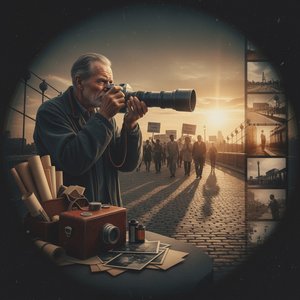
Witnessing History Through Lens & Light: Documentary Photography's Enduring Legacy
Explore the powerful history of documentary photography – from its origins to contemporary masters like Gordon Parks & W. Eugene Smith. Discover how this art form shapes our understanding of society and witness pivotal moments in time.