

 Bekijk op ware grootte
 Verstuur
 Delen
Delen
 Details bekijken
 Gids voor studentenkunstwerken

 Download
 Vergelijkbare items
 Röntgenonderzoek
 Diavoorstelling
 Statistieken
Mrs Joseph Chamberlain


 Lees meer
Handgemaakte olieverfreproductie
Met de hand geschilderd in olieverf op canvas in uw gewenste maat en lijst, op bestelling gemaakt door onze kunstenaars. ( Schakel over naar print Schakel over naar digitale afbeeldingen)




P118B €10

P118H €10

P118W €10

P438Z €10

P508JH €12

P508YH €12

P805H €10

P805Z €10

P919BZ €10

P919G €10

P919XJ €10

P959ZH €10

P968JZ €12

W106C €8

W218G €10

W218JH €8

W218Y €10

W307PJ €10

W316G €10

W316PJ €8

W316Y €10

W398PJ €8

W4111J €10

W500HY €15

W500JH €15

W692G €12

W849H €8

W940BG €15

W953PJ €8




Kies uit onze vooraf ingestelde maten die overeenkomen met de originele verhoudingen van het kunstwerk.

U kunt uw eigen afmetingen invoeren om in een specifieke lijst of ruimte te passen. Als de door u gekozen maat niet overeenkomt met de verhoudingen van het originele beeld, zullen we het kunstwerk bijsnijden of het schilderij uitbreiden met extra handgeschilderde elementen. Een digitale mockup wordt ter goedkeuring naar u verzonden voordat de productie begint.
Houd er rekening mee dat de preview op het scherm niet de werkelijke uitsnede of uitbreiding weergeeft. Alleen de mockup toont de uiteindelijke compositie nauwkeurig.
Hoewel aangepaste afmetingen mogelijk zijn, raden we aan een maat uit de vooraf gedefinieerde lijst te selecteren om de originele verhoudingen te behouden.
Na de bestelling zal het team van OriginalUniqueArt.com per e-mail contact opnemen met de klant voor instructies en een mockup-voorbeeld sturen.
Wereldwijde levering () binnen 3 tot 4 weken in plaats van de standaard 5 weken. (11 oktober). Zonder concessies aan de kwaliteit.

Gratis wereldwijde expressverzending

Hoogwaardig linnen canvas

Volledige verzendverzekering

Garantie op terugbetaling van invoerrechten

Garantie op exacte kleurweergave

Retourbeleid van 100 dagen (alleen bij defecten)

100% Geld-terug-garantie

Korting bij meerdere afnames
 De optie voor glas is alleen beschikbaar bij een formaat kleiner dan 110 cm.

Mrs Joseph Chamberlain
Reproductiemethode
Formaat reproductie
-


Totaalprijs
€ 259
Mrs Joseph Chamberlain by John Everett Millais
John Everett Millais’s “Portrait of Mrs. Joseph Chamberlain” stands as a quintessential example of Victorian portraiture and the Pre-Raphaelite movement's dedication to meticulous observation and emotive storytelling. Painted in 1891, this masterpiece captures not merely likeness but also the essence of its subject—Mary Endicott Chamberlain—a woman embodying grace, intellect, and quiet dignity within the confines of domestic life. Millais’s artistic vision sought to elevate portraiture beyond mere representation, aiming instead for a profound engagement with psychological depth and visual beauty.A Window into Victorian Society
The painting emerged during a period defined by social conservatism and aristocratic patronage—a context that profoundly influenced Millais's stylistic choices. Commissioned by Joseph Chamberlain, a prominent figure in British politics and economics, the portrait reflects the values of the era: respectability, familial piety, and an appreciation for refined aesthetics. The Chamberlain family’s home, Highbury Manor in Birmingham, served as inspiration for the setting—a meticulously recreated interior bathed in diffused natural light, symbolizing both comfort and intellectual stimulation. This deliberate selection of environment underscores Millais's intention to portray Mrs. Chamberlain not just as a woman but as an embodiment of Victorian ideals.Technical Brilliance: The Pre-Raphaelite Approach
Millais’s technique exemplifies the Pre-Raphaelite preoccupation with realism achieved through painstaking detail and layering—a method that distinguishes itself from the academic conventions prevalent at the time. He employed oil paint on canvas, utilizing a wet-on-wet technique to build up surfaces gradually, capturing subtle nuances of color and texture. The artist’s masterful brushwork contributes to an overall smoothness that belies the immense effort invested in recreating the scene with astonishing accuracy. Particular attention was paid to the depiction of fabrics—the grey jacket and white lace collar—each rendered with meticulous precision to convey a sense of tactile richness. Furthermore, Millais skillfully employed chiaroscuro—the interplay of light and shadow—to sculpt Mrs. Chamberlain’s form and imbue the composition with dramatic depth.Symbolism Beyond Appearance
Beyond its visual splendor, “Portrait of Mrs. Joseph Chamberlain” is laden with symbolic elements that enrich its narrative significance. The tea table itself serves as a focal point, representing domestic tranquility and hospitality—values highly esteemed in Victorian society. However, Millais’s gaze extends beyond the surface appearance to convey an inner state of composure and self-assurance. The subtle expression on Mrs. Chamberlain's face suggests thoughtfulness and resilience—qualities that resonate with the broader themes explored by Tennyson’s poem “Mariana,” which inspired Millais’s artistic endeavor. The inclusion of a small mouse beneath the table adds a touch of realism, grounding the scene in everyday life while simultaneously hinting at vulnerability and fragility.A Legacy of Artistic Excellence
“Portrait of Mrs. Joseph Chamberlain” remains an enduring testament to Millais's artistic genius—a painting that transcends its historical context to captivate viewers with its beauty and psychological insight. Its meticulous execution, combined with its evocative symbolism, secures its place as one of the most celebrated works of Victorian art—a masterpiece admired for its unwavering commitment to truthfulness and emotional resonance. It continues to inspire artists and collectors alike, demonstrating the enduring power of Pre-Raphaelite aesthetics to convey profound human experience.Vragen & Antwoorden
Waar kan ik een gids vinden voor "Mrs Joseph Chamberlain"?
De Gids-pagina van "Mrs Joseph Chamberlain" door Sir John Everett Millais biedt een printbaar factsheet van twee pagina's: het kunstwerk met de bijbehorende identificatietabel, een tijdlijn die het werk plaatst binnen de levensloop van de kunstenaar, andere werken van de kunstenaar, het gemeten kleurenpalet en kant-en-klare citaten in vier verschillende stijlen.
Hoe oud was Sir John Everett Millais toen "Mrs Joseph Chamberlain" werd gemaakt?
Sir John Everett Millais was 62 jaar oud bij het creëren van "Mrs Joseph Chamberlain" in 1891. De leeftijd is berekend op basis van het geboortejaar van de kunstenaar, 1829.
Wie heeft "Mrs Joseph Chamberlain" gemaakt?
De kunstenaar achter "Mrs Joseph Chamberlain" is Sir John Everett Millais. Het werk is gecatalogiseerd onder de naam van Sir John Everett Millais.
Wordt "Mrs Joseph Chamberlain" door Sir John Everett Millais bewaard in het land van herkomst van de kunstenaar?
Ja - het kunstwerk wordt bewaard in het land van herkomst van de kunstenaar. Sir John Everett Millais werd geboren in Verenigd Koninkrijk, en het originele werk "Mrs Joseph Chamberlain" wordt bewaard in een museum in Verenigd Koninkrijk.
In welk jaar werd "Mrs Joseph Chamberlain" door Sir John Everett Millais gemaakt?
"Mrs Joseph Chamberlain" door Sir John Everett Millais werd gemaakt in 1891.
Is "Mrs Joseph Chamberlain" door Sir John Everett Millais een bekend kunstwerk?
"Mrs Joseph Chamberlain" door Sir John Everett Millais heeft een populariteitsniveau van Recognized. Deze classificatie weerspiegelt hoe breed het werk wordt erkend.
Welke techniek is gebruikt voor "Mrs Joseph Chamberlain" door Sir John Everett Millais?
"Mrs Joseph Chamberlain" is uitgevoerd in Oil On Canvas.
Biografie van de kunstenaar
A Prodigy of the Pre-Raphaelites: The Life and Art of Sir John Everett Millais
Born in Southampton in 1829, John Everett Millais entered the Royal Academy Schools at the astonishing age of eleven—the youngest student ever admitted. This early demonstration of prodigious talent foreshadowed a career that would not only define an artistic movement but also capture the Victorian imagination with its breathtaking realism and emotional depth. From his earliest days, Millais possessed a remarkable gift for observation, a quality that would become the cornerstone of his artistic style. He wasn’t merely painting what he saw; he was meticulously recreating it, imbuing each brushstroke with an almost photographic fidelity. This dedication to truth in representation set him apart and ultimately led him to challenge the established conventions of British art.The Birth of a Brotherhood and Artistic Rebellion
Millais’s artistic trajectory took a pivotal turn in 1848 when, alongside Dante Gabriel Rossetti and William Holman Hunt, he founded the Pre-Raphaelite Brotherhood. This wasn't simply an aesthetic choice; it was a deliberate rebellion against what they perceived as the artificiality of academic art—art that had strayed too far from the natural world and the sincerity of early Renaissance masters, those working *before* Raphael. The Pre-Raphaelites sought to revive the clarity, detail, and vibrant color palettes of artists like Jan van Eyck and Fra Angelico. Their manifesto was one of truth to nature, a rejection of idealized forms, and an embrace of subjects drawn from literature, mythology, and everyday life. Millais’s early works, such as *Isabella*, immediately showcased this new approach—a meticulous attention to detail combined with a narrative intensity that captivated and often provoked audiences. His most controversial work during this period, Christ in the House of His Parents (1849-50), depicted the Holy Family not as ethereal beings but as ordinary working-class people, sparking outrage among critics who found its realism unsettling and even blasphemous. The painting’s stark depiction of a mother washing her child's clothes, set against the backdrop of a humble home, was a radical departure from traditional religious iconography.Evolving Styles and Victorian Sensibilities
The mid-1850s marked a period of significant change for Millais, both personally and artistically. His marriage to Effie Gray, following the annulment of her marriage to John Ruskin, profoundly influenced his work. He moved away from the intensely detailed, symbolic style of his early Pre-Raphaelite paintings towards a broader, more atmospheric realism. This shift wasn’t simply a matter of stylistic preference; it reflected a growing engagement with contemporary life and a desire to capture the fleeting beauty of the natural world. Paintings like *Autumn Leaves* exemplify this new direction—a serene depiction of a group of young women drifting leaves on a river, imbued with a sense of melancholy and nostalgia. The use of light and color in *Autumn Leaves* is particularly noteworthy, creating an atmosphere of quiet contemplation and capturing the subtle nuances of the autumnal landscape. He also found considerable success as a portraitist, capturing the likenesses of prominent Victorian figures, including John Gladstone and Benjamin Disraeli. This period saw Millais achieve widespread popularity and financial security, but it also drew criticism from some who felt he had compromised his artistic principles.Major Works & Collections
- Christ in the House of His Parents (1849-1850): Tate Britain, London – A controversial masterpiece that exemplifies early Pre-Raphaelite realism.
- Ophelia (1851-1852): Tate Britain, London – Perhaps his most famous work, renowned for its haunting beauty and symbolic depth. The painting’s depiction of Ophelia drowning in a river is both tragic and mesmerizing, capturing the character's vulnerability and despair.
- A Huguenot (1851-1852): Private Collection – A dramatic depiction of religious conflict and forbidden love. The scene depicts a young Huguenot woman being pursued by her brother, highlighting themes of faith, family, and societal pressure.
- Mariana (1850-1851): Manchester Art Gallery – Inspired by Shakespeare and Tennyson, showcasing Millais’s skill in capturing mood and atmosphere. The painting portrays Mariana as a young woman consumed by grief after the death of her lover.
- Autumn Leaves (1855-1856): City of Manchester Art Galleries – A serene and evocative painting that reflects his evolving style. The composition, with its dappled light and delicate colors, creates a sense of tranquility and beauty.
Legacy and Lasting Influence
Despite these criticisms, Sir John Everett Millais remains one of the most important figures in 19th-century British art. His influence extends far beyond the Pre-Raphaelite Brotherhood; he helped to redefine the standards of realism and narrative painting, inspiring generations of artists. His iconic images—*Ophelia*, with its haunting beauty and symbolic richness, A Huguenot, depicting a moment of poignant drama, and countless others—continue to resonate with audiences today. Millais’s ability to blend meticulous observation with emotional depth, his mastery of color and composition, and his willingness to challenge artistic conventions cemented his place as a true innovator. In 1896, he was elected President of the Royal Academy, a testament to his enduring legacy—though sadly, he passed away only months later. His work continues to be celebrated in museums and collections worldwide, ensuring that the beauty and power of his art will endure for generations to come.
Sir John Everett Millais
1829 - 1896 , Verenigd Koninkrijk
Snelle feiten
- Artistic Movement Or Style: Pre-Raphaëlisme, Realisme
- Artists Or Movements Influenced By This Artist: ['Pre-Raphaëlische beweging']
- Artists Who Influenced This Artist: Pre-Raphaëlische beweging
- Date Of Birth: 8 juni 1829
- Date Of Death: 13 aug 1896
- Full Name: Sir John Everett Millais
- Nationality: Engels
- Notable Artworks:
- Christ in huis...
- Ophelia
- Een Huguenot
- Place Of Birth: Southampton, VK
Gerelateerde artikelen

Sir John Everett Millais: Pre-Raphaelite Rebellion & Victorian Narrative Detail
Explore the revolutionary art of Sir John Everett Millais & the Pre-Raphaelite Brotherhood. Discover their radical realism, symbolic narratives, and lasting impact on Victorian aesthetics. A deep dive into 19th-century masterpieces.

The Pre-Raphaelite Brotherhood: Rediscovering Beauty, Romance, and Medieval Magic in Victorian Art
Embark on a journey through the Pre-Raphaelite Brotherhood. Discover the romantic symbolism, medieval magic, and radical beauty of Rossetti and Burne-Jones in this expert exploration of Victorian art history.

Pre-Raphaelite Romanticism: A Guide to Vivid Detail and Medieval Beauty in Victorian Art
Explore the vivid detail and medieval beauty of Pre-Raphaelite Romanticism. Discover the history of masters like Rossetti and Millais through our expert guide to Victorian art, perfect for collectors and professionals seeking authentic, museum-quality reproductions.

Dante Gabriel Rossetti's Top 25 Meesterwerken: Kunst voor uw Interieur | OriginalUniqueArt
Ontdek de 25 meest betoverende meesterwerken van Dante Gabriel Rossetti! Duik in de wereld van Pre-Raphaëlitische kunst, symbolisme & romantiek. Vind museumkwaliteit reproducties en inspiratie voor uw interieur op OriginalUniqueArt.com.
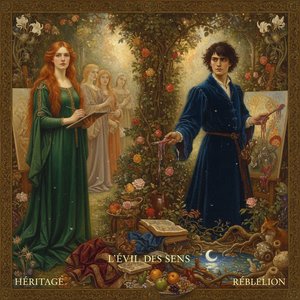
The Pre-Raphaelite Brotherhood: Reclaiming Beauty, Nature, and Truth in Victorian Art History
Explore the revolutionary Pre-Raphaelite Brotherhood. Discover how these visionary artists rejected academic tradition to reclaim beauty, nature, and truth through luminous detail and literary depth in Victorian art history.


