

 Bekijk op ware grootte
 Verstuur
 Delen
Delen
 Details bekijken
 Gids voor studentenkunstwerken

 Download
 Vergelijkbare items
 Röntgenonderzoek
 Diavoorstelling
 Statistieken
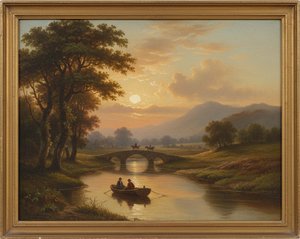
Edward Whitaker Gray (1748–1806)
 Oil On Canvas
- WallArt
- Romantic Landscape Painting
 1800
1800 75.0 x 63.0 cm
 De Royal Society
 Lees meer
Giclée / Kunstafdrukken
Giclée- of canvasafdruk van museumkwaliteit met een snelle productie en flexibele afwerkingsmogelijkheden. ( Koop handgeschilderd kunstwerk Schakel over naar digitale afbeeldingen)




P118B $10

P118H $10

P118W $10

P438Z $10

P508JH $12

P508YH $12

P805H $10

P805Z $10

P919BZ $10

P919G $10

P919XJ $10

P959ZH $10

P968JZ $12

W106C $8

W218G $10

W218JH $8

W218Y $10

W307PJ $10

W316G $10

W316PJ $8

W316Y $10

W398PJ $8

W4111J $10

W500HY $15

W500JH $15

W692G $12

W849H $8

W940BG $15

W953PJ $8




Kies uit onze vooraf ingestelde maten die overeenkomen met de originele verhoudingen van het kunstwerk.

U kunt uw eigen afmetingen opgeven om in een specifieke lijst of ruimte te passen. Als de door u gekozen maat niet overeenkomt met de proporties van het originele kunstwerk, zullen wij de afbeelding bijsnijden of uitbreiden met een gespiegelde of effen rand. Een digitaal mockup wordt ter goedkeuring naar u verzonden voordat de productie begint.
Houd er rekening mee dat de preview op het scherm de werkelijke bijsneding of uitbreiding niet weergeeft. Alleen de mockup toont de uiteindelijke compositie nauwkeurig.
Hoewel aangepaste maten beschikbaar zijn, raden wij aan een afmeting uit de vooraf bepaalde lijst te kiezen om de originele proporties te behouden.
Wereldwijde levering () binnen 2 weken in plaats van de standaard 4/5 weken. (27 september)

Gratis wereldwijde expressverzending

Hoogwaardig linnen canvas

Volledige verzendverzekering

Garantie op terugbetaling van invoerrechten

Garantie op exacte kleurweergave

Retourbeleid van 100 dagen (alleen bij defecten)

100% Geld-terug-garantie

Korting bij meerdere afnames
 De optie voor glas is alleen beschikbaar bij een formaat kleiner dan 110 cm.

Edward Whitaker Gray (1748–1806)
Giclée / Kunstafdrukken
Formaat reproductie
-


Totaalprijs
$ 81
Edward Whitaker Gray (1748–1806): A Portrait of Dignified Observation
Edward Whitaker Gray (1748–1806) stands as a testament to the neoclassical aesthetic—a genre defined by its unwavering commitment to realism, clarity, and order. This striking portrait captures the essence of a man whose gaze holds both intellectual curiosity and quiet composure, reflecting the spirit of Enlightenment Britain. Commissioned likely during Gray’s tenure as secretary to the Royal Society, the artwork embodies the values of scientific inquiry and aristocratic refinement prevalent in his era.- Subject Matter: The portrait depicts Edward Whitaker Gray himself, a botanist renowned for his meticulous cataloguing of plant specimens and contributions to Linnaean taxonomy. His dignified posture conveys authority and intellectual prowess—a reflection of his prominent role within the scientific community.
- Style & Technique: Executed in monochrome, primarily graphite and charcoal, the piece exemplifies the precision characteristic of neoclassical drawing. Artists like Gray favored detailed hatching and cross-hatching to achieve tonal variations and convincingly render volume, creating a palpable sense of depth and texture. The artist’s masterful handling of light and shadow—known as chiaroscuro—further enhances the dramatic effect, emphasizing the contours of Gray's face and clothing.
- Composition: The portrait employs a three-quarter profile view, positioning Gray’s head and shoulders centrally within the frame. This deliberate compositional choice directs the viewer’s attention to his countenance, allowing for an intimate study of his expression and features. The dark background serves as a counterpoint to the illuminated subject, amplifying the impact of the light source—positioned from the left—which casts deep shadows on Gray's right side.
- Historical Context: Gray’s work aligns seamlessly with the broader intellectual currents of the late 18th century. The neoclassical style championed reason and observation as tools for understanding the natural world, mirroring Gray’s scientific pursuits. Furthermore, portraits like this served as symbols of social status and familial lineage—affirming the importance of aristocratic patronage in supporting artistic endeavors.
- Symbolic Elements: Gray's solemn expression speaks to a profound seriousness of purpose – an unwavering dedication to scientific exploration and intellectual contemplation. The attire—formal robes indicative of his position within the Royal Society—underscores his status as a respected scholar and statesman, embodying the ideals of Enlightenment thought.
Detailed Examination: Line Work & Texture Rendering
The artist’s meticulous attention to detail is evident in the intricate line work that defines Gray's facial features and clothing folds. Hatching and cross-hatching techniques skillfully convey tonal gradations, creating a convincing illusion of surface texture—particularly noticeable in the wig’s voluminous curls and the fabric of Gray’s jacket. The subtle variations in linework contribute to the overall sense of realism, immersing the viewer in the likeness of Gray himself. Graphite and charcoal were favored mediums for capturing nuanced shades of gray, allowing artists like Gray to achieve remarkable expressive power.Material Considerations: Charcoal & Paper
Based on visual analysis, it’s probable that Gray utilized graphite and charcoal—perhaps supplemented with black ink—on paper or canvas. Graphite offered exceptional control over tonal values, facilitating the creation of subtle gradations essential for achieving chiaroscuro effects. Charcoal provided a darker pigment capable of producing dramatic contrasts—a technique favored by neoclassical painters to heighten visual impact and convey emotional depth. The choice of paper—likely linen—would have ensured durability and stability, preserving the artwork’s integrity across generations.Overall Impression & Artistic Legacy
Ultimately, Gray's portrait transcends mere representation; it embodies the intellectual spirit of its time—a celebration of observation, reason, and dignified contemplation. Its enduring appeal lies in its masterful execution—the artist’s ability to capture not only Gray’s physical likeness but also his inner character—solidifying his place as a pivotal figure within neoclassical art history.Biografie van de kunstenaar
vroege jaren en opleiding
Sir Augustus Wall Callcott, een vooraanstaande Engelse landschapsschilder, werd op 20 februari 1779 geboren in Kensington Gravel Pits, een dorp aan de westelijke rand van Londen. Zijn vroege jaren werden gekenmerkt door een diepe passie voor muziek, wat hem er zelfs toe bracht om gedurende enkele jaren deel uit te maken van het koor van Westminster Abbey. Later vond hij zijn weg naar de Royal Academy, waar hij als student zijn artistieke carrière begon als portretschilder onder de deskundige begeleiding van John Hoppner.opkomst naar roem
De voorkeur van Callcott voor de landschapsschilderkunst werd al snel duidelijk, en na 1804 exposeerde hij uitsluitend landschappen. Zijn technische vaardigheid, elegante composities en charmante tonaliteit zorgden voor een gestage groei van zijn reputatie. In 1806 werd hij verkozen tot associatie van de Royal Academy, en in 1810 bereikte hij de status van volwaardig academicus.opmerkelijke werken en exposities
Enkele van Callcotts meest iconische meesterwerken zijn onder meer:- The Entrance to the Pool of London (1816)
- The Mouth of the Tyne (1818)
- A Dead Calm on the Medway (1820)
- Rochester (1824)
- Raffaelle and the Fornarina (1837) - een zeldzaam voorbeeld van zijn figuratieve schilderijen, te vinden in het South Kensington Museum (Sheepshanks Collection), tegenwoordig onderdeel van de V&A
erfenis en latere leven
Bij de troonsbestijging van koningin Victoria werd Callcott in 1837 tot ridder geslagen. In 1843 volgde hij William Seguier op als surveyor of the Queen's pictures. Callcott overleed op 25 november 1844 en werd begraven op de Kensal Green Cemetery. Bekijk meer werken van Sir Augustus Wall Callcott op OriginalUniqueArt.com: Ontdek meer op Wikipedia:
Sir Augustus Wall Callcott
1779 - 1844 , Verenigd Koninkrijk
Snelle feiten
- Artistic Movement Or Style: Romantische Landschapspinturen
- Artists Or Movements Influenced By This Artist: ['Turner']
- Artists Who Influenced This Artist: ['John Hoppner']
- Date Of Birth: 20 februari 1779
- Date Of Death: 25 november 1844
- Full Name: Augustus Wall Callcott
- Nationality: Engels
- Notable Artworks:
- De toegang tot het meer van Lodon
- De mond van de Tyne
- Een vredige kalmte op het Scheldewater
- Rochester
- Raffaël en de Fornarina
- Place Of Birth: Kensington, Verenigd Koninkrijk
Gerelateerde artikelen
Sir Augustus Wall Callcott: A Life Painted with Light & Atmosphere
Explore the life & art of Sir Augustus Wall Callcott, a celebrated British landscape painter known for his serene scenes and elegant compositions. Discover his Romantic influences & lasting legacy at OriginalUniqueArt.

John Constable's Top 25 Meesterwerken: Landschappen die de Ziel Raaken | OriginalUniqueArt
Ontdek de 25 mooiste schilderijen van John Constable, meester van de Engelse Romantiek. Van idyllische landschappen tot iconische Hay Wain – bewonder zijn techniek en emotie. Museumkwaliteit reproducties & decoratie op OriginalUniqueArt.com.

Evocations of Place: A Historical Journey Through Landscape Art
Explore the rich history of landscape art with OriginalUniqueArt. Discover renowned artists, movements like Impressionism & Romanticism, and expert guidance for collecting timeless pieces. Find your perfect serene escape today!

Romantische Landschappen: Top 10 Meesterwerken voor een Sfeervol Interieur | OriginalUniqueArt.nl
Ontdek de 10 meest iconische meesterwerken van de Romantiek! Reis door de tijd met Caspar David Friedrich, Turner & Delacroix. Laat je inspireren en vind museumkwaliteit kunst reproducties voor een sfeervol interieur op OriginalUniqueArt.com.

Evoking Atmosphere & Identity: A Journey Through Landscape Painting's History
Explore the rich history of landscape painting! Discover renowned artists, movements like Romanticism, & techniques such as atmospheric perspective. Find inspiration and quality reproductions at OriginalUniqueArt.
