

 Voorvertoning
 Verstuur
 Delen
Delen
 Details bekijken
 Gids
Gids

 Download
 Vergelijkbare items
 Röntgenonderzoek
 Diavoorstelling
 Q&A
Q&A Statistieken
The Ford
 Acrylic On Canvas
- WallArt
- Newlyn School
 19th Century
 139.0 x 165.0 cm
 Wolverhampton Art Gallery
 Lees meer
De kunstwerken die op deze pagina worden weergegeven, zijn beschermd door de auteursrechtwetgeving, wat betekent dat het ons wettelijk niet is toegestaan om identieke reproducties te maken of te verkopen. Deze bescherming wordt gehandhaafd onder internationale overeenkomsten zoals de Conventie van Bern en door nationale wetgeving, waaronder de bepalingen van de Amerikaanse auteurswet - Titel 17. Alle rechten voorbehouden. Reproduceren of distribueren van afbeeldingen is niet toegestaan zonder uitdrukkelijke schriftelijke toestemming van WahooArt.com en de rechthebbenden.
Deze methode voldoet volledig aan de auteursrechtwetgeving, omdat het niet gaat om het kopiëren of dupliceren van het beschermde kunstwerk. In plaats daarvan is er sprake van een creatieve herinterpretatie — een nieuw schilderij dat door het origineel wordt geïnspireerd, maar er niet identiek aan is.
Giclée / Kunstafdrukken
Giclée- of canvasafdruk van museumkwaliteit met een snelle productie en flexibele afwerkingsmogelijkheden. ( Bestel handgeschilderde reproductie Schakel over naar digitale afbeeldingen)




P118B €10

P118H €10

P118W €10

P438Z €10

P508JH €12

P508YH €12

P805H €10

P805Z €10

P919BZ €10

P919G €10

P919XJ €10

P959ZH €10

P968JZ €12

W106C €8

W218G €10

W218JH €8

W218Y €10

W307PJ €10

W316G €10

W316PJ €8

W316Y €10

W398PJ €8

W4111J €10

W500HY €15

W500JH €15

W692G €12

W849H €8

W940BG €15

W953PJ €8




Kies uit onze vooraf ingestelde maten die overeenkomen met de originele verhoudingen van het kunstwerk.

Voer de gewenste breedte en hoogte in, passend bij uw lijst of muur. Een afdruk kan alleen worden ingekort en nooit groter worden gemaakt dan het origineel; een formaat met andere verhoudingen zal daarom een deel van de afbeelding verliezen. Wij sturen u een digitaal mockup ter goedkeuring voordat we tot drukwerk overgaan. De afbeelding op deze pagina toont niet de werkelijke uitsnede — dit is alleen te zien op het mockup.
Wereldwijde levering () binnen 2 weken in plaats van de standaard 4/5 weken. (31 oktober)

Gratis wereldwijde expressverzending

Hoogwaardig linnen canvas

Volledige verzendverzekering

Garantie op terugbetaling van invoerrechten

Garantie op exacte kleurweergave

Retourbeleid van 100 dagen (alleen bij defecten)

100% Geld-terug-garantie

Korting bij meerdere afnames
 De optie voor glas is alleen beschikbaar bij een formaat kleiner dan 110 cm.

The Ford
Giclée / Kunstafdrukken
Afmetingen reproductie
-


Eindtotaal
€ 72
A Moment Frozen in Time: The Ford by Sir Alfred Munnings
Sir Alfred James Munnings’s “The Ford,” painted in 1910, isn't merely a depiction of horses and riders; it’s a vibrant snapshot of a vanishing world – the heartland of rural England on the cusp of profound change. More than just a landscape painting, it’s an immersive experience, transporting the viewer to a flooded field teeming with life, action, and a palpable sense of camaraderie. Munnings, a master of capturing the essence of equine grace and the spirit of the countryside, skillfully renders this chaotic scene with remarkable precision and emotional depth.
The painting immediately draws the eye to the central figure on horseback, a man confidently leading a group through the turbulent waters. His posture exudes authority and leadership, while his attire – a crisp tie against the muddy backdrop – subtly anchors him in a world of gentlemanly pursuits. The horses themselves are rendered with breathtaking realism; each muscle flexes, each stride is captured with an almost photographic accuracy. Munnings’s ability to convey the power and movement of these animals is truly remarkable, highlighting their vital role within this community.
The Painter's Technique: Impressionism Meets Equestrian Detail
Munnings’s style seamlessly blends elements of Impressionism with his deep understanding of horses. He employs loose brushstrokes and a vibrant palette – dominated by earthy browns, greens, and blues – to create an atmosphere of immediacy and dynamism. The water itself is depicted not as a static element but as a swirling vortex of color and movement, reflecting the light and adding to the sense of unrestrained energy. Notice how he uses broken color to suggest depth and texture, particularly in the wet ground and the flowing garments of the riders.
The painting’s composition is carefully constructed to draw the viewer into the scene. The diagonal lines created by the horses and riders lead the eye across the canvas, while the use of atmospheric perspective – with distant figures appearing paler and less distinct – reinforces the sense of depth. Munnings' meticulous attention to detail extends beyond the horses; he captures the expressions on the faces of the riders, conveying a range of emotions from determination to amusement.
A Window into a Disappearing World
“The Ford” offers more than just a beautiful landscape; it’s a poignant reminder of a bygone era. Painted in 1910, the scene depicts a time when rural life was deeply intertwined with agriculture and hunting – activities that were increasingly threatened by industrialization and urbanization. The flooded field itself speaks to the unpredictable nature of the countryside, highlighting its vulnerability to the elements.
The painting’s historical context is crucial to understanding its significance. Munnings was a staunch defender of traditional rural values, and his work often served as a visual chronicle of a disappearing way of life. “The Ford” captures this sentiment perfectly, offering a glimpse into a world where horses were not just animals but essential partners in the daily rhythms of life. The painting’s enduring appeal lies in its ability to evoke a sense of nostalgia for a time when community and connection with nature held greater importance.
Symbolism and Emotional Resonance
Beyond its technical brilliance, “The Ford” is rich in symbolism. The flooded field represents both challenge and opportunity – a test of skill and resilience. The central figure on horseback embodies leadership and determination, while the other riders represent community and shared experience. The painting’s overall mood is one of optimism and camaraderie, suggesting that even amidst adversity, there is always reason for hope.
Ultimately, “The Ford” is a powerful testament to Munnings' artistic vision and his ability to capture the essence of rural England. It’s a timeless masterpiece that continues to resonate with viewers today, reminding us of the beauty and importance of preserving our cultural heritage.
Veelgestelde vragen
Onder welke pseudoniemen of andere namen is Alfred Munnings bekend?
Alfred Munnings staat ook bekend als Sir Alfred James Munnings, AJ Munnings.
Wat is de kunsthistorische betekenis van "The Ford" door Alfred Munnings?
Historisch gezien is "The Ford" een Newlyn School werk uit het bredere 19th Century tijdperk.
Wat stelt "The Ford" voor en welke sfeer straalt het uit?
"The Ford" toont horses, rural england, landscape, painting, munnings, ford, equestrian, flooding en de vastgelegde stemming is Romantic.
Biografie kunstenaar
A Life Immersed in Equine Grace
Sir Alfred James Munnings, een naam die onlosmakelijk verbonden is aan de levendige weergave van paarden en de romantische verleiding van het platteland Engeland, bevindt zich op een cruciale positie binnen de 20ste-eeuwse Britse kunst. Hij werd geboren in 1878 in het dorp Mendham, in de rustige omgeving van Suffolk, en zijn leven werd diepgaand gevormd door een blijvende band met de paardenwereld – een verbinding die zijn artistieke visie zou definiëren en hem tot bekendheid zou leiden. Munnings registreerde niet simpelweg wat hij zag; hij bewaarde een gevoel, een sfeer, een wereld op het punt van onomkeerbare verandering te staan. Hij ving een verdwijnende levensstijl in, een scherp geobserveerd portret van Groot-Brittannië doordrenkt van traditie, jagen en de ritmes van het platteland.From Rural Beginnings to Artistic Development
Munnings’s artistieke reis begon niet binnen de formele grenzen van een academie, maar in de praktische wereld van een drukkerij in Norwich. Deze leerlingperiode verfijnde zijn vaardigheden op het gebied van ontwerp en observatie terwijl hij tegelijkertijd studie volgde aan de Norwich School of Art. Dit was een vormende periode, die discipline instilled die hem goed zou dienen bij het navigeren door de uitdagingen van het etableren van zichzelf als kunstenaar. Vroege invloeden omvatten de plein air-schilders van de Newlyn School in Cornwall, waar hij hun toewijding aan het vastleggen van licht en atmosfeer direct vanuit de natuur omarmde. Deze onderdompeling in impressionistische technieken legde de basis voor zijn kenmerkende stijl – losse penseelstreken, een levendige palet en een tastbare sensatie van beweging. Zijn vroege werken toonden vaak landelijke scènes, met name die met Roma’s en paarden die door het Suffolk-landschap ronddrijven, doordrenkt van een romantische gevoeligheid die zijn groeiende beheersing van kleur en licht demonstreerde. Deze schilderijen waren niet simpelweg representaties; ze waren expressies van een diepe liefde voor het land en zijn inwoners.War, Recognition, and a Champion of Tradition
De Eerste Wereldoorlog had een diepgaande invloed op zowel Munnings’s artistieke perspectief als zijn publieke imago. Hoewel aanvankelijk niet geschikt bevonden voor dienst, werd hij in 1918 naar Frankrijk gestuurd om de acties van de Canadese Cavalerie Brigade te documenteren, met name hun relatie tot de paarden die essentieel waren voor hun missie. Deze ervaring bracht hem oog in oog met de harde realiteit van oorlog – lijden, verlies en de blijvende band tussen mensen en dieren. Zijn schilderijen uit deze periode zijn geen glorieuze beschrijvingen van gevechten, maar aangrijpende reflecties op offerslag en veerkracht, die een sombere schoonheid vastleggen in de naschokken van de vernietiging. De jaren na de oorlog getuigden van een opleving van Munnings’s populariteit en financiële zekerheid. Prestigeuze commissies stroomden binnen, waardoor hij Castle House kon verwerven in Dedham, Essex – een eigendom dat zowel zijn thuis als studio zou worden voor de rest van zijn leven. Hij werd een gevraagde portretschilder, die het uiterlijk maar ook de karakter en geest van prominente figuren uit de adelstand en de paardenrace vastlegde. Zijn vermogen om niet alleen fysieke gelijkenis maar ook karakter en ziel over te brengen, versterkte zijn reputatie als een van Groot-Brittannië’s toptalenten. Munnings was echter ook een vurige pleitbezorger van traditionele artistieke waarden.A Controversial Voice and Enduring Legacy
Munnings’s artistieke filosofie was diep geworteld in traditie, en hij werd een kritische stem op de groeiende modernistische bewegingen die conventionele ideeën over kunst uitdaagden. Zijn beroemde – en vaak controversiële – radio-uitzending van 1949 zag hem een verpletterend aanzoek tegen Cubisme en Surrealisme leveren, met kenmerkende eerlijkheid (en waarschijnlijk aangewakkerd door alcohol). Hoewel zijn opmerkingen woede veroorzaakten bij de voorstanders van moderne kunst, weerspiegelden ze ook de gevoelens van degenen die vasthielden aan representatie en de blijvende kracht van artistisch vakmanschap. Hij was niet simpelweg tegen verandering om de verandering zelf; hij geloofde in het belang van het behouden van artistieke normen en schoonheid in zijn traditionele vorm. Deze overtuiging leidde tot zijn verkiezing als president van de Royal Academy in 1944, een positie die hij bezat tot 1949, waardoor zijn status binnen de Britse kunstwereld werd verstevigd. Hij werd in 1944 Ritter en benoemd tot Knight Commander of the Royal Victorian Order in 1947, wat verder erkenning gaf aan zijn bijdragen aan het culturele leven van het land.Major Achievements
- Royal Academy President: Elected President of the Royal Academy in 1944, serving until 1949.
- Knighthood: Knighted Bachelor in 1944 and appointed a Knight Commander of the Royal Victorian Order in 1947.
- War Artist Commissions: Recognized for his work documenting the Canadian Cavalry during WWI.
- Sculptural Work: Created sculptures, including an equestrian statue of Edward Horner.
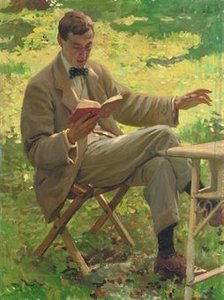
Alfred Munnings
1878 - 1959 , Verenigd Koninkrijk
Belangrijkste feiten
- Artistic Movement Or Style: Impressionisme
- Artists Or Movements Influenced By This Artist: ['Modernisme']
- Artists Who Influenced This Artist: ['Newlyn School scholen']
- Date Of Birth: 8 oktober 1878
- Date Of Death: 17 juli 1959
- Full Name: Sir Alfred James Munnings
- Nationality: Engels
- Notable Artworks:
- The Fancy Dress Ball
- A Piper
- Place Of Birth: Mendham, Verenigd Koninkrijk
Gerelateerde artikelen

Sir Alfred James Munnings: Top 25 Meesterwerken voor Kunstliefhebbers | OriginalUniqueArt.nl
Ontdek de top 25 schilderijen van Sir Alfred James Munnings, meester van paardenkunst & Engelse impressionisme. Leer over zijn leven, techniek en iconische werken. Museumkwaliteit reproducties op OriginalUniqueArt.com! Ontdek alle meesterwerken online.

Cultivating Visions: A Historical Journey Through Rural Landscapes in Art
Explore the rich history of rural landscape painting with OriginalUniqueArt. Discover Impressionist masterpieces, key artists & movements. Find your perfect serene artwork and bring nature's beauty home.

James Abbott McNeill Whistler: Top 25 Meesterwerken voor Kunstliefhebbers | OriginalUniqueArt
Ontdek de 25 meest iconische meesterwerken van James Abbott McNeill Whistler, pionier van het esthetisme en impressionisme. Van zijn betoverende Nocturnes tot portretten vol harmonie. Vind museumkwaliteit reproducties & decoratie-inspiratie op OriginalUniqueArt.com

Capturing Motion: The Timeless Beauty of Sir Alfred James Munnings' Equestrian Masterpieces
Discover the breathtaking equestrian mastery of Sir Alfred James Munnings. Explore an art-history journey through his impressionistic captures of motion, light, and rural elegance, perfect for the discerning classic art enthusiast and collector.

John Constable's Top 25 Meesterwerken: Landschappen die de Ziel Raaken | OriginalUniqueArt
Ontdek de 25 mooiste schilderijen van John Constable, meester van de Engelse Romantiek. Van idyllische landschappen tot iconische Hay Wain – bewonder zijn techniek en emotie. Museumkwaliteit reproducties & decoratie op OriginalUniqueArt.com.


