Verstuur
 Delen
Delen
 Details bekijken
 Gids voor studentenkunstwerken

 Download
 Vergelijkbare items
 Diavoorstelling
 Statistieken
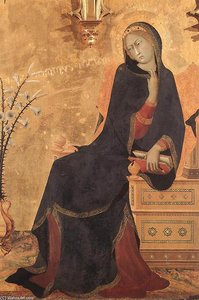
Maestà (detail)


 Lees meer
Giclée / Kunstafdrukken
Giclée- of canvasafdruk van museumkwaliteit met een snelle productie en flexibele afwerkingsmogelijkheden. ( Koop handgeschilderd kunstwerk Schakel over naar digitale afbeeldingen)




































Kies uit onze vooraf ingestelde maten die overeenkomen met de originele verhoudingen van het kunstwerk.

Voer de breedte en de hoogte in die u nodig heeft, passend bij uw lijst of uw muur. Een afdruk kan alleen worden ingekort, nooit groter worden gemaakt dan het origineel, waardoor een formaat met een andere verhouding een deel van de afbeelding verliest. Wij sturen u een digitaal mockup ter goedkeuring voordat we iets drukken. De afbeelding op deze pagina toont niet de werkelijke uitsnede — dit is alleen te zien op het mockup.
Wereldwijde levering () binnen 2 weken in plaats van de standaard 4/5 weken. (21 oktober)

Gratis wereldwijde expressverzending

Hoogwaardig linnen canvas

Volledige verzendverzekering

Garantie op terugbetaling van invoerrechten

Garantie op exacte kleurweergave

Retourbeleid van 100 dagen (alleen bij defecten)

100% Geld-terug-garantie

Korting bij meerdere afnames
 De optie voor glas is alleen beschikbaar bij een formaat kleiner dan 110 cm.

Maestà (detail)
Giclée / Kunstafdrukken
Formaat reproductie
-


Totaalprijs
€ 71
A Symphony of Grace: The Ethereal Vision of Simone Martini
To gaze upon the detail of Simone Martini’s Maestà is to step through a portal into the golden age of Sienese Gothic art. Created around 1315, this fresco fragment serves as a breathtaking window into a period where spiritual devotion and courtly elegance danced in perfect harmony. The artwork presents a celestial assembly, a rhythmic arrangement of angels and saints whose presence transcends the physical realm. Each figure, adorned with delicate halos, seems to exist in a state of perpetual adoration, their forms layered with a sense of orderly divinity. The composition does not merely depict a group of holy figures; it orchestrates a visual hymn, where the soft interplay of light and shadow creates an atmosphere of profound serenity and timelessness.
The technical mastery displayed in this work is nothing short of extraordinary, showcasing Martini’s unique ability to marry linear precision with a luminous, flowing grace. Unlike the more robust and muscular figures found in the Florentine works of Giotto, Martini’s hand is characterized by an exquisite delicacy. He employs a meticulous linework that defines the rhythmic folds of drapery, lending the figures a weightless, almost ethereal quality. The palette is a masterclass in color harmony, dominated by cool, contemplative blues and verdant greens that evoke the tranquil sanctity of the Basilica di San Domenico. This subtle use of shading and color creates an illusion of three-dimensional form that feels soft to the eye, inviting the viewer into a meditative state of contemplation.
Historical Splendor and Symbolic Depth
The historical backdrop of the Maestà is as rich as its visual textures. Painted during a time when Siena was ascending as a powerful papal stronghold under the influence of Pope Boniface VIII, the artwork reflects the political and religious fervor of the era. This was a period of immense patronage, where art served as both an expression of faith and a symbol of civic and ecclesiastical authority. Martini, a master of the Sienese school, infused this commission with the sophisticated aesthetic of the International Gothic style—a movement that sought to blend the spiritual intensity of the Middle Ages with the refined, courtly splendor of European royalty.
Beyond its surface beauty, every element of the fresco is imbued with deep symbolic significance. The arrangement of the saints and angels represents the hierarchical order of the heavens, a visual manifestation of divine grace descending upon the earthly realm. The very act of looking upon these figures was intended to inspire piety and a sense of connection to the divine. For the modern collector or interior designer, this piece offers more than mere decoration; it provides a focal point of profound emotional resonance. A high-quality reproduction of this masterpiece brings an air of historical prestige and sophisticated tranquility to any space, acting as a bridge between the storied past of the Trecento and the refined elegance of contemporary living.
Vragen & Antwoorden
Waarvan is "Maestà (detail)" gemaakt en in welke stijl?
"Maestà (detail)" is vervaardigd in Fresco, in de Late Gothic-stijl.
Wie is de kunstenaar achter "Maestà (detail)"?
"Maestà (detail)" is gemaakt door Simone Martini. De informatie op deze pagina beschrijft het originele werk van Simone Martini.
Voor welke ruimte wordt "Maestà (detail)" door Simone Martini aanbevolen?
De aanbevolen ruimte voor "Maestà (detail)" door Simone Martini is een Hotel Lobby. Dit advies kan uiteraard worden aangepast aan uw interieur.
Biografie van de kunstenaar
A Sienese Master of Elegance and Grace
Simone Martini, born around 1284 in the heart of Siena, Italy, stands as a pivotal figure in the transition from medieval to Renaissance art. He wasn’t merely a painter; he was an architect of elegance, a master of line and color who infused his works with a courtly refinement that distinguished him from contemporaries like Giotto. While historical accounts vary regarding his early training—some suggest apprenticeship under Duccio di Buoninsegna, the leading Sienese artist of the time, while others point to Florence and the influence of Giotto—Martini undeniably forged a unique artistic path. His brother-in-law, Lippo Memmi, was also an artist with whom he frequently collaborated, further enriching the vibrant artistic landscape of Siena. The city itself played a crucial role in shaping Martini’s aesthetic; Siena, a thriving center of commerce and culture, fostered an environment where art flourished, blending religious devotion with worldly sophistication.
The Flourishing of International Gothic
Martini's style is immediately recognizable for its departure from the more monumental forms favored in Florence. He embraced a delicate sensibility, characterized by flowing lines, soft decorative details, and an overall sense of grace. This aesthetic wasn’t born in isolation; it was profoundly influenced by external forces. The Via Francigena, a major pilgrimage route traversing Europe, brought with it artistic currents from France—particularly the refined elegance of French manuscript illumination and ivory carving. These influences are readily apparent in Martini's work, manifesting as intricate patterns, elongated figures, and a heightened attention to surface ornamentation. He didn’t simply copy these styles; he synthesized them with existing Sienese traditions, creating something entirely new. His paintings weren’t merely representations of religious scenes but rather elegant narratives imbued with emotional depth and visual poetry.
From Siena to Avignon: A Courtly Appointment
Martini's reputation extended beyond the borders of Italy, leading to a significant turning point in his career. In 1336, he accepted a commission from Pope Benedict XII to create frescoes for the Papal Palace in Avignon, France—a move that placed him at the heart of European power and patronage. This appointment wasn’t merely about artistic skill; it was a testament to Martini's ability to cater to the tastes of a sophisticated courtly audience. While in Avignon, he entered into a remarkable intellectual circle, befriending Francesco Petrarca—better known as Petrarch, the renowned humanist poet. The connection with Petrarch is particularly poignant, as Vasari and other sources suggest that Martini painted a portrait of Laura de Noves, Petrarch’s lifelong muse. Though the portrait itself is lost to time, its very existence speaks volumes about Martini's status as a celebrated artist capable of capturing not only physical likeness but also the essence of beauty and inspiration. The Saint Louis Crowning Robert, painted during his time in Naples, exemplifies this period, showcasing delicate beauty and refined aesthetic.
Key Works and Artistic Techniques
Simone Martini’s oeuvre is characterized by a remarkable range of subjects and styles, reflecting the diverse influences that shaped his artistic development. His most celebrated works include the *Maestà* fresco in the Palazzo Pubblico of Siena, a monumental depiction of the Virgin Mary and Child surrounded by angels and saints; the *Annunciation* triptych, now housed in the Uffizi Gallery in Florence, renowned for its exquisite detail and delicate rendering of figures; and the *Saint Catherine of Alexandria Polyptych*, a masterpiece of color and composition that showcases Martini’s mastery of decorative painting. Throughout his career, Martini employed a variety of techniques to achieve his distinctive style, including meticulous attention to line, subtle gradations of color, and a masterful use of perspective—a departure from the more stylized approaches favored by earlier medieval artists. His works are often characterized by a sense of movement and dynamism, achieved through flowing draperies, expressive gestures, and carefully orchestrated compositions.
Legacy and Enduring Influence
Simone Martini’s impact on the development of European art cannot be overstated. He played a crucial role in disseminating the International Gothic style—a movement characterized by its elegance, refinement, and emphasis on decorative detail—across the continent. His influence extended to generations of artists who followed, shaping the course of late medieval and early Renaissance painting. Martini’s work wasn’t simply about technical skill; it was about creating a visual language that resonated with the sensibilities of his time—a language of beauty, grace, and spiritual devotion. Even today, his paintings continue to captivate viewers with their exquisite detail, harmonious compositions, and enduring sense of elegance. His frescoes in San Francesco d’Assisi demonstrate his mastery of large-scale decorative painting, while works like the Saint Catherine of Alexandria Polyptych showcase his unparalleled command of color and form. Simone Martini died in Avignon in 1344, leaving behind a legacy that continues to inspire awe and admiration centuries later—a testament to the enduring power of art to transcend time and touch the human spirit.

Simone Martini
1284 - 1344 , Italië
Snelle feiten
- Artistic Movement Or Style: Internationale Gotiek
- Artists Or Movements Influenced By This Artist: ['Sienese school']
- Artists Who Influenced This Artist:
- Duccio di Buoninsegna
- Giotto
- Date Of Birth: c. 1284
- Date Of Death: 1344
- Full Name: Simone Martini
- Nationality: Italiaans
- Notable Artworks:
- Maestà
- St. Louis
- Annunciatie
- Place Of Birth: Siena, Italië
Gerelateerde artikelen

Gothic Vibes: From Dark Shadows to Bold Modern Edge | The Ultimate Trend Forecast
Explore the evolution of Gothic vibes, from historical shadows to bold modern edge. Discover how dark aesthetics, noir interiors, and contemporary subcultures are redefining modern design through a high-impact, trend-focused lens.
The Radiant Dusk of Medieval Vision: Exploring Late Gothic Art's Synthesis of Faith, Form & Emotionality (c. 1300-1500)
Explore the exquisite beauty & spiritual depth of Late Gothic art (c. 1300-1500). Discover key artists, symbolism, and its lasting influence on the Renaissance. Expert insights at OriginalUniqueArt.

Simone Martini: Innovation, Spirituality & Courtly Refinement in Sienese Painting
Explore the captivating world of Simone Martini, a pivotal figure in Sienese painting & the International Gothic style. Discover his innovative techniques, spiritual depth, and lasting influence on early Renaissance art.

Beyond Borders: The Spiritual & Stylistic Innovations of International Gothic Art
Explore the exquisite beauty & spiritual depth of International Gothic art. Discover key artists like Simone Martini & Pol de Limbourg, its origins, symbolism, and lasting influence on European painting. Expert insights at OriginalUniqueArt.

International Gothic Style: The Elegant Dawn of European Art History and the Transition to Renaissance Naturalism
Explore the elegance of International Gothic art. Discover how masters like Simone Martini bridged medieval symbolism and Renaissance naturalism through courtly grace, luminous gold, and intricate detail in this expert guide to European art history.