Voorvertoning
 Verstuur
 Delen
Delen
 Details bekijken
 Gids
Gids

 Download
 Vergelijkbare items
 Röntgenonderzoek
 Diavoorstelling
 Statistieken
Christ aangetroffen in de tempel
 Acryl op canvas
- Wanddecoratie
- Internationale Gotiek
 1342
1342- Renaissance
 351.0 x 495.0 cm
 Walker Art Gallery
 Lees meer
Handgemaakte olieverfreproductie
Met de hand geschilderd in olieverf op canvas in uw gewenste maat en lijst, op bestelling gemaakt door onze kunstenaars. ( Schakel over naar print Schakel over naar digitale afbeeldingen)




P118B €10

P118H €10

P118W €10

P438Z €10

P508JH €12

P508YH €12

P805H €10

P805Z €10

P919BZ €10

P919G €10

P919XJ €10

P959ZH €10

P968JZ €12

W106C €8

W218G €10

W218JH €8

W218Y €10

W307PJ €10

W316G €10

W316PJ €8

W316Y €10

W398PJ €8

W4111J €10

W500HY €15

W500JH €15

W692G €12

W849H €8

W940BG €15

W953PJ €8




Kies uit onze vooraf ingestelde maten die overeenkomen met de originele verhoudingen van het kunstwerk.

Voer de breedte en hoogte in die u nodig heeft, passend bij uw lijst of uw muur. Omdat dit handgeschilderd is, kan de kunstenaar bij een afmeting met een andere beeldverhouding iets meer rondom het schilderij schilderen of juist iets meer weglaten — u kiest zelf. Wij sturen u een digitaal mockup ter goedkeuring voordat het schilderwerk begint. De afbeelding die op deze pagina wordt getoond, is niet het uiteindelijke resultaat — alleen de mockup geeft dit weer.
Na de bestelling zal het team van OriginalUniqueArt.com per e-mail contact opnemen met de klant voor instructies en een mockup-voorbeeld sturen.
Wereldwijde levering () binnen 3 tot 4 weken in plaats van de standaard 5 weken. (27 oktober). Zonder concessies aan de kwaliteit.

Gratis wereldwijde expressverzending

Hoogwaardig linnen canvas

Volledige verzendverzekering

Garantie op terugbetaling van invoerrechten

Garantie op exacte kleurweergave

Retourbeleid van 100 dagen (alleen bij defecten)

100% Geld-terug-garantie

Korting bij meerdere afnames
 De optie voor glas is alleen beschikbaar bij een formaat kleiner dan 110 cm.

Christ aangetroffen in de tempel
Druktechniek
Afmetingen reproductie
-


Eindtotaal
€ 307
Een moment van goddelijke ontdekking: het onthullen van Simone Martini’s meesterwerk
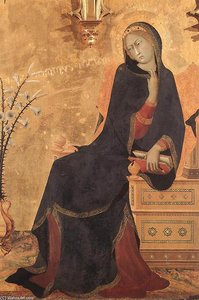
Simone Martini's Christ Discovered in the Temple (1342) is een adembenemend voorbeeld van de kunst uit de 14e eeuw, dat momenteel de bezoekers van de Walker Art Gallery in Liverpool betovert. Met een indrukwekkende afmeting van 351 x 495 cm is dit tempera op paneel niet louter een weergave van een bijbelse scène; het is een venster naar het evoluerende artistieke landschap van middeleeuws Europa en een getuigenis van Martini’s uitzonderlijke vaardigheid.Het verhaal ontvouwt zich: een scène uit de evangeliën
Het kunstwerk verbeeldt het aangrijpende moment waarop de jonge Jezus, twaalf jaar oud, wordt gevonden in de Tempel in Jeruzalem, waar hij deelneemt aan een theologische discussie met geleerden. Nadat zij hem vol bezorgdheid hebben gezocht, confronteren Maria en Jozef hun zoon. De inscriptie op het boek dat de bedroefde Maria vasthoudt – “Kind, waarom heb je ons zo behandeld?” (Lukas 2:48) – vangt de emotionele kern van de scène: de bezorgdheid van een moeder vermengd met ontzag voor de vroegrijpe wijsheid van haar zoon. Martini legt deze complexe wisselwerking van emoties subtiel vast door middel van gebaren en expressie. De kunstenaar heeft het werk zelfs langs de onderste rand gesigneerd en gedateerd, waarmee hij zijn auteurschap bevestigt en een belangrijk moment in zijn carrière markeert.Een versmelting van stijlen: Sienese traditie ontmoet Franse elegantie
Martini, geboren in Siena, Italië, werkte binnen de invloedssfeer van het pauselijk hof in Avignon, Frankrijk, toen hij dit meesterwerk creëerde. Deze unieke positie resulteerde in een fascinerende stilistische versmelting. Hoewel geworteld in de elegante en verfijnde tradities van de Sienese schilderkunst – gekenmerkt door vloeiende lijnen, delicate gelaatstrekken en rijke kleurenpaletten – weerspierend Christ Discovered in the Temple ook de aristocratische gevoeligheden die in de Franse kunst van die periode gangbaar waren. De compositie echoot de gratie die men vindt in verluchte manuscripten en ivoren snijwerk, en toont een hofwaardige verfijning die zelden werd gezien in eerdere Italiaanse werken.Techniek en materialen: een blik op middeleeuws vakmanschap
Martini maakte gebruik van tempera op paneel, een techniek die uiterste precisie vereist. Lagen pigment werden aangebracht op het voorbereide houten oppervlak, wat resulteerde in lichtgevende kleuren en ingewikkelde details. Het uitgebreide gebruik van bladgoud – niet alleen in de achtergrond, maar ook om subtiel elementen binnen de scène te accentueren – verhoogt de spirituele betekenis van het werk en voegt een weelderige visuele rijkdom toe. Deze luxueuze toepassing van goud was typerend voor de Internationale Gotische stijl en benadrukte de goddelijke aard van het onderwerp.Symboliek en iconografie: lagen van betekenis
Naast de narratieve inhoud is het schilderij rijk aan symboliek. De aureolen rond Jezus, Maria en Jozef duiden op hun heiligheid. De architecturale setting, hoewel gestileerd, suggereert de grootsheid en het belang van de Tempel als centrum van religieuze geleerdheid. De ordening van de figuren – die een stabiele driehoekscompositie vormen – versterkt het gevoel van orde en goddelijke harmonie. Zelfs de kledingstijlen weerspiegelen de mode van die tijd, waardoor het bijbelse verhaal stevig verankerd wordt in zijn historische context.Historische context en mecenaat: een reflectie van pauselijke macht
Gemaakt tijdens een periode waarin het pausdom in Avignon was gevestigd in plaats van in Rome, profiteerde Christ Discovered in the Temple waarschijnlijk van aanzienlijk mecenaat. Er wordt gespeculeerd dat de opdracht afkomstig was van een hooggeplaatst figuur aan het pauselijk hof – misschien zelfs van paus Benedictus XII zelf. Dit suggereert dat het schilderij niet alleen diende als een object voor religieuze devotie, maar ook als een symbool van pauselijke autoriteit en artistieke verfijning.Emotionele resonantie en blijvende erfenis
Christ Discovered in the Temple roept een gevoel van stille contemplatie en spiritische verwondering op. De delicate schoonheid van de figuren, gecombineerd met de rijkdom van de materialen en het meeslepende verhaal, creëert een emotioneel resonerende ervaring voor de kijker. Het werk van Martini heeft opeenvolgende generaties kunstenaars diepgaand beïnvloed en zijn plaats verstevigd als een sleutelfiguur in de ontwikkeling van de Internationale Gotische schilderkunst. Het blijft een krachtig getuigenis van de blijvende kracht van het geloof en het transformerende potentieel van de kunst.Verdere verkenning
- Gerelateerde werken: Ontdek Simone Martini’s Saviour Blessing (detail) in het Palais des Papes in Avignon, Frankrijk, als een verder voorbeeld van zijn verfijnde stijl.
- Complementaire kunstenaars: Ontdek de werken van Elisabetta Sirani, waarvan de schilderijen eveneens te vinden zijn in de Walker Art Gallery en een contrasterend perspectief bieden op artistieke expressie.
- Musea om te bezoeken: Het Museum Notre-Dame-des-Doms in Avignon biedt dieper inzicht in de kunst en cultuur van het 14e-eeuwse Frankrijk.
Veelgestelde vragen
Hoe verhoudt de stijl van "Christ aangetroffen in de tempel" zich tot het tijdperk van de maker?
"Christ aangetroffen in de tempel" behoort tot de Internationale Gotiek-stroming en de maker ervan was werkzaam in het Laatmiddeleeuwen-tijdperk.
Welke afmeting moet ik kiezen voor de print van "Christ aangetroffen in de tempel" in mijn kamer?
Voor een Woonkamer is de aanbevolen afmeting voor de print van "Christ aangetroffen in de tempel" door Simone Martini Groot formaat.
Hoe verhouden de kleuren van "Christ aangetroffen in de tempel" door Simone Martini zich tot de emotie van het kunstwerk?
"Christ aangetroffen in de tempel" door Simone Martini combineert een Donkere tinten palet met een Spiritueel toon.
Biografie kunstenaar
A Sienese Master of Elegance and Grace
Simone Martini, born around 1284 in the heart of Siena, Italy, stands as a pivotal figure in the transition from medieval to Renaissance art. He wasn’t merely a painter; he was an architect of elegance, a master of line and color who infused his works with a courtly refinement that distinguished him from contemporaries like Giotto. While historical accounts vary regarding his early training—some suggest apprenticeship under Duccio di Buoninsegna, the leading Sienese artist of the time, while others point to Florence and the influence of Giotto—Martini undeniably forged a unique artistic path. His brother-in-law, Lippo Memmi, was also an artist with whom he frequently collaborated, further enriching the vibrant artistic landscape of Siena. The city itself played a crucial role in shaping Martini’s aesthetic; Siena, a thriving center of commerce and culture, fostered an environment where art flourished, blending religious devotion with worldly sophistication.
The Flourishing of International Gothic
Martini's style is immediately recognizable for its departure from the more monumental forms favored in Florence. He embraced a delicate sensibility, characterized by flowing lines, soft decorative details, and an overall sense of grace. This aesthetic wasn’t born in isolation; it was profoundly influenced by external forces. The Via Francigena, a major pilgrimage route traversing Europe, brought with it artistic currents from France—particularly the refined elegance of French manuscript illumination and ivory carving. These influences are readily apparent in Martini's work, manifesting as intricate patterns, elongated figures, and a heightened attention to surface ornamentation. He didn’t simply copy these styles; he synthesized them with existing Sienese traditions, creating something entirely new. His paintings weren’t merely representations of religious scenes but rather elegant narratives imbued with emotional depth and visual poetry.
From Siena to Avignon: A Courtly Appointment
Martini's reputation extended beyond the borders of Italy, leading to a significant turning point in his career. In 1336, he accepted a commission from Pope Benedict XII to create frescoes for the Papal Palace in Avignon, France—a move that placed him at the heart of European power and patronage. This appointment wasn’t merely about artistic skill; it was a testament to Martini's ability to cater to the tastes of a sophisticated courtly audience. While in Avignon, he entered into a remarkable intellectual circle, befriending Francesco Petrarca—better known as Petrarch, the renowned humanist poet. The connection with Petrarch is particularly poignant, as Vasari and other sources suggest that Martini painted a portrait of Laura de Noves, Petrarch’s lifelong muse. Though the portrait itself is lost to time, its very existence speaks volumes about Martini's status as a celebrated artist capable of capturing not only physical likeness but also the essence of beauty and inspiration. The Saint Louis Crowning Robert, painted during his time in Naples, exemplifies this period, showcasing delicate beauty and refined aesthetic.
Key Works and Artistic Techniques
Simone Martini’s oeuvre is characterized by a remarkable range of subjects and styles, reflecting the diverse influences that shaped his artistic development. His most celebrated works include the *Maestà* fresco in the Palazzo Pubblico of Siena, a monumental depiction of the Virgin Mary and Child surrounded by angels and saints; the *Annunciation* triptych, now housed in the Uffizi Gallery in Florence, renowned for its exquisite detail and delicate rendering of figures; and the *Saint Catherine of Alexandria Polyptych*, a masterpiece of color and composition that showcases Martini’s mastery of decorative painting. Throughout his career, Martini employed a variety of techniques to achieve his distinctive style, including meticulous attention to line, subtle gradations of color, and a masterful use of perspective—a departure from the more stylized approaches favored by earlier medieval artists. His works are often characterized by a sense of movement and dynamism, achieved through flowing draperies, expressive gestures, and carefully orchestrated compositions.
Legacy and Enduring Influence
Simone Martini’s impact on the development of European art cannot be overstated. He played a crucial role in disseminating the International Gothic style—a movement characterized by its elegance, refinement, and emphasis on decorative detail—across the continent. His influence extended to generations of artists who followed, shaping the course of late medieval and early Renaissance painting. Martini’s work wasn’t simply about technical skill; it was about creating a visual language that resonated with the sensibilities of his time—a language of beauty, grace, and spiritual devotion. Even today, his paintings continue to captivate viewers with their exquisite detail, harmonious compositions, and enduring sense of elegance. His frescoes in San Francesco d’Assisi demonstrate his mastery of large-scale decorative painting, while works like the Saint Catherine of Alexandria Polyptych showcase his unparalleled command of color and form. Simone Martini died in Avignon in 1344, leaving behind a legacy that continues to inspire awe and admiration centuries later—a testament to the enduring power of art to transcend time and touch the human spirit.

Simone Martini
1284 - 1344 , Italië
Belangrijkste feiten
- Artistic Movement Or Style: Internationale Gotiek
- Artists Or Movements Influenced By This Artist: ['Sienese school']
- Artists Who Influenced This Artist:
- Duccio di Buoninsegna
- Giotto
- Date Of Birth: c. 1284
- Date Of Death: 1344
- Full Name: Simone Martini
- Nationality: Italiaans
- Notable Artworks:
- Maestà
- St. Louis
- Annunciatie
- Place Of Birth: Siena, Italië
Gerelateerde artikelen
The Radiant Dusk of Medieval Vision: Exploring Late Gothic Art's Synthesis of Faith, Form & Emotionality (c. 1300-1500)
Explore the exquisite beauty & spiritual depth of Late Gothic art (c. 1300-1500). Discover key artists, symbolism, and its lasting influence on the Renaissance. Expert insights at OriginalUniqueArt.

Late Medieval Masterpieces: 10 Artworks That Defined an Era | OriginalUniqueArt
Journey through 10 defining Late Medieval masterpieces – from Giotto's frescoes to Jan van Eyck’s realism. Explore the stories, techniques & vibrant colors of Gothic art. Find museum-quality reproductions and elevate your home decor with OriginalUniqueArt.com! Discover all masterpieces on OriginalUniqueArt.com

High Medieval Art: 10 Masterpieces That Shaped an Era | OriginalUniqueArt
Journey through High Medieval Art! Explore 10 iconic masterpieces – from Giotto's frescoes to stunning Gothic cathedrals. Discover the stories behind these timeless paintings, sculptures & illuminated manuscripts. Find museum-quality art reproductions at OriginalUniqueArt.com.

Simone Martini: Innovation, Spirituality & Courtly Refinement in Sienese Painting
Explore the captivating world of Simone Martini, a pivotal figure in Sienese painting & the International Gothic style. Discover his innovative techniques, spiritual depth, and lasting influence on early Renaissance art.

Beyond Borders: The Spiritual & Stylistic Innovations of International Gothic Art
Explore the exquisite beauty & spiritual depth of International Gothic art. Discover key artists like Simone Martini & Pol de Limbourg, its origins, symbolism, and lasting influence on European painting. Expert insights at OriginalUniqueArt.