Voorvertoning
 Verstuur
 Delen
Delen
 Details bekijken

 Download
 Vergelijkbare items
 Röntgenonderzoek
 Diavoorstelling
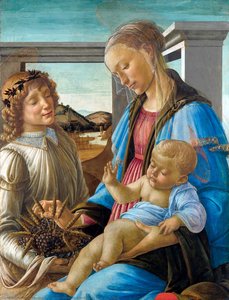
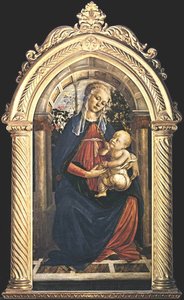
Madonna en Kind met Twee Engelen


 Lees meer
Handgemaakte olieverfreproductie
Met de hand geschilderd in olieverf op canvas in uw gewenste maat en lijst, op bestelling gemaakt door onze kunstenaars. ( Bestel print Koop afbeelding)




P118B $10

P118H $10

P118W $10

P438Z $10

P508JH $12

P508YH $12

P805H $10

P805Z $10

P919BZ $10

P919G $10

P919XJ $10

P959ZH $10

P968JZ $12

W106C $8

W218G $10

W218JH $8

W218Y $10

W307PJ $10

W316G $10

W316PJ $8

W316Y $10

W398PJ $8

W4111J $10

W500HY $15

W500JH $15

W692G $12

W849H $8

W940BG $15

W953PJ $8




Kies uit onze vooraf ingestelde maten die overeenkomen met de originele verhoudingen van het kunstwerk.

U kunt uw eigen afmetingen invoeren om in een specifieke lijst of ruimte te passen. Als de door u gekozen maat niet overeenkomt met de verhoudingen van het originele beeld, zullen we het kunstwerk bijsnijden of het schilderij uitbreiden met extra handgeschilderde elementen. Een digitale mockup wordt ter goedkeuring naar u verzonden voordat de productie begint.
Houd er rekening mee dat de preview op het scherm niet de werkelijke uitsnede of uitbreiding weergeeft. Alleen de mockup toont de uiteindelijke compositie nauwkeurig.
Hoewel aangepaste afmetingen mogelijk zijn, raden we aan een maat uit de vooraf gedefinieerde lijst te selecteren om de originele verhoudingen te behouden.
Na de bestelling zal het team van OriginalUniqueArt.com per e-mail contact opnemen met de klant voor instructies en een mockup-voorbeeld sturen.
Wereldwijde levering () binnen 3 tot 4 weken in plaats van de standaard 5 weken. (20 augustus). Zonder concessies aan de kwaliteit.

Gratis wereldwijde expressverzending

Hoogwaardig linnen canvas

Volledige verzendverzekering

Garantie op terugbetaling van invoerrechten

Garantie op exacte kleurweergave

Retourbeleid van 60 dagen (alleen bij defecten)

100% Geld-terug-garantie

Korting bij meerdere afnames
 De optie voor glas is alleen beschikbaar bij een formaat kleiner dan 110 cm.

Madonna en Kind met Twee Engelen
Druktechniek
Afmetingen reproductie
-


Eindtotaal
$ 300
Beschrijving kunstwerk
Sandro Botticelli’s Tender Reverie: The Madonna and Child with Two Angels
The painting “Madonna and Child with Two Angels,” a captivating work by Sandro Botticelli, offers a glimpse into the heart of the Early Renaissance in Florence. Created around 1468-1469 during a pivotal period in the artist’s career, this tempera on panel masterpiece resides within the Museo Nazionale di Capodimonte in Naples—a testament to its enduring beauty and historical significance. More than simply a depiction of the Virgin Mary cradling her infant son, it's an exploration of faith, grace, and the burgeoning humanist ideals that were reshaping European art and thought.
Botticelli’s early style is immediately apparent in this piece: a delicate balance between the formality of the late Gothic tradition and the emerging naturalism of the Renaissance. The figures possess a remarkable elegance—their poses are graceful, their lines fluid, and their expressions imbued with an almost ethereal serenity. Notice particularly the flowing drapery, rendered with meticulous detail that suggests both luxuriousness and a subtle awareness of volume and form. The color palette is restrained yet luminous; the vibrant red of Mary’s gown provides a striking focal point against the softer hues of the background and the angels’ robes, drawing the eye to the central figures.
Botticelli’s meticulous attention to detail extends beyond mere visual representation—it reflects a profound understanding of artistic principles rooted in classical tradition. He skillfully employs perspective, albeit subtly achieved, creating an illusion of depth that enhances the sense of realism. Furthermore, he demonstrates mastery of chiaroscuro—the interplay of light and shadow—to sculpt the forms of his subjects and imbue them with emotional resonance.
A Window into Renaissance Florence
To fully appreciate “Madonna and Child,” it’s essential to understand the historical context in which it was created. The Early Renaissance—a period spanning roughly from 1400 to 1500—witnessed a remarkable revival of interest in classical Greek and Roman art, philosophy, and literature. Artists like Botticelli were deeply influenced by these ancient ideals, seeking to emulate their sense of beauty, proportion, and humanism. This is evident in the painting’s idealized figures and its emphasis on harmonious composition.
Botticelli's work reflects the intellectual climate of Florence at this time, a city that was experiencing a period of unprecedented wealth and cultural flourishing. The patronage of powerful families like the Medici fueled artistic innovation, creating an environment where artists could experiment with new techniques and ideas. The painting’s creation coincided with a shift in religious thought—a move towards a more personal and emotional understanding of faith. Botticelli’s Madonna is not simply a representation of the Virgin Mary; it’s an invitation to contemplate her love, compassion, and connection to humanity.
Symbolism and Spiritual Depth
Beyond its aesthetic qualities, “Madonna and Child” is rich in symbolism. The red dress worn by Mary traditionally represents purity, sacrifice, and royalty—all attributes associated with the Virgin Mother. The angels themselves are often interpreted as messengers of God, symbolizing divine grace and protection. The presence of two angels suggests a deeper spiritual dimension to the scene, hinting at the role of intermediaries between humanity and the divine.
The composition itself is carefully orchestrated. Botticelli masterfully employs symmetry—the Virgin and Child occupy the precise center, flanked by two angels on either side. This creates a sense of balance and harmony, reflecting the theological importance of the subject matter. However, it’s not merely a static arrangement; there's a dynamic quality to the scene, conveyed through subtle gestures and expressions. Mary’s gaze is directed towards her child with an expression of profound love and devotion, while one angel extends a hand in blessing, mirroring the gesture of Christ. The other angel appears to be pointing upwards, perhaps symbolizing divine guidance or the promise of salvation.
A Legacy Enduring
“Madonna and Child and Two Angels” stands as a quintessential example of Botticelli’s early genius—a testament to his mastery of technique, his sensitivity to beauty, and his ability to capture the essence of human emotion. Its influence can be seen in countless subsequent works of art, solidifying its place as one of the most beloved paintings of the Renaissance. Today, reproductions of this masterpiece offer a unique opportunity to bring this timeless work of art into your home, allowing you to experience its beauty and spiritual depth firsthand.
At OriginalUniqueArt.com, we are proud to offer meticulously crafted hand-painted oil reproduction of “Madonna and Child and Two Angels,” capturing the original’s luminosity and detail with unparalleled accuracy. Explore our collection of Botticelli reproductions—including his iconic "Birth of Venus" and "Portrait of a Young Man"—and discover how you can own a piece of art history.
To view high-resolution images and explore other works by Sandro Botticelli, visit here and here.
Discover the beauty of Italian Renaissance art with OriginalUniqueArt.com! Explore our collection of hand-made oil paintings reproductions and learn more about the artists and their works.
Biografie van de kunstenaar
Early Life and Florentine Beginnings
Sandro Botticelli, geboren Alessandro di Mariano di Vanni Filipepi rond 1445 in Florence, Italië, kwam op tijdens een periode van buitengewone culturele fermentatie – de vroege Renaissance. Zijn leven was diep geworteld in de artistieke en sociale stof van de stad; hij dwaalde nooit ver af van zijn wijk Ognissanti, een getuigenis van zowel familiale banden als het levendige creatieve ecosysteem dat hem voedde. Zijn vader, Mariano Filipepi, begon als goudsmid en later als leerlooier, bood een vroege blootstelling aan vakmanschap en nauwkeurigheid – kwaliteiten die Botticelli’s artistieke benadering diepgaand zouden beïnvloeden. Hoewel aanvankelijke rapporten suggereerden dat hij goudsmid was, vond hij al snel zijn roeping onder de begeleiding van Fra Filippo Lippi, een toonaangevende schilder van het tijdvak. Deze leerlingenperiode bleek cruciaal, waardoor hij werd ondergedompeld in de technieken en esthetiek van de Florentijnse school, terwijl hij ook verbinding maakte met invloedrijke patrons zoals de Medici-familie.A Style Defined by Grace and Myth
Botticelli’s artistieke stijl is onmiddellijk herkenbaar door zijn lyrische schoonheid, gekenmerkt door elegante lineariteit, vloeiende contouren en een delicate kleurgebruik. Hij beheerstte het overbruggen van de kloof tussen de late Gotische tradities en de opkomende Renaissance-esthetiek, waarbij hij invloeden opnam van meesters zoals Fra Angelico en Paolo Uccello, maar toch een unieke persoonlijke visie creëerde. Zijn figuren bezitten een etherische kwaliteit, vaak afgebeeld met verlengde proporties en gracieuze poses die zowel sereniteit als een subtiele melancholie uitdrukken. Een kenmerkend element van zijn werk is de frequente integratie van klassieke mythologie – een weerspiegeling van de humanistische interesses die door Florence’s Renaissance heen woedden. Hij illustreerde deze oude verhalen niet alleen; hij verlegde er nieuwe lagen betekenis aan, waarbij thema's als liefde, schoonheid en spirituele verlangens werden onderzocht. Botticelli’s techniek was innovatief voor zijn tijd. Hij gebruikte vaak een zilverpotlood-tekening onder de verf van zijn doeken, wat bijdroeg aan de luminositeit en delicate details die te zien zijn in zijn afgewerkte werken. Zijn gebruik van temperagewijze verf stelde hem in staat tot nauwkeurige weergave en levendige kleuren, terwijl zijn latere experimenten met olieverf zijn expressieve mogelijkheden uitbreidden.Iconic Masterpieces and Artistic Development
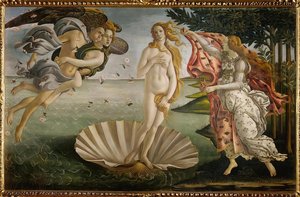
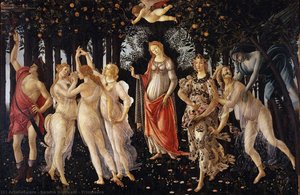
Botticelli’s nalatenschap rust op een aantal iconische schilderijen die het publiek eeuwen later nog steeds betoveren. *De Geboorte van Venus*, voltooid rond 1486, staat als misschien zijn meest beroemde werk – een allegorisch beeld dat de godin afbeeldt die uit een schelpkom ontstaat, en de Renaissance-idealen van schoonheid en harmonie vertegenwoordigt. Zijn elegante compositie, delicate kleurpalet en evocatieve symboliek hebben het tot een blijvende symbool van de tijd gemaakt. Even beroemd is *Primavera*, gecreëerd rond 1482, een complex en raadselachtig schilderij dat lente en liefde viert, bevolkt met symbolische figuren uit klassieke mythologie. Deze werken tonen Botticelli’s meesterschap in compositie, zijn vermogen om atmosferische diepte te creëren en zijn diepe begrip van menselijke emoties. Zijn vroege jaren 70 zagen hem focussen op religieuze onderwerpen, waarbij hij zijn technische vaardigheden verfijnde en een reputatie opbouwde voor bekwame uitvoering. De jaren 80 markeerden het hoogtepunt van zijn creatieve kracht, met de creatie van zijn meest beroemde mythologische schilderijen. Het laatste kwart eeuw toonde echter een verschuiving in zijn stijl, beïnvloed door de gepassioneerde prediking van Girolamo Savonarola – een Dominicanse priester die wat hij zag als de decadentie en morele corruptie van Florence veroordeelde. Dit periode resulteerde in meer sober en emotioneel geladen werken, die een groeiende spirituele intensiteit weerspiegelden.Major Works
- De Geboorte van Venus (c. 1486): Een iconisch schilderij dat de Renaissance-idealen van schoonheid vertegenwoordigt.
- Primavera (c. 1482): Een complex allegorisch schilderij dat lente en liefde viert.
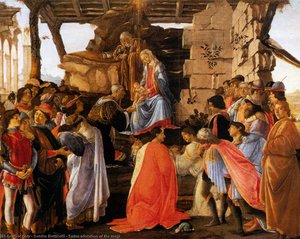
- Adoration of the Magi (1475-1476): Demonstreert vroege meesterschap in compositie en perspectief.
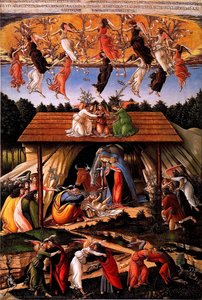
- Mystic Nativity (1501): Weerspiegelt een verschuiving naar spirituele thema’s in zijn latere carrière.
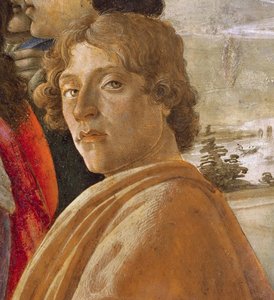
Sandro Botticelli
1445 - 1510 , Italië
Belangrijkste feiten
- Artistic Movement Or Style: Vroege Renaissance
- Artists Or Movements Influenced By This Artist: ['Pre-Raphaelieten']
- Artists Who Influenced This Artist:
- Lippi
- Uccello
- Date Of Birth: c. 1445
- Date Of Death: 1510
- Full Name: Alessandro di Mariano Filipepi
- Nationality: Italiaans
- Notable Artworks:
- Venus Ontstaan
- Primavera
- Wijzen Aanbidding
- Place Of Birth: Florence, Italië
Gerelateerde artikelen
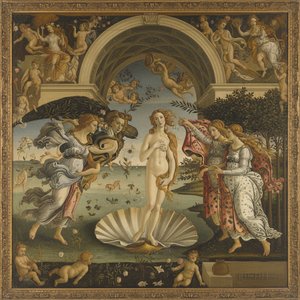
Sandro Botticelli's Top 25 Meesterwerken: Kunst voor uw Interieur | OriginalUniqueArt.nl
Ontdek de 25 mooiste meesterwerken van Sandro Botticelli! Duik in de Renaissance, bewonder 'De Geboorte van Venus' & 'Primavera'. Museumkwaliteit reproducties voor uw interieur. Bekijk de collectie op OriginalUniqueArt.com.

Celestial Messengers: A Comprehensive Exploration of Angelic Representation in Art History
Explore the captivating history of angels in art! Discover symbolism, iconic Renaissance masterpieces & renowned artists. Expert insights for art lovers & collectors at OriginalUniqueArt.

Celestial Messengers: Angels in Painting – A Historical & Artistic Exploration
Explore the captivating history of angels in painting! Discover symbolism, iconic Renaissance & Byzantine masterpieces, and renowned artists. Expert insights for art lovers & collectors at OriginalUniqueArt.
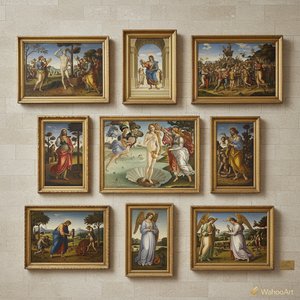
Top 10 Renaissance Meesterwerken: Kunstgeschiedenis voor uw Interieur | OriginalUniqueArt.nl
Ontdek de 10 grootste meesterwerken van de Vroege Renaissance! Lees over Leonardo da Vinci, Michelangelo & Botticelli. Laat u inspireren door Italiaanse kunst en koop museumkwaliteit reproducties voor uw interieur op OriginalUniqueArt.com.
Top 25 Meesterwerken: Een Reis door de Galleria degli Uffizi, Florence | OriginalUniqueArt
Ontdek de top 25 meesterwerken van de Galleria degli Uffizi, Florence! Reis door de Renaissance met Botticelli, Leonardo da Vinci & Michelangelo. Kunst reproducties van museumkwaliteit voor uw interieur. Explore the full collection on OriginalUniqueArt.com.