

 Bekijk op ware grootte
 Verstuur
 Delen
Delen
 Details bekijken
 Gids voor studentenkunstwerken

 Download
 Vergelijkbare items
 Röntgenonderzoek
 Diavoorstelling
 Statistieken
Nil Nil #5
 Acrylic On Canvas
- WallArt
- Contemporary Realism
 2008
2008 70.0 x 120.0 cm
 Pergamonmuseum
 Lees meer
De kunstwerken die op deze pagina worden weergegeven, zijn beschermd door de auteursrechtwetgeving, wat betekent dat het ons wettelijk niet is toegestaan om identieke reproducties te maken of te verkopen. Deze bescherming wordt gehandhaafd onder internationale overeenkomsten zoals de Conventie van Bern en door nationale wetgeving, waaronder de bepalingen van de Amerikaanse auteurswet - Titel 17. Alle rechten voorbehouden. Reproduceren of distribueren van afbeeldingen is niet toegestaan zonder uitdrukkelijke schriftelijke toestemming van WahooArt.com en de rechthebbenden.
Als een respectvol en legaal alternatief bieden wij op maat gemaakte, handgeschilderde kunstwerken aan die geïnspireerd zijn op het origineel. Onze bekwame en professionele kunstenaars bestuderen zorgvuldig de stijl, sfeer en artistieke essentie van het origineel om een nieuw, uniek werk te creëren dat dezelfde emotie oproept – terwijl het een op zichzelf staande, originele creatie blijft.
Deze methode voldoet volledig aan de auteursrechtwetgeving, omdat het niet gaat om het kopiëren of dupliceren van het beschermde kunstwerk. In plaats daarvan is er sprake van een creatieve herinterpretatie — een nieuw schilderij dat door het origineel wordt geïnspireerd, maar er niet identiek aan is.
Handgemaakte olieverfreproductie
Met de hand geschilderd in olieverf op canvas in uw gewenste maat en lijst, op bestelling gemaakt door onze kunstenaars. ( Schakel over naar print Schakel over naar digitale afbeeldingen)




P118B €10

P118H €10

P118W €10

P438Z €10

P508JH €12

P508YH €12

P805H €10

P805Z €10

P919BZ €10

P919G €10

P919XJ €10

P959ZH €10

P968JZ €12

W106C €8

W218G €10

W218JH €8

W218Y €10

W307PJ €10

W316G €10

W316PJ €8

W316Y €10

W398PJ €8

W4111J €10

W500HY €15

W500JH €15

W692G €12

W849H €8

W940BG €15

W953PJ €8




Kies uit onze vooraf ingestelde maten die overeenkomen met de originele verhoudingen van het kunstwerk.

Voer de breedte en de hoogte in die u nodig heeft, passend bij uw lijst of uw muur. Dit is handgeschilderd, dus bij een afmeting met een andere vormverhouding kan de kunstenaar iets meer rondom het schilderij schilderen of juist iets meer weglaten — u kiest zelf. Wij sturen u een digitaal mockup ter goedkeuring voordat het schilderwerk begint. De afbeelding die op deze pagina wordt getoond, is niet het uiteindelijke resultaat — alleen de mockup geeft dit weer.
Na de bestelling zal het team van OriginalUniqueArt.com per e-mail contact opnemen met de klant voor instructies en een mockup-voorbeeld sturen.
Wereldwijde levering () binnen 3 tot 4 weken in plaats van de standaard 5 weken. (22 oktober). Zonder concessies aan de kwaliteit.

Gratis wereldwijde expressverzending

Hoogwaardig linnen canvas

Volledige verzendverzekering

Garantie op terugbetaling van invoerrechten

Garantie op exacte kleurweergave

Retourbeleid van 100 dagen (alleen bij defecten)

100% Geld-terug-garantie

Korting bij meerdere afnames
 De optie voor glas is alleen beschikbaar bij een formaat kleiner dan 110 cm.

Nil Nil #5
Reproductiemethode
Formaat reproductie
-


Totaalprijs
€ 263
A Quiet Observation on Everyday Reality
Shadi Ghadirian’s “Nil Nil #5,” created in 2008, transcends mere photographic documentation; it's a masterful distillation of Iranian culture and societal nuances. Captured with meticulous detail by Silk Road Gallery, this piece presents a deceptively simple scene—a room bathed in soft light featuring a vacuum cleaner resting against a wall alongside two handbags—yet within its stillness lies a profound commentary on female identity and the constraints imposed upon women’s lives.
The Photographer's Vision: Minimalism and Symbolism
Ghadirian employs a distinctive photographic style characterized by stark contrasts between black and white, mirroring the austerity of Iranian domestic spaces. Her technique prioritizes careful composition and subtle tonal shifts to convey emotion without resorting to overt theatricality. The deliberate placement of the vacuum cleaner—a ubiquitous household appliance—acts as an unexpected focal point, symbolizing both labor and confinement – a visual metaphor for the roles traditionally assigned to women.
Historical Context: Iranian Society Under Pressure
“Nil Nil #5” emerges from a period marked by significant social transformations in Iran. Ghadirian’s work reflects the anxieties surrounding cultural preservation amidst Western influences and governmental scrutiny. The inclusion of handbags speaks volumes about practicality and resourcefulness—a quiet defiance against idealized representations of femininity. It's a visual echo of broader discussions concerning women’s roles within Iranian society during that era.
Decoding the Image: Layers of Meaning
The photograph’s composition invites contemplation, prompting viewers to consider unspoken narratives. The starkness of the monochrome palette amplifies the emotional resonance of the scene, conveying a sense of quiet resilience and understated dignity. Ghadirian's masterful use of light sculpts the forms within the room, highlighting textures and creating depth—elements that contribute to the artwork’s enduring appeal.
A Legacy of Quiet Reflection
"Nil Nil #5" stands as a testament to Ghadirian’s ability to capture the essence of human experience with remarkable sensitivity. It's more than just an image; it's a window into Iranian culture and a poignant exploration of female identity—a timeless piece that continues to inspire discussion and admiration within the art world.
Vragen & Antwoorden
Is "Nil Nil #5" typerend voor wat Shadi Ghadirian gewoonlijk creëerde?
Onder de vastgelegde thema's van Shadi Ghadirian - domesticity, observation, iranian identity, minimalist aesthetic, conceptual photography, social critique, gender roles reflection, exploring norms - brengt "Nil Nil #5" een eigen focus op iranian women, domestic spaces, household objects, photography, everyday life, minimalism, black and white.
Wie heeft "Nil Nil #5" gemaakt, en wanneer?
"Nil Nil #5" werd in 2008 gecreëerd door Shadi Ghadirian.
Wie verkoopt handgeschilderde reproducties van "Nil Nil #5" door Shadi Ghadirian?
Met de handgeschilderde kopieën van "Nil Nil #5" door Shadi Ghadirian kunt u terecht op deze website: een met de hand geschilderde olieverfreproductie op linnen canvas, te bestellen via de Met de hand geschilderde reproductie pagina.
Biografie van de kunstenaar
A Vision Between Eras
Shadi Ghadirian stands as a profound voice in contemporary photography, capturing the intricate textures of life in Tehran. Born in 1974, her artistic journey is deeply intertwined with her experiences as a Muslim woman navigating the complexities of post-revolutionary Iran. Her work serves as a poignant meditation on the delicate balance between tradition and modernity, exploring the silent tensions that exist within the domestic and public spheres. Through her lens, the contradictions of everyday life are made visible, revealing the subtle pushes and pulls of cultural identity and the evolving status of women in a rapidly changing society.
Ghadirian’s academic foundation was laid at the Islamic Azad University, Central Tehran Branch, where she studied under the esteemed Bahman Jalali. This period of formal training provided her with the technical mastery required to execute her highly constructed and symbolic compositions. Her photographic practice is not merely about documentation; it is a deliberate act of subverting traditional portraiture to comment on censorship, religion, and the persistence of heritage amidst globalized influences.
The Dialogue of Tradition and Modernity
The artist gained significant international recognition through her groundbreaking series, most notably Qajar and Like Every Day. In the Qajar series, created in 1998, Ghadirian masterfully employs a technique that evokes the formal studio photography of the 19th-century Qajar dynasty. By arranging portraits of women—often friends and family—in elaborate costumes and poses reminiscent of that era, she establishes an immediate historical connection to Iran's past. However, she brilliantly disrupts this sense of antiquity by introducing contemporary Western props such as boom boxes, Pepsi cans, and sunglasses.
This deliberate juxtaposition creates an arresting visual tension, acting as a shorthand for the complexities of a nation navigating rapid modernization while grappling with deeply rooted traditions. Her subsequent works continue to explore these themes of identity and contradiction:
- Miss Butterfly: A series that delves into the layers of female identity.
- Nil, Nil: Works that offer quiet observations on everyday reality and societal nuances.
- Ctrl+Alt+Delete: An exploration of the digital and modern shifts in culture.
- West by East: A reflection on the intersection of Eastern and Western influences.
Symbolism and Social Commentary
Beyond the striking aesthetics, Ghadirian’s work is deeply symbolic, often using minimalist elements to convey profound messages about the constraints placed upon women's lives. In pieces such as Nil Nil #5, a simple scene of a vacuum cleaner and handbags becomes a masterful distillation of domesticity and the quiet realities of female existence. Her ability to find meaning in the mundane allows her to critique social norms and the complexities of negative stereotypes without relying on overt political rhetoric.
Through her various photographic series—including Be Colourful, My Press Photo, and Out of Focus—she has built a body of work that transcends borders. While her subject matter is rooted in the specificities of Iranian life, her exploration of gender roles, religion, and the struggle for autonomy resonates with women across the globe. Ghadirian remains a vital figure in contemporary art, using the camera to illuminate the beautiful, often difficult, intersections of history and the present moment.

Shadi Ghadirian
1974 - , Iran
Snelle feiten
- Artistic Movement Or Style: Contemporary photography
- Artists Who Influenced This Artist: ['Bahman Jalali']
- Full Name: Shadi Ghadirian
- Nationality: Iranian
- Notable Artworks:
- Qajar
- Like Every Day
- Nil Nil
- Miss Butterfly
- Place Of Birth: Tehran, Iran
- Date Of Birth: 1974
Gerelateerde artikelen

Witnessing History Through Lens & Light: Documentary Photography's Enduring Legacy
Explore the powerful history of documentary photography – from its origins to contemporary masters like Gordon Parks & W. Eugene Smith. Discover how this art form shapes our understanding of society and witness pivotal moments in time.

Pictorialism: A Search for Artistic Photography's Soul – Aesthetics, Techniques & Legacy
Explore the captivating world of Pictorialism – a pivotal movement that transformed photography into fine art. Discover key artists like Stieglitz & Käsebier, techniques, and collecting tips from experts.

Monochrome Visions: Exploring the Aesthetic & Historical Significance of Black & White Photography
Explore the rich history & artistic power of black and white photography. From early techniques to iconic masters like Ansel Adams, discover why monochrome continues to captivate art lovers today. Expert insights for collectors.

Beyond the Lens: Photography's Enduring Influence on Modern & Contemporary Art
Explore photography's pivotal role in shaping modern & contemporary art. Discover key movements, influential artists like Stieglitz, and expert collecting advice from OriginalUniqueArt.
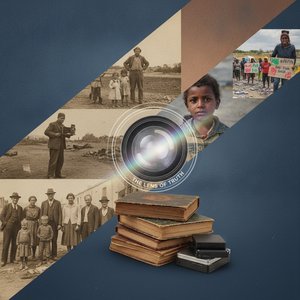
The Lens of Truth: A Comprehensive History and Legacy of Documentary Photography
Explore the profound history of documentary photography. From early daguerreotypes to social reform movements, discover how the lens captures truth, preserves vanishing cultures, and shapes our global visual narrative through an expert art-historical lens.