
 Preview
 Verstuur
 Delen
Delen
 Details bekijken

 Download
 Vergelijkbare werken
 Röntgenonderzoek
 Diavoorstelling
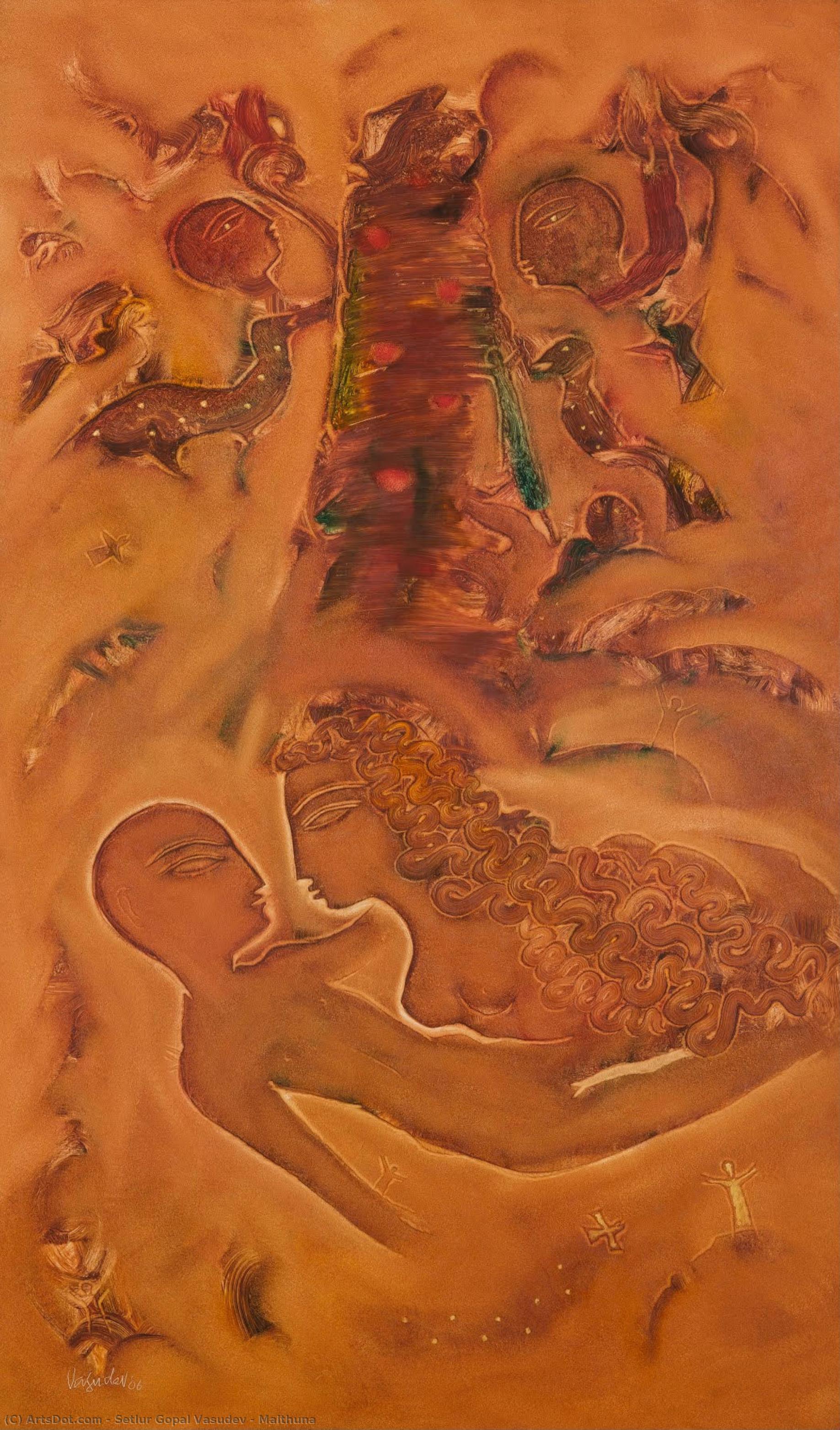
Maithuna
 Oil On Canvas
- WallArt
- Madras Movement
 2006
2006- Contemporary
 176.0 x 104.0 cm
 Cholamandal Artists' Village
 Lees meer
Koop een digitale afbeelding met hoge resolutie en verbeterde kwaliteit, die veel superieur is aan de online voorvertoning.
Elk bestand wordt met uiterste precisie voorbereid door onze interne specialisten, met behulp van geavanceerde tools en deskundige handmatige retouche. Wij garanderen dat elke afbeelding een uitzonderlijke helderheid, nauwkeurige kleurweergave en verfijnde details bezit.
Het uiteindelijke bestand wordt binnen 72 uur per e-mail geleverd, geoptimaliseerd voor direct gebruik in professionele, redactionele en printomgevingen. Dit is dezelfde kwaliteit waarop topontwerpstudio's, uitgevers en galerieën vertrouwen.
Digitale afbeeldingen
Download een bestand met hoge resolutie voor persoonlijke weergave, afdrukken en creatieve projecten. ( Switch to Print Switch to hand made Painting)
Inbegrepen bij elke bestelling van een digitale afbeelding
Professionele digitale levering, gegarandeerd
Wanneer u kiest voor OriginalUniqueArt.com, ontvangt u niet alleen een afbeelding – u krijgt een professioneel verbeterd digitaal kunstwerk, met precisie vervaardigd en voorzien van een tevredenheidsgarantie. Dit is alles wat automatisch bij uw bestelling is inbegrepen:

Snelle digitale levering
Uw hoogwaardige digitale afbeeldingsbestand wordt binnen 72 uur na bestelling naar u gemaild – klaar voor direct gebruik.

Met AI verbeterd digitaal bestand
Uw kunstwerk wordt professioneel geoptimaliseerd met behulp van geavanceerde AI-tools en handmatige bewerkingen, waardoor maximale details, helderheid en kleurnauwkeurigheid worden gegarandeerd.

Gratis levenslange herlevering van digitale afbeeldingen
Je bestand per ongeluk verwijderd of kwijtgeraakt? Geen zorgen – we sturen het u op elk gewenst moment gratis opnieuw toe.

Geen invoerkosten - Altijd
Geniet direct van uw kunstwerk zonder invoerrechten, belastingen of verzendkosten – digitale downloads zijn altijd belastingvrij.

Garantie op kleurgetrouwheid
Met behulp van professionele hulpmiddelen en kleurbeheer zorgen wij ervoor dat uw digitale afbeelding de originele kleuren zo nauwkeurig mogelijk weergeeft.

60 dagen tevredenheidsgarantie
Als u niet tevreden bent met uw digitale afbeelding, passen wij deze aan of storten wij 100% terug binnen 60 dagen – zonder vragen gesteld.

100% Geld-terug-garantie
Niet tevreden? Ontvang binnen 60 dagen na ontvangst van uw digitale bestand uw volledige aankoopbedrag terug – zonder vragen te stellen.

Korting bij grote bestellingen
Koop 3 afbeeldingen, bespaar 10% - Koop 5, bespaar 15% - Koop 10+, bespaar 20%. Ideaal voor creatieve projecten, galerieën en bureaus.
Kunstenaarsbiografie
Robert Delaunay: A Pioneer of Color and Rhythm
Robert Delaunay, born Robert-Victor-Felix Delaunay in Paris on April 12, 1885, was a pivotal figure in the early development of modern art. His life, marked by both artistic innovation and personal drama, profoundly shaped his distinctive style – a vibrant synthesis of Cubism, Orphism, and Simultanism. Initially apprenticed to a theatrical designer, Delaunay’s early career focused on stagecraft, but it was his burgeoning interest in painting that ultimately defined him. He found himself drawn to the radical ideas circulating within Parisian artistic circles, particularly those championed by figures like Henri Matisse and Pablo Picasso, yet he forged his own unique path, one characterized by an intense exploration of color and its dynamic relationships. His work reflects a deep engagement with the world around him, from the bustling streets of Paris to the serene beauty of the Mediterranean coast.Early Influences and the Birth of Orphism
Delaunay’s artistic journey began in the early 20th century, coinciding with significant shifts in European art. He was deeply influenced by Neo-Impressionism, particularly the work of Paul Gauguin and Georges Seurat, which emphasized the use of pure colors and scientific color theory. However, Delaunay quickly moved beyond mere imitation, developing his own distinct approach – Orphism. This movement, named after the Greek word for “light,” sought to liberate color from its traditional representational function. Instead of depicting objects realistically, Delaunay used color as an independent element, creating dynamic rhythms and harmonies on the canvas. He collaborated closely with his wife, Sonia Delaunay, who was a key figure in developing Orphism’s visual language, often exploring geometric abstraction and textile design alongside him. Their shared aesthetic vision became a cornerstone of their artistic partnership.Key Characteristics and Artistic Techniques
Delaunay's paintings are immediately recognizable by their bold use of color – vibrant reds, yellows, blues, and greens—applied in flat planes with minimal shading or modeling. He employed techniques reminiscent of Cubism, breaking down forms into geometric shapes and presenting multiple viewpoints simultaneously. However, unlike the fragmented forms of Picasso’s Cubism, Delaunay's compositions are characterized by a sense of dynamism and movement. His canvases often feature overlapping circles, squares, and rectangles, arranged in rhythmic patterns that evoke feelings of energy and excitement. He frequently incorporated elements of Simultanism, a technique developed alongside Orphism, which aimed to capture the simultaneous perception of objects – how they appear at different moments in time. Delaunay’s use of color was not merely decorative; it served as a means of expressing emotion and conveying abstract ideas about space, light, and rhythm.Major Works and Historical Significance
Throughout his career, Delaunay produced a vast body of work encompassing paintings, sculptures, textiles, and designs. Notable examples include *Endless Rhythm* (1913), a dynamic composition dominated by overlapping circles and squares; *The Eiffel Tower* (1910-1914), which captures the iconic Parisian landmark through an abstracted lens; and his monumental panels for the Aeronautics pavilion at the 1937 Paris International Exhibition, showcasing his mastery of scale and color. His work was exhibited widely in Europe and America, gaining recognition from influential critics and collectors. Delaunay’s influence extended beyond painting, impacting fields such as graphic design and textile art. He played a crucial role in shaping the development of abstract art in the early 20th century, paving the way for later movements like Constructivism and Bauhaus.Later Years and Legacy
Robert Delaunay continued to paint and exhibit throughout his life, though his style evolved somewhat during his later years. He increasingly focused on exploring color relationships and creating abstract compositions that were both visually striking and emotionally resonant. He died in Montpellier, France, on October 25, 1941, leaving behind a rich legacy of artistic innovation. His pioneering work in Orphism helped to liberate color from its traditional role and opened up new possibilities for abstraction. Today, his paintings are celebrated for their vibrant energy, dynamic rhythms, and profound exploration of the relationship between color, form, and emotion. The Musée Matisse de Nice houses an extensive collection of his works, offering a valuable insight into the life and art of this extraordinary artist.
setlur gopal vasudev
1941 - , India
Belangrijkste feiten
- Artistic Movement Or Style:
- Divisionism
- Cubism
- Orphic Cubism
- Simultanism
- Artists Or Movements Influenced By This Artist:
- Klee
- Marc
- Apolinaire
- Artists Who Influenced This Artist:
- Neo-Impressionism
- Cézanne
- Date Of Birth: 1885-04-12
- Date Of Death: 1941-10-25
- Full Name: Robert Delaunay
- Nationality: French
- Notable Artworks:
- Endless Rhythm
- The Eiffel Tower
- City
- Place Of Birth: Paris, France

