

 Voorvertoning
 Verstuur
 Delen
Delen
 Details bekijken

 Download
 Vergelijkbare items
 Röntgenonderzoek
 Diavoorstelling
 Statistieken
Death of Dido
 Oil On Canvas
- WallArt
- Baroque
 1637
1637 159.0 x 137.0 cm
 Hermitage Museum
 Lees meer
Giclée / Kunstafdrukken
Giclée- of canvasafdruk van museumkwaliteit met een snelle productie en flexibele afwerkingsmogelijkheden. ( Bestel handgeschilderde reproductie Schakel over naar digitale afbeelding)




P118B $10

P118H $10

P118W $10

P438Z $10

P508JH $12

P508YH $12

P805H $10

P805Z $10

P919BZ $10

P919G $10

P919XJ $10

P959ZH $10

P968JZ $12

W106C $8

W218G $10

W218JH $8

W218Y $10

W307PJ $10

W316G $10

W316PJ $8

W316Y $10

W398PJ $8

W4111J $10

W500HY $15

W500JH $15

W692G $12

W849H $8

W940BG $15

W953PJ $8




Kies uit onze vooraf ingestelde maten die overeenkomen met de originele verhoudingen van het kunstwerk.

U kunt uw eigen afmetingen opgeven om in een specifieke lijst of ruimte te passen. Als de door u gekozen maat niet overeenkomt met de proporties van het originele kunstwerk, zullen wij de afbeelding bijsnijden of uitbreiden met een gespiegelde of effen rand. Een digitaal mockup wordt ter goedkeuring naar u verzonden voordat de productie begint.
Houd er rekening mee dat de preview op het scherm de werkelijke bijsneding of uitbreiding niet weergeeft. Alleen de mockup toont de uiteindelijke compositie nauwkeurig.
Hoewel aangepaste maten beschikbaar zijn, raden wij aan een afmeting uit de vooraf bepaalde lijst te kiezen om de originele proporties te behouden.
Wereldwijde levering () binnen 2 weken in plaats van de standaard 4/5 weken. (18 september)

Gratis wereldwijde expressverzending

Hoogwaardig linnen canvas

Volledige verzendverzekering

Garantie op terugbetaling van invoerrechten

Garantie op exacte kleurweergave

Retourbeleid van 100 dagen (alleen bij defecten)

100% Geld-terug-garantie

Korting bij meerdere afnames
 De optie voor glas is alleen beschikbaar bij een formaat kleiner dan 110 cm.

Death of Dido
Giclée / Kunstafdrukken
Afmetingen reproductie
-


Eindtotaal
$ 81
The Tragic Beauty of "Death of Dido": A Baroque Masterpiece
Sébastien Bourdon’s “Death of Dido,” painted in 1637, is not merely a depiction of a legendary queen's demise; it’s a profound exploration of grief, betrayal, and the immutable power of fate. This monumental oil on canvas, measuring an impressive 159 x 137 cm, resides within the State Hermitage Museum in St. Petersburg, a testament to its enduring artistic merit. Bourdon, a pivotal figure in the Baroque movement, masterfully captures the raw emotion of this poignant scene drawn from Virgil’s epic poem, the Aeneid, transforming a classical narrative into a deeply resonant visual experience.
The composition immediately commands attention. Dido, draped in a flowing blue gown, lies supine on her bed, a sword poised delicately in her hand – an instrument of both destruction and liberation. Her face, etched with sorrow and defiance, is turned towards the departing ships of Aeneas, symbolizing the irrevocable loss of love and the end of her reign. Around her, a carefully orchestrated group of mourners—servants, women, and even a partially visible figure presumed to be her brother Acerbas – react with varying degrees of grief and shock. The scene is bathed in a dramatic chiaroscuro, characteristic of Bourdon’s style and deeply influenced by the Venetian masters he admired during his time in Rome. Light streams dramatically from an unseen source, highlighting Dido's form while casting deep shadows across the room, intensifying the sense of tragedy and despair.
A Story of Betrayal and Divine Intervention
The narrative itself is steeped in myth and heartbreak. Dido, a Phoenician princess, founded Carthage after fleeing persecution in Tyre. She fell passionately in love with Aeneas, a Trojan prince destined to found Rome. However, fate intervened – or so it seemed – as Aeneas was compelled by the gods to fulfill his destiny and leave her behind. The painting vividly portrays this moment of agonizing separation, capturing the devastating consequences of divine decree and human ambition. The inclusion of Mercury, the messenger god, subtly alluded to in the composition through a glimpse of his winged sandals amongst the departing ships, reinforces the notion that Dido’s fate was predetermined.
Bourdon's artistic choices are laden with symbolic meaning. The two vases positioned strategically within the scene – one on the left and another on the right – aren’t simply decorative elements; they likely represent offerings to the gods, acknowledging the role of divine forces in shaping Dido’s tragic end. The stark contrast between the vibrant colors of her gown and the muted tones of the surrounding figures further emphasizes her isolation and vulnerability. The overall effect is a powerful meditation on loss, duty, and the inescapable nature of destiny.
Bourdon's Baroque Vision
Sébastien Bourdon’s artistic journey was profoundly shaped by his time in Rome, where he encountered the revolutionary techniques of Caravaggio. Bourdon expertly employed *tenebrism*, a dramatic use of light and shadow, to create an atmosphere of intense emotionality. This technique, combined with his masterful rendering of textures – from the flowing fabric of Dido’s gown to the rough stone of the room – imbues the painting with remarkable realism and immediacy. His brushwork is loose and expressive, conveying a sense of urgency and movement that mirrors the drama unfolding within the scene.
Furthermore, Bourdon's understanding of classical composition—inherited from his training in France—is evident in the carefully balanced arrangement of figures and objects. The pyramidal structure of the composition draws the viewer’s eye towards Dido’s central form, while the diagonal lines created by the departing ships and her outstretched hand contribute to a dynamic sense of movement and instability. This masterful blend of classical principles and Baroque dynamism is what elevates “Death of Dido” beyond a simple historical depiction into a timeless work of art.
A Legacy of Dramatic Emotion
“Death of Dido” remains a compelling example of the emotional intensity that characterized the Baroque period. Bourdon’s ability to translate a complex mythological narrative into a visually arresting and emotionally resonant image is truly remarkable. The painting continues to captivate viewers with its depiction of profound sorrow, betrayal, and the enduring power of love—a testament to the artist's skill and the timelessness of the story he so powerfully portrays. Reproductions of this masterpiece offer an opportunity to experience the drama and beauty of Bourdon’s vision in a way that transcends time and space.
Biografie van de kunstenaar
Een Meester van Licht en Veelzijdigheid: Het Leven van Sébastien Bourdon
Sébastien Bourdon (1616–1671) blijft een van de meest boeiende en veelzijdige figuren van de Franse barok in de zeventiende eeuw. Geboren in Montpellier in een familie van protestantse kunstenaars, werd zijn vroege leven gevormd door de levendige, maar vaak turbulente artistieke tradities van Zuid-Frankrijk. Zijn reis van jonge leerling tot fundamenteel lid van de Académie Royale de Peinture et de Sculpture is een getuigenis van een diepgaand, rusteloos intellect en een ongeëvenaard vermogen om de stilistische stromingen van Europa te absorberen. Na zijn vroege opleiding in Parijs leidde het pad van Bourdon hem via Bordeaux en Toulouse naar het spirituele en artistieke hart van het continent: Rome. Het was in Italië dat zijn talent werkelijk ontbrandde, toen hij zich onderdompelde in de werken van meesters als Caravaggio, Nicolas Poussin en Claude Lorrain. Deze periode van intense studie stelde hem in staat een unieke visuele taal te ontwikkelen—een taal die kon schakelen tussen het rauwe, dramatische realisme van de Caravaggisti en de lumineuze, klassieke elegantie van de Venetiaanse school.De Evolutie van Stijl en Techniek
Wat Bourdons oeuvre werkelijk onderscheidt, is de opmerkelijke stilistische vloeiendheid, een kwaliteit die bij zijn tijdgenoten soms zowel bewondering als kritiek opriep. Zijn ontwikkeling werd gekenmerkt door een reeks transformerende ontmoetingen met verschillende Europese tradities. Na een cruciaal bezoek aan Venetië onderging zijn palet een diepgaande metamorfose; de scherpere contrasten uit zijn vroege opleiding maakten plaats voor een rijker, atmosferischer kleurgebruik, geïnspireerd door de Venetiaanse meesters. Deze evolutie stelde hem in staat om meesterlijk te navigeren tussen uiteenlopende genres. In zijn portretkunst hanteerde hij vaak een Rubensiaanse benadering of koos hij voor intieme composities tot aan de buste, die de psychologische diepgang en elegantie van zijn onderwerpen vastlegden, zoals de Zweedse edelvrouw in Gravin Ebba Sparre. Daartegenover stelden zijn religieuze werken een dramatisch chiaroscuro in om spirituele ontzag op te wekken, het meest treffend in zijn monumentale meesterwerk, De Kruisiging van Sint-Pieter, vervaardigd voor de kathedraal van Notre Dame.Nalatenschap en Historisch Belang
Buiten zijn individuele doeken speelde Bourdon een cruciale rol in de institutionalisering van de Franse kunst. Als medeoprichter van de Koninklijke Academie in 1648 hielp hij bij het vaststellen van de standaarden van excellentie die de Franse schilderkunst voor generaties zouden definiëren. Zijn carrière werd ook gekenmerkt door een buitengewone breedte aan verdiensten; zijn reputatie als vooraanstaand portrettist bracht hem naar het hof van Koningin Christina van Zweden, waar hij diende als hofschilder en de verfijnde esthetiek van Parijs en Rome naar Stockholm bracht. Of hij nu de aangrijpende spanning van Mozes en de Koperen Slang afbeeldde of de serene grandeur van klassieke landschappen, het werk van Bourdon belichaamt de dubbele geest van het baroktijdperk: het intense emotionele drama van de menselijke conditie en het evenwichtige, intellectuele streven naar klassieke schoonheid. Zijn vermogen om de naturalistisch tradities van Frankrijk te synthetiseren met de monumentale stijlen van Italië verzekert hem een blijvende plaats in het pantheon van de Europese kunstgeschiedenis.
Sébastien Bourdon
1616 - 1671 , Frankrijk
Belangrijkste feiten
- Artistic Movement Or Style: Barok
- Artists Or Movements Influenced By This Artist: ['Franse Barokkunst']
- Artists Who Influenced This Artist:
- Nicolas Poussin
- Claude Lorrain
- Caravaggio
- Date Of Birth: 2 februari 1616
- Date Of Death: 8 mei 1671
- Full Name: Sébastien Bourdon
- Nationality: Frans
- Notable Artworks:
- De Kruisiging van de Heilige Petrus
- De Nedaling
- Place Of Birth: Montpellier, Frankrijk
Gerelateerde artikelen

Theatricality & Triumph: Baroque Drama in Painting & Sculpture
Explore the dramatic world of Baroque art! Discover its history, defining characteristics, & lasting influence on painting & sculpture. Expert insights into Caravaggio, Zurbarán, and Bernini – plus high-quality reproductions at OriginalUniqueArt.

The Visceral Stage: Exploring Dramatic Narratives & Emotional Intensity in Baroque Art
Explore the dramatic world of Baroque art! Discover iconic masters like Caravaggio & Rembrandt, their techniques, and the movement's lasting impact. Expert insights for collectors & enthusiasts at OriginalUniqueArt.

Top 10 Barok Meesterwerken: Kunstgeschiedenis voor uw Interieur | OriginalUniqueArt.nl
Ontdek de 10 meest iconische Barok meesterwerken van Caravaggio, Rembrandt & Rubens! Duik in de geschiedenis en passie achter deze klassieke schilderijen. Vind museumkwaliteit reproducties voor uw interieur op OriginalUniqueArt.com.

The Dramatic Flourish: Exploring the Baroque Movement's Enduring Legacy in Art History
Explore the dramatic world of Baroque art! Discover iconic artists like Caravaggio & Rubens, defining techniques, and its lasting impact on art history. Expert insights for collectors & enthusiasts at OriginalUniqueArt.
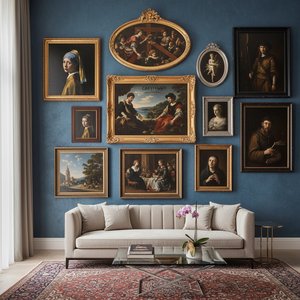
Barok Schilderwerk: Top 10 Meesterwerken die een Beweging Definieerden | OriginalUniqueArt
Ontdek de 10 meest invloedrijke meesterwerken van het Barok schilderwerk! Caravaggio, Rembrandt & Rubens – leer over hun techniek en passie. Vind museumkwaliteit reproducties & interieurinspiratie op OriginalUniqueArt.com.