 Schakel over naar print
 Lees meer







































 Voor kunstwerken of reproducties die aan één zijde groter zijn dan 105 cm (ongeveer 41 inch), wordt de lijst als een losse set verzonden. Deze methode garandeert een veilige levering en voorkomt schade tijdens het transport.


The Widower: A Portrait of Victorian Poverty and Resilience
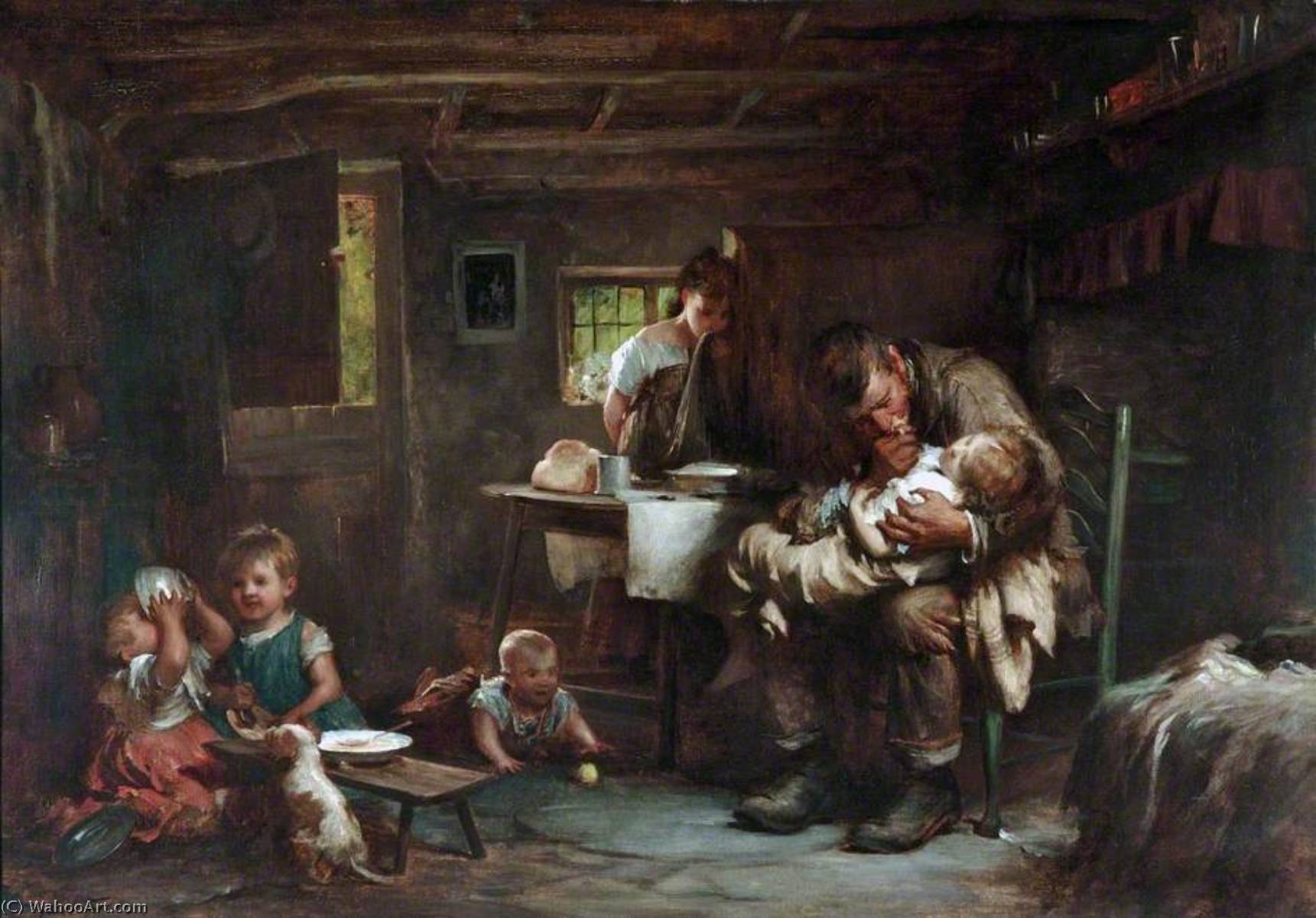
Samuel Luke Fildes’ “The Widower,” completed in 1904, stands as a poignant testament to the realities faced by working-class families during the Victorian era. More than just a depiction of circumstance, it's a masterful exploration of human emotion—specifically compassion and familial devotion—rendered with remarkable realism.
- Subject Matter: The painting portrays a father embracing his young children within a sparsely furnished room, capturing a moment of profound intimacy amidst palpable hardship. It’s a direct response to the social anxieties surrounding poverty and child welfare prevalent in Victorian Britain.
- Style & Technique: Fildes adheres strictly to Realism, rejecting idealized representations in favor of an unflinching portrayal of everyday life. His technique utilizes visible brushstrokes and a textured surface characteristic of oil painting—a deliberate choice that emphasizes materiality and conveys the rough edges of existence. The flattened perspective contributes to a sense of immediacy and claustrophobia, mirroring the limitations imposed by poverty.
- Composition & Perspective: Careful attention is paid to compositional balance, centering on the father figure as dominant presence. Shadows cast across the room heighten the atmosphere of gloom, reinforcing the bleakness of their environment. The lack of atmospheric perspective—where distant objects recede gradually without significant detail—further underscores the confinement and restricts visual depth.
- Color Palette & Symbolism: Dominated by muted browns, grays, and ochres, the color palette reflects the economic constraints of the depicted family. Subtle warmer tones appear in the faces and clothing, offering a glimmer of humanity amidst despair – symbolizing love, warmth, and resilience. The wooden paneling and fabric textures contribute to the tactile quality of the image, grounding it in tangible reality.
- Historical Context: Created during a period marked by significant social reform movements advocating for improved conditions for children and families, “The Widower” speaks directly to these concerns. It’s considered part of Fildes' broader engagement with Social Realism—a movement dedicated to depicting life as it is without embellishment or romanticization.
Beyond its visual qualities, the painting resonates deeply with viewers due to its empathetic portrayal of familial bonds. It compels contemplation on themes of vulnerability, sacrifice, and unwavering love—qualities that transcend time and continue to inspire admiration for Fildes’ artistic vision.
This reproduction aims to faithfully capture the essence of the original artwork, preserving its textural richness and nuanced tonal range. Presented in a high-resolution Giclee print, “The Widower” offers an opportunity to experience this iconic piece of Victorian art firsthand—a powerful reminder of human compassion and enduring familial connection.
Veelgestelde vragen
Hoe verzadigd is het kleurenpalet van "The Widower"?
"The Widower" door Samuel Luke Fildes heeft een Muted verzadiging.
Voor welke kamer wordt "The Widower" door Samuel Luke Fildes aanbevolen, gezien de kleuren?
Met zijn Earthy palet wordt "The Widower" door Samuel Luke Fildes aanbevolen voor een Living Room. De kleuren zijn een van de redenen voor dit advies.
Welke stemming en emotie straalt "The Widower" door Samuel Luke Fildes uit?
"The Widower" door Samuel Luke Fildes roept een Melancholic gevoel op binnen een algeheel Calm stemmigheid.
 Voorvertoning
 Verstuur
 Delen
Delen
 Details bekijken
 Gids
Gids

 Download
 Vergelijkbare items
 Röntgenonderzoek
 Diavoorstelling
 Q&A
Q&A Statistieken