

 Voorvertoning
 Verstuur
 Delen
Delen
 Details bekijken

 Download
 Vergelijkbare items
 Röntgenonderzoek
 Diavoorstelling
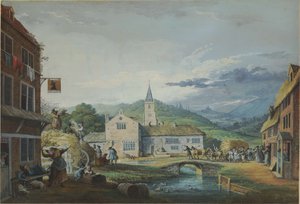
Rhuddlan Castle from the Bridge
 Lees meer
Koop een digitale afbeelding in hoge resolutie met verbeterde kwaliteit, die veel superieur is aan de online voorvertoning.
Elk bestand wordt met uiterste precisie voorbereid door onze interne specialisten, met behulp van geavanceerde tools en deskundige handmatige retouche. Wij garanderen dat elke afbeelding een uitzonderlijke helderheid, nauwkeurige kleurweergave en verfijnde details bezit.
Het uiteindelijke bestand wordt binnen 72 uur per e-mail geleverd, geoptimaliseerd voor direct gebruik in professionele, redactionele en printomgevingen. Dit is dezelfde kwaliteit waarop vooraanstaande designstudio's, uitgevers en galerieën vertrouwen.
Digitale afbeeldingen
Download een bestand met hoge resolutie voor persoonlijke weergave, afdrukken en creatieve projecten. ( Bestel print Bestel handgeschilderde reproductie)
Inbegrepen bij elke bestelling van een digitale afbeelding
Professionele digitale levering, gegarandeerd
Wanneer u kiest voor OriginalUniqueArt.com, ontvangt u niet alleen een afbeelding – u krijgt een professioneel verbeterd digitaal kunstwerk, met precisie vervaardigd en voorzien van een tevredenheidsgarantie. Dit is alles wat automatisch bij uw bestelling is inbegrepen:

Snelle levering per e-mail
Uw hoogwaardige digitale afbeeldingsbestand wordt binnen 72 uur na bestelling naar u gemaild – klaar voor direct gebruik.

AI-verbeterd digitaal bestand
Uw kunstwerk wordt professioneel geoptimaliseerd met behulp van geavanceerde AI-tools en handmatige bewerkingen, waardoor maximale details, helderheid en kleurnauwkeurigheid worden gegarandeerd.

Gratis levenslange herlevering van digitale afbeeldingen
Je bestand per ongeluk verwijderd of kwijtgeraakt? Geen zorgen – we sturen het u op elk gewenst moment gratis opnieuw toe.

Geen invoerkosten – nooit
Geniet direct van uw kunstwerk zonder invoerrechten, belastingen of verzendkosten – digitale downloads zijn altijd belastingvrij.

Garantie op kleurgetrouwheid
Met behulp van professionele hulpmiddelen en kleurbeheer zorgen wij ervoor dat uw digitale afbeelding de originele kleuren zo nauwkeurig mogelijk weergeeft.

60 dagen tevredenheidsgarantie
Als u niet tevreden bent met uw digitale afbeelding, passen wij deze aan of storten wij 100% terug binnen 60 dagen – zonder vragen gesteld.

100% Geld-terug-garantie
Niet tevreden? Ontvang binnen 60 dagen na ontvangst van uw digitale bestand uw volledige aankoopbedrag terug – zonder vragen te stellen.

Korting bij grote bestellingen
Koop 3 afbeeldingen, bespaar 10% - Koop 5, bespaar 15% - Koop 10+, bespaar 20%. Ideaal voor creatieve projecten, galerieën en bureaus.
Kunstenaarsbiografie
Johan Zoffany: The Master of Grand Manner and Conversation Pieces
Born in 1733 in London, Johan Zoffany was a pivotal figure in the burgeoning world of British art during the late 18th century. While often overshadowed by his contemporaries, Zoffany’s unique approach to portraiture—characterized by meticulous detail, theatrical composition, and an uncanny ability to capture fleeting moments of social interaction—established him as a leading practitioner of what became known as the ‘Grand Manner.’ His work wasn't merely about depicting individuals; it was about constructing elaborate narratives within painted scenes, inviting viewers into carefully orchestrated dialogues between figures and elements.
Zoffany’s early life provided an unusual foundation for his artistic development. He was apprenticed to Richard Wilson, a prominent landscape painter known for his idealized depictions of the Scottish Highlands. This training instilled in Zoffany a deep appreciation for light, atmosphere, and the grandeur of nature – elements that would profoundly influence his later work. However, it was his association with the wealthy and influential Earl of Bute—a close advisor to King George III—that truly shaped his career trajectory. The Earl commissioned Zoffany to paint a series of large-scale group portraits, known as ‘Grand Manner’ scenes, which became Zoffany's signature style.
These ‘Grand Manner’ paintings are perhaps Zoffany’s most enduring legacy. The most famous example, *Three Daughters of John, 3rd Earl of Bute*, exemplifies his meticulous technique and compositional brilliance. The painting depicts the Earl’s three daughters posing with a visiting German artist, Johann Christian Brand, and his young pupil, Louis-Joseph Kress. Zoffany masterfully integrated elements from various cultures—classical architecture, oriental motifs, and contemporary London life—into a single, unified scene. The figures are arranged in a carefully choreographed manner, creating a sense of depth and drama. The use of light is particularly noteworthy, with the central group bathed in warm sunlight while the background remains shrouded in shadow. This interplay of light and dark not only enhances the visual impact of the painting but also contributes to its overall narrative complexity.
The Influence of Italian Masters
Zoffany’s artistic sensibilities were deeply influenced by the works of Italian painters, particularly those associated with the Roman School. He spent several years in Italy during his youth, studying under artists who specialized in landscape and genre painting. The influence of masters like Canaletto and Piranesi is evident in Zoffany's meticulous attention to detail, his use of perspective, and his ability to capture the atmosphere of urban environments. He was particularly fascinated by the ruins of ancient Rome, which served as a constant source of inspiration for his paintings.
Zoffany’s fascination with ruins is reflected in several of his works, including *The Ruins of Pompeii* and *Ruins of the Temple of Jupiter at Brompton*. These paintings are not simply depictions of crumbling buildings; they are carefully constructed compositions that evoke a sense of melancholy and nostalgia. He skillfully combined elements of reality and imagination to create scenes that were both historically accurate and visually arresting. The inclusion of figures within these ruins—often engaged in quiet contemplation or scholarly pursuits—adds another layer of meaning to the paintings, suggesting a connection between the past and the present.
Technique and Composition
Zoffany’s technical skill was exceptional. He possessed a remarkable ability to render light and shadow with precision, creating a sense of depth and realism in his paintings. His use of color was subtle yet effective, contributing to the overall harmony of his compositions. He employed a technique known as ‘grisaille,’ using monochrome underpaintings to establish the basic forms and values of the scene before adding color. This method allowed him to achieve a greater degree of control over the final image.
Zoffany’s compositional approach was equally sophisticated. He carefully considered the placement of each figure within the painting, ensuring that they interacted with one another in a meaningful way. He often used diagonal lines and overlapping forms to create a sense of movement and dynamism. His paintings are characterized by their intricate detail and complex arrangements—a testament to his meticulous planning and artistic skill.
Legacy and Historical Significance
Despite not achieving widespread fame during his lifetime, Johan Zoffany’s influence on subsequent generations of British artists is undeniable. His ‘Grand Manner’ style became a model for portrait painters such as Thomas Gainsborough and George Romney. His meticulous attention to detail and his ability to capture the nuances of social interaction set a new standard for portraiture in Britain.
Zoffany's work offers a fascinating glimpse into the cultural landscape of 18th-century London. His paintings reflect the wealth, sophistication, and intellectual curiosity of the era. They also provide valuable insights into the social dynamics of the time—the relationships between artists, patrons, and members of the aristocracy. Today, Zoffany’s paintings are treasured works of art that continue to captivate viewers with their beauty, complexity, and historical significance. His legacy endures as a testament to his artistic genius and his profound contribution to the history of British painting.
samuel hieronymous grimm
1733 - 1794 , Switzerland
Belangrijkste feiten
- Artistic Movement Or Style: Romanticism, Landscape
- Artists Or Movements Influenced By This Artist:
- Fragonard
- Romanticism
- Artists Who Influenced This Artist:
- Michel-Ange Slodtz
- Giovanni Paolo Panini
- Date Of Birth: 22 May 1733
- Date Of Death: 15 Apr 1808
- Full Name: Hubert Robert
- Nationality: French
- Notable Artworks:
- Ruins of the Church
- Roman Capriccio
- Charitable Ladies
- Place Of Birth: Paris, France

