
() ·
Een schilderij speciaal voor u gemaakt, met de hand
Handgemaakte olieverfreproductie
Met de hand geschilderd in olieverf op canvas in uw gewenste maat en lijst, op bestelling gemaakt door onze kunstenaars. ( Schakel over naar print Schakel over naar digitale afbeeldingen)
Beschrijving verzamelobject
A charming black and white photograph capturing a lush Victorian garden gathering by Samuel Dixon Bourne from 1865 that invites you to explore the timeless elegance of this historic outdoor scene.
Biografie kunstenaar
Samuel Dixon Bourne (1834-1912) was een pionierende Britse fotograaf, beroemd om zijn prachtige landschappen en architecturale studies van 19e-eeuws India. Ontdek museumkwaliteit prints bij OriginalUniqueArt.
 Lees meer
vanaf ·
Hoofdstuk 1
Hoe groot moet het zijn?
Schuif om de afmetingen te wijzigen; de afbeelding aan de linkerzijde toont de lijst in de werkelijke breedte. De oorspronkelijke verhoudingen blijven behouden.
Kies uit onze vooraf ingestelde maten die overeenkomen met de originele verhoudingen van het kunstwerk.

Voer de breedte en hoogte in die u nodig heeft, passend bij uw lijst of uw muur. Omdat dit handgeschilderd is, kan de kunstenaar bij een afmeting met een andere beeldverhouding iets meer rondom het schilderij schilderen of juist iets meer weglaten — u kiest zelf. Wij sturen u een digitaal mockup ter goedkeuring voordat het schilderwerk begint. De afbeelding die op deze pagina wordt getoond, is niet het uiteindelijke resultaat — alleen de mockup geeft dit weer.
Hoofdstuk 2
Hoe moet het worden geleverd?
Kies de randen van het canvas
Kies uw lijst

Wit €1

Vervagende randen €1

Doorlopende rand €1

P118B €10

P118H €10

P118W €10

P438Z €10

P508JH €12

P508YH €12

P805H €10

P805Z €10

P919BZ €10

P919G €10

P919XJ €10

P959ZH €10

P968JZ €12

W106C €8

W218G €10

W218JH €8

W218Y €10

W307PJ €10

W316G €10

W316PJ €8

W316Y €10

W398PJ €8

W4111J €10

W500HY €15

W500JH €15

W692G €12

W849H €8

W940BG €15

W953PJ €8

H24-GOLD €30

H24-SILVER €30

H36-GOLD €45

H36-SILVER €45
Ingelijst
Lijstrand: . Totale afmetingen inclusief lijst: .
Hoofdstuk 3
Wie schildert het, en moet er iets veranderen?
Na de bestelling zal het team van OriginalUniqueArt.com per e-mail contact opnemen met de klant voor instructies en een mockup-voorbeeld verstrekken
Wereldwijde levering () binnen 3 tot 4 weken in plaats van de standaard 5 weken. (10 november). Zonder concessies aan de kwaliteit.
Hoofdstuk 4
De laatste hand aan
Een naambordje, zoals in een museum?
Details van de gegraveerde bronzen plaat
This elegant plaque features the artist's name and the title of the artwork, finely engraved for a timeless presentation.
It is made from bronze with a refined, elegant finish. The text is precisely laser-engraved for a sharp and permanent result. Measuring 9x2 cm, the plaque is compact yet easy to read. It's built to be durable and scratch-resistant, offering a professional, museum-quality look. Mounting is simple thanks to the included adhesive backing.
Details transparante acrylplaat
The plaque includes essential engraved details such as the artist's name, the title of the artwork, the date it was created, the type of media used-like oil on canvas or watercolor-a brief description of the piece, and a QR code that links to the complete artwork information.
It is crafted from clear acrylic, offering a sleek, modern appearance. The text is UV-engraved in black to ensure strong visual contrast. With a size of 10x15 cm, it ensures optimal readability. It comes equipped with two metal hooks for secure wall mounting. The plaque is designed to be weather-resistant, making it suitable for various environments, and it includes interactive features that work seamlessly with smartphone scanning.
Details zwarte acrylplaat
This elegant plaque includes engraved information such as the artist's name, the title of the artwork, the date it was created, the type of media used (like oil on canvas or watercolor), a short description of the artwork, and a QR code for quick access to more information.
The plaque itself is made from refined black acrylic with a premium finish. The text is laser-engraved in white for high contrast and readability. Its size is 10x15 cm, designed to be easy to read. It comes with two metal hooks for professional mounting. The design is sleek and fits any interior style. It is also weather-resistant and durable, with built-in digital integration for mobile compatibility.
Een beschermende vernis?
Wanneer heeft u het nodig?
Hoofdstuk 5
Uw schilderij, zoals u het heeft besteld

Untitled
Druktechniek
Afmetingen reproductie
-

Geselecteerde topkunstenaars
Meer detail, verfijning en extra productietijd
-

Lijst voor reproductie
-
-
Voor kunstwerken of reproducties die aan één zijde groter zijn dan 105 cm (ongeveer 41 inch), wordt de lijst als een losse set verzonden. Deze methode garandeert een veilige levering en voorkomt schade tijdens het transport.
Professionele montage vereist - dit is geen doe-het-zelfproduct.
De set moet worden gemonteerd en het canvas moet worden gespannen door een ervaren professionele lijstenmaker, met gebruik van houtlijm (niet inbegrepen), een doekspanter en klemmen om de sponningen recht te houden terwijl de lijm droogt. Onjuiste montage of een ongelijkmatige spanning op het canvas kan het kunstwerk permanent beschadigen en wordt niet gedekt door onze garantie.
 Voor kunstwerken of reproducties die aan één zijde groter zijn dan 105 cm (ongeveer 41 inch), wordt de lijst als een losse set verzonden. Deze methode garandeert een veilige levering en voorkomt schade tijdens het transport.
Alle massief houten onderdelen zijn inbegrepen, nauwkeurig op maat gesneden voor montage.
Te monteren met de meegeleverde schroeven, plus houtlijm voor de hoekverbindingen, die niet wordt meegeleverd en door uw lijstenmaker moet worden aangeschaft.
Professioneel gereedschap is vereist en niet inbegrepen: een spanner voor canvas en klemmen om de latten recht te houden terwijl de lijm droogt.
Belangrijk:
De hoekverbindingen vereisen houtlijm, de latten moeten met lijmklemmen worden vastgehouden tot de lijm volledig is opgedroogd, en het spannen van het canvas op het samengestelde frame vereist een doekspanter. Geen van deze artikelen is inbegrepen in de set. Wij adviseren u om een ervaren professionele lijstenmaker te raadplegen voordat u deze maat bestelt.

Naamplaatje
-
-

Beschermende vernislaag
Glanzende vernis (versterkt de kleuren en biedt bescherming tegen licht en vocht)
-

Mijn kunstwerk aanpassen
Voorbeelden van aanpassingen: vervang het gezicht door een eigen foto; voeg een huisdier toe (bijv. vervang de kat door een hond); verwerk een verborgen boodschap in de achtergrond; wijzig het landschap of andere elementen op de achtergrond.
-

Spoedlevering
Wereldwijde levering () binnen 3 tot 4 weken in plaats van de standaard 5 weken. (10 november). Geen concessies aan de kwaliteit.
-
Spoedlevering
Wereldwijde levering naar binnen 5 weken. (17 november).
Inbegrepen
Eindtotaal
€ 269
De optie voor glas is alleen beschikbaar bij een formaat kleiner dan 110 cm.
Inbegrepen bij elke bestelling
- Gratis wereldwijde expressverzending
- Hoogwaardig linnen canvas
- Volledige verzendverzekering
- Garantie op terugbetaling van invoerrechten
- Garantie op exacte kleurweergave
- Retourbeleid van 100 dagen (alleen bij defecten)
- 100% Geld-terug-garantie
- Korting bij meerdere afnames


 Verstuur
 Delen
Delen
 Details bekijken
 Gids
Gids

 Download
 Vergelijkbare items
 Diavoorstelling
 Vraag & antwoord
 Statistieken
In cijfers
- 1865het jaar waarin het werd geschilderd
- 29lijsten om uit te kiezen
- standaardmaten, in hun eigen verhoudingen
- 5weken om te schilderen en te leveren
Over het origineel

- 23.0 x 29.0 cm


Samuel Dixon Bourne
1834 - 1912
Snelle feiten over Samuel Dixon Bourne
- Artistic Movement Or Style: Victoriaanse landschapsfotografie
- Artists Or Movements Influenced By This Artist: ['Fotogravure']
- Artists Who Influenced This Artist: ['William Henry Fox Talbot']
- Date Of Birth: 1834
- Date Of Death: 1912
- Full Name: Samuel Dixon Bourne
- Nationality: Brits
- Notable Artworks:
- Paigah Tomb
- Groep bhooteas, Darjeeling
- Interieurs van Moti Masjid, Agra Fort
- Marochetti
- Tomb of Itmad-ud Daulah
- Bombay, The Said-Memon Street
- Het Taj Mahal vanuit de hoek van het binnenplein
- Place Of Birth: Neasden, Verenigd Koninkrijk
Biografie kunstenaar
Een Visionair door de Lens: Het Leven van Samuel Dixon Bourne
Samuel Dixon Bourne (1834–1912) was veel meer dan een eenvoudige chroniqueur van landschappen; hij was een pionier die de visuele taal van een imperium herdefinieerde. Geboren in Neasden, Verenigd Koninkrijk, werd het vroege leven van Bourne gevormd door de gedisciplineerde sfeer van een klassieke opvoeding, maar zijn hart behoorde toe aan het opkomende medium van de fotografie. Hoewel zijn professionele begin geworteld was in de stabiele, voorspelbare wereld van het bankwezen bij Moore & Robinson’s Bank in Nottingham, bleek de roep van de beeldende kunst onweerstaanbaar. Deze overgang van het grootboek naar de lens markeerde het begin van een diepgaande reis die hem uiteindelijk weg zou leiden van het comfort van Engeland, richting de zonovergoten, cultureel rijke uitgestrektheid van het Indiase subcontinent. Naarmate zijn technische beheersing groeide, zo groeide ook zijn reputatie als onderwijzer en intellectueel binnen de fotografische gemeenschap. Bourne was niet louter een beoefenaar, maar een geleerde van licht en chemie, die met scherpzinnige inzichten bijdroeg aan de vooraanstaande tijdschriften van het Victoriaanse tijdperk. Zijn diepe begrip van fotografische technieken stelde hem in staat om verder te gaan dan eenvoudige documentatie; hij zocht juist naar de sublieme essentie van de natuurlijke wereld. Dit streven naar het buitengewone culmineerde uiteindelijk in zijn transformerende besluit om zijn bankcarrière volledig achter zich te laten en koers te zetten naar India—een zet die de loop van de koloniale fotografie voorgoed zou veranderen.De Dageraad van Bourne & Shepherd en de Indiase Odyssee
Bij aankomst in Calcutta in 1863 begon Bourne aan een van de meest betekenisvolle samenwerkingen in de fotografische geschiedenis. Samen met Charles Shepherd richtte hij de legendarische Bourne & Shepherd Studios op, een partnerschap dat synoniem zou worden met de visuele identiteit van Brits-Indië. Hun bedrijfsactiviteiten waren strategisch briljant en strekten zich uit van de mistige, hooggelegen retraites van Shimla tot de bruisende, vochtige straten van Calcutta. Deze dubbele aanwezigheid stelde Bourne in staat om twee verschillende, maar even boeiende werelden te verkennen: de majestueuze, weidse grandeur van de Himalayalandschappen en de intieme, op de mens gerichte architectonische studies van de stedelijke centra. Zijn werk uit deze periode dient als een adembenemend venster op een verdwenen tijdperk. Door zijn lens werd de monumentale schaal van het Mogolrijk weergegeven met zowel precisie als poëtische gratie. Men kan staren naar zijn formele architectonische studie, The Taj Mahal from the corner of the quadrangle, en getuige zijn van de minutieuze wijze waarop hij licht gebruikte om de complexe details van de Mogol-kunst te accentueren. Zijn vermogen om het samenspel van schaduw en steen vast te leggen, transformeerde statische monumenten tot levende geschiedenissen, waardoor hij een meester werd van het fotogravureproces en een vooraanstaand documentalist van de architectonische pracht uit die tijd.Erfenis van Licht en de Documentatie van een Beschaving
Buiten de grote monumenten bezat Bourne een zeldzame gevoeligheid voor de hartslag van het dagelijks leven. Zijn fotografische repertoire strekte zich uit tot de intieme hoeken van de Indiase verstedelijking, waarbij hij de levendige energie vastlegde van straten zoals Bombay, The Said-Memon Street. In deze zwart-wit composities wordt de kijker terugverplaatst naar de jaren 1860, getuige van de beweging, de handel en het sociale weefsel van koloniaal India. Dit vermogen om het epische met het intieme te balanceren—het vastleggen van zowel de torenhoge pieken van de Himalaya als de stille, spirituele sereniteit van een Christusbeeld in een vredige omgeving—is wat zijn oeuvre onderscheidt van dat van zijn tijdgenoten. De historische betekenis van Samuel Dixon Bourne kan niet worden overschat. Hij maakte niet simpelweg foto's; hij construeerde een visueel archief dat een onmisbare bron blijft voor historici, architecten en kunstliefhebbers. Zijn werk staat als een testament voor de kracht van het fotografische medium om afstanden en tijdperken te overbruggen. Door zijn toewijding aan het vastleggen van de schoonheid, cultuur en complexiteit van India, liet Bourne een erfenis van licht na die ons begrip van de negentiende-eeuwse wereld blijft verlichten, en die ervoor zorgt dat de grandeur van het verleden voor altijd toegankelijk blijft voor het heden.Gerelateerde artikelen
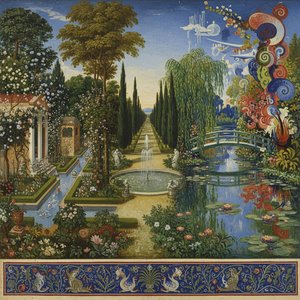
Cultivating Paradise: A Historical & Artistic Exploration of Gardens in Painting
Explore the rich history of gardens in painting! Discover masterpieces from Renaissance to Impressionism & beyond. Learn about symbolism, artists like Monet & Klimt, and find your perfect artwork at OriginalUniqueArt.

Meesterwerken in Zwart: Top 10 Schilderijen Gedreven door Donkere Tinten | OriginalUniqueArt.nl
Ontdek de kracht van donker! Verlies jezelf in onze top 10 zwarte schilderijen, van Caravaggio tot Manet. Leer over meesterwerken, technieken & emotie. Museumkwaliteit reproducties op OriginalUniqueArt.com – Kunst voor uw interieur.

Top 10 Witte Meesterwerken: Kunstgeschiedenis & Interieurinspiratie
Ontdek de top 10 witte meesterwerken uit de kunstgeschiedenis! Van Monet tot Mondriaan, bewonder abstracte vormen & serene kleuren. Vind museumkwaliteit reproducties en interieurinspiratie op OriginalUniqueArt.com.

Monochrome Visions: Exploring the Aesthetic & Historical Significance of Black & White Photography
Explore the rich history & artistic power of black and white photography. From early techniques to iconic masters like Ansel Adams, discover why monochrome continues to captivate art lovers today. Expert insights for collectors.