Menu
Text size

() ·

A painting made for you, by hand

Virgin and Child

Handgemaakte olieverfreproductie

Met de hand geschilderd in olieverf op canvas in uw gewenste maat en lijst, op bestelling gemaakt door onze kunstenaars. ( Schakel over naar print Schakel over naar digitale afbeeldingen)

Beschrijving verzamelobject

Experience Rogier van der Weyden's 'Virgin and Child.' A masterpiece of Early Netherlandish art, showcasing tender devotion & intricate detail from the Museum of Fine Arts, Houston.

Biografie kunstenaar

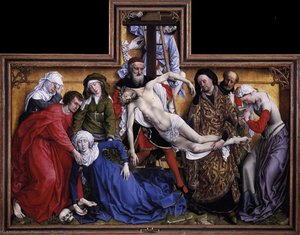
Rogier van der Weyden (1400-1464): Een meester van de vroegere Nederlandse schilderkunst, bekend om zijn emotionele religieuze werken, rijke kleuren en realistische details. Ontdek 'Lamentatie' & meer!

from ·

Chapter 1

How large should it be?

Slide to change the size; the picture on the left shows the frame at its real width. The proportions of the original are kept.

Standaardformaat
op maat gemaakt
CM
INCH

Kies uit onze vooraf ingestelde maten die overeenkomen met de originele verhoudingen van het kunstwerk.

breedte
hoogte

Voer de breedte en hoogte in die u nodig heeft, passend bij uw lijst of uw muur. Omdat dit handgeschilderd is, kan de kunstenaar bij een afmeting met een andere beeldverhouding iets meer rondom het schilderij schilderen of juist iets meer weglaten — u kiest zelf. Wij sturen u een digitaal mockup ter goedkeuring voordat het schilderwerk begint. De afbeelding die op deze pagina wordt getoond, is niet het uiteindelijke resultaat — alleen de mockup geeft dit weer.


Chapter 2

How should it arrive?

Choose the edges of the stretched canvas

Choose your frame

Corner sample of the WhiteWrap canvas edge finish, stretched on massief hout bars
White €1
Corner sample of the BlurSideWrap canvas edge finish, stretched on massief hout bars
Blurside €1
Corner sample of the ExtendedWrap canvas edge finish, stretched on massief hout bars
Extended €1
Corner sample of the P118B picture frame: gegoten polystyreen, 5 cm wide and 3 cm thick
P118B €10
Corner sample of the P118H picture frame: gegoten polystyreen, 5 cm wide and 3 cm thick
P118H €10
Corner sample of the P118W picture frame: gegoten polystyreen, 5 cm wide and 3 cm thick
P118W €10
Corner sample of the P438Z picture frame: gegoten polystyreen, 5.5 cm wide and 3.5 cm thick
P438Z €10
Corner sample of the P508JH picture frame: gegoten polystyreen, 7 cm wide and 3.5 cm thick
P508JH €12
Corner sample of the P508YH picture frame: gegoten polystyreen, 7 cm wide and 3.5 cm thick
P508YH €12
Corner sample of the P805H picture frame: gegoten polystyreen, 5 cm wide and 3.5 cm thick
P805H €10
Corner sample of the P805Z picture frame: gegoten polystyreen, 5 cm wide and 3.5 cm thick
P805Z €10
Corner sample of the P919BZ picture frame: gegoten polystyreen, 7 cm wide and 3.5 cm thick
P919BZ €10
Corner sample of the P919G picture frame: gegoten polystyreen, 7 cm wide and 3.5 cm thick
P919G €10
Corner sample of the P919XJ picture frame: gegoten polystyreen, 7 cm wide and 3.5 cm thick
P919XJ €10
Corner sample of the P959ZH picture frame: gegoten polystyreen, 5 cm wide and 3 cm thick
P959ZH €10
Corner sample of the P968JZ picture frame: gegoten polystyreen, 6 cm wide and 4 cm thick
P968JZ €12
Corner sample of the W106C picture frame: massief hout, 5 cm wide and 3 cm thick
W106C €8
Corner sample of the W218G picture frame: massief hout, 5 cm wide and 3 cm thick
W218G €10
Corner sample of the W218JH picture frame: massief hout, 5 cm wide and 3 cm thick
W218JH €8
Corner sample of the W218Y picture frame: massief hout, 5 cm wide and 3 cm thick
W218Y €10
Corner sample of the W307PJ picture frame: massief hout, 6 cm wide and 3 cm thick
W307PJ €10
Corner sample of the W316G picture frame: massief hout, 6 cm wide and 3 cm thick
W316G €10
Corner sample of the W316PJ picture frame: massief hout, 6 cm wide and 3 cm thick
W316PJ €8
Corner sample of the W316Y picture frame: massief hout, 6 cm wide and 3 cm thick
W316Y €10
Corner sample of the W398PJ picture frame: massief hout, 5 cm wide and 3 cm thick
W398PJ €8
Corner sample of the W4111J picture frame: massief hout, 6.5 cm wide and 3.5 cm thick
W4111J €10
Corner sample of the W500HY picture frame: massief hout, 7 cm wide and 5 cm thick
W500HY €15
Corner sample of the W500JH picture frame: massief hout, 7 cm wide and 5 cm thick
W500JH €15
Corner sample of the W692G picture frame: massief hout, 8 cm wide and 4 cm thick
W692G €12
Corner sample of the W849H picture frame: massief hout, 5 cm wide and 3 cm thick
W849H €8
Corner sample of the W940BG picture frame: massief hout, 7.5 cm wide and 4.5 cm thick
W940BG €15
Corner sample of the W953PJ picture frame: massief hout, 6 cm wide and 3.5 cm thick
W953PJ €8
Corner sample of the H24-GOLD picture frame: gesneden hout met gesso, 10 cm wide and 6 cm thick
H24-GOLD €30
Corner sample of the H24-SILVER picture frame: gesneden hout met gesso, 10 cm wide and 6 cm thick
H24-SILVER €30
Corner sample of the H36-GOLD picture frame: gesneden hout met gesso, 15 cm wide and 6.5 cm thick
H36-GOLD €45
Corner sample of the H36-SILVER picture frame: gesneden hout met gesso, 15 cm wide and 6.5 cm thick
H36-SILVER €45
Lijstvoorbeeld
Ingelijst

Moulding: . Overall size with the frame: .

Chapter 3

Who paints it, and should anything change?

Examples of what can be changed: Replace face with customer photo; Add pet (e.g., replace cat with dog); Include hidden message in background; Change background landscape or elements.
After order, OriginalUniqueArt.com team will email client for instructions and provide a mockup preview

Wereldwijde levering () binnen 3 tot 4 weken in plaats van de standaard 5 weken. (29 oktober). Zonder concessies aan de kwaliteit.

Chapter 4

The finishing touches

A nameplate, as in a museum?

Details van de gegraveerde bronzen plaat

This elegant plaque features the artist's name and the title of the artwork, finely engraved for a timeless presentation.

It is made from bronze with a refined, elegant finish. The text is precisely laser-engraved for a sharp and permanent result. Measuring 9x2 cm, the plaque is compact yet easy to read. It's built to be durable and scratch-resistant, offering a professional, museum-quality look. Mounting is simple thanks to the included adhesive backing.

Details transparante acrylplaat

The plaque includes essential engraved details such as the artist's name, the title of the artwork, the date it was created, the type of media used-like oil on canvas or watercolor-a brief description of the piece, and a QR code that links to the complete artwork information.

It is crafted from clear acrylic, offering a sleek, modern appearance. The text is UV-engraved in black to ensure strong visual contrast. With a size of 10x15 cm, it ensures optimal readability. It comes equipped with two metal hooks for secure wall mounting. The plaque is designed to be weather-resistant, making it suitable for various environments, and it includes interactive features that work seamlessly with smartphone scanning.

Details zwarte acrylplaat

This elegant plaque includes engraved information such as the artist's name, the title of the artwork, the date it was created, the type of media used (like oil on canvas or watercolor), a short description of the artwork, and a QR code for quick access to more information.

The plaque itself is made from refined black acrylic with a premium finish. The text is laser-engraved in white for high contrast and readability. Its size is 10x15 cm, designed to be easy to read. It comes with two metal hooks for professional mounting. The design is sleek and fits any interior style. It is also weather-resistant and durable, with built-in digital integration for mobile compatibility.

A protective varnish?

When do you need it?

Chapter 5

Your painting, as you ordered it

Virgin and Child

Druktechniek

Afmetingen reproductie

-

Geselecteerde topkunstenaars

Meer detail, verfijning en extra productietijd

-

Lijst voor reproductie

-

-

Voor kunstwerken of reproducties die aan één zijde groter zijn dan 105 cm (ongeveer 41 inch), wordt de lijst als een losse set verzonden. Deze methode garandeert een veilige levering en voorkomt schade tijdens het transport.

Professionele montage vereist - dit is geen doe-het-zelfproduct.
De set moet worden gemonteerd en het canvas moet worden gespannen door een ervaren professionele lijstenmaker, met gebruik van houtlijm (niet inbegrepen), een doekspanter en klemmen om de sponningen recht te houden terwijl de lijm droogt. Onjuiste montage of een ongelijkmatige spanning op het canvas kan het kunstwerk permanent beschadigen en wordt niet gedekt door onze garantie.

  • Alle massief houten onderdelen zijn inbegrepen, nauwkeurig op maat gesneden voor montage.

  • Te monteren met de meegeleverde schroeven, plus houtlijm voor de hoekverbindingen, die niet wordt meegeleverd en door uw lijstenmaker moet worden aangeschaft.

  • Professioneel gereedschap is vereist en niet inbegrepen: een spanner voor canvas en klemmen om de latten recht te houden terwijl de lijm droogt.

Belangrijk:
De hoekverbindingen vereisen houtlijm, de latten moeten met lijmklemmen worden vastgehouden tot de lijm volledig is opgedroogd, en het spannen van het canvas op het samengestelde frame vereist een doekspanter. Geen van deze artikelen is inbegrepen in de set. Wij adviseren u om een ervaren professionele lijstenmaker te raadplegen voordat u deze maat bestelt.

Naamplaatje

-

-

Beschermende vernislaag

Glanzende vernis (versterkt de kleuren en biedt bescherming tegen licht en vocht)

-

Mijn kunstwerk aanpassen

Voorbeelden van aanpassingen: vervang het gezicht door een eigen foto; voeg een huisdier toe (bijv. vervang de kat door een hond); verwerk een verborgen boodschap in de achtergrond; wijzig het landschap of andere elementen op de achtergrond.

-

Spoedlevering

Wereldwijde levering () binnen 3 tot 4 weken in plaats van de standaard 5 weken. (29 oktober). Geen concessies aan de kwaliteit.

-

Spoedlevering

Wereldwijde levering naar binnen 5 weken. (5 november).

Inbegrepen

Eindtotaal

€ 265

Totaalprijs € 265

De optie voor glas is alleen beschikbaar bij een formaat kleiner dan 110 cm.

Included with every order

  • Gratis wereldwijde expressverzending
  • Hoogwaardig linnen canvas
  • Volledige verzendverzekering
  • Garantie op terugbetaling van invoerrechten
  • Garantie op exacte kleurweergave
  • Retourbeleid van 100 dagen (alleen bij defecten)
  • 100% Geld-terug-garantie
  • Korting bij meerdere afnames

A Tender Embrace: Rogier van der Weyden’s “Virgin and Child”

Within the hallowed halls of the Museum of Fine Arts in Houston resides a painting that transcends mere representation, offering instead a profound meditation on motherhood, divinity, and the quiet intimacy of faith – Rogier van der Weyden's "Virgin and Child." Created around 1454-1460 during the height of the Early Netherlandish school’s artistic flourishing, this work is more than just an image; it’s a carefully constructed dialogue between artist, subject, and viewer. Van der Weyden, a master renowned for his meticulous detail and ability to imbue his scenes with palpable emotion, presents us with a tableau that speaks volumes through its subtle gestures and luminous colors.

The painting depicts the Virgin Mary cradling the Christ Child, an iconic motif in Western art yet rendered here with a remarkable freshness. The composition is deceptively simple: a woman, clearly identified as Mary by her traditional attire – a flowing blue gown and a delicate crown – holds the infant Jesus close to her breast. Yet, within this apparent stillness lies a wealth of visual information and symbolic weight. Van der Weyden’s genius lies in his ability to convey complex ideas through deceptively straightforward imagery. The scene is bathed in an ethereal light, characteristic of the Early Netherlandish style, which allowed for intricate details and vibrant colors while maintaining a sense of depth and realism. The use of oil on panel was crucial here, enabling him to build up layers of paint with incredible precision, creating textures that mimic the feel of fabric and skin.

The Language of Symbolism

Beyond its technical brilliance, “Virgin and Child” is rich in symbolism, reflecting the deeply religious context of its creation. The blue robe worn by Mary isn’t merely decorative; it's a deliberate reference to her role as the Mother of God, associating her with heaven and divine grace. The crown adorning the Christ Child symbolizes his royal status – he is, after all, the King of Kings. However, Van der Weyden doesn’t simply present these symbols in an overtly didactic manner. Instead, he integrates them seamlessly into the scene through gesture and expression. Note how Mary's gaze is directed towards her son with a profound tenderness, while the Christ Child appears to be gazing upwards with innocent curiosity – a visual representation of their mutual love and connection.

The inclusion of a small, intricately carved wooden cartouche above the scene adds another layer of complexity. These cartouches were common in Northern European art during this period, often containing inscriptions or prayers. In this case, they likely served as a devotional element, inviting viewers to contemplate the sacredness of the depicted figures. The use of trompe l'oeil – creating an illusion of three-dimensionality – further enhances the painting’s realism and draws the viewer into its world.

A Masterpiece in Context

To fully appreciate “Virgin and Child,” it’s essential to understand the historical context in which it was created. The late Middle Ages witnessed a remarkable cultural and artistic renaissance in the Low Countries, giving rise to a new generation of artists who pushed the boundaries of realism and emotional expression. Rogier van der Weyden was undoubtedly one of the leading figures of this movement, known for his incredible attention to detail and his ability to convey emotion through his paintings. He served as court painter to Philip the Good, Duke of Burgundy, a position that afforded him significant patronage and influence.

Interestingly, “Virgin and Child” is part of a series of Apostle paintings commissioned by Van der Weyden, including depictions of St. Matthew and St. Bartholomew. This suggests a deliberate effort on the artist’s part to explore themes of faith, piety, and devotion through a variety of religious subjects. The painting's meticulous detail and emotional resonance reflect the broader trends in Northern European art during this period – a shift away from the stylized representations of the Gothic era towards a more naturalistic and human-centered approach.

Reproductions: Bringing History Home

OriginalUniqueArt offers meticulously crafted, hand-painted oil painting reproductions of Rogier van der Weyden’s “Virgin and Child,” allowing art lovers to own a piece of this extraordinary masterpiece. Each reproduction is created by skilled artisans who painstakingly recreate the artist's techniques, colors, and textures, ensuring that it captures the essence of the original while retaining its own unique beauty. Measuring 31 x 22 cm, this intimate rendition invites contemplation and serves as a timeless reminder of the enduring power of art to inspire and uplift.

For those seeking to delve deeper into the life and work of Rogier van der Weyden, we encourage you to visit our dedicated page for further information. And if you’re interested in exploring other works by this master of the Early Netherlandish school, please visit our comprehensive artist database.

Veelgestelde vragen

Kan ik "Virgin and Child" door Rogier van der Weyden onder ander licht bekijken?

De röntgenweergave van "Virgin and Child" door Rogier van der Weyden is te vinden op de Röntgenanalyse-pagina van het kunstwerk: een interactieve verkenning van het beeld door middel van elf optische lagen.

Wat voegt "Virgin and Child" door Rogier van der Weyden toe aan een interieur?

"Virgin and Child" door Rogier van der Weyden heeft een Elegant atmosfeer en wordt aanbevolen voor de Woonkamer. De stemming bepaalt wat het werk toevoegt aan de omringende ruimte.

Wat zijn de afmetingen en het formaat van "Virgin and Child"?

Het formaat van "Virgin and Child" is Staand formaat en het origineel heeft de afmetingen 31 x 22 cm. Beide zijn nuttig bij het plannen van een reproductie.

More about this painting

Voorvertoning Bekijk in AR Schakel over naar print Schakel over naar digitale afbeeldingen Verstuur
Details bekijken Gids Toevoegen aan favorieten Download Vergelijkbare items Röntgenonderzoek Diavoorstelling Q&A Statistieken

In numbers

  • 29frames to choose from
  • standard sizes, in its own proportions
  • 5weeks to paint and deliver it
Rogier van der Weyden

Rogier van der Weyden

1400 - 1464, België

Quick facts about Rogier van der Weyden

  • Artistic Movement Or Style: Vroege Nederlandse schilderkunst
  • Artists Or Movements Influenced By This Artist:
    • Italiaanse Renaissance
    • Spaanse schilderkunst
  • Artists Who Influenced This Artist:
    • Robert Campin
    • Jan van Eyck
  • Date Of Birth: c. 1400
  • Date Of Death: 1464
  • Full Name: Rogier van der Weyden
  • Nationality: Vlaams
  • Notable Artworks:
    • Lamentatie
    • Aflegging
    • Aanblik
  • Place Of Birth: Tournai, België

Biografie kunstenaar

A Master of Emotion: The Life and Legacy of Rogier van der Weyden

Rogier van der Weyden, initially known as Roger de la Pasture, was born around 1400 in the bustling city of Tournai, nestled within what is now Belgium. His early life remains somewhat shrouded in mystery, though it’s believed he began his artistic journey not with brush and pigment, but as a skilled goldsmith. This formative training instilled within him an unwavering dedication to meticulous detail and a refined sensibility for craftsmanship – qualities that would become the very hallmarks of his distinctive style. The precision demanded by working with precious metals undoubtedly translated into the exquisite rendering of textures, fabrics, and expressions that define his most celebrated masterpieces. He wasn’t merely depicting reality; he was recreating it with painstaking accuracy, imbued with an almost reverent attention to detail.

From Tournai to Brussels: A Rising Star

By 1427, van der Weyden had ascended to the rank of master within the Guild of Saint Luke in Tournai – a significant milestone that solidified his position as a professional artist and opened doors to prestigious commissions. His career truly gained momentum when he entered the service of Philip the Good, Duke of Burgundy, in 1435. This patronage proved transformative, providing him with not only financial security but also invaluable access to an elite circle of influence and exposure to some of the most discerning eyes of the era. During this period, van der Weyden’s artistic vision underwent a remarkable evolution, moving away from the somewhat rigid conventions prevalent in earlier Netherlandish painting towards a more emotionally resonant and naturalistic approach. He wasn't simply painting religious scenes; he was striving to evoke genuine feeling in the viewer – to create an experience that transcended mere observation. His work began to reflect a deeper understanding of human psychology, capturing not just appearances but also the subtle nuances of emotion.

The Language of Feeling: Style and Technique

Rogier van der Weyden’s artistic signature is immediately recognizable through several defining characteristics. His palette was remarkably rich and diverse, a vibrant tapestry of colors carefully chosen to avoid repetition and create depth and complexity within his compositions. He possessed an extraordinary ability to convey profound emotion – *pathos* – particularly in depictions of religious subjects like the Lamentation, where grief and sorrow are palpably present. This emotional intensity wasn’t achieved through dramatic gestures or exaggerated expressions; rather, it was subtly woven into the very fabric of the painting, conveyed through delicate nuances of facial expression, body language, and composition. His figures, while adhering to the conventions of the time, demonstrate a growing interest in realistic representation – not just in anatomy and drapery, but also in capturing the psychological states of his subjects. They possess a dignified, almost sculptural quality, particularly evident in his grand triptychs, lending them an air of solemnity and reverence. He masterfully employed oil paint, building up layers of translucent glazes to achieve luminous effects and create a sense of depth and realism that was revolutionary for its time. The use of *chiaroscuro*, the dramatic interplay of light and shadow, further enhanced the emotional impact of his works.

Notable Works and Enduring Masterpieces

Throughout his prolific career, van der Weyden produced numerous works that stand as testaments to his artistic prowess. St Luke Drawing a Portrait of the Madonna, housed in the Museum of Fine Arts, Boston, showcases his mastery of oil on panel and meticulous observation. The Lamentation, residing in the Musée des Beaux-Arts Tournai, Belgium, is perhaps his most celebrated work – a powerfully emotive depiction of Christ’s mourning, renowned for its dramatic use of *chiaroscuro* and its ability to evoke profound sorrow in the viewer. Multiple versions of The Deposition exist, each demonstrating his skill in conveying grief and drama with breathtaking sensitivity. The Annunciation, a masterpiece of refined style and attention to detail, exemplifies his ability to imbue even the most traditional subjects with a sense of freshness and vitality. And finally, the intricate and richly detailed Bladelin Triptych stands as a monumental achievement – a complex altarpiece that showcases the full range of van der Weyden’s artistic abilities. These works, and many others, continue to captivate audiences today, solidifying his position as one of the most important painters of the 15th century.

Lasting Influence: A Legacy Forged in Paint

Van der Weyden’s influence extended far beyond the borders of his native Flanders. His works were highly sought after throughout Europe, particularly in Italy and Spain, where they introduced a new level of emotional depth and naturalism to local artistic traditions. Although his fame experienced a period of relative decline in the 17th century, a rediscovery during the 19th century cemented his place as one of the most important painters of the 15th century. He stands alongside Jan van Eyck and Robert Campin as one of the “three great” Early Flemish masters, each contributing uniquely to the development of Northern Renaissance art. His innovative techniques and emotionally charged compositions paved the way for future generations of artists, inspiring countless imitators and influencing the course of Western painting for centuries to come. He helped establish oil painting as the dominant medium and elevated the status of the artist within society, transforming them from skilled craftsmen into revered creators. Rogier van der Weyden’s legacy continues to resonate today, a testament to his enduring genius and his profound understanding of the human condition.