
 Voorvertoning
 Verstuur
 Delen
Delen
 Details bekijken

 Download
 Vergelijkbare items
 Röntgenonderzoek
 Diavoorstelling
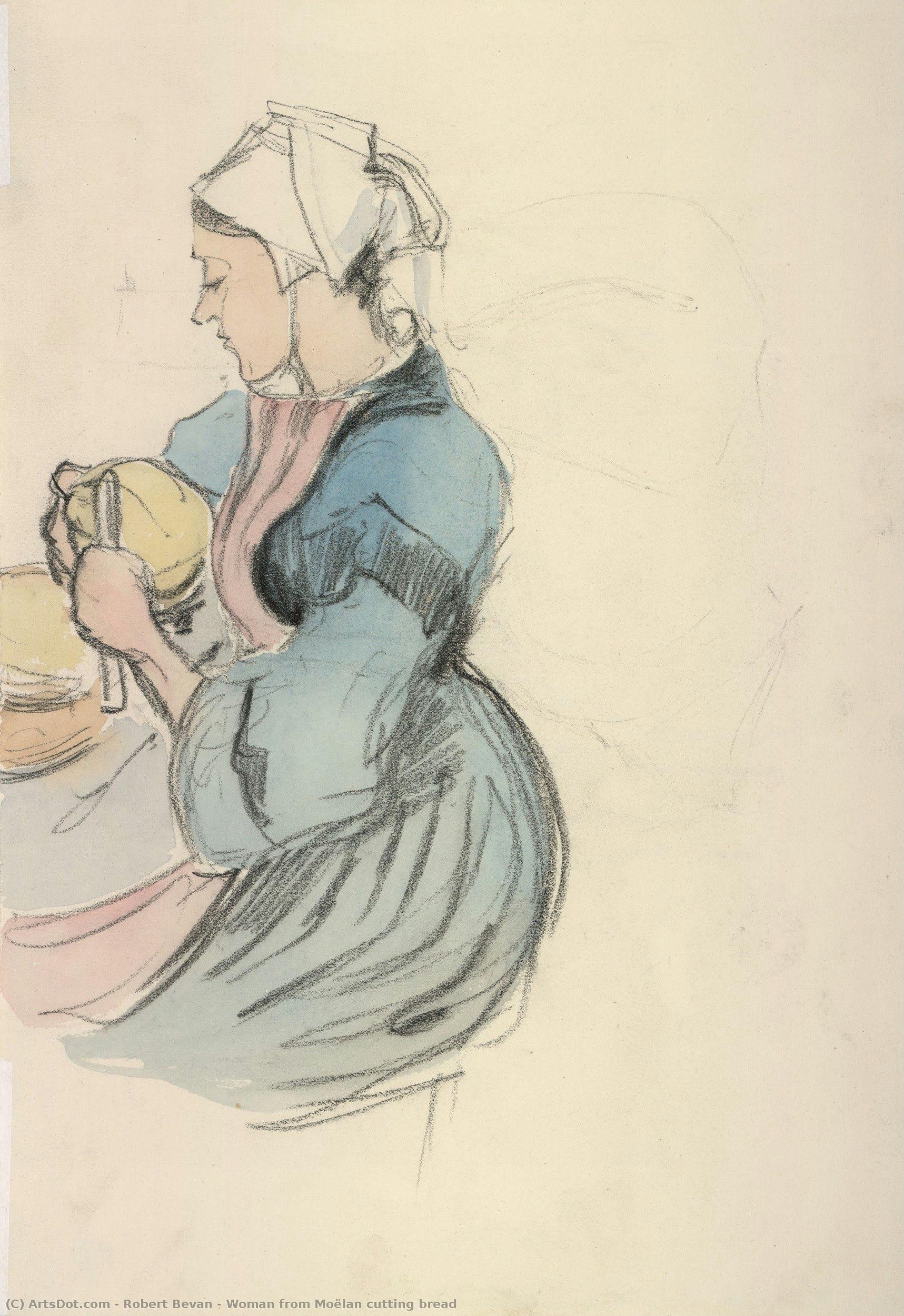
Woman from Moëlan cutting bread
 Acrylic On Canvas
- WallArt
- Fauvism
 1891
1891- 19th Century
 34.0 x 24.0 cm
 Musée de Pont-Aven
 Lees meer
Handgemaakte olieverfreproductie
Met de hand geschilderd in olieverf op canvas in uw gewenste maat en lijst, op bestelling gemaakt door onze kunstenaars. ( Bestel print Koop afbeelding)




P118B $10

P118H $10

P118W $10

P438Z $10

P508JH $12

P508YH $12

P805H $10

P805Z $10

P919BZ $10

P919G $10

P919XJ $10

P959ZH $10

P968JZ $12

W106C $8

W218G $10

W218JH $8

W218Y $10

W307PJ $10

W316G $10

W316PJ $8

W316Y $10

W398PJ $8

W4111J $10

W500HY $15

W500JH $15

W692G $12

W849H $8

W940BG $15

W953PJ $8




Kies uit onze vooraf ingestelde maten die overeenkomen met de originele verhoudingen van het kunstwerk.

U kunt uw eigen afmetingen invoeren om in een specifieke lijst of ruimte te passen. Als de door u gekozen maat niet overeenkomt met de verhoudingen van het originele beeld, zullen we het kunstwerk bijsnijden of het schilderij uitbreiden met extra handgeschilderde elementen. Een digitale mockup wordt ter goedkeuring naar u verzonden voordat de productie begint.
Houd er rekening mee dat de preview op het scherm niet de werkelijke uitsnede of uitbreiding weergeeft. Alleen de mockup toont de uiteindelijke compositie nauwkeurig.
Hoewel aangepaste afmetingen mogelijk zijn, raden we aan een maat uit de vooraf gedefinieerde lijst te selecteren om de originele verhoudingen te behouden.
Na de bestelling zal het team van OriginalUniqueArt.com per e-mail contact opnemen met de klant voor instructies en een mockup-voorbeeld sturen.
Wereldwijde levering () binnen 3 tot 4 weken in plaats van de standaard 5 weken. (20 augustus). Zonder concessies aan de kwaliteit.

Gratis wereldwijde expressverzending

Hoogwaardig linnen canvas

Volledige verzendverzekering

Garantie op terugbetaling van invoerrechten

Garantie op exacte kleurweergave

Retourbeleid van 60 dagen (alleen bij defecten)

100% Geld-terug-garantie

Korting bij meerdere afnames
 De optie voor glas is alleen beschikbaar bij een formaat kleiner dan 110 cm.

Woman from Moëlan cutting bread
Druktechniek
Afmetingen reproductie
-


Eindtotaal
$ 300
Beschrijving kunstwerk
A Moment of Domesticity: Robert Polhill Bevan’s ‘Woman from Moëlan Cutting Bread’
Robert Polhill Bevan's “Woman from Moëlan Cutting Bread,” painted in 1891, isn’t merely a depiction of a woman preparing food; it’s a carefully constructed tableau brimming with quiet observation and the subtle poetry of everyday life. The painting immediately draws the eye to its central figure – a woman, rendered in soft watercolor hues, her face partially obscured by shadow yet radiating an undeniable sense of purpose as she expertly wields a bread knife against a worn wooden table. This isn’t a grand narrative; it's a frozen moment, a snapshot of domesticity imbued with a distinctly late-nineteenth-century sensibility.
Bevan, a pivotal figure in the Camden Town Group and a pioneer of Fauvist tendencies, was deeply interested in capturing the essence of British life – its rhythms, its textures, and its inherent beauty. He moved away from the purely academic traditions of his early training, embracing bolder color palettes and looser brushwork to convey mood and atmosphere. “Woman from Moëlan Cutting Bread” exemplifies this shift; the colors are muted yet vibrant, suggesting a warm, inviting interior bathed in diffused light. The careful layering of washes creates a remarkable sense of depth and texture, particularly evident in the depiction of the loaf of bread itself – its rough surface rendered with meticulous detail.
The Context of Camden Town and Modern British Art
To fully appreciate Bevan’s work, it's crucial to understand the artistic climate of his time. The late 1880s and 90s witnessed a burgeoning interest in depicting modern life – not the heroic or romanticized versions often favored by earlier artists, but rather the realities of working-class existence and the quiet moments of domesticity. The Camden Town Group, to which Bevan belonged, sought to capture this spirit with a focus on urban scenes and portraits of ordinary people. They rejected the prevailing academic style in favor of brighter colors, looser brushwork, and a more direct approach to subject matter.
Bevan’s connection to the group was significant; he shared their desire to break free from traditional artistic conventions and explore new ways of representing the world around them. His work reflects this experimentation, particularly in his use of color – a characteristic that would later influence the development of Fauvism, an early 20th-century movement known for its intense, non-naturalistic hues. The painting’s palette, dominated by blues and browns with touches of yellow and red, creates a sense of warmth and intimacy, inviting the viewer into this private moment.
Symbolism and Emotional Resonance
Beyond its technical merits, “Woman from Moëlan Cutting Bread” is rich in symbolism. The act of cutting bread itself can be interpreted as a metaphor for sustenance, both physical and emotional. The woman’s focused expression suggests a sense of responsibility and care – she's not simply preparing food; she's providing for her household. The presence of the basket and bowls hints at a shared meal, fostering connection and community.
Furthermore, the painting evokes a feeling of nostalgia—a longing for simpler times. The worn table, the rustic bread, and the woman’s humble attire all contribute to this sense of timelessness. It's a scene that could have been plucked from a bygone era, offering a poignant glimpse into the lives of ordinary people. The painting’s emotional impact lies in its ability to capture a fleeting moment of quiet beauty—a reminder of the dignity and grace found in everyday life.
A Legacy of Impressionistic Innovation
Robert Polhill Bevan's "Woman from Moëlan Cutting Bread" stands as a testament to his pioneering spirit within British art. It’s a work that transcends its simple subject matter, offering a profound meditation on domesticity, labor, and the beauty of the ordinary. Reproductions of this evocative painting continue to resonate with viewers today, capturing the essence of a bygone era while simultaneously speaking to universal themes of family, sustenance, and human connection.
Biografie van de kunstenaar
A Pioneer of British Modernism: The Life and Art of Robert Polhill Bevan
Robert Polhill Bevan, born in Hove in 1865, occupies a pivotal yet often understated position within the narrative of early 20th-century British art. Emerging from a Quaker background steeped in banking connections – his parents were Richard Alexander Bevan and Laura Maria Polhill – he defied conventional expectations to become a daring innovator, a key figure in the transition from Impressionism towards more radical explorations of color and form. His journey was one of constant experimentation, absorbing influences from across Europe while forging a distinctly personal artistic vision that would profoundly impact the development of modern art in Britain. Bevan’s early education at Westminster School of Art under Fred Brown provided a solid foundation, but it was his subsequent studies at the Académie Julian in Paris that truly ignited his creative spark. There, he encountered a constellation of rising stars – Paul Sérusier, Pierre Bonnard, Édouard Vuillard, and Maurice Denis – artists who were challenging academic conventions and embracing new approaches to painting. These encounters proved formative, exposing Bevan to the principles of synthetism and laying the groundwork for his future explorations.Brittany, Fauvism, and the Search for Pure Color
The impact of Brittany on Bevan’s artistic development cannot be overstated. Two significant journeys in 1890 and 1891 immersed him in the atmosphere of Pont-Aven, a small coastal town that had become a magnet for artists seeking an alternative to Parisian salon culture. The bold colors and simplified forms championed by artists like Gauguin resonated deeply with Bevan, influencing his early drawings and prints. He was particularly drawn to the luminous landscapes of Breton Brittany, where he sought inspiration from the Impressionists’ techniques but pushed beyond mere replication—aiming instead for a more expressive portrayal of light and atmosphere. The influence of Gauguin's uncompromising vision – prioritizing emotional impact over meticulous detail – is palpable in Bevan’s early works, demonstrating his willingness to embrace stylistic departures from established traditions. Around 1904, Bevan embarked on a path of experimentation with pure color that anticipated the emergence of Fauvism on the continent. His painting “Courtyard” stands as a remarkable example of this proto-Fauvist approach, demonstrating a willingness to abandon naturalistic representation in favor of expressive chromatic intensity – a boldness that set him apart from many of his British contemporaries. This exploration didn’t remain static; Bevan subsequently adopted a divisionist or pointillist technique, evident in works like “Ploughing on the Downs” and “The Turn-Rice Plough,” showcasing his commitment to exploring different methods of applying color and capturing light. The vibrant hues he employed—particularly yellows and reds—were deliberately chosen to convey emotion rather than accurately depict reality, aligning him with the burgeoning movement spearheaded by Matisse and Kandinsky.Collective Visions: The Camden Town Group and Beyond
Bevan was not an artist who worked in isolation. He actively sought connection with like-minded individuals, playing a crucial role in the formation of several influential art groups. As a founding member of the Camden Town Group, he joined forces with artists determined to depict modern urban life and challenge established artistic norms. This collective spirit extended to his involvement with the London Group and the Cumberland Market Group, further demonstrating his commitment to progressive artistic movements. The group’s aim was to capture the dynamism of London's industrial landscape—a stark contrast to the idealized depictions favored by academic painters—and Bevan championed a bold visual language that prioritized expressive color and simplified forms. He collaborated closely with Walter Sickert and Frank Auerbach, fostering an environment of intellectual exchange and artistic experimentation. This collaborative spirit wasn’t merely social; it fueled his creative process and contributed to the broader evolution of British art during this transformative period.Landscapes, Urban Scenes, and Lasting Legacy
While Bevan’s subject matter was diverse – encompassing portraits depicting prominent figures of his time and capturing scenes from everyday life—he is perhaps best known for his landscapes. His paintings of Sussex and Brittany are imbued with a vibrant energy, capturing the essence of rural life through expressive brushwork and bold color palettes. Works like “In the Downs near Lewes,” “The Chestnut Tree,” and “Landscape in the Blackdown Hills, Devon” exemplify this mastery, showcasing his ability to convey both the physical beauty and emotional resonance of the natural world. Bevan’s technique—characterized by meticulous observation combined with a deliberate simplification of form—was influenced by masters such as Velázquez and Goya, who prioritized capturing psychological depth over photographic accuracy. He skillfully employed divisionist techniques – applying dots of color to create textured surfaces—to achieve remarkable effects of light and atmosphere, mirroring the innovations championed by Monet and Sisley. Robert Polhill Bevan’s legacy extends far beyond his individual paintings. He is rightfully recognized as a pioneer of modern British art, particularly for his early adoption of Fauvist principles and his fearless experimentation with color. His influence on subsequent generations of painters is undeniable, and his contribution to the Camden Town Group was instrumental in shaping the development of modern art in Britain. A retrospective exhibition at Colnaghi’s in 1961 served as a crucial moment of recognition, solidifying his place in art history and ensuring that his innovative spirit continues to inspire artists today. He remains a vital figure for understanding the complex evolution of British painting in the early twentieth century.
Robert Polhill Bevan
1865 - 1925 , Verenigd Koninkrijk
Belangrijkste feiten
- Artistic Movement Or Style: Fauvisme, Divisionisme
- Artists Or Movements Influenced By This Artist:
- De Camden Town Groep
- Het Londense Genootschap
- Artists Who Influenced This Artist:
- Paul Gauguin
- Velázquez
- Goya
- Renoir
- Date Of Birth: 1865
- Date Of Death: 1925
- Full Name: Robert Polhill Bevan
- Nationality: Britse kunstenaar
- Notable Artworks:
- Het Hofhuis
- Plooien op De Downs
- De Cab Horse
- Place Of Birth: Hove, Verenigd Koninkrijk
Gerelateerde artikelen

Top 10 Legendarische Aquarellen die de Kunst voor Altijd Veranderden | OriginalUniqueArt
Ontdek de 10 legendarische aquarellen die kunstgeschiedenis schreven! Van Turner tot Monet, leer over techniek, emotie & impact. Vind museumkwaliteit reproducties en interieurinspiratie op OriginalUniqueArt.com.

Ephemeral Visions: Exploring the Artistic Legacy & Contemporary Practice of Watercolor Painting
Explore the captivating world of watercolor painting! Discover its rich history, essential techniques, influential artists & collecting tips. A comprehensive guide for art enthusiasts from OriginalUniqueArt.

Ephemeral Visions: Exploring the History & Emotional Resonance of Watercolor Painting
Explore the captivating history of watercolor painting, from ancient techniques to modern masters like Kandinsky & Blake. Discover essential artists, collecting tips & the emotional power of this luminous medium. Expert insights for art enthusiasts.
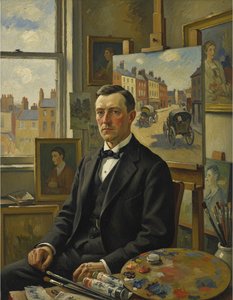
Robert Bevan: Pioneering British Post-Impressionism & the Camden Town Group's Intimate Vision
Explore the life & work of Robert Bevan, a pioneer of British Post-Impressionism and founding member of the Camden Town Group. Discover his vibrant landscapes and lasting impact on early 20th-century art.

Ephemeral Visions: Exploring the Artistic Legacy & Nuances of Watercolor Painting
Explore the captivating world of watercolor painting! Discover its rich history, essential techniques, influential artists & collecting tips from art experts. A comprehensive guide for enthusiasts.



