Bekijk op ware grootte
 Verstuur
 Delen
Delen
 Details bekijken
 Gids voor studentenkunstwerken

 Download
 Vergelijkbare items
 Röntgenonderzoek
 Diavoorstelling
 Statistieken
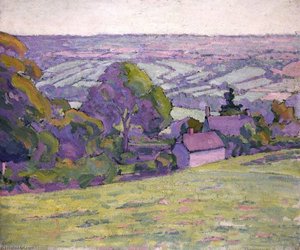
Brimley Hill
 Acryl op canvas
- Wanddecoratie
- British Fauvism
 1916
1916 51.0 x 60.0 cm
 Herbert Art Gallery - Museum
 Lees meer
Giclée / Kunstafdrukken
Giclée- of canvasafdruk van museumkwaliteit met een snelle productie en flexibele afwerkingsmogelijkheden. ( Koop handgeschilderd kunstwerk Schakel over naar digitale afbeeldingen)




P118B €10

P118H €10

P118W €10

P438Z €10

P508JH €12

P508YH €12

P805H €10

P805Z €10

P919BZ €10

P919G €10

P919XJ €10

P959ZH €10

P968JZ €12

W106C €8

W218G €10

W218JH €8

W218Y €10

W307PJ €10

W316G €10

W316PJ €8

W316Y €10

W398PJ €8

W4111J €10

W500HY €15

W500JH €15

W692G €12

W849H €8

W940BG €15

W953PJ €8




Kies uit onze vooraf ingestelde maten die overeenkomen met de originele verhoudingen van het kunstwerk.

Voer de breedte en de hoogte in die u nodig heeft, passend bij uw lijst of uw muur. Een afdruk kan alleen worden ingekort, nooit groter worden gemaakt dan het origineel, waardoor een formaat met een andere verhouding een deel van de afbeelding verliest. Wij sturen u een digitaal mockup ter goedkeuring voordat we iets drukken. De afbeelding op deze pagina toont niet de werkelijke uitsnede — dit is alleen te zien op het mockup.
Wereldwijde levering () binnen 2 weken in plaats van de standaard 4/5 weken. (21 oktober)

Gratis wereldwijde expressverzending

Hoogwaardig linnen canvas

Volledige verzendverzekering

Garantie op terugbetaling van invoerrechten

Garantie op exacte kleurweergave

Retourbeleid van 100 dagen (alleen bij defecten)

100% Geld-terug-garantie

Korting bij meerdere afnames
 De optie voor glas is alleen beschikbaar bij een formaat kleiner dan 110 cm.

Brimley Hill
Giclée / Kunstafdrukken
Formaat reproductie
-


Totaalprijs
€ 71
Een Huyselijke Harmonie op Schouwgrond Brimley Hill
Robert Polhill Bevan’s “Brimley Hill, Devon” is een schilderij dat meer dan alleen een prachtige landschap weergeeft; het belichaamt een essentieel moment in de ontwikkeling van Britse kunst rond het begin van de 20e eeuw. Gecreëerd tussen 1914 en 1916, biedt dit werk een fascinerende kijk op zowel technische innovatie als een diepe emotionele connectie met de natuurlijke wereld. Het schilderij behoort tot de verzameling van Herbert Art Gallery & Museum in Preston, waar het nog steeds wordt tentoongesteld en bewonderd door kunstliefhebbers over de hele wereld.- Het Onderwerp: Een serene omgeving die zich afspeelt op een glooiende heuvelrug in Devonshire. Aan de bovenkant domineert een groot huis, omringd door een rijke vegetatie en een gedetailleerde weergave van het lokale ecosysteem. De kunstenaar heeft een gevoel voor compositie laten zien bij het plaatsen van kleinere huizen en bomen die een gevoel van balans en harmonie creëren.
- De Stijl: “Brimley Hill” wordt beschouwd als een belangrijke vertegenwoordiger van de Fauvist beweging, een stroming die zich afgeschermd voelde voor de beperkingen van Impressionisme en eerder gericht was op het gebruik van intense kleuren om emotie en gevoelens weer te geven. Bevan’s stijl is gekenmerkt door een gedurfde kleurgebruik en een vloeiende penseelstreek, waardoor hij een dynamische kwaliteit aan zijn werk geeft die verder gaat dan alleen een eenvoudige natuurlijke afbeelding.
- Techniek: Bevan gebruikte olie op doek als medium, een populaire keuze voor landschapsschilders van zijn tijd. Zijn aandacht voor detail is evident in de zorgvuldige manier waarop hij verschillende soorten bomen en vegetatie heeft weergegeven, gebruikmakend van subtiele schaduwen en kleuren om een gevoel van diepte en realisme te creëren. De penseelstreek is breed en expressief, maar ook beheerst, wat bijdraagt aan de algehele rustieke charme van het kunstwerk.
- Historische Context: Het werk ontstond tijdens een periode waarin Britse kunstenaars actief waren op zoek naar nieuwe vormen van uitdrukking na de Impressionistische beweging. De Fauvist stijl werd populair onder een groep kunstenaars die bekend staan als Camden Town Group, waar Bevan zelf een prominente rol speelde. Deze groep wilde zich loskoppelen van de academische traditie en een meer persoonlijke visie ontwikkelen op kunst, waarbij kleur en emotie centraal stonden.
- Symbolisme en Emotionele Impact: “Brimley Hill” kan worden gezien als een symbool van eenvoudige schoonheid en natuurlijke harmonie – thema’s die belangrijk waren voor de tijd waarin het werd geschilderd. De afbeelding roept gevoelens van kalmte, rust en contemplatie op bij de kijker, waardoor hij zich laat meevoeren door de prachtige omgeving en de serene atmosfeer van het kunstwerk. Het schilderij biedt een prachtige manier om terug te kijken naar een periode van artistieke innovatie en persoonlijke expressie.
Vragen & Antwoorden
Is "Brimley Hill" beschikbaar als een fine art print?
Om een print van "Brimley Hill" door Robert Polhill Bevan te bemachtigen, kunt u deze eenvoudig bestellen op de Fine Art Print pagina: een fine art print op katoenen canvas of archiefwaardig canvaspapier.
Behoort "Brimley Hill" van Robert Polhill Bevan tot het publiek domein, en zo ja, waarom?
"Brimley Hill" door Robert Polhill Bevan is bevindt zich in het publiek domein - de auteursrechten zijn verlopen. De auteursrechtelijke bescherming loopt vanaf het overlijden van de kunstenaar, dat plaatsvond in 1925.
Wie heeft "Brimley Hill" gemaakt?
De kunstenaar achter "Brimley Hill" is Robert Polhill Bevan. Het werk is gecatalogiseerd onder de naam van Robert Polhill Bevan.
Biografie van de kunstenaar
A Pioneer of British Modernism: The Life and Art of Robert Polhill Bevan
Robert Polhill Bevan, born in Hove in 1865, occupies a pivotal yet often understated position within the narrative of early 20th-century British art. Emerging from a Quaker background steeped in banking connections – his parents were Richard Alexander Bevan and Laura Maria Polhill – he defied conventional expectations to become a daring innovator, a key figure in the transition from Impressionism towards more radical explorations of color and form. His journey was one of constant experimentation, absorbing influences from across Europe while forging a distinctly personal artistic vision that would profoundly impact the development of modern art in Britain. Bevan’s early education at Westminster School of Art under Fred Brown provided a solid foundation, but it was his subsequent studies at the Académie Julian in Paris that truly ignited his creative spark. There, he encountered a constellation of rising stars – Paul Sérusier, Pierre Bonnard, Édouard Vuillard, and Maurice Denis – artists who were challenging academic conventions and embracing new approaches to painting. These encounters proved formative, exposing Bevan to the principles of synthetism and laying the groundwork for his future explorations.Brittany, Fauvism, and the Search for Pure Color
The impact of Brittany on Bevan’s artistic development cannot be overstated. Two significant journeys in 1890 and 1891 immersed him in the atmosphere of Pont-Aven, a small coastal town that had become a magnet for artists seeking an alternative to Parisian salon culture. The bold colors and simplified forms championed by artists like Gauguin resonated deeply with Bevan, influencing his early drawings and prints. He was particularly drawn to the luminous landscapes of Breton Brittany, where he sought inspiration from the Impressionists’ techniques but pushed beyond mere replication—aiming instead for a more expressive portrayal of light and atmosphere. The influence of Gauguin's uncompromising vision – prioritizing emotional impact over meticulous detail – is palpable in Bevan’s early works, demonstrating his willingness to embrace stylistic departures from established traditions. Around 1904, Bevan embarked on a path of experimentation with pure color that anticipated the emergence of Fauvism on the continent. His painting “Courtyard” stands as a remarkable example of this proto-Fauvist approach, demonstrating a willingness to abandon naturalistic representation in favor of expressive chromatic intensity – a boldness that set him apart from many of his British contemporaries. This exploration didn’t remain static; Bevan subsequently adopted a divisionist or pointillist technique, evident in works like “Ploughing on the Downs” and “The Turn-Rice Plough,” showcasing his commitment to exploring different methods of applying color and capturing light. The vibrant hues he employed—particularly yellows and reds—were deliberately chosen to convey emotion rather than accurately depict reality, aligning him with the burgeoning movement spearheaded by Matisse and Kandinsky.Collective Visions: The Camden Town Group and Beyond
Bevan was not an artist who worked in isolation. He actively sought connection with like-minded individuals, playing a crucial role in the formation of several influential art groups. As a founding member of the Camden Town Group, he joined forces with artists determined to depict modern urban life and challenge established artistic norms. This collective spirit extended to his involvement with the London Group and the Cumberland Market Group, further demonstrating his commitment to progressive artistic movements. The group’s aim was to capture the dynamism of London's industrial landscape—a stark contrast to the idealized depictions favored by academic painters—and Bevan championed a bold visual language that prioritized expressive color and simplified forms. He collaborated closely with Walter Sickert and Frank Auerbach, fostering an environment of intellectual exchange and artistic experimentation. This collaborative spirit wasn’t merely social; it fueled his creative process and contributed to the broader evolution of British art during this transformative period.Landscapes, Urban Scenes, and Lasting Legacy
While Bevan’s subject matter was diverse – encompassing portraits depicting prominent figures of his time and capturing scenes from everyday life—he is perhaps best known for his landscapes. His paintings of Sussex and Brittany are imbued with a vibrant energy, capturing the essence of rural life through expressive brushwork and bold color palettes. Works like “In the Downs near Lewes,” “The Chestnut Tree,” and “Landscape in the Blackdown Hills, Devon” exemplify this mastery, showcasing his ability to convey both the physical beauty and emotional resonance of the natural world. Bevan’s technique—characterized by meticulous observation combined with a deliberate simplification of form—was influenced by masters such as Velázquez and Goya, who prioritized capturing psychological depth over photographic accuracy. He skillfully employed divisionist techniques – applying dots of color to create textured surfaces—to achieve remarkable effects of light and atmosphere, mirroring the innovations championed by Monet and Sisley. Robert Polhill Bevan’s legacy extends far beyond his individual paintings. He is rightfully recognized as a pioneer of modern British art, particularly for his early adoption of Fauvist principles and his fearless experimentation with color. His influence on subsequent generations of painters is undeniable, and his contribution to the Camden Town Group was instrumental in shaping the development of modern art in Britain. A retrospective exhibition at Colnaghi’s in 1961 served as a crucial moment of recognition, solidifying his place in art history and ensuring that his innovative spirit continues to inspire artists today. He remains a vital figure for understanding the complex evolution of British painting in the early twentieth century.
Robert Polhill Bevan
1865 - 1925 , Verenigd Koninkrijk
Snelle feiten
- Artistic Movement Or Style: Fauvisme, Divisionisme
- Artists Or Movements Influenced By This Artist:
- De Camden Town Groep
- Het Londense Genootschap
- Artists Who Influenced This Artist:
- Paul Gauguin
- Velázquez
- Goya
- Renoir
- Date Of Birth: 1865
- Date Of Death: 1925
- Full Name: Robert Polhill Bevan
- Nationality: Britse kunstenaar
- Notable Artworks:
- Het Hofhuis
- Plooien op De Downs
- De Cab Horse
- Place Of Birth: Hove, Verenigd Koninkrijk
Gerelateerde artikelen

John Constable's Top 25 Meesterwerken: Landschappen die de Ziel Raaken | OriginalUniqueArt
Ontdek de 25 mooiste schilderijen van John Constable, meester van de Engelse Romantiek. Van idyllische landschappen tot iconische Hay Wain – bewonder zijn techniek en emotie. Museumkwaliteit reproducties & decoratie op OriginalUniqueArt.com.

Romantische Landschappen: Top 10 Meesterwerken voor een Sfeervol Interieur | OriginalUniqueArt.nl
Ontdek de 10 meest iconische meesterwerken van de Romantiek! Reis door de tijd met Caspar David Friedrich, Turner & Delacroix. Laat je inspireren en vind museumkwaliteit kunst reproducties voor een sfeervol interieur op OriginalUniqueArt.com.
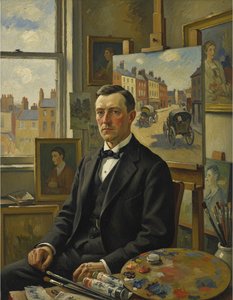
Robert Bevan: Pioneering British Post-Impressionism & the Camden Town Group's Intimate Vision
Explore the life & work of Robert Bevan, a pioneer of British Post-Impressionism and founding member of the Camden Town Group. Discover his vibrant landscapes and lasting impact on early 20th-century art.

Evocations of Place: A Historical Journey Through Landscape Art
Explore the rich history of landscape art with OriginalUniqueArt. Discover renowned artists, movements like Impressionism & Romanticism, and expert guidance for collecting timeless pieces. Find your perfect serene escape today!

William James Müller: Navigating Victorian Sentiment & Realism in British Landscape Painting
Explore the captivating landscapes of William James Müller, the leading artist of the Bristol School. Discover his Victorian masterpieces, Egyptian travels & Lycian sketches – a journey through 19th-century art and technique.