 Voorvertoning
 Verstuur
 Delen
Delen
 Details bekijken
 Gids
Gids

 Download
 Vergelijkbare items
 Röntgenonderzoek
 Diavoorstelling
 Vraag & antwoord
 Statistieken
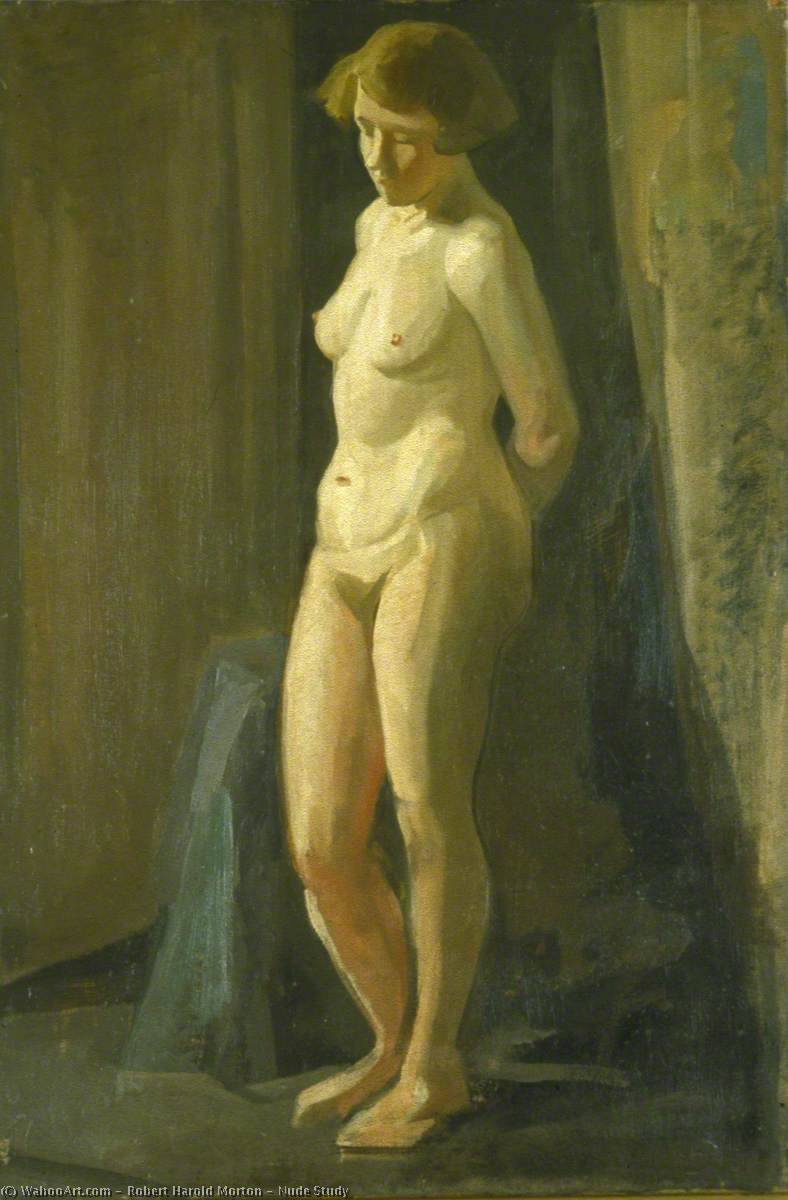
Nude Study

- 92.0 x 61.0 cm


 Lees meer
De kunstwerken die op deze pagina worden weergegeven, zijn beschermd door de auteursrechtwetgeving, wat betekent dat het ons wettelijk niet is toegestaan om identieke reproducties te maken of te verkopen. Deze bescherming wordt gehandhaafd onder internationale overeenkomsten zoals de Conventie van Bern en door nationale wetgeving, waaronder de bepalingen van de Amerikaanse auteurswet - Titel 17. Alle rechten voorbehouden. Reproduceren of distribueren van afbeeldingen is niet toegestaan zonder uitdrukkelijke schriftelijke toestemming van WahooArt.com en de rechthebbenden.
Deze methode voldoet volledig aan de auteursrechtwetgeving, omdat het niet gaat om het kopiëren of dupliceren van het beschermde kunstwerk. In plaats daarvan is er sprake van een creatieve herinterpretatie — een nieuw schilderij dat door het origineel wordt geïnspireerd, maar er niet identiek aan is.
Giclée / Kunstafdrukken
Giclée- of canvasafdruk van museumkwaliteit met een snelle productie en flexibele afwerkingsmogelijkheden. ( Bestel handgeschilderde reproductie Schakel over naar digitale afbeeldingen)




































Kies uit onze vooraf ingestelde maten die overeenkomen met de originele verhoudingen van het kunstwerk.

Voer de gewenste breedte en hoogte in, passend bij uw lijst of muur. Een afdruk kan alleen worden ingekort en nooit groter worden gemaakt dan het origineel; een formaat met andere verhoudingen zal daarom een deel van de afbeelding verliezen. Wij sturen u een digitaal mockup ter goedkeuring voordat we tot drukwerk overgaan. De afbeelding op deze pagina toont niet de werkelijke uitsnede — dit is alleen te zien op het mockup.
Wereldwijde levering () binnen 2 weken in plaats van de standaard 4/5 weken. (20 november)

Gratis wereldwijde expressverzending

Hoogwaardig linnen canvas

Volledige verzendverzekering

Garantie op terugbetaling van invoerrechten

Garantie op exacte kleurweergave

Retourbeleid van 100 dagen (alleen bij defecten)

100% Geld-terug-garantie

Korting bij meerdere afnames
 De optie voor glas is alleen beschikbaar bij een formaat kleiner dan 110 cm.

Nude Study
Giclée / Kunstafdrukken
Afmetingen reproductie
-


Eindtotaal
€ 72
Biografie kunstenaar
The Luminous Legacy of Robert Harold Morton
In the soft, amber glow of a Mediterranean afternoon, one can almost feel the brushstrokes of Robert Harold Morton dancing across the canvas. An American Impressionist whose soul seemed inextricably linked to the coastal rhythms of Europe, Morton possessed a rare ability to translate the ephemeral qualities of light into enduring visual poetry. Born in 1879 in the picturesque enclave of Cassis, France, his very origins were steeped in the salt air and sun-drenched landscapes that would later become the hallmarks of his celebrated oeuvre. His life and work represent a profound dialogue between the artist and the natural world, a lifelong pursuit of capturing those fleeting moments where atmosphere and earth converge in perfect harmony.
Morton’s artistic journey was shaped by the grand traditions of European masterworks. During his formative years, he traveled extensively through the cultural heartlands of Italy and France, immersing himself in the revolutionary techniques of the Impressionist movement. The influence of luminaries such as Claude Monet and Auguste Renoir is palpable in his dedication to plein air painting. Rather than retreating to the sterile confines of a studio, Morton sought the truth of nature directly under the open sky. He became a meticulous observer of the subtle shifts in light—how a midday sun might bleach the granite cliffs of Cassis, or how the twilight hour casts long, violet shadows across a tranquil harbor. His technique was a masterful balance of realism and impressionistic fluidity; while his rendering of textures like rough stone or shimmering water displayed remarkable sensitivity, he never allowed precise detail to overshadow the overarching emotional resonance of color and tone.
A Symphony of Sea and Shore
The heart of Morton’s repertoire lies in his evocative seascapes and landscapes, particularly those centered around his beloved Mediterranean home. His canvases serve as windows into a world of profound serenity, where the rhythmic pulse of the sea dictates the composition. In works such as Harbour Scene or his depictions of Portofino, the viewer is invited to witness the quiet majesty of maritime life. He had a particular talent for portraying the stillness of calm waters, using delicate gradations of azure and turquoise to reflect the vastness of the sky above. These maritime scenes are often punctuated by recurring motifs that lend a sense of narrative grace: the silhouette of a cypress tree standing sentinel against the horizon, or the gentle, purposeful movement of sailboats gliding through the waves.
Beyond the expansive vistas, Morton’s artistry extended into more intimate realms, including his celebrated nude studies. In these works, he applied the same reverence for light and form that defined his landscapes, treating the human figure as another element of the natural landscape, subject to the same soft illumination and atmospheric depth. This duality in his work—the ability to move between the grand scale of a coastal vista and the delicate intimacy of a portrait—demonstrates a versatile mastery of the Impressionist idiom. His paintings do not merely document a place or a figure; they capture an impression, a sensory memory of warmth, light, and peace.
Historical Significance and Enduring Beauty
As the art world transitioned through various modernistic shifts in the early 20th century, Morton remained steadfast in his commitment to the beauty of the natural world. His work stands as a testament to the enduring power of Impressionism to evoke emotion through color and light. While later movements sought to deconstruct form entirely, Morton’s dedication to capturing the essence of the Mediterranean landscape provided a sense of continuity and timelessness. He achieved a level of technical sophistication that allowed him to render the rugged textures of the French coast with such accuracy that his work remains as vibrant today as when it was first applied to canvas.
The historical significance of Robert Harold Morton lies in his role as a bridge between American sensibility and European light. He brought a unique perspective to the American Impressionist tradition, infusing it with the specific, luminous character of the Côte d'Azur. Today, his legacy lives on through the quiet power of his paintings, which continue to offer solace and wonder to those who seek beauty in the interplay of shadow and sun. His life’s work remains a profound celebration of the earth, the sea, and the eternal dance of light.

Belangrijkste feiten
- Full Name: Robert Harold Morton
- Nationality: American
- Notable Artworks:
- Harbour Scene
- Landscape near Cassis
- Artistic Movement Or Style: Impressionism
Gerelateerde artikelen

Masterpieces of the Habsburgs: Top 25 Must-See Artworks at the Albertina, Vienna
Journey through the Albertina’s legacy with our curated guide to 25 iconic masterpieces. From Dürer's precision to Habsburg grandeur, explore the stories behind these timeless works and find museum-quality art reproductions for your space. Discover all masterpieces on OriginalUniqueArt.com.

Anatomy, Idealism, and Realism: A History of the Female Nude in Painting
Explore the technical evolution of the female nude from Renaissance anatomy to Impressionist light. Trace art history with our expert guide.

The Persistence of Form: Tracing the Tradition of the Nude in Fine Art
Explore the profound distinction between the nude and naked through art history. Trace the evolution of classical form with us.

Masterpieces of the Habsburgs: Top 25 Must-See Artworks at the Albertina, Vienna
Journey through the Albertina’s legacy with our curated guide to 25 iconic masterpieces. From Dürer's precision to Habsburg grandeur, explore the stories behind these timeless works and find museum-quality art reproductions for your decor. Discover all masterpieces on OriginalUniqueArt.com.

The Evolving Human Form: Tracing Light and Flesh from Impressionism to Post-Impressionism
Explore the evolution of the human form from academic realism to Post-Impressionism. Trace the history of light and flesh with us.