

 Bekijk op ware grootte
 Verstuur
 Delen
Delen
 Details bekijken
 Gids voor studentenkunstwerken

 Download
 Vergelijkbare items
 Röntgenonderzoek
 Diavoorstelling
 Statistieken
Poring


 Lees meer
Handgemaakte olieverfreproductie
Met de hand geschilderd in olieverf op canvas in uw gewenste maat en lijst, op bestelling gemaakt door onze kunstenaars. ( Schakel over naar print Schakel over naar digitale afbeeldingen)




P118B €10

P118H €10

P118W €10

P438Z €10

P508JH €12

P508YH €12

P805H €10

P805Z €10

P919BZ €10

P919G €10

P919XJ €10

P959ZH €10

P968JZ €12

W106C €8

W218G €10

W218JH €8

W218Y €10

W307PJ €10

W316G €10

W316PJ €8

W316Y €10

W398PJ €8

W4111J €10

W500HY €15

W500JH €15

W692G €12

W849H €8

W940BG €15

W953PJ €8




Kies uit onze vooraf ingestelde maten die overeenkomen met de originele verhoudingen van het kunstwerk.

Voer de breedte en de hoogte in die u nodig heeft, passend bij uw lijst of uw muur. Dit is handgeschilderd, dus bij een afmeting met een andere vormverhouding kan de kunstenaar iets meer rondom het schilderij schilderen of juist iets meer weglaten — u kiest zelf. Wij sturen u een digitaal mockup ter goedkeuring voordat het schilderwerk begint. De afbeelding die op deze pagina wordt getoond, is niet het uiteindelijke resultaat — alleen de mockup geeft dit weer.
Na de bestelling zal het team van OriginalUniqueArt.com per e-mail contact opnemen met de klant voor instructies en een mockup-voorbeeld sturen.
Wereldwijde levering () binnen 3 tot 4 weken in plaats van de standaard 5 weken. (22 oktober). Zonder concessies aan de kwaliteit.

Gratis wereldwijde expressverzending

Hoogwaardig linnen canvas

Volledige verzendverzekering

Garantie op terugbetaling van invoerrechten

Garantie op exacte kleurweergave

Retourbeleid van 100 dagen (alleen bij defecten)

100% Geld-terug-garantie

Korting bij meerdere afnames
 De optie voor glas is alleen beschikbaar bij een formaat kleiner dan 110 cm.

Poring
Reproductiemethode
Formaat reproductie
-


Totaalprijs
€ 263
Robert Delaunay's "Poring": A Symphony of Light and Color
Robert Delaunay’s “Poring,” painted in 1915, is far more than a depiction of fruit; it’s a pivotal moment in the birth of abstract art. This vibrant canvas explodes with color – rich oranges, deep reds, and luminous yellows – creating an atmosphere that pulsates with energy and optimism. The seemingly simple arrangement of apples, oranges, and bananas on a table becomes a carefully constructed composition, reflecting Delaunay's fascination with capturing not just what he saw, but the very essence of light and its transformative power.
The Orphism Movement & Delaunay’s Vision
Created during a period of immense artistic experimentation, “Poring” is inextricably linked to the movement Delaunay co-founded: Orphism. Rejecting traditional representational painting, Orphists like Delaunay sought to express emotions and ideas through pure color and geometric forms. Influenced by Post-Impressionism – particularly the work of Paul Cézanne – Delaunay believed that objects were merely a point of intersection for colors, and his goal was to depict this relationship directly on the canvas. The subtle presence of another figure in the background, partially obscured, adds an element of mystery and invites the viewer to contemplate the interplay between observation and perception.
Technique & Materials: A Pioneering Approach
Delaunay’s technique is characterized by loose, expressive brushstrokes applied with a vibrant palette knife. This method allowed him to build up layers of color rapidly, creating a sense of movement and dynamism. He employed a unique layering process – often applying thin glazes over thicker impasto – to achieve the painting's luminous quality. The use of unprimed canvas, a relatively new practice at the time, further enhanced the colors’ intensity and allowed them to vibrate against each other. This was a radical departure from the meticulous realism favored by many contemporary artists.
Symbolism & Emotional Resonance
"Poring," derived from the Cornish word for "a small stream," subtly suggests themes of renewal and flow. The abundance of fruit, symbols of fertility and prosperity, reinforces this idea. More broadly, the painting embodies Delaunay’s belief in the power of color to evoke emotion and transcend the limitations of objective reality. It's a celebration of light, joy, and the transformative potential of artistic vision – a testament to Delaunay’s pioneering role in shaping modern art and its enduring appeal.
Vragen & Antwoorden
Waarvoor wordt het gebruik van "Poring" door Robert Delaunay aanbevolen?
Een reproductie van "Poring" door Robert Delaunay wordt aanbevolen voor Statement. Dit advies is gebaseerd op het onderwerp, de sfeer en de kleuren van het werk.
Welke sfeer zou een reproductie van "Poring" door Robert Delaunay in een kamer brengen?
Met zijn Elegant karakter is "Poring" een aanrader voor de Dining Room.
Hoe kan ik "Poring" door Robert Delaunay bekijken als een diavoorstelling?
"Poring" door Robert Delaunay kan worden bekeken als een diavoorstelling op de Diavoorstelling pagina van het kunstwerk.
Biografie van de kunstenaar
Robert Delaunay (1885-1941): A Pioneer of Abstract Color
Robert Victor Félix Delaunay, born in Paris on April 12, 1885, emerged as a pivotal figure in the radical artistic shifts of the early twentieth century. Though initially drawn to more traditional forms of painting—primarily decorative arts—his journey swiftly propelled him toward an exploration of color and light that would ultimately define his legacy and contribute significantly to the birth of abstract art. Delaunay wasn’t merely interested in *representing* the world; he sought to capture its very essence through a vibrant language of geometric shapes and luminous hues, co-founding the Orphism movement with his wife, Sonia Delaunay, and others who shared their vision. His early life was marked by instability—his parents divorced when he was young, and he was raised by relatives—but this perhaps fostered an independent spirit that would serve him well in challenging artistic conventions. He initially pursued decorative arts, but quickly gravitated towards painting, exhibiting at the Salon des Indépendants as early as 1904, demonstrating a burgeoning talent and ambition.Early Influences and Impressionistic Beginnings
Delaunay’s formative years were steeped in the aesthetic currents of his time. Like many artists of his generation, he absorbed the influence of Impressionism—particularly Georges Seurat—recognizing its groundbreaking use of color to capture fleeting moments of light and atmosphere. The shimmering effect achieved through the application of small, distinct dots of pigment—a technique known as Divisionism—became a cornerstone of his early artistic practice. This fascination with optical phenomena wasn’t merely stylistic; it reflected a deeper intellectual engagement with scientific theories about perception and color. He meticulously studied the work of Seurat and Cézanne, absorbing their compositional innovations and striving to emulate their mastery of tonal harmony. His initial paintings often depicted landscapes bathed in sunlight, capturing the beauty of nature through a delicate interplay of hues.Cubism: A Departure from Representation
A crucial turning point in Delaunay’s artistic development arrived with his encounter with Jean Metzinger and the burgeoning movement of Cubism. While he didn't fully embrace Léger’s analytical approach—which aimed to dissect objects into geometric components—Delaunay recognized the potential for abstraction within Cubist principles. He skillfully combined fragmented forms with bold color palettes, creating canvases that defied conventional notions of perspective and spatial illusion. Unlike Cézanne, who sought to depict the underlying structure of nature, Delaunay prioritized visual sensation above all else. This shift represented a decisive break from Impressionism’s preoccupation with capturing optical reality—a move toward an entirely new expressive language.The Birth of Orphism: Simultaneous Contrasts and Emotional Resonance
Delaunay's most distinctive contribution to modern art was undoubtedly the creation of Orphism, a term coined by Guillaume Apollinaire and which signaled a radical departure from established artistic traditions. Inspired by Nietzsche’s concept of “eternal recurrence”—the idea that life repeats itself infinitely—Orphism sought to evoke emotional responses through pure chromatic intensity. Delaunay championed the notion of *simultanéité*, arguing that colors interact with each other, generating new sensations and perceptions beyond what could be achieved through individual hues alone. This theoretical underpinning informed his artistic practice, resulting in paintings like “Simultaneous Contrasts: Sun and Moon,” where intersecting planes of color—often juxtaposed against complementary hues—created a dynamic visual experience. The Eiffel Tower series exemplifies this approach, demonstrating Delaunay’s ability to transform an iconic architectural symbol into a canvas brimming with energy and movement.Later Years and Enduring Legacy
The Second World War forced Delaunay and Sonia to relocate to Spain and Portugal, where they continued to produce artwork despite the hardships of exile. Upon returning to Paris in the 1920s, he explored diverse subjects—portraits, landscapes, and still lifes—but consistently upheld his core artistic convictions: color as a primary expressive force and abstraction as a pathway to profound emotional resonance. He undertook ambitious projects such as designing large-scale colored reliefs for the 1937 Paris International Exposition, showcasing his versatility as an artist and architect. Robert Delaunay’s untimely death in October 1941 marked a significant loss for the art world—however, his influence persists today. His pioneering work laid the foundation for subsequent developments in abstract art, establishing him as one of the foremost innovators of the modernist movement. He wasn't merely creating paintings; he was formulating a groundbreaking theoretical framework for understanding how color, light, and perception interact to shape our experience of reality—a legacy that continues to inspire artists across disciplines.
Robert Delaunay
1885 - 1941 , Frankrijk
Snelle feiten
- Artistic Movement Or Style: Orphism, Cubisme
- Artists Or Movements Influenced By This Artist: ['Der Blaue Reiter']
- Artists Who Influenced This Artist: ['Paul Klee']
- Date Of Birth: April 12, 1885
- Full Name: Robert Victor Félix Delaunay
- Nationality: Frans
- Notable Artworks:
- Eiffel Tower
- Simultaneous Contrasts
- Windows Open Simultaneously
- Place Of Birth: Paris, France
Gerelateerde artikelen
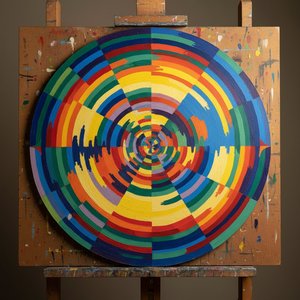
Sonia Delaunay: A Life in Color – Exploring the Rhythms of Abstraction and Synesthesia
Explore the vibrant world of Sonia Delaunay, a pioneer of abstract art and co-founder of Orphism. Discover her revolutionary use of color, geometric forms, and influence on modern design. A deep dive into her life & legacy.

Katsushika Hokusai's 25 Meesterwerken: Japanse Kunst voor uw Interieur | OriginalUniqueArt
Ontdek de 25 meesterwerken van Katsushika Hokusai, de Japanse Ukiyo-e kunstenaar! Reis door zijn iconische prints zoals 'The Great Wave' en Mount Fuji. Vind museumkwaliteit reproducties & inspiratie voor uw interieur op OriginalUniqueArt.com.
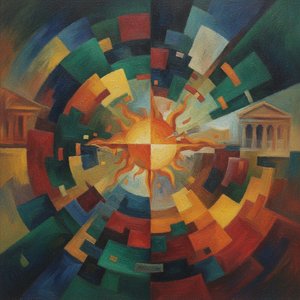
Orphism Unveiled: The Radiant Dance of Color and Light in the Evolution of Abstract Art
Discover the luminous world of Orphism. Explore how masters like Robert and Sonia Delaunay revolutionized art through a radiant dance of color, light, and geometric abstraction in this deep dive into modern art history.
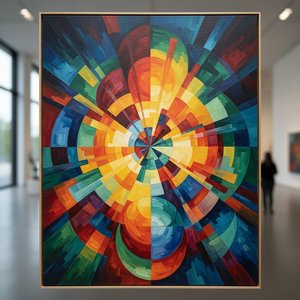
Orphism: A Symphony of Color and Form – Exploring the Abstract Roots of Modern Art
Explore Orphism, the vibrant abstract art movement pioneered by Robert & Sonia Delaunay. Discover its unique color theory, lasting influence on modern art, and how to bring this 'symphony of color' into your home with OriginalUniqueArt.
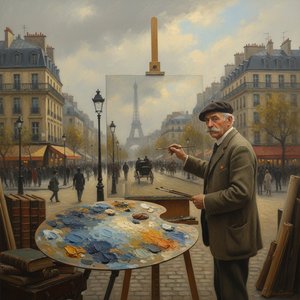
Édouard Cortès: Capturing Parisian Life – A Comprehensive Study of the 'Painter of Paris'
Explore the captivating world of Édouard Cortès, 'The Painter of Paris'. Discover his iconic street scenes, unique style & lasting legacy. Expert insights for collectors and art enthusiasts.

