

 Bekijk op ware grootte
 Verstuur
 Delen
Delen
 Details bekijken
 Gids voor studentenkunstwerken

 Download
 Vergelijkbare items
 Röntgenonderzoek
 Diavoorstelling
 Statistieken
Formes circulaires, soleil (Circular Forms, Sun)


 Lees meer
Giclée / Kunstafdrukken
Giclée- of canvasafdruk van museumkwaliteit met een snelle productie en flexibele afwerkingsmogelijkheden. ( Koop handgeschilderd kunstwerk Schakel over naar digitale afbeeldingen)




P118B €10

P118H €10

P118W €10

P438Z €10

P508JH €12

P508YH €12

P805H €10

P805Z €10

P919BZ €10

P919G €10

P919XJ €10

P959ZH €10

P968JZ €12

W106C €8

W218G €10

W218JH €8

W218Y €10

W307PJ €10

W316G €10

W316PJ €8

W316Y €10

W398PJ €8

W4111J €10

W500HY €15

W500JH €15

W692G €12

W849H €8

W940BG €15

W953PJ €8




Kies uit onze vooraf ingestelde maten die overeenkomen met de originele verhoudingen van het kunstwerk.

U kunt uw eigen afmetingen opgeven om in een specifieke lijst of ruimte te passen. Als de door u gekozen maat niet overeenkomt met de proporties van het originele kunstwerk, zullen wij de afbeelding bijsnijden of uitbreiden met een gespiegelde of effen rand. Een digitaal mockup wordt ter goedkeuring naar u verzonden voordat de productie begint.
Houd er rekening mee dat de preview op het scherm de werkelijke bijsneding of uitbreiding niet weergeeft. Alleen de mockup toont de uiteindelijke compositie nauwkeurig.
Hoewel aangepaste maten beschikbaar zijn, raden wij aan een afmeting uit de vooraf bepaalde lijst te kiezen om de originele proporties te behouden.
Wereldwijde levering () binnen 2 weken in plaats van de standaard 4/5 weken. (7 oktober)

Gratis wereldwijde expressverzending

Hoogwaardig linnen canvas

Volledige verzendverzekering

Garantie op terugbetaling van invoerrechten

Garantie op exacte kleurweergave

Retourbeleid van 100 dagen (alleen bij defecten)

100% Geld-terug-garantie

Korting bij meerdere afnames
 De optie voor glas is alleen beschikbaar bij een formaat kleiner dan 110 cm.

Formes circulaires, soleil (Circular Forms, Sun)
Giclée / Kunstafdrukken
Formaat reproductie
-


Totaalprijs
€ 70
A Dance of Light and Form: Robert Delaunay’s “Formes Circulaires, Soleil, Lune”
Robert Delaunay's "Formes Circulaires, Soleil, Lune" (Circular Forms, Sun, Moon) is not merely a painting; it’s an immersive experience—a vibrant meditation on the very essence of light and its transformative power. Created in 1912-13 during his pivotal period of experimentation with color theory and abstraction, this work stands as a cornerstone of Orphism, a movement Delaunay co-founded alongside his wife, Sonia, seeking to liberate art from representational constraints and embrace the pure joy of visual sensation. The canvas pulsates with an energy born from the collision of scientific inquiry and artistic intuition, inviting the viewer into a world where color isn’t simply observed but actively felt.
The Language of Color: Delaunay's Theoretical Framework
Delaunay’s approach to painting was deeply rooted in his fascination with optics and the theories of Chevreul, a 19th-century color scientist. He believed that colors didn’t exist independently but were instead created through the simultaneous interaction of complementary hues. This concept—that the effect of one color is altered by its neighbors—became the driving force behind his “Orphism,” characterized by bold, clashing colors arranged in dynamic, non-naturalistic compositions. "Formes Circulaires" exemplifies this perfectly; the fiery yellows and oranges of the sun are juxtaposed against cooler blues and greens, creating a visual tension that is both exhilarating and harmonious. The layering of these colors isn’t simply decorative; it's a deliberate attempt to capture the fleeting, shimmering quality of light itself.
Geometric Harmony: Structure and Symbolism
Despite its vibrant color palette, “Formes Circulaires” is fundamentally structured. The dominant element—a series of concentric circles—creates a sense of rhythm and movement, echoing the patterns found in nature – the sun’s rays, the orbits of planets, or even the ripples on water. These circles aren't static; they are layered with smaller, fragmented shapes, suggesting an underlying dynamism and instability. The inclusion of the titles “Soleil” (Sun) and “Lune” (Moon) isn’t merely descriptive; it imbues the painting with symbolic weight. The sun represents energy, vitality, and illumination, while the moon embodies mystery, reflection, and the subconscious. The interplay between these celestial bodies speaks to a fundamental duality—the conscious and the unconscious, the active and the passive.
A Bridge Between Tradition and Modernity
Delaunay’s work occupies a fascinating space within the transition from early 20th-century art. While influenced by Neoimpressionism's emphasis on color theory, he moved decisively beyond its strict adherence to pointillist techniques. “Formes Circulaires” demonstrates this shift—a move towards abstraction and a focus on pure visual experience. His exploration of color and form resonated deeply with artists like Kandinsky and Mondrian, who would later develop their own distinct approaches to abstract art. Delaunay’s legacy lies not only in his pioneering work within Orphism but also in his willingness to challenge conventional artistic boundaries and explore the limitless possibilities of color and light.
This reproduction captures the essence of Delaunay's vision, offering a window into a world where art becomes a celebration of perception itself. Its bold colors and dynamic composition make it an ideal addition to any space, injecting a dose of energy and visual excitement.
Vragen & Antwoorden
Welke afmeting voor de reproductie wordt aanbevolen voor "Formes circulaires, soleil (Circular Forms, Sun)" door Robert Delaunay?
Een reproductie van Medium wordt aanbevolen voor "Formes circulaires, soleil (Circular Forms, Sun)" door Robert Delaunay. De afmetingen kunnen worden aangepast met behoud van de verhoudingen.
Kan ik een olieverfreproductie van "Formes circulaires, soleil (Circular Forms, Sun)" bestellen?
"Formes circulaires, soleil (Circular Forms, Sun)" is verkrijgbaar als een met de hand geschilderde olieverfreproductie op linnen canvas. De bestelling kan worden geplaatst via deze pagina, met een keuze uit verschillende formaten.
Wat voor soort kunstwerk is "Formes circulaires, soleil (Circular Forms, Sun)"?
"Formes circulaires, soleil (Circular Forms, Sun)" door Robert Delaunay wordt geclassificeerd als WallArt. De categorie beschrijft het type kunstwerk dat het origineel is.
Zijn de kleuren van "Formes circulaires, soleil (Circular Forms, Sun)" krachtig of juist zacht?
De kleuren in "Formes circulaires, soleil (Circular Forms, Sun)" door Robert Delaunay hebben een Balanced intensiteit.
Waar kan ik een gids vinden voor "Formes circulaires, soleil (Circular Forms, Sun)"?
De Gids-pagina van "Formes circulaires, soleil (Circular Forms, Sun)" door Robert Delaunay biedt een printbaar factsheet van twee pagina's: het kunstwerk met de bijbehorende identificatietabel, een tijdlijn die het werk plaatst binnen de levensloop van de kunstenaar, andere werken van de kunstenaar, het gemeten kleurenpalet en kant-en-klare citaten in vier verschillende stijlen.
Waar kan ik een print van "Formes circulaires, soleil (Circular Forms, Sun)" door Robert Delaunay kopen?
Een print van "Formes circulaires, soleil (Circular Forms, Sun)" door Robert Delaunay kan rechtstreeks worden besteld op deze pagina: een fine art print op katoenen canvas of archiefwaardig canvaspapier.
Wie is de kunstenaar achter "Formes circulaires, soleil (Circular Forms, Sun)"?
De kunstenaar achter "Formes circulaires, soleil (Circular Forms, Sun)" is Robert Delaunay. Het werk is gecatalogiseerd onder de naam van Robert Delaunay.
Biografie van de kunstenaar
Robert Delaunay (1885-1941): A Pioneer of Abstract Color
Robert Victor Félix Delaunay, born in Paris on April 12, 1885, emerged as a pivotal figure in the radical artistic shifts of the early twentieth century. Though initially drawn to more traditional forms of painting—primarily decorative arts—his journey swiftly propelled him toward an exploration of color and light that would ultimately define his legacy and contribute significantly to the birth of abstract art. Delaunay wasn’t merely interested in *representing* the world; he sought to capture its very essence through a vibrant language of geometric shapes and luminous hues, co-founding the Orphism movement with his wife, Sonia Delaunay, and others who shared their vision. His early life was marked by instability—his parents divorced when he was young, and he was raised by relatives—but this perhaps fostered an independent spirit that would serve him well in challenging artistic conventions. He initially pursued decorative arts, but quickly gravitated towards painting, exhibiting at the Salon des Indépendants as early as 1904, demonstrating a burgeoning talent and ambition.Early Influences and Impressionistic Beginnings
Delaunay’s formative years were steeped in the aesthetic currents of his time. Like many artists of his generation, he absorbed the influence of Impressionism—particularly Georges Seurat—recognizing its groundbreaking use of color to capture fleeting moments of light and atmosphere. The shimmering effect achieved through the application of small, distinct dots of pigment—a technique known as Divisionism—became a cornerstone of his early artistic practice. This fascination with optical phenomena wasn’t merely stylistic; it reflected a deeper intellectual engagement with scientific theories about perception and color. He meticulously studied the work of Seurat and Cézanne, absorbing their compositional innovations and striving to emulate their mastery of tonal harmony. His initial paintings often depicted landscapes bathed in sunlight, capturing the beauty of nature through a delicate interplay of hues.Cubism: A Departure from Representation
A crucial turning point in Delaunay’s artistic development arrived with his encounter with Jean Metzinger and the burgeoning movement of Cubism. While he didn't fully embrace Léger’s analytical approach—which aimed to dissect objects into geometric components—Delaunay recognized the potential for abstraction within Cubist principles. He skillfully combined fragmented forms with bold color palettes, creating canvases that defied conventional notions of perspective and spatial illusion. Unlike Cézanne, who sought to depict the underlying structure of nature, Delaunay prioritized visual sensation above all else. This shift represented a decisive break from Impressionism’s preoccupation with capturing optical reality—a move toward an entirely new expressive language.The Birth of Orphism: Simultaneous Contrasts and Emotional Resonance
Delaunay's most distinctive contribution to modern art was undoubtedly the creation of Orphism, a term coined by Guillaume Apollinaire and which signaled a radical departure from established artistic traditions. Inspired by Nietzsche’s concept of “eternal recurrence”—the idea that life repeats itself infinitely—Orphism sought to evoke emotional responses through pure chromatic intensity. Delaunay championed the notion of *simultanéité*, arguing that colors interact with each other, generating new sensations and perceptions beyond what could be achieved through individual hues alone. This theoretical underpinning informed his artistic practice, resulting in paintings like “Simultaneous Contrasts: Sun and Moon,” where intersecting planes of color—often juxtaposed against complementary hues—created a dynamic visual experience. The Eiffel Tower series exemplifies this approach, demonstrating Delaunay’s ability to transform an iconic architectural symbol into a canvas brimming with energy and movement.Later Years and Enduring Legacy
The Second World War forced Delaunay and Sonia to relocate to Spain and Portugal, where they continued to produce artwork despite the hardships of exile. Upon returning to Paris in the 1920s, he explored diverse subjects—portraits, landscapes, and still lifes—but consistently upheld his core artistic convictions: color as a primary expressive force and abstraction as a pathway to profound emotional resonance. He undertook ambitious projects such as designing large-scale colored reliefs for the 1937 Paris International Exposition, showcasing his versatility as an artist and architect. Robert Delaunay’s untimely death in October 1941 marked a significant loss for the art world—however, his influence persists today. His pioneering work laid the foundation for subsequent developments in abstract art, establishing him as one of the foremost innovators of the modernist movement. He wasn't merely creating paintings; he was formulating a groundbreaking theoretical framework for understanding how color, light, and perception interact to shape our experience of reality—a legacy that continues to inspire artists across disciplines.
Robert Delaunay
1885 - 1941 , Frankrijk
Snelle feiten
- Artistic Movement Or Style: Orphism, Cubisme
- Artists Or Movements Influenced By This Artist: ['Der Blaue Reiter']
- Artists Who Influenced This Artist: ['Paul Klee']
- Date Of Birth: April 12, 1885
- Full Name: Robert Victor Félix Delaunay
- Nationality: Frans
- Notable Artworks:
- Eiffel Tower
- Simultaneous Contrasts
- Windows Open Simultaneously
- Place Of Birth: Paris, France
Gerelateerde artikelen
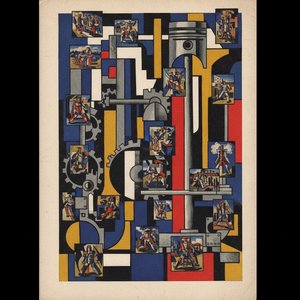
Fernand Léger's Top 25 Meesterwerken: Kleur, Vorm & Moderniteit | OriginalUniqueArt
Ontdek de 25 meest iconische werken van Fernand Léger! Duik in zijn kubistische wereld, machine esthetiek & kleurrijke composities. Vind museumkwaliteit kunst reproducties en interieur inspiratie op OriginalUniqueArt.com.

Kandinsky's Meesterwerken: 25 Abstracte Kunstparels voor uw Interieur | OriginalUniqueArt
Ontdek de 25 meest iconische werken van Wassily Kandinsky! Duik in zijn abstracte wereld vol kleur, expressionisme & spirituele diepgang. Vind museumkwaliteit reproducties en interieurinspiratie op OriginalUniqueArt.com.

Beyond Form & Color: Geometric Abstraction's Evolution in 20th/21st Century Art
Explore the evolution of geometric abstraction from Cubism to contemporary art. Discover key artists like Malevich & Mondrian, investment insights, and expert collecting advice at OriginalUniqueArt.

Top 10 Meesterwerken van de Geometrische Abstractie | OriginalUniqueArt.nl
Ontdek de 10 meest invloedrijke meesterwerken van de geometrische abstractie! Van Mondriaan tot Malevich, leer over kunstenaars, technieken & kleuren. Museumkwaliteit reproducties op OriginalUniqueArt.com – voor een unieke interieurstijl.
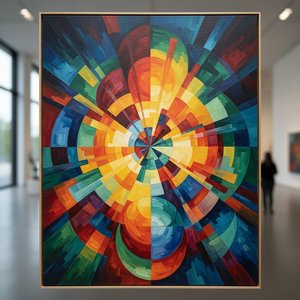
Orphism: A Symphony of Color and Form – Exploring the Abstract Roots of Modern Art
Explore Orphism, the vibrant abstract art movement pioneered by Robert & Sonia Delaunay. Discover its unique color theory, lasting influence on modern art, and how to bring this 'symphony of color' into your home with OriginalUniqueArt.

