
 Voorvertoning
 Verstuur
 Delen
Delen
 Details bekijken

 Download
 Vergelijkbare items
 Röntgenonderzoek
 Diavoorstelling
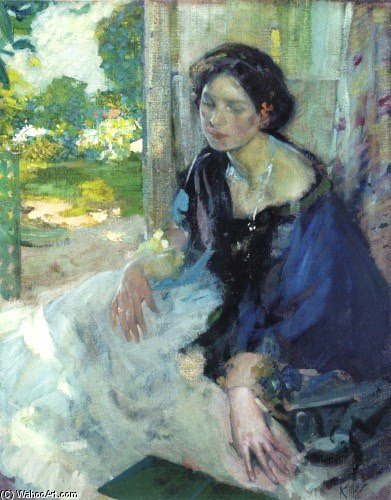
The Shadow
 Lees meer
Koop een digitale afbeelding in hoge resolutie met verbeterde kwaliteit, die veel superieur is aan de online voorvertoning.
Elk bestand wordt met uiterste precisie voorbereid door onze interne specialisten, met behulp van geavanceerde tools en deskundige handmatige retouche. Wij garanderen dat elke afbeelding een uitzonderlijke helderheid, nauwkeurige kleurweergave en verfijnde details bezit.
Het uiteindelijke bestand wordt binnen 72 uur per e-mail geleverd, geoptimaliseerd voor direct gebruik in professionele, redactionele en printomgevingen. Dit is dezelfde kwaliteit waarop vooraanstaande designstudio's, uitgevers en galerieën vertrouwen.
Digitale afbeeldingen
Download een bestand met hoge resolutie voor persoonlijke weergave, afdrukken en creatieve projecten. ( Bestel print Bestel handgeschilderde reproductie)
Inbegrepen bij elke bestelling van een digitale afbeelding
Professionele digitale levering, gegarandeerd
Wanneer u kiest voor OriginalUniqueArt.com, ontvangt u niet alleen een afbeelding – u krijgt een professioneel verbeterd digitaal kunstwerk, met precisie vervaardigd en voorzien van een tevredenheidsgarantie. Dit is alles wat automatisch bij uw bestelling is inbegrepen:

Snelle levering per e-mail
Uw hoogwaardige digitale afbeeldingsbestand wordt binnen 72 uur na bestelling naar u gemaild – klaar voor direct gebruik.

AI-verbeterd digitaal bestand
Uw kunstwerk wordt professioneel geoptimaliseerd met behulp van geavanceerde AI-tools en handmatige bewerkingen, waardoor maximale details, helderheid en kleurnauwkeurigheid worden gegarandeerd.

Gratis levenslange herlevering van digitale afbeeldingen
Je bestand per ongeluk verwijderd of kwijtgeraakt? Geen zorgen – we sturen het u op elk gewenst moment gratis opnieuw toe.

Geen invoerkosten – nooit
Geniet direct van uw kunstwerk zonder invoerrechten, belastingen of verzendkosten – digitale downloads zijn altijd belastingvrij.

Garantie op kleurgetrouwheid
Met behulp van professionele hulpmiddelen en kleurbeheer zorgen wij ervoor dat uw digitale afbeelding de originele kleuren zo nauwkeurig mogelijk weergeeft.

60 dagen tevredenheidsgarantie
Als u niet tevreden bent met uw digitale afbeelding, passen wij deze aan of storten wij 100% terug binnen 60 dagen – zonder vragen gesteld.

100% Geld-terug-garantie
Niet tevreden? Ontvang binnen 60 dagen na ontvangst van uw digitale bestand uw volledige aankoopbedrag terug – zonder vragen te stellen.

Korting bij grote bestellingen
Koop 3 afbeeldingen, bespaar 10% - Koop 5, bespaar 15% - Koop 10+, bespaar 20%. Ideaal voor creatieve projecten, galerieën en bureaus.
Kunstenaarsbiografie
Jean-Baptiste-Camille Corot: Bridging Realism and Impressionism
Jean-Baptiste-Camille Corot, born in Paris on July 16, 1796, stands as a pivotal figure in the transition between Neoclassicism and the burgeoning world of Impressionism. His life’s work wasn't defined by grand narratives or revolutionary pronouncements, but rather by an unwavering dedication to capturing the subtle beauty of the natural world – the shifting light on fields, the hazy outlines of distant mountains, and the quiet dignity of rural life. Unlike many artists of his era who sought fame through Salon exhibitions, Corot prioritized a deeply personal approach to painting, one rooted in meticulous observation and a profound respect for the landscape.
Corot’s early years were surprisingly comfortable, thanks to his family's modest but prosperous business as cloth merchants. This afforded him an education beyond the typical expectations of the time, including studies at the Lycée Pierre-Corneille in Rouen and subsequent apprenticeships with various artisans – a far cry from the struggles faced by many aspiring artists. However, it was his brief association with Achille Etna Michallon, a prominent landscapist influenced by Valenciennes, that truly ignited his passion for painting. Michallon’s emphasis on atmospheric effects and loose brushwork proved to be a crucial foundation for Corot's own evolving style.
A significant turning point in Corot’s career came with his journey to Italy between 1825 and 1828. This extended sojourn was not merely a vacation, but a deliberate immersion in the artistic traditions of the Renaissance and Baroque masters. He studied the works of Raphael, Michelangelo, and Titian, absorbing their techniques for rendering light, form, and color. The Italian landscapes – the rolling hills of Tuscany, the dramatic cliffs of the Amalfi Coast – provided an endless source of inspiration, informing his later paintings with a sense of depth and spatial ambiguity. Returning to Paris, he continued to refine his skills under Jean-Victor Bertin, further solidifying his understanding of composition and technique.
The Pursuit of *Plein Air* and a New Approach
Corot’s most enduring legacy lies in his pioneering adoption of *plein air* painting – working directly from nature. Prior to this practice, landscape artists typically completed their paintings in the studio, relying on memory and sketches as guides. Corot, however, embraced the challenge of capturing fleeting moments of light and atmosphere outdoors. This commitment required a significant shift in artistic methodology, demanding quick observation, decisive brushwork, and an intuitive understanding of color relationships.
His early works, particularly those from his Italian period, are characterized by crisp details and bright colors, reflecting the influence of academic painting. However, as he matured, Corot gradually softened his palette, favoring muted tones and hazy effects to convey a sense of atmospheric depth. He employed broken brushstrokes – short, irregular marks that blended optically in the viewer’s eye – creating an illusion of shimmering light and subtle gradations of color. This technique, combined with his deliberate avoidance of sharp outlines, contributed significantly to the development of Impressionism, though he resisted any categorization as a member of the movement.
Subjects and Themes: Rural Life and the Essence of Nature
Corot’s subject matter was deliberately modest – rural landscapes, humble farmhouses, and scenes of everyday life. He avoided grand historical or mythological themes, focusing instead on capturing the simple beauty of the natural world and the lives of ordinary people. His paintings often depict laborers working in fields, shepherds tending their flocks, or families gathering around a hearth. These seemingly unremarkable subjects were imbued with a profound sense of dignity and tranquility.
However, Corot’s work wasn't simply a celebration of rural life; it was also an exploration of the relationship between humanity and nature. He sought to capture not just the outward appearance of the landscape but also its underlying essence – its mood, atmosphere, and spiritual quality. His paintings invite contemplation and evoke a sense of nostalgia for a simpler time.
Legacy and Influence
Jean-Baptiste-Camille Corot died in Paris on February 22, 1875, leaving behind an extraordinarily vast body of work – over 800 paintings. His influence on subsequent generations of artists is immeasurable. He paved the way for Impressionism by demonstrating the possibilities of *plein air* painting and encouraging a more direct and intuitive approach to artmaking. Artists such as Monet, Pissarro, and Sisley were deeply indebted to his techniques and vision.
Beyond his technical innovations, Corot’s legacy lies in his unwavering commitment to capturing the beauty of the natural world with honesty and sincerity. His paintings serve as a reminder of the power of art to evoke emotion, inspire contemplation, and connect us to something larger than ourselves. His work continues to resonate today, offering viewers a glimpse into a timeless landscape of quiet beauty and profound human connection.

richard edward miller
1875 - 1943 , United States of America
Belangrijkste feiten
- Artistic Movement Or Style: Realism, Landscape
- Artists Or Movements Influenced By This Artist: ['Impressionism']
- Artists Who Influenced This Artist: ['Achille Etna Michallon']
- Date Of Birth: 1796-07-16
- Date Of Death: 1875-02-22
- Full Name: Jean-Baptiste-Camille Corot
- Nationality: French
- Notable Artworks:
- View at Narni
- Roman Campagna
- Place Of Birth: Paris, France

