

 Voorvertoning
 Verstuur
 Delen
Delen
 Details bekijken

 Download
 Vergelijkbare items
 Röntgenonderzoek
 Diavoorstelling
 Statistieken
Jumping Shadowman, 1983


 Lees meer
Giclée / Kunstafdrukken
Giclée- of canvasafdruk van museumkwaliteit met een snelle productie en flexibele afwerkingsmogelijkheden. ( Bestel handgeschilderde reproductie Schakel over naar digitale afbeelding)




































Kies uit onze vooraf ingestelde maten die overeenkomen met de originele verhoudingen van het kunstwerk.

U kunt uw eigen afmetingen opgeven om in een specifieke lijst of ruimte te passen. Als de door u gekozen maat niet overeenkomt met de proporties van het originele kunstwerk, zullen wij de afbeelding bijsnijden of uitbreiden met een gespiegelde of effen rand. Een digitaal mockup wordt ter goedkeuring naar u verzonden voordat de productie begint.
Houd er rekening mee dat de preview op het scherm de werkelijke bijsneding of uitbreiding niet weergeeft. Alleen de mockup toont de uiteindelijke compositie nauwkeurig.
Hoewel aangepaste maten beschikbaar zijn, raden wij aan een afmeting uit de vooraf bepaalde lijst te kiezen om de originele proporties te behouden.
Wereldwijde levering () binnen 2 weken in plaats van de standaard 4/5 weken. (11 september)

Gratis wereldwijde expressverzending

Hoogwaardig linnen canvas

Volledige verzendverzekering

Garantie op terugbetaling van invoerrechten

Garantie op exacte kleurweergave

Retourbeleid van 100 dagen (alleen bij defecten)

100% Geld-terug-garantie

Korting bij meerdere afnames
 De optie voor glas is alleen beschikbaar bij een formaat kleiner dan 110 cm.

Jumping Shadowman, 1983
Giclée / Kunstafdrukken
Afmetingen reproductie
-


Eindtotaal
$ 81
A Glimpse into Urban Anxiety: Richard Hambleton's "Jumping Shadowman"
Richard Art Hambleton’s 1983 work, “Jumping Shadowman,” is a striking example of abstract expressionism infused with the raw energy of street art. This piece isn't merely a depiction; it's an evocative exploration of urban alienation and fleeting moments captured in a whirlwind of motion. Born from Hambleton’s experiences navigating the vibrant yet often unsettling New York City art scene alongside contemporaries like Keith Haring and Jean-Michel Basquiat, "Jumping Shadowman" reflects a unique perspective on public space and human presence.
Style & Technique: Gestural Abstraction and Urban Influence
The artwork’s style is immediately recognizable as abstract expressionist, but with a distinct edge derived from Hambleton's background in street art. Rather than meticulous detail, the piece prioritizes movement and emotional impact through gestural brushstrokes and potentially the use of chalk or spray paint – techniques common to his public interventions. The monochromatic palette—primarily blacks, whites, and greys—amplifies the dramatic effect, forcing the viewer’s attention onto the form and the dynamism of the figure. The visible texture, created by layered applications of paint, adds a sense of immediacy and spontaneity, as if capturing a fleeting moment in time.
Subject & Symbolism: Shadowy Figures and Urban Disorientation
At its core, "Jumping Shadowman" portrays a stylized human figure caught mid-leap. However, the figure is far from representational; it's reduced to a dark silhouette distorted by radiating lines and blurred shapes. This abstraction isn’t accidental. It speaks to themes of anonymity and transience within an urban environment. The swirling lines emanating outwards suggest not just movement but also chaos, instability, or even paranoia – reflecting the anxieties inherent in navigating crowded cityscapes. The "Shadowman" itself can be interpreted as a representation of a fleeting presence, a momentary disturbance in the fabric of urban life.
Emotional Impact & Historical Context
“Jumping Shadowman” evokes a powerful emotional response—a sense of unease and disorientation. The flattened perspective and lack of spatial depth contribute to this feeling, trapping the viewer within the vortex of motion alongside the figure. Created in 1983, during a period of significant social and economic change in New York City, the artwork resonates with the anxieties of the era. Hambleton’s work challenged conventional notions of art by bringing it directly into public spaces, blurring the lines between gallery and street, and prompting viewers to reconsider their relationship with urban environments. This piece remains a compelling testament to his unique artistic vision and its enduring relevance in contemporary art.
Biografie van de kunstenaar
Richard Hambleton: The Shadowed Pioneer of Urban Art
Richard Art Hambleton (June 23, 1952 – October 29, 2017) remains a profoundly enigmatic figure in the history of art, often described as the “Godfather of Public Art.” Born in Tofino, British Columbia, a remote coastal community steeped in natural beauty, Hambleton’s trajectory led him from the rugged landscapes of his youth to the frenetic energy of New York City's art scene during the 1980s – a period of explosive creativity and radical experimentation. He wasn’t simply an artist; he was a provocateur, a conceptualist who challenged perceptions of urban space and forced viewers to confront their own anxieties about anonymity and visibility within the sprawling metropolis. His work, characterized by its unsettling presence and deliberate ambiguity, continues to resonate today as a key influence on street art and contemporary visual culture.Early Life and Artistic Beginnings
Hambleton’s early life instilled in him a deep appreciation for solitude and observation – qualities that would profoundly shape his artistic approach. He received an Advanced Diploma from the Emily Carr University of Art and Design in Vancouver, honing his skills in painting and printmaking before relocating to New York City in the late 1970s. This move marked a pivotal moment, thrusting him into the heart of a burgeoning art scene fueled by punk rock’s rebellious spirit and the rise of new wave aesthetics. Crucially, he established Pumps Centre for Alternative Art in Vancouver, a space that served as both a gallery and performance venue – a testament to his early commitment to challenging conventional artistic boundaries. This environment fostered experimentation and provided a platform for emerging artists, mirroring the ethos he would later embody through his public interventions.The Shadowman Phenomenon: Street Art’s First Icon
Hambleton's most enduring legacy lies in his “Shadowman” paintings of the early 1980s. These striking black silhouettes, often depicted emerging from darkened doorways or lurking on building facades, were not merely images; they were carefully orchestrated interventions designed to elicit a visceral reaction from passersby. The scale and placement of these figures – ranging from life-sized to monumental – created an unsettling sense of unease, blurring the lines between art and reality. He didn’t seek recognition or commercial success; his primary motivation was to disrupt the everyday experience of urban life, forcing viewers to confront their own vulnerability and the potential for hidden threats within the anonymity of the city. The creation of over 450 “Shadowmen” across New York City, often executed under the cover of darkness, cemented Hambleton’s reputation as a daring and elusive artist. His work drew heavily from Dadaist collage techniques and the Situationist movement's concept of "art as experience," aiming to provoke a reaction beyond mere aesthetic appreciation.Expanding the Canvas: Marlboro Men and Beyond
Following the initial impact of the Shadowman series, Hambleton expanded his practice, exploring new themes and techniques while retaining his core commitment to public intervention. The “Marlboro Man” paintings – a deliberate appropriation of the iconic advertising image – served as a commentary on American consumerism and the idealized masculinity it promoted. These works, often painted directly onto buildings, mirrored the Shadowman project in their confrontational nature, challenging viewers to question the messages embedded within popular culture. He also created “Horse and Riders,” further exploring themes of power, vulnerability, and the relationship between man and nature. Later, he shifted his focus to more controlled studio paintings, notably "Beautiful Paintings," a deliberate departure from his earlier street art, reflecting a desire to move away from the pressures of the commercial art world.Legacy and Influence
Richard Hambleton’s influence on contemporary art is undeniable. He is widely considered a pioneer of public art, predating many later street artists by decades. His work laid the groundwork for interventions by artists like Banksy and Shepard Fairey, demonstrating the potential of art to disrupt urban landscapes and engage with social commentary. His willingness to operate outside traditional gallery spaces and his commitment to creating experiences that challenged viewers’ perceptions established a precedent for contemporary artists who seek to blur the boundaries between art and life. While often operating in obscurity, Hambleton's impact on the evolution of street art and conceptual practice remains profound, solidifying his place as a truly original and influential artist. His legacy continues to inspire artists today to question the role of art within society and to explore new ways of engaging with public space.
richard art hambleton
1952 - 2017 , Canada
Belangrijkste feiten
- Artistic Movement Or Style: Street art, Conceptual art
- Artists Or Movements Influenced By This Artist:
- Graffiti art
- Punk visual art
- Artists Who Influenced This Artist:
- Keith Haring
- Jean-Michel Basquiat
- Date Of Birth: June 23, 1952
- Date Of Death: October 29, 2017
- Full Name: Richard Art Hambleton
- Nationality: Canadian
- Notable Artworks:
- Shadowman paintings
- Image Mass Murder
- Marlboro Country
- Shadow Head Portraits
- Place Of Birth: Tofino, Canada
Gerelateerde artikelen

Pure Chaos & Color: The High-Voltage World of Abstract Expressionism
Dive into the high-voltage world of Abstract Expressionism. Explore the raw energy of Action Painting and the legendary masters of the New York School through a visual journey of pure chaos and color. Discover how to bring bold, high-impact abstract art into your modern space.

Kandinsky's Meesterwerken: 25 Abstracte Kunstparels voor uw Interieur | OriginalUniqueArt
Ontdek de 25 meest iconische werken van Wassily Kandinsky! Duik in zijn abstracte wereld vol kleur, expressionisme & spirituele diepgang. Vind museumkwaliteit reproducties en interieurinspiratie op OriginalUniqueArt.com.

Top 10 Abstract Expressionisme Meesterwerken: Kunst voor uw Interieur | OriginalUniqueArt.com
Ontdek de 10 meest invloedrijke werken van Abstract Expressionisme! Leer over Jackson Pollock, Mark Rothko & meer. Museumkwaliteit kunst reproducties voor uw interieur. Bekijk de collectie op OriginalUniqueArt.com.

Top 10 Meesterwerken van de Geometrische Abstractie | OriginalUniqueArt.nl
Ontdek de 10 meest invloedrijke meesterwerken van de geometrische abstractie! Van Mondriaan tot Malevich, leer over kunstenaars, technieken & kleuren. Museumkwaliteit reproducties op OriginalUniqueArt.com – voor een unieke interieurstijl.
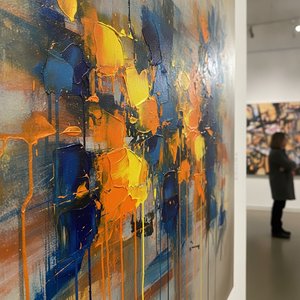
Beyond the Lines: Mastering the High-Impact World of Contemporary Abstraction
Master the high-impact world of contemporary abstraction. Discover how bold colors, textures, and modern movements like Abstract Expressionism can transform your space with premium, high-energy art curated for the design-conscious professional.