 Bekijk op ware grootte
 Verstuur
 Delen
Delen
 Details bekijken
 Gids voor studentenkunstwerken

 Download
 Vergelijkbare items
 Röntgenonderzoek
 Diavoorstelling
 Statistieken
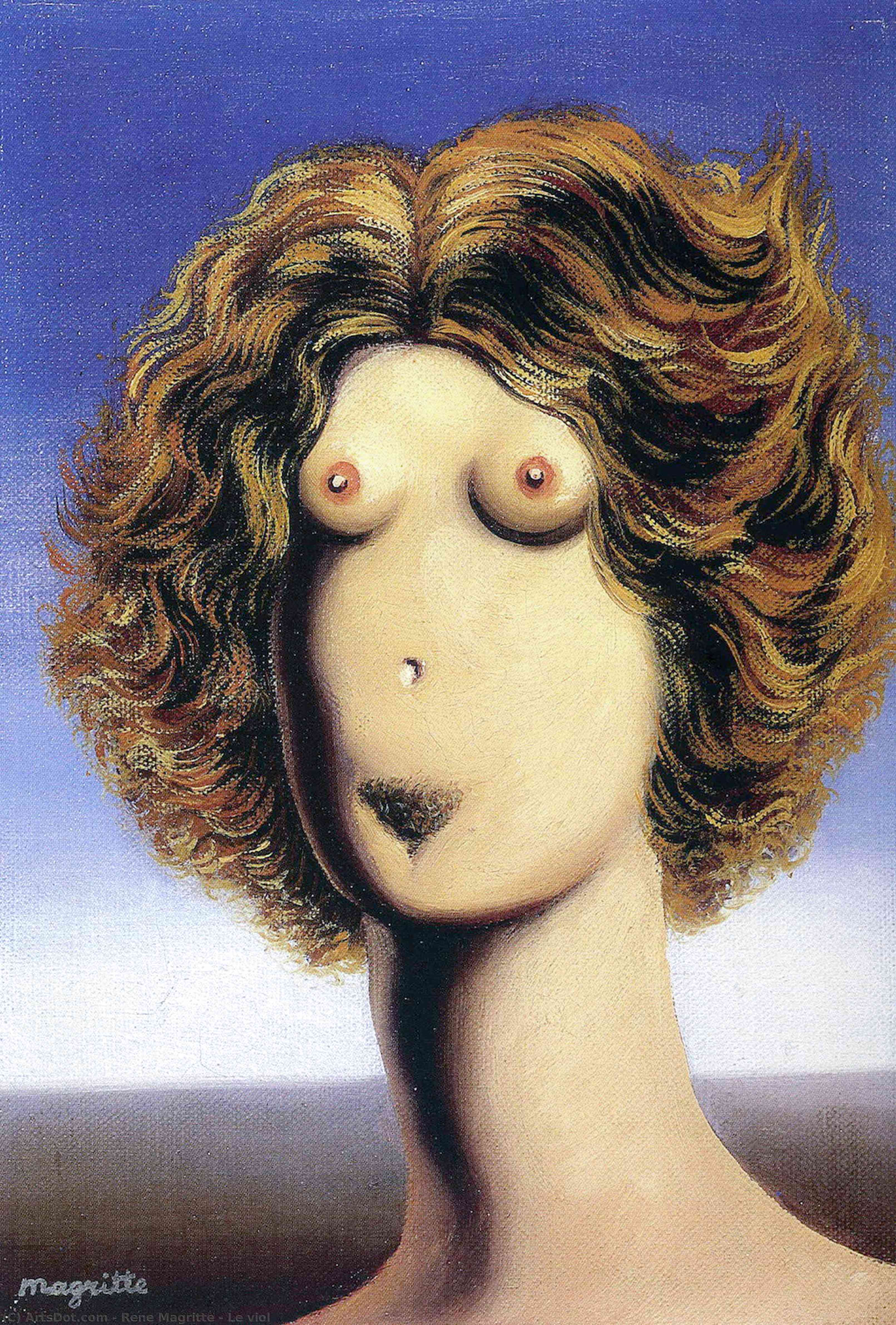
Le viol


 Lees meer
De kunstwerken die op deze pagina worden weergegeven, zijn beschermd door de auteursrechtwetgeving, wat betekent dat het ons wettelijk niet is toegestaan om identieke reproducties te maken of te verkopen. Deze bescherming wordt gehandhaafd onder internationale overeenkomsten zoals de Conventie van Bern en door nationale wetgeving, waaronder de bepalingen van de Amerikaanse auteurswet - Titel 17. Alle rechten voorbehouden. Reproduceren of distribueren van afbeeldingen is niet toegestaan zonder uitdrukkelijke schriftelijke toestemming van WahooArt.com en de rechthebbenden.
Deze methode voldoet volledig aan de auteursrechtwetgeving, omdat het niet gaat om het kopiëren of dupliceren van het beschermde kunstwerk. In plaats daarvan is er sprake van een creatieve herinterpretatie — een nieuw schilderij dat door het origineel wordt geïnspireerd, maar er niet identiek aan is.
Giclée / Kunstafdrukken
Giclée- of canvasafdruk van museumkwaliteit met een snelle productie en flexibele afwerkingsmogelijkheden. ( Koop handgeschilderd kunstwerk Schakel over naar digitale afbeeldingen)




P118B €10

P118H €10

P118W €10

P438Z €10

P508JH €12

P508YH €12

P805H €10

P805Z €10

P919BZ €10

P919G €10

P919XJ €10

P959ZH €10

P968JZ €12

W106C €8

W218G €10

W218JH €8

W218Y €10

W307PJ €10

W316G €10

W316PJ €8

W316Y €10

W398PJ €8

W4111J €10

W500HY €15

W500JH €15

W692G €12

W849H €8

W940BG €15

W953PJ €8




Kies uit onze vooraf ingestelde maten die overeenkomen met de originele verhoudingen van het kunstwerk.

Voer de breedte en de hoogte in die u nodig heeft, passend bij uw lijst of uw muur. Een afdruk kan alleen worden ingekort, nooit groter worden gemaakt dan het origineel, waardoor een formaat met een andere verhouding een deel van de afbeelding verliest. Wij sturen u een digitaal mockup ter goedkeuring voordat we iets drukken. De afbeelding op deze pagina toont niet de werkelijke uitsnede — dit is alleen te zien op het mockup.
Wereldwijde levering () binnen 2 weken in plaats van de standaard 4/5 weken. (22 oktober)

Gratis wereldwijde expressverzending

Hoogwaardig linnen canvas

Volledige verzendverzekering

Garantie op terugbetaling van invoerrechten

Garantie op exacte kleurweergave

Retourbeleid van 100 dagen (alleen bij defecten)

100% Geld-terug-garantie

Korting bij meerdere afnames
 De optie voor glas is alleen beschikbaar bij een formaat kleiner dan 110 cm.

Le viol
Giclée / Kunstafdrukken
Formaat reproductie
-


Totaalprijs
€ 71
A Surrealist Riddle: Exploring René Magritte’s “Le Viol”
René Magritte's "Le Viol," painted in 1935, isn’t merely a depiction of a woman; it’s an invitation to confront the unsettling core of perception itself. This deceptively simple image—a nude female figure with two breasts—immediately arrests the viewer’s gaze and compels contemplation beyond its surface appearance. Magritte, deeply influenced by the burgeoning Surrealist movement, skillfully employs visual paradox to unsettle conventional notions of beauty and reality.The Style and Technique of Illusion
Magritte's approach aligns perfectly with Surrealism’s manifesto championed by André Breton—a deliberate rejection of rational thought in favor of accessing the subconscious mind. He achieves this effect through meticulous realism rendered in oil paint on canvas, a technique that contrasts sharply with the dreamlike distortions characteristic of other Surrealist artists. The artist employs precise shading and tonal gradations to create an illusionistic depth, grounding the fantastical element—the doubled breast—within a believable space. This careful craftsmanship underscores Magritte’s commitment to portraying the world as it *feels*, rather than simply how it looks.Historical Context: Surrealism's Challenge to Convention
The 1930s witnessed a fervent debate regarding artistic expression and societal values. Surrealism arose from disillusionment with the horrors of World War I and a desire to liberate thought from the constraints of logic. Breton argued that art should bypass conscious control, tapping into primal instincts and repressed desires—a radical departure from academic painting’s focus on idealized representations. “Le Viol” embodies this spirit, mirroring the movement's preoccupation with exploring hidden anxieties and questioning accepted standards of femininity. It reflects a broader cultural fascination with psychoanalysis and its exploration of unconscious motivations.Symbolism: Beyond Anatomy – A Meditation on Desire
The doubled breast is arguably the painting’s most potent symbol—a deliberate provocation designed to disrupt our ingrained understanding of female anatomy. While seemingly straightforward, Magritte avoids explicit eroticism; instead, he presents a visual enigma that invites interpretation. Some scholars suggest it represents fertility and motherhood, while others interpret it as a commentary on societal pressures surrounding female sexuality. The woman’s gaze is averted, furthering the sense of mystery and emphasizing the difficulty of accessing inner thoughts and emotions. Magritte's masterful use of symbolism elevates “Le Viol” beyond mere visual representation, transforming it into a profound meditation on desire and vulnerability.Emotional Resonance: Unease and Intellectual Engagement
“Le Viol” lingers in the viewer’s mind long after initial observation—a testament to its ability to evoke feelings of unease and stimulate intellectual curiosity. Magritte doesn't offer answers; he poses questions, forcing us to confront our assumptions about beauty, sexuality, and the nature of reality. Like many Surrealist artworks, it operates on multiple levels, stimulating contemplation and prompting viewers to consider alternative perspectives. Its enduring appeal lies in its refusal to succumb to easy interpretations—a characteristic that secures its place as a cornerstone of 20th-century art history.Vragen & Antwoorden
Hoe sterk is het contrast in "Le viol" door René Magritte?
"Le viol" door René Magritte vertoont een Statement contrast tussen de lichte en donkere partijen.
Tot welke periode in de carrière van René Magritte behoort "Le viol"?
"Le viol" behoort tot de Brussels Period in de carrière van René Magritte. Deze classificatie plaatst het werk in de context van de ontwikkeling van de kunstenaar.
Is er een download beschikbaar voor "Le viol"?
"Le viol" door René Magritte kan worden gedownload via de Downloaden-pagina van het kunstwerk, als een download van een digitale afbeelding in hoge resolutie.
Biografie van de kunstenaar
Early Life and the Seeds of Surrealism
René Magritte, geboren René François Ghislain Magritte op 21 november 1898 in Lessines, België, kwam in een wereld terecht die zijn enigmatische artistieke visie diepgaand zou vormen. Zijn vroege jaren werden gekenmerkt door een onheilspellend incident – de zelfmoord van zijn moeder toen hij slechts dertien jaar oud was. Het beeld van haar lichaam dat uit de Samber werd opgegraven, met haar jurk die haar gezicht bedekte, werd een spookachtig motief dat subtiel terugkeerde in zijn latere werk, zich manifesteerde in verduisterde figuren en een voortdurende zoektocht naar verborgen realiteiten. Deze vroege trauma’s zaaiden een fascinatie met mysterie, verlies en de verstikkende kracht van wat onthuld blijft. Hoewel details van zijn jeugd enigszins ongrijpbaar zijn, is duidelijk dat deze vormende ervaring de basis legde voor zijn levenslange vraaging naar perceptie en representatie. Hij begon op tienjarige leeftijd met tekenen, wat een innige neiging tot visuele expressie onthulde, maar experimenteerde aanvankelijk met Impressionisme voordat hij een pad insloeg dat hem zou leiden tot het worden van een van de meest significante figuren in de Surrealistische kunst.Artistic Development and Influences
Magritte’s artistieke reis was niet direct of rechtlijnig. Hij studeerde aan de Académie Royale des Beaux-Arts in Brussel, maar vond de traditionele methoden daar verstikkend. Zijn vroege werk experimenteerde met Futurisme en Cubisme, waardoor elementen van deze avantgardistische bewegingen werden opgenomen, maar uiteindelijk weigerde hun puur formele bezorgdheid. Het was pas in 1922, toen hij de schilderij *The Song of Love* van Giorgio de Chirico ontmoette, dat Magritte een resonatie ontdekte die zijn artistieke koers onherstelbaar zou veranderen. De Chirico’s dromerige landschappen en verontrustende juxtaposities openden voor Magritte een nieuwe manier van kijken – een wereld waar het bekende vreemd kon worden gemaakt, en het alledaagse met diepe mystiek werd ingezaaid. Dit ontmoeting leidde tot zijn toewijding aan Surrealisme, hoewel hij vaak een unieke afstand behield van de meer expliciet psychologische of automatische aspecten ervan. Hij prefereerde een nauwkeurige, bijna klinische precisie in zijn schilderkunst, waarbij hij realistische technieken gebruikte om illogische scenario’s weer te geven.The Heart of Surrealism: Challenging Reality
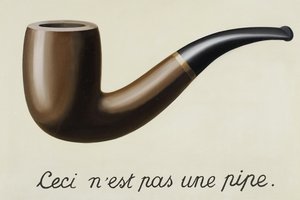
Vanaf 1926 had Magritte zich volledig ingezet voor de principes van Surrealisme, waarbij hij *Le Jockey Perdu (The Lost Jockey)* produceerde, die breed wordt beschouwd als zijn eerste echt surrealistische werk. Echter, zijn soort Surrealisme was uniek. Hij was niet geïnteresseerd in het verkennen van het onbewuste door vrije associatie of dromerige beelden zoals sommige van zijn tijdgenoten. In plaats daarvan zocht Magritte naar een manier om de perceptie van de werkelijkheid uit te dagen door alledaagse objecten in onverwachte contexten te presenteren, waardoor kijkers werden aangemoedigd hun aannames over de wereld om hen heen in twijfel te trekken. Iconische werken zoals *The Treachery of Images (This is not a pipe)* (1929) ontleden het relatie tussen beeld en object briljant, herinnerend ons dat een representatie nooit het ding zelf is. *Les Amants (The Lovers)* (1927-1928), met zijn verduisterde figuren, echoë de trauma’s van zijn moeder dood terwijl tegelijkertijd intimiteit en verborgenheid worden onderzocht. *Time Transfixed* (1938) presenteert een locomatief die door een bakstenen muur barst, waardoor onze perceptie van ruimte en tijd wordt verstoord. En *The Human Condition* (1933), een doek in een doek, vervaagt de grenzen tussen representatie en werkelijkheid, waardoor we worden aangemoedigd om te overwegen hoe we de wereld waarnemen en interpreteren.Later Life, Recognition, and Enduring Legacy
Ondanks initiële moeilijkheden met erkenning, kreeg Magritte’s werk geleidelijk aan meer bekendheid, vooral in de Verenigde Staten door tentoonstellingen in 1936 en latere retrospectieve tentoonstellingen op het Museum of Modern Art (1965) en het Metropolitan Museum of Art (1992). Hij bleef politiek actief gedurende zijn hele leven, waarbij hij artistieke autonomie verdedigde. Hij bleef zijn kenmerkende stijl verfijnen, thema’s van herhaling, illusie en de kracht van taal onderzoeken in schilderijen die zowel intellectueel stimulerend als visueel aantrekkelijk zijn. Magritte stierf op 15 augustus 1967, waardoor een oeuvre achterbleef dat nog steeds kijkers wereldwijd fascineert en uitdaagt. Zijn invloed strekt zich verder uit dan de schilderkunst, beïnvloedt pop art, minimalistische kunst, conceptuele kunst en zelfs reclame en film. Vandaag de dag worden zijn schilderijen in belangrijke museumcollecties over de hele wereld gehouden, waaronder de Musées royaux des beaux-arts de Belgique in Brussel, die het Magritte Museum herbergen – gewijd geheel aan zijn werk en dat de grootste collectie van zijn creaties bezit.- Museum Collecties: Musées royaux des beaux-arts de Belgique, Brussels; Magritte Museum.
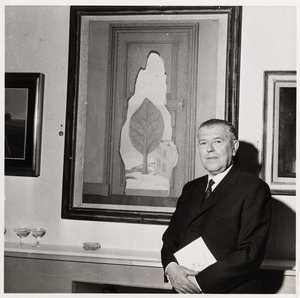
René Magritte
1898 - 1967 , België
Snelle feiten
- Artistic Movement Or Style: Surrealisme
- Artists Or Movements Influenced By This Artist:
- Pop art
- Minimalisme
- Artists Who Influenced This Artist: ['Giorgio de Chirico']
- Date Of Birth: 21 november 1898
- Date Of Death: 15 augustus 1967
- Full Name: René François Ghislain Magritte
- Nationality: Belgisch
- Notable Artworks:
- De Lovers
- Treurkaart
- Tijd verstijfd
- Place Of Birth: Lessines, België
Gerelateerde artikelen

Beyond Reality: A Sophisticated Exploration of the Dreamlike Architecture in Surrealist Landscapes
Embark on a sophisticated journey through the dreamlike architecture of Surrealist landscapes. Uncover the profound psychological depths and visual paradoxes of masters like Salvador Dalí in this expert exploration of art’s most captivating, impossible vistas.
The Treachery of Images: Decoding René Magritte’s Surrealist Philosophy and the Paradox of Representation
Explore the profound mystery of René Magritte’s 'The Treachery of Images.' Dive into an expert analysis of his Surrealist philosophy, the paradox of representation, and how he challenged reality through the interplay of language and visual perception.

The Treachery of Images: Decoding René Magritte’s Surrealist Vision and the Paradox of Representation
Delve into the profound mysteries of René Magritte’s Surrealism. Explore an expert analysis of 'The Treachery of Images,' decoding the philosophical paradoxes and visual subversions that redefined modern art history for collectors and connoisseurs alike.

The Enduring Allure of the Nude: A Historical & Artistic Exploration of the Human Form
Explore the captivating history of nude art! Discover iconic paintings & artists from classical to modern eras. Uncover symbolism, techniques & find museum-quality reproductions at OriginalUniqueArt.
Top 10 Surrealistische Meesterwerken: Kunst die de Realiteit Uitdaagt | OriginalUniqueArt
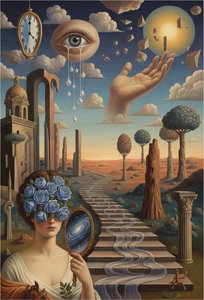
Ontdek de 10 meest iconische surrealistische schilderijen van Dalí, Magritte & Miró. Duik in de droomwereld en onbewuste kunst met OriginalUniqueArt's collectie hoogwaardige reproducties. Vind jouw perfecte wandkunst! Explore the full collection online.