

 Voorvertoning
 Verstuur
 Delen
Delen
 Details bekijken

 Download
 Vergelijkbare items
 Röntgenonderzoek
 Diavoorstelling
 Stats
StatsMalaria

 Lees meer
Giclée / Kunstafdrukken
Giclée- of canvasafdruk van museumkwaliteit met een snelle productie en flexibele afwerkingsmogelijkheden. ( Bestel handgeschilderde reproductie Switch to Digital Image)




































Kies uit onze vooraf ingestelde maten die overeenkomen met de originele verhoudingen van het kunstwerk.

U kunt uw eigen afmetingen opgeven om in een specifieke lijst of ruimte te passen. Als de door u gekozen maat niet overeenkomt met de proporties van het originele kunstwerk, zullen wij de afbeelding bijsnijden of uitbreiden met een gespiegelde of effen rand. Een digitaal mockup wordt ter goedkeuring naar u verzonden voordat de productie begint.
Houd er rekening mee dat de preview op het scherm de werkelijke bijsneding of uitbreiding niet weergeeft. Alleen de mockup toont de uiteindelijke compositie nauwkeurig.
Hoewel aangepaste maten beschikbaar zijn, raden wij aan een afmeting uit de vooraf bepaalde lijst te kiezen om de originele proporties te behouden.
Wereldwijde levering () binnen 2 weken in plaats van de standaard 4/5 weken. (8 september)

Gratis wereldwijde expressverzending

Hoogwaardig linnen canvas

Volledige verzendverzekering

Garantie op terugbetaling van invoerrechten

Garantie op exacte kleurweergave

Retourbeleid van 100 dagen (alleen bij defecten)

100% Geld-terug-garantie

Korting bij meerdere afnames
 De optie voor glas is alleen beschikbaar bij een formaat kleiner dan 110 cm.

Malaria
Giclée / Kunstafdrukken
Afmetingen reproductie
-


Eindtotaal
$ 81
A Haunting Vision of Nature's Intrusion: Remedios Varo’s "Malaria"
Remedios Varo’s “Malaria” is a captivating oil painting that plunges the viewer into a meticulously rendered, yet dreamlike swamp environment. This work exemplifies Varo’s unique para-surrealist style, blending scientific precision with mystical symbolism and a palpable sense of melancholy. The artwork presents a layered composition; from the detailed foreground reeds and foliage to the hazy background, drawing the eye towards the central, dramatically enlarged figure of a mosquito – the painting's namesake. It is not merely a depiction of nature but an exploration of its unsettling power and potential for intrusion.Style & Technique: Realism Meets Surrealist Atmosphere
The painting’s technical mastery is immediately apparent. Varo employs a realistic style, meticulously capturing the textures of water, reeds, and leaves. However, this realism is subtly infused with impressionistic elements – particularly in the diffused lighting and atmospheric perspective that creates a sense of depth and distance. The use of oil on canvas allows for rich color gradations and visible impasto in certain areas, adding to the textural complexity. Notice how the organic lines mimic the natural forms within the scene, contrasting with the sharp focus on the mosquito itself. This juxtaposition highlights the unsettling presence of this seemingly insignificant creature magnified to a monumental scale.Symbolism & Historical Context
“Malaria” is steeped in symbolism, reflecting Varo’s intellectual and philosophical interests. The mosquito, enlarged and dominating the composition, transcends its literal representation to become a potent symbol of disease, decay, and perhaps even an unsettling intrusion into the tranquility of nature. Considering Varo's anarchist leanings and her fascination with alchemy and mysticism, the painting can be interpreted as a commentary on hidden forces at play within seemingly natural systems. Created during a period marked by political upheaval in Europe (though Varo was living in Mexico at this point), the work subtly reflects anxieties surrounding vulnerability and unseen threats. Varo's background in technical drawing also informs her precise rendering of the mosquito, lending it an almost scientific quality that further enhances its unsettling presence.Emotional Impact & Artistic Legacy
“Malaria” evokes a profound sense of melancholy and unease. The muted color palette – dominated by greens, browns, and yellows – contributes to this somber mood. While the scene is rendered with remarkable detail, there's an underlying dreamlike quality created by the flattened perspective and atmospheric haze. This combination creates a captivating tension between realism and surrealism, leaving the viewer contemplating the delicate balance between beauty and decay within the natural world. As a key figure in para-surrealism, Remedios Varo’s work continues to inspire artists and captivate audiences with its unique blend of technical skill, philosophical depth, and haunting imagery.Biografie van de kunstenaar
A Life Bridging Science, Mysticism, and Surrealism
Remedios Varo (1908-1963) stands as a singular figure in 20th-century art, an artist whose work defies easy categorization. Though often associated with the Surrealist movement, her vision extended far beyond its boundaries, weaving together scientific precision, alchemical symbolism, and a deeply personal mythology. Born María de los Remedios Alicia Rodriga Varo y Uranga in Anglès, Spain, her early life was shaped by a fascinating duality: a pragmatic father, a hydraulic engineer who instilled in her a love for technical drawing and meticulous observation, and a devoutly Catholic mother whose influence sparked a lifelong questioning of established norms. This tension between reason and faith, science and spirituality, would become a defining characteristic of her art. Her childhood was marked by frequent relocations following her father’s work, exposing her to diverse landscapes and cultures, while her formal education at the Real Academia de Bellas Artes de San Fernando in Madrid provided a solid foundation in traditional artistic techniques. It was there she encountered fellow artists like Salvador Dalí, though her path would diverge into more introspective and uniquely symbolic territory.Early Influences and Artistic Beginnings
Varo’s early work reflected the prevailing styles of the time—sensitive portraits and realistic depictions of her surroundings. However, a growing fascination with the esoteric began to permeate her artistic explorations. In Madrid, she became involved with a group known as the Logicophobists, who sought to reconcile art and metaphysics, delving into realms beyond rational understanding. This period marked a crucial shift in her thinking, laying the groundwork for the intensely personal iconography that would define her mature style. Her father’s influence was particularly significant; he nurtured her artistic talent by encouraging meticulous observation of technical drawings and introducing her to scientific literature alongside fantastical tales. She devoured books on alchemy, philosophy, and mythology – a blend of knowledge that would later inform her symbolic language. The outbreak of the Spanish Civil War forced Varo to flee Europe, eventually finding refuge in Mexico City in 1938. This relocation proved transformative. Freed from the constraints and political turmoil of wartime Europe, she discovered a vibrant artistic community and an environment conducive to fully realizing her unique vision. Mexico offered not just safety but also a fertile ground for exploring her interests in alchemy, astrology, and indigenous philosophies—influences that would become inextricably linked to her art.Mexico City: A Crucible of Creativity
In Mexico, Varo established a close circle of fellow artists, including Leonora Carrington and Kati Horna – often referred to as “the three witches.” These women shared a deep interest in alchemy, mysticism, and the exploration of feminine power. They formed a supportive community that encouraged experimentation and challenged conventional artistic norms. During this period, Varo’s style evolved dramatically. She began incorporating elements of Mexican folklore, indigenous symbolism, and her own personal mythology into her paintings. Her work became increasingly dreamlike and surreal, yet grounded in a meticulous attention to detail and a profound understanding of human psychology. She continued to illustrate for commercial clients, primarily pharmaceutical companies, which provided a crucial source of income during this period, allowing her to dedicate more time to her artistic pursuits. It was here that she developed the distinctive style characterized by intricate machinery, hybrid figures, and enigmatic narratives – a visual language that would become instantly recognizable.The Language of Symbols: Alchemy, Technology, and the Feminine Mystique
Varo’s artistic style is instantly recognizable – a meticulous blend of technical draftsmanship and dreamlike imagery. Her paintings are populated by fantastical machines, hybrid creatures, and enigmatic female figures engaged in mysterious activities. These aren't merely whimsical creations; they are carefully constructed allegories, laden with symbolic meaning. Alchemy serves as a central theme, not simply as a historical practice but as a metaphor for transformation—the process of refining the self through knowledge and experience. Her depictions of intricate apparatuses suggest a desire to understand and manipulate the forces of nature, while also hinting at the limitations of human control. Recurring motifs include cages, towers, and journeys – all representing the constraints and aspirations of the human spirit. Perhaps most compelling is her portrayal of women: not as passive muses or objects of desire, but as active agents of change—inventors, scientists, alchemists, and seekers of knowledge. She challenges traditional gender roles, presenting a vision of feminine power rooted in intellect, intuition, and spiritual exploration. Creation of the World or Microcosm, for example, showcases her early fascination with creation myths and scientific principles, while works like Star Catcher exemplify her ability to merge mysticism with technical skill.Legacy and Enduring Influence
Remedios Varo’s contribution to art history lies in her development of what has been termed “para-surrealism”—an expansion upon traditional Surrealism that incorporates elements of alchemy, mysticism, and esoteric knowledge. She wasn't interested in simply accessing the subconscious, as many Surrealists were; she sought to create a visual language for exploring deeper truths about the universe and humanity’s place within it. Her work resonates with contemporary audiences because it speaks to our enduring fascination with the mysteries of existence, the power of transformation, and the search for meaning in an increasingly complex world. Though her career was relatively short—she died prematurely at the age of 54—her impact on subsequent generations of artists is undeniable. She paved the way for a more inclusive and multifaceted understanding of Surrealism, inspiring those who seek to bridge the gap between science, spirituality, and artistic expression. Her paintings continue to captivate viewers with their intricate detail, enigmatic symbolism, and profound sense of wonder.Exploring Varo’s World Today
- Her works can be found in numerous private collections worldwide.
- Significant examples of her art are held at the Real Academia de San Fernando (Madrid).
- The Munnings Art Museum offers a glimpse into British artistry that influenced her early work.
- Museums like MoMA have featured her works, solidifying her place in art history.
Today, Remedios Varo’s legacy continues to grow. Her paintings invite us to embark on our own journeys of discovery—to question assumptions, embrace the unknown, and explore the hidden dimensions of reality.

Remedios Varo
1865 - 1911 , Spanje
Belangrijkste feiten
- Artistic Movement Or Style: Para-Surrealisme
- Artists Or Movements Influenced By This Artist:
- Dalí
- Surrealisme
- Artists Who Influenced This Artist:
- Bosch
- Goya
- El Greco
- Date Of Birth: 1908
- Date Of Death: 1963
- Full Name: María de los Remedios Alicia Rodriga Varo y Uranga
- Nationality: Spaans-Mexicaanse
- Notable Artworks:
- Star Catcher
- Icon
- Face
- Place Of Birth: Angles, Spanje
Gerelateerde artikelen
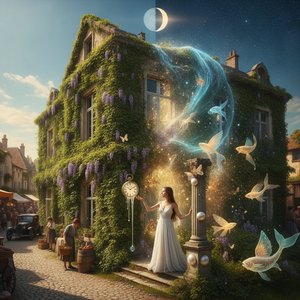
Magic Realism Unveiled: The Sophisticated Intersection of Tangible Reality and the Extraordinary
Explore the enigmatic world of Magic Realism. From its German origins to Latin American mastery, discover how this sophisticated movement blends reality with the extraordinary—perfect for discerning collectors seeking depth and wonder in fine art.

Romantic Realism's Finest: 10 Masterpieces for Your Home | OriginalUniqueArt
Explore 10 defining masterpieces of Romantic Realism! Discover Courbet, Millet & Daumier's powerful paintings—capturing emotion and social realities. Find museum-quality reproductions for your home at OriginalUniqueArt.com.
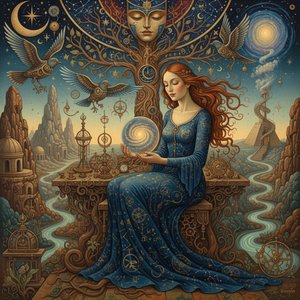
Remedios Varo: A Surrealist Vision of Science, Mysticism & the Female Psyche
Explore the captivating world of Remedios Varo, a pioneering Surrealist painter blending science, mysticism & feminist themes. Discover her unique style and enduring legacy with OriginalUniqueArt.
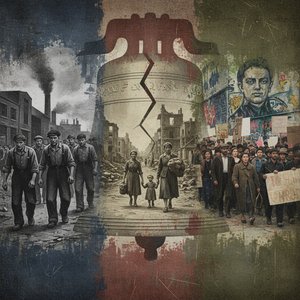
Echoes of Society: Exploring Social Realism's Enduring Legacy in Art
Explore the powerful world of Social Realism art! Discover key artists, masterpieces & its profound social commentary. Expert insights into this influential movement's history and enduring legacy.
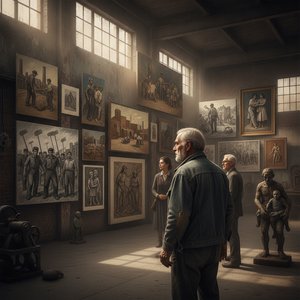
The Raw Truth: A Definitive Guide to the Power and Legacy of Social Realism Art
Explore the profound impact of Social Realism. Discover how masters like Courbet rejected idealism to capture the raw, socio-political truths of the working class through powerful, unvarnished art history and enduring visual critique.