 Olieverfversie
 Alles over Fantasy







































 Voor kunstwerken of reproducties die aan één zijde groter zijn dan 105 cm (ongeveer 41 inch), wordt de lijst als een losse set verzonden. Deze methode garandeert een veilige levering en voorkomt schade tijdens het transport.


The Composition of Emergence
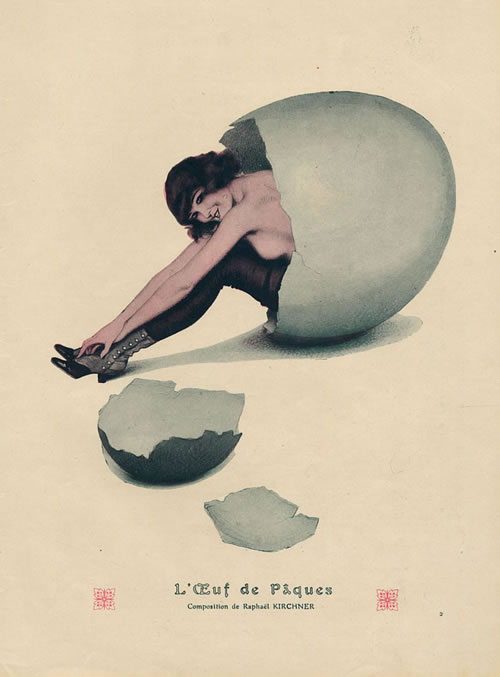
The artwork presents a central figure of a nude woman positioned within the hollow of a large, fractured eggshell. The shell is broken into several irregular, geometric fragments that surround the organic form of the body. The woman's skin is rendered in pale cream and beige tones, contrasting with the darker, shadowed recesses of the shell's interior. Her form is defined by soft, continuous lines that trace the contours of her limbs and torso. The lighting is diffused, creating subtle gradients of shadow across the smooth surface of her skin and the textured, matte surfaces of the eggshell. The background remains neutral, focusing all visual weight on the intersection of the broken calcium structure and the human figure. This arrangement creates a sense of depth through the layering of the shell fragments in the foreground and the figure in the midground.
Technical and Stylistic Attributes
The piece utilizes a muted color palette dominated by shades of ivory, cream, and light tan. The medium appears to be ink on paper, evidenced by the tonal variations and the precision of the line work. The style aligns with the transition between Symbolism and early Surrealism, characterized by a focus on dreamlike subject matter and non-literal representation. The following elements define the visual structure:
- The use of organic shapes to represent the human body and the egg.
- The use of geometric, sharp-edged shapes to represent the cracked shell.
- A flattened perspective that emphasizes the symbolic arrangement over spatial realism.
- A soft, non-directional light source that minimizes harsh highlights.
Historical Context and Symbolism
Created in 1914, this work emerged during a period of significant transition in European art. The subject matter utilizes the egg as a symbol of birth, renewal, or the unveiling of internal potential. The juxtaposition of the rigid, broken shell and the soft, emerging figure suggests a moment of transition from a confined state to an open one. This imagery reflects the broader artistic shifts occurring in the early 20th century, where artists moved away from strict realism toward more psychological and symbolic depictions of the human condition. The work's aesthetic, characterized by a blend of technical precision and ethereal subject matter, is consistent with the Art Nouveau influences prevalent in the era.
Veelgestelde vragen
Is Fantasy handgeschilderd of een print?
Met de hand geschilderd: een professioneel kunstenaar kopieert Fantasy in olieverf op linnen canvas.
Welke maat moet ik kiezen voor Fantasy?
De afmetingen variëren van 36.8 x 27.2 cm (€179) tot 245.0 x 181.0 cm (€1470); in de tabel op deze pagina vindt u de verschillende opties en de bijbehorende prijzen.
Hoe lang duurt de bezorging?
De levertijd bedraagt 4 tot 5 weken, inclusief gratis wereldwijde expressverzending; op deze pagina wordt een optie voor spoedproductie aangeboden. U kunt het binnen 100 dagen zonder voorwaarden retourneren voor een volledige terugbetaling.
Is het origineel van Fantasy een tekening of een schilderij?
Een tekening: Raphael Kirchner maakte deze in Ink On Paper.
 Voorvertoning

 Verstuur
 Delen
 Details bekijken
 Informatieblad


 Download
 Vergelijkbare items
 Röntgenonderzoek
 Diavoorstelling
 Vraag & antwoord

 Statistieken


