
 Voorvertoning
 Verstuur
 Delen
Delen
 Details bekijken
 Gids
Gids

 Download
 Vergelijkbare items
 Röntgenonderzoek
 Diavoorstelling
 Vraag & antwoord
 Statistieken
The Canoe Builders

 Lees meer
Giclée / Kunstafdrukken
Giclée- of canvasafdruk van museumkwaliteit met een snelle productie en flexibele afwerkingsmogelijkheden. ( Bestel handgeschilderde reproductie Schakel over naar digitale afbeeldingen)




































Kies uit onze vooraf ingestelde maten die overeenkomen met de originele verhoudingen van het kunstwerk.

Voer de gewenste breedte en hoogte in, passend bij uw lijst of muur. Een afdruk kan alleen worden ingekort en nooit groter worden gemaakt dan het origineel; een formaat met andere verhoudingen zal daarom een deel van de afbeelding verliezen. Wij sturen u een digitaal mockup ter goedkeuring voordat we tot drukwerk overgaan. De afbeelding op deze pagina toont niet de werkelijke uitsnede — dit is alleen te zien op het mockup.
Wereldwijde levering () binnen 2 weken in plaats van de standaard 4/5 weken. (11 november)

Gratis wereldwijde expressverzending

Hoogwaardig linnen canvas

Volledige verzendverzekering

Garantie op terugbetaling van invoerrechten

Garantie op exacte kleurweergave

Retourbeleid van 100 dagen (alleen bij defecten)

100% Geld-terug-garantie

Korting bij meerdere afnames
 De optie voor glas is alleen beschikbaar bij een formaat kleiner dan 110 cm.

The Canoe Builders
Giclée / Kunstafdrukken
Afmetingen reproductie
-


Eindtotaal
€ 72
Artistic Style and Technique
Blakelock's artistic style is characterized by his use of dark, moody palettes and an almost mystical quality that permeates his scenes. In The Canoe Builders, this style is evident in the depiction of a group of Native American figures engaged in the construction of a canoe, set against a backdrop of dense, shadowy forest. The scene is imbued with a sense of quiet industry and harmony with the natural surroundings. Key Features of the painting include:- The use of light and shadow to create a dramatic contrast
- The poignant portrayal of a vanishing way of life
- The technical mastery and emotional depth of the piece
Artistic Significance
The Canoe Builders is celebrated for its technical mastery and emotional depth. Blakelock's ability to convey the subtleties of light and texture, combined with his poignant portrayal of a vanishing way of life, makes this painting a significant work in American art history. It reflects the artist's fascination with the American wilderness and his respect for the indigenous cultures that inhabited these landscapes. For those interested in learning more about Ralph Albert Blakelock and his work, visit the OriginalUniqueArt.com website, which offers a wide range of handmade oil paintings reproductions, including The Canoe Builders. Additionally, the Wikipedia page on Ralph Albert Blakelock provides further information on the artist's life and work.The Smithsonian American Art Museum also features The Canoe Builders in its collection, highlighting the painting's importance in American art history.
Veelgestelde vragen
Zijn de kleuren van "The Canoe Builders" levendig of gedempt?
De kleur van "The Canoe Builders" heeft een verzadiging van Subtle Color en een intensiteit van Monochromatic.
Hoe kan ik een print van "The Canoe Builders" door Ralph Albert Blakelock verkrijgen?
"The Canoe Builders" is verkrijgbaar als een fine art print op katoenen canvas of archiefwaardig canvaspapier. U kunt uw bestelling plaatsen op de Fine Art Print pagina, in de afmeting naar keuze.
Welk palet en welke hoofdkleur bepalen "The Canoe Builders"?
De kleuridentiteit van "The Canoe Builders" door Ralph Albert Blakelock: een Earthy palet, gedomineerd door Espresso (#4d2a1d).
Biografie kunstenaar
Ralph Albert Blakelock (1847–1919): A Life Shrouded in Mystery
Ralph Albert Blakelock, born in New York City in 1847, remains one of the most enigmatic and tragically compelling figures in American art. His life was a poignant blend of artistic vision and personal turmoil, a narrative often overshadowed by obscurity until late in his career. The son of a successful English physician, young Ralph initially followed a path toward medicine, enrolling at the Free Academy of the City of New York – now City College – in 1864. However, the allure of art and music proved too strong to resist, leading him to abandon medical studies after only three terms and dedicate himself fully to creative pursuits. Largely self-taught, Blakelock’s artistic development was a deeply personal journey, shaped by observation, introspection, and an innate sensitivity to the natural world rather than formal academic constraints. This independence would become a defining characteristic of his unique style.Early Influences and Artistic Beginnings
Blakelock's formative years were marked by exposure to both classical music and visual arts—a combination that profoundly shaped his artistic sensibilities. He demonstrated an early aptitude for drawing, honing his skills through self-directed study and experimentation. Recognizing the importance of mastering technique, Blakelock diligently practiced sketching landscapes and portraits, absorbing influences from artists such as Frederic Church and Albert Pinkham Ryder – figures who championed a Romantic aesthetic rooted in emotional expression and sublime grandeur. These connections to prominent artistic voices would prove crucial in establishing Blakelock’s distinctive stylistic trajectory. His initial works reflected the prevailing Hudson River School tradition, characterized by luminous color palettes and meticulous depictions of American wilderness—a style that nevertheless served as springboard for his own explorations into mood and atmosphere.Western Wanderings: Inspiration from Native Landscapes
A pivotal period in Blakelock’s life was his extensive journey through the American West from 1869 to 1872. He ventured far beyond established settlements, immersing himself in the landscapes and cultures of the frontier. This wasn't merely a geographical exploration; it was a spiritual quest that profoundly impacted his artistic vision. Spending time among Native American communities provided him with invaluable subject matter and inspiration, fueling his imagination with scenes of wilderness and indigenous life. He meticulously documented his experiences in notebooks filled with sketches and observations, which served as crucial references for his later works. These early landscapes and depictions of Indian encampments weren’t simply representations of what he saw; they were imbued with a romanticized, almost mystical quality, establishing the foundation for his distinctive artistic voice. The vastness and solitude of the West seemed to seep into his very being, influencing the mood and atmosphere that would become hallmarks of his paintings. He sought to capture not just the visual appearance of these landscapes but also their emotional resonance—a quest that would define his artistic practice for decades to come.The Tonalist Style: Darkness Embraced
Ralph Albert Blakelock is now recognized as a key figure within the Tonalist movement, an artistic current that emerged in the late 19th century as a reaction against the more detailed and dramatic styles of earlier landscape painting. His canvases are characterized by muted color palettes – often dominated by grays, browns, and greens – atmospheric effects achieved through subtle gradations of tone, and a profound emphasis on mood and emotion over precise representation. He frequently depicted nocturnal scenes and shadowy forests, creating an evocative sense of mystery and introspection. Blakelock’s technique was particularly unique; he famously incorporated coal tar into his pigments to deepen the darkness and achieve a velvety texture. The influence of Albert Pinkham Ryder is evident in this approach – Ryder's dreamlike landscapes resonated deeply with Blakelock’s own artistic sensibilities, inspiring him to explore similar themes of solitude, spirituality, and the sublime power of nature. He wasn’t interested in simply *depicting* a landscape; he sought to capture its essence, its emotional resonance, and its ability to stir the soul.Later Years: Institutionalization and Artistic Legacy
Despite his undeniable talent, Blakelock struggled with financial hardship throughout much of his life. Supporting a large family – nine children – proved an immense burden, leading him to sell paintings at drastically undervalued prices in moments of desperation. This economic strain contributed to a series of mental breakdowns, the first occurring in 1891, and another more severe episode in 1899 that resulted in nearly two decades spent institutionalized. Ironically, it was during this period of personal suffering that Blakelock’s work began to gain recognition, though often through the unfortunate proliferation of forgeries sold at inflated prices. A turning point arrived in 1916 when one of his landscapes achieved a record-breaking sale price of $20,000, bringing him unexpected public attention and leading to his election as an academician of the National Academy of Design (1916). Though he experienced brief periods of lucidity and continued painting within the confines of the asylum, Blakelock remained largely confined until his death on August 9, 1919, at the age of 71. His enduring legacy rests upon his ability to convey profound emotion through understated visual language—a testament to the transformative power of art and a poignant reminder of the complexities inherent in human experience.
Ralph Albert Blakelock
1847 - 1919 , Verenigde Staten van Amerika
Belangrijkste feiten
- Artistic Movement Or Style: Tonalisme
- Artists Or Movements Influenced By This Artist: ['Hudson River School']
- Artists Who Influenced This Artist: ['Albert Pinkham Ryder']
- Date Of Birth: October 15, 1847
- Date Of Death: August 9, 1919
- Full Name: Ralph Albert Blakelock
- Nationality: Amerikaans
- Notable Artworks:
- Moonlight
- Indian Encampment
- Place Of Birth: New York City, USA
Gerelateerde artikelen

25 Masterpieces by William Blake: The Visionary Art of a Romantic Legend
Step into the visionary world of William Blake. Explore 25 iconic Romantic masterpieces, from his mystical illuminated prints to legendary engravings. Find inspiration and museum-quality art reproductions for your collection. Discover all masterpieces on OriginalUniqueArt.com.

Top 10 Meesterwerken uit de 19e Eeuw: Kunstgeschiedenis voor uw Interieur
Ontdek de 10 meest iconische kunstwerken uit de 19e eeuw! Van romantiek tot impressionisme, leer het verhaal achter meesterwerken van Monet, Van Gogh & Delacroix. Vind museumkwaliteit reproducties en interieurinspiratie op OriginalUniqueArt.com.

Oil on Canvas: A Historical & Technical Exploration of a Timeless Artistic Medium
Explore the rich history & enduring techniques of oil painting on canvas. Discover the science behind its longevity, conservation practices, and contemporary relevance. Expert insights for art enthusiasts.
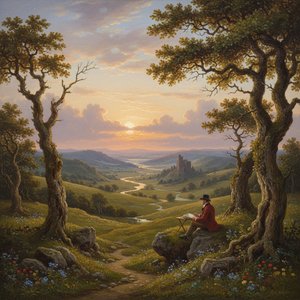
John Varley I: Intimate Observation & the British Romantic Landscape
Explore the serene landscapes of John Varley I, a key figure in British Romanticism. Discover his unique watercolour style, collaboration with William Blake & lasting artistic legacy. Learn about collecting Varley's work.

25 Masterpieces by William Blake: The Visionary Art of a Romantic Legend
Step into the visionary world of William Blake. Explore 25 iconic Romantic masterpieces, from his mystical illuminated prints to legendary illustrations. Find inspiration and museum-quality art reproductions for your decor. Discover all masterpieces on OriginalUniqueArt.com.