
 Voorvertoning
 Verstuur
 Delen
Delen
 Details bekijken
 Gids
Gids

 Download
 Vergelijkbare items
 Röntgenonderzoek
 Diavoorstelling
 Vraag & antwoord
 Statistieken
St Anne Altarpiece (left wing)

- 224.0 x 219.0 cm


 Lees meer
Giclée / Kunstafdrukken
Giclée- of canvasafdruk van museumkwaliteit met een snelle productie en flexibele afwerkingsmogelijkheden. ( Bestel handgeschilderde reproductie Schakel over naar digitale afbeeldingen)




P118B €10

P118H €10

P118W €10

P438Z €10

P508JH €12

P508YH €12

P805H €10

P805Z €10

P919BZ €10

P919G €10

P919XJ €10

P959ZH €10

P968JZ €12

W106C €8

W218G €10

W218JH €8

W218Y €10

W307PJ €10

W316G €10

W316PJ €8

W316Y €10

W398PJ €8

W4111J €10

W500HY €15

W500JH €15

W692G €12

W849H €8

W940BG €15

W953PJ €8




Kies uit onze vooraf ingestelde maten die overeenkomen met de originele verhoudingen van het kunstwerk.

Voer de gewenste breedte en hoogte in, passend bij uw lijst of muur. Een afdruk kan alleen worden ingekort en nooit groter worden gemaakt dan het origineel; een formaat met andere verhoudingen zal daarom een deel van de afbeelding verliezen. Wij sturen u een digitaal mockup ter goedkeuring voordat we tot drukwerk overgaan. De afbeelding op deze pagina toont niet de werkelijke uitsnede — dit is alleen te zien op het mockup.
Wereldwijde levering () binnen 2 weken in plaats van de standaard 4/5 weken. (4 november)

Gratis wereldwijde expressverzending

Hoogwaardig linnen canvas

Volledige verzendverzekering

Garantie op terugbetaling van invoerrechten

Garantie op exacte kleurweergave

Retourbeleid van 100 dagen (alleen bij defecten)

100% Geld-terug-garantie

Korting bij meerdere afnames
 De optie voor glas is alleen beschikbaar bij een formaat kleiner dan 110 cm.

St Anne Altarpiece (left wing)
Giclée / Kunstafdrukken
Afmetingen reproductie
-


Eindtotaal
€ 72
A Vision of Devotion: The Sacred Grace of St Anne
In the quiet, contemplative corner of the St Anne Altarpiece, specifically its left wing, we encounter a moment of profound spiritual intimacy that has captivated viewers for over five centuries. Painted in 1507 by the Flemish master Quentin Massys, this work serves as a breathtaking window into the soul of the Northern Renaissance. The scene is anchored by the figure of St Anne, depicted with a poignant realism that eschews the idealized perfection of the Italian masters in favor of a deeply human vulnerability. As she kneels in humble supplication, her hands raised toward the heavens, the viewer is not merely an observer of a religious event but a participant in her prayerful silence. The painting captures the very essence of piety, inviting anyone who gazes upon it to pause and reflect on the weight of devotion.
The composition is masterfully balanced by celestial messengers that bridge the gap between the earthly and the divine. To the left, an angel holds a delicate scroll inscribed with the words “Ave Maria,” a powerful proclamation of Mary's divine motherhood that resonates with the theological heart of the era. Opposite this, another angel presents a pristine lily, a timeless symbol of purity and virginity. These figures are rendered with a classical grace, their wings and gestures adding a sense of movement to the otherwise still and solemn atmosphere. For the collector or designer, this interplay of sacred figures creates a focal point that is both intellectually stimulating and visually harmonious, making it an ideal centerpiece for spaces dedicated to tranquility and thought.
The Mastery of Light and Texture
What truly distinguishes Massys as the pioneer of the Antwerp School is his unparalleled ability to manipulate light and texture to create a sense of tangible reality. Through a sophisticated use of chiaroscuro, he sculpts the figures out of the shadows, lending them a three-dimensional presence that feels almost sculptural. The way light catches the heavy folds of St Anne's robes or illuminates the subtle wrinkles of her skin demonstrates a technical virtuosity that was revolutionary for its time. This meticulous attention to detail extends to the background, where a serene landscape of rolling hills and distant architecture provides a sense of infinite depth.
For those seeking to incorporate fine art into a sophisticated interior, the tactile quality of this piece offers immense inspiration. The artist’s ability to render the sheen of fabric and the soft textures of nature creates a sensory experience that transcends the flat surface of the panel. A high-quality reproduction of this masterpiece allows the subtle nuances of Massys' brushwork—the way he captures the weathered texture of age alongside the ethereal glow of angelic light—to breathe life into a room. It is a work that does not merely decorate a wall; it transforms an environment, infusing it with the historical grandeur and the quiet, enduring beauty of the Northern Renaissance.
Veelgestelde vragen
Uit welke materialen bestaat "St Anne Altarpiece (left wing)" en in welke stijl is het uitgevoerd?
In "St Anne Altarpiece (left wing)" komen de Oil On Panel-techniek en de Northern Renaissance-stroming samen.
Is de afbeelding van "St Anne Altarpiece (left wing)" door Quentin Matsijs vrij van auteursrecht?
De auteursrechtelijke status van "St Anne Altarpiece (left wing)" door Quentin Matsijs: het werk is bevindt zich in het publiek domein - de auteursrechten zijn verlopen. Dit bepaalt of reproducties van de afbeelding vrijelijk mogen worden gemaakt.
Wanneer is "St Anne Altarpiece (left wing)" door Quentin Matsijs gemaakt en bij welke stroming behoort het?
"St Anne Altarpiece (left wing)" werd in 1507 gecreëerd als een werk uit de Northern Renaissance-stroming. De datum en de stroming verankeren het kunstwerk in de kunstgeschiedenis.
Biografie kunstenaar
De Architect van de Antwerpse School
In het levendige, ontkiemende landschap van de Lage Landen in de zestiende eeuw, klinken weinig namen met zoveel fundamentele belang voor als Quentin Massys. Vaak geprezen als de pionier van de Antwerpse School, was Massys een schilder die de brug sloeg tussen de minutieuze, spirituele devotie van de vroeg-Nederlandse traditie en het opkomende humanisme van de Noordelijke Renaissance. Geboren rond 1466 in Leuven, België, blijft zijn vroege leven een weefsel van legenden en historische fragmenten. In de kunstgeschiedenis wordt breed gefluisterd dat hij, voordat hij ooit een fijne penseel vasthield, werd opgeleid als smid—een detail dat een diepe, tastbare gewichtigheid geeft aan zijn latere meesterschap in textuur en materiaal. Deze achtergrond in de metaalbewerking heeft hem waarschijnlijk een uniek ontzag voor de fysieke wereld ingegeven, waardoor hij de glans van zijde, de koude schittering van een munt en de verweerde huid van de mensheid met ongeëvenaarde precisie kon weergeven.
Toen hij rond 1490 de overstap maakte van de academische sfeer van Leuven naar het bruisende commerciële knooppunt Antwerpen, begon Massys zijn eigen, eigenzinnige draad in het weefsel van de Vlaamse kunst te weven. Zijn vroege opleiding, mogelijk onder begeleiding van Dirk Bouts, verbond hem met de lijn van meesters zoals Hans Memling en Rogier van der Weyden. Van deze voorgangers erfde hij een toewijding aan verisimilitude—het streven naar waarachtigheid in de representatie. Toch was Massys verre van een loutere imitator. Hoewel hij het verfijnde detail dat kenmerkend was voor zijn voorvaderen behield, injecteerde hij zijn werk met een nieuwe, ontkiemende vitaliteit en een bereidheid om de complexiteit van het menselijk bestaan te verkennen door zowel religieuze plechtigheid als scherpe sociale commentaar.
Een Meesterschap van Devotie en Satire
De genialiteit van Massys ligt in zijn opmerkelijke vermogen om twee schijnbaar onverenigbare werelden te navigeren: het heilige en het profane. Aan de ene kant dienen zijn religieuze composities als diepgaande meditaties over het geloof. In werken zoals Christus aan het Kruis met Donoren legt hij de rauwe, emotioneende zwaarte van de kruisiging vast, waarbij hij een Hoog-Renaissancistische sensibiliteit gebruikt om een scène te presenteren die zowel diep ontroerend als technisch vlekkeloos is. Zijn vermogen om het goddelijke door de lens van menselijk lijden af te beelden, zorgde ervoor dat zijn religieuze onderwerpen resoneerden met een viscerale intimiteit, waardoor het spirituele tastbaar werd voor de toeschouwer.
Daartegenover stond Massys als een meester van het satirische genre, waarbij hij zijn penseel gebruikte om een spiegel voor te houden aan de veranderende sociale moraal van zijn tijd. Hij bezat een scherp oog voor de dwaasheden van de mensheid en creëerde vaak scènes die realisme mengden met een subtiele, spottende humor. Deze dualiteit is misschien wel het meest evident in zijn benadering van portretkunst en genrestukken, waar hij kon schakelen van de serene schoonheid van een Madonna met Kind naar de complexere, moreel gelaagde afbeeldingen van het hedendaagse leven. Zijn werk verkende vaak thema's als hebzucht, ijdelheid en de spanning tussen materiële rijkdom en spirituele zuiverheid, waardoor hij een voorloper werd van de grote genreschilders die in de daaropvolgende eeuwen zouden volgen.
Nalatenschap en Artistieke Betekenis
De historische betekenis van Quentin Massys kan niet worden overschat; hij was de katalysator voor een artistische revolutie in Antwerpen. Door nieuwe motieven en technieken te introduceren terwijl hij verankerd bleef in de rijke tradities van zijn vaderland, leverde hij het blauwdruk voor een schildersschool die Vlaanderen gedurende de hele zestiende eeuw zou domineren. Zijn invloed is terug te traceren door de evolutie van de Noord-Europese kunst, aangezien hij de weg vrijmaakte voor een expressievere, observerende stijl die de complexiteit van de moderniserende wereld omarmde.
Vandaag de dag herinneren wij ons Massys niet alleen als een ambachtsman, maar als een verhalenverteller die de ziel van een tijdperk wist te vangen. Zijn nalatenschap wordt bewaard in de blijvende kracht van zijn beeldtaal:
- Technische Innovatie: De naadloze integratie van metaalbewerking-geïnspireerde precisie met de vloeiende gratie van de Renaissance-olieverfschilderkunst.
- De Antwerpse School: Het vestigen van een blijvende artistieke beweging die prioriteit gaf aan zowel realisme als morele vertelling.
- Humanistisch Perspectief: Een uniek vermogen om de diepe heiligheid van religieuze iconen te vermengen met de scherpe, observerende humor van sociale satire.

Quentin Matsijs
1466 - 1530 , België
Belangrijkste feiten
- Artistic Movement Or Style: Antwerpse School
- Artists Or Movements Influenced By This Artist: ['Hans Memling']
- Artists Who Influenced This Artist: ['Dirk Bouts']
- Date Of Birth: ca. 1466
- Date Of Death: 1530
- Full Name: Quentin Massys
- Nationality: Vlaams
- Notable Artworks:
- St Anne Altaarstuk
- De Geldwisselaar
- Place Of Birth: Leuven, België
Gerelateerde artikelen
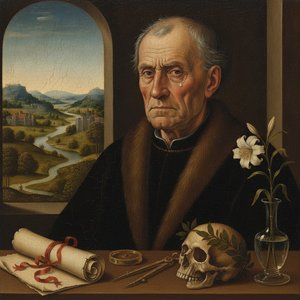
The Northern Renaissance: A Masterclass in Hyper-Realism, Oil Innovation, and Symbolic Depth
Explore the profound mastery of Northern Renaissance art. Discover the technical brilliance of Flemish oil painting, the intricate symbolism of Bosch and Bruegel, and the revolutionary realism that redefined European art history through an expert historical lens.

The Enduring Power of Painting: A Historical & Contemporary Exploration of Form and Emotion
Explore the rich history & enduring techniques of oil painting with OriginalUniqueArt. Discover masterpieces, learn about art collecting, and find authentic handmade reproductions crafted by skilled artists.

The Enduring Legacy of Oil on Canvas: Technique, History & Aesthetic Impact
Explore the rich history & techniques of oil painting – from Renaissance masters to Impressionism. Discover pigments, layering methods, and why this timeless medium endures. Expert insights for artists & art enthusiasts.

De Blijvende Erfenis van Olieverf op Doek: Techniek, Geschiedenis en Hedendaagse Praktijk
Ontdek de rijke geschiedenis en technieken van olieverfschilderen. Van Renaissance meesterwerken tot moderne toepassingen, leer over pigmenten, glazuur en conservering.

Oil on Canvas: A Historical & Technical Exploration of a Timeless Artistic Medium
Explore the rich history & enduring techniques of oil painting on canvas. Discover the science behind its longevity, conservation practices, and contemporary relevance. Expert insights for art enthusiasts.