

 Voorvertoning
 Verstuur
 Delen
Delen
 Details bekijken
 Gids
Gids

 Download
 Vergelijkbare items
 Röntgenonderzoek
 Diavoorstelling
 Statistieken
Sir Charles Watson
 Oil On Canvas
- WallArt
- Neoclassicism
 75.0 x 99.0 cm
 Fondazione Cariplo
 Lees meer
Handgemaakte olieverfreproductie
Met de hand geschilderd in olieverf op canvas in uw gewenste maat en lijst, op bestelling gemaakt door onze kunstenaars. ( Schakel over naar print Schakel over naar digitale afbeeldingen)




P118B €10

P118H €10

P118W €10

P438Z €10

P508JH €12

P508YH €12

P805H €10

P805Z €10

P919BZ €10

P919G €10

P919XJ €10

P959ZH €10

P968JZ €12

W106C €8

W218G €10

W218JH €8

W218Y €10

W307PJ €10

W316G €10

W316PJ €8

W316Y €10

W398PJ €8

W4111J €10

W500HY €15

W500JH €15

W692G €12

W849H €8

W940BG €15

W953PJ €8




Kies uit onze vooraf ingestelde maten die overeenkomen met de originele verhoudingen van het kunstwerk.

Voer de breedte en hoogte in die u nodig heeft, passend bij uw lijst of uw muur. Omdat dit handgeschilderd is, kan de kunstenaar bij een afmeting met een andere beeldverhouding iets meer rondom het schilderij schilderen of juist iets meer weglaten — u kiest zelf. Wij sturen u een digitaal mockup ter goedkeuring voordat het schilderwerk begint. De afbeelding die op deze pagina wordt getoond, is niet het uiteindelijke resultaat — alleen de mockup geeft dit weer.
Na de bestelling zal het team van OriginalUniqueArt.com per e-mail contact opnemen met de klant voor instructies en een mockup-voorbeeld sturen.
Wereldwijde levering () binnen 3 tot 4 weken in plaats van de standaard 5 weken. (25 oktober). Zonder concessies aan de kwaliteit.

Gratis wereldwijde expressverzending

Hoogwaardig linnen canvas

Volledige verzendverzekering

Garantie op terugbetaling van invoerrechten

Garantie op exacte kleurweergave

Retourbeleid van 100 dagen (alleen bij defecten)

100% Geld-terug-garantie

Korting bij meerdere afnames
 De optie voor glas is alleen beschikbaar bij een formaat kleiner dan 110 cm.

Sir Charles Watson
Druktechniek
Afmetingen reproductie
-


Eindtotaal
€ 263
A Glimpse into Aristocratic Grandeur: Pompeo Batoni's Portrait of Sir Charles Watson
To stand before this portrait is to step directly into the gilded salons of eighteenth-century Rome, a place where culture, ambition, and artistry converged. Pompeo Batoni, master chronicler of the privileged elite, has captured not merely a likeness, but an entire moment in aristocratic life. The subject, Sir Charles Watson, gazes out with a composed intensity that speaks volumes of his station and the era's expectations for gentlemen of means. His bearing is one of assured refinement; the crisp lines of his ruffled collar contrast beautifully with the deep tones of his brown coat, anchoring the composition against the stark, dramatic backdrop.
The Allure of Fashion and Historical Echoes
What immediately draws the eye, beyond the sitter's steady gaze, is the costume itself. Batoni has dressed Sir Charles in what is described as the Van Dyck dress—a fashion choice that transports us back to the opulent courts of the early seventeenth century. The golden mantle and buttons evoke the grandeur associated with Antoon Van Dyck’s time at the court of Charles I, a style that held immense sway among the British aristocracy during this period. This deliberate nod to historical costume suggests more than mere vanity; it is a sophisticated cultural citation, a visual language understood only by those who navigated the intellectual currents of the Grand Tour. The feather held delicately in his hand serves as both an accessory and a subtle emblem of status.
Mastery of Technique and Atmosphere
Technically, this oil on canvas exemplifies Batoni's genius for portraiture. His ability to render texture—the soft sweep of the white beard against the dark fabric, the sheen of the gold trim—is breathtaking. The contrast between the richly detailed foreground and the almost monolithic black background is a masterful stroke. This simplicity forces the viewer’s entire attention onto the sitter's face and gesture. Batoni, whose style drew from Bolognese Classicism and Raphael, achieves here a balance: the formality of classical portraiture infused with the vibrant immediacy of contemporary life. It is art that feels both timelessly grand and intimately personal.
A Statement for the Modern Collector
For the discerning collector or designer seeking to infuse a space with historical depth and undeniable elegance, this piece offers profound resonance. Reproducing such an artwork allows one to own a tangible piece of cultural history. It speaks to themes of lineage, worldly success, and enduring style. Imagine this portrait gracing a library or drawing-room; it does not merely decorate—it narrates the story of those who shaped the world from within its most cultured circles. It is an object that commands conversation, whispering tales of Oxford graduations, naval supremacy, and the dazzling allure of Italian artistic patronage.
Veelgestelde vragen
Hoe kan ik "Sir Charles Watson" door Pompeo Batoni bekijken als een diavoorstelling?
"Sir Charles Watson" door Pompeo Batoni is te bekijken als een diavoorstelling op de Diavoorstelling-pagina van het kunstwerk.
Waar komen de bezoekers van "Sir Charles Watson" door Pompeo Batoni vandaan?
De Statistieken-pagina van "Sir Charles Watson" door Pompeo Batoni toont statistieken over de publieksbezoeken: het aantal maandelijkse bezoeken aan dit kunstwerk, een vergelijking met de meest bekeken werken van de kunstenaar en de herkomst van de bezoekers.
Welke kleuren overheersen in "Sir Charles Watson" door Pompeo Batoni?
"Sir Charles Watson" door Pompeo Batoni maakt gebruik van een Earthy palet, met Black (#151512) als dominante kleur.
Biografie kunstenaar
Vroege Leven en Opleiding
- Geboren: Lucca, Italië (1708)
- Overleden: 1787
- Pompeo Batoni verhuisde in 1727 naar Rome.
- Hij volgde een meesterproef bij Agostino Masucci, Sebastiano Conca en/of Francesco Imperiali.
- Zijn eerste onafhankelijke opdracht kwam voort uit de regenval die Rome trof in april 1732.
- Het schilderij "De Extase van Sint Catharina van Siena" illustreert zijn academische verfijning van de laat-barokke stijl.
Artistieke Stijl en Invloeden
- Batoni's stijl putte inspiratie uit de klassieke oudheid, de Franse Rococo, het Bolognese Classicisme en kunstenaars zoals Nicolas Poussin, Claude Lorrain en in het bijzonder Rafaël.
- Hij wordt beschouwd als een voorloper van het Neoclassicisme.
- Zijn werk is te vinden in diverse musea, waaronder de Pinacoteca di Brera in Milaan, Italië.
Beroemde Werken en Opdrachten
- Maagd en Kind met Heiligen
- Een Ridder in Rome: Charles Cecil Roberts – Een gevierd portret van een Britse reiziger tegen de achtergrond van Romeinse ruïnes.
- De Triomf van Venetië
- Talrijke altaarstukken voor kerken in Italië, zoals het Museum Duomo in Siena.
- Hij was zeer gewild voor portretten, met name bij Britse reizigers op de Grand Tour, die portretten lieten maken in antieke decors.
Ontwikkeling en Historisch Belang
- Batoni werd een zeer modieuze schilder in Rome nadat zijn rivaal, Anton Raphael Mengs, in 1761 naar Spanje vertrok.
- Hij sloot vriendschap met Winckelmann en streefde naar een meer ingetogen classicisme in zijn schilderkunst.
- Zijn portretten legden de geest van het Grand Tour-tijdperk vast, wat de fascinatie voor de klassieke oudheid onder de Europese elite weerspiegelde.
- Batoni's vermogen om barokke technieken te versmelten met opkomende neoclassicistische idealen positioneerde hem als een overgangsfiguur in de Italiaanse kunstgeschiedenis.
Nalatenschap
- Pompeo Batoni overleed op 4 februari 1787 in Rome.
- Hij liet een nalatenschap na als een van de meest gerenommeerde Italiaanse schilders van zijn tijd.
- Zijn werk blijft worden bewonderd om de technische vaardigheid, elegante composities en diepgaande portrettering van individuen binnen hun historische context.

Pompeo Batoni
1708 - 1787 , Italië
Belangrijkste feiten
- Artistic Movement Or Style: Neoclassicisme
- Artists Who Influenced This Artist:
- Nicolas Poussin
- Claude Lorrain
- Rafaël
- Date Of Birth: 1708
- Date Of Death: 1787
- Full Name: Pompeo Batoni
- Nationality: Italiaans
- Notable Artworks:
- Maagd en Kind met Heiligen
- Een ridder in Rome
- De triomf van Venetië
- Place Of Birth (City And Country): Lucca, Italië
Gerelateerde artikelen

De Blijvende Erfenis van Olieverf op Doek: Techniek, Geschiedenis en Hedendaagse Praktijk
Ontdek de rijke geschiedenis en technieken van olieverfschilderen. Van Renaissance meesterwerken tot moderne toepassingen, leer over pigmenten, glazuur en conservering.

The Enduring Legacy of Oil on Canvas: Technique, History & Aesthetic Impact
Explore the rich history & techniques of oil painting – from Renaissance masters to Impressionism. Discover pigments, layering methods, and why this timeless medium endures. Expert insights for artists & art enthusiasts.

Oil on Canvas: A Historical & Technical Exploration of a Timeless Artistic Medium
Explore the rich history & enduring techniques of oil painting on canvas. Discover the science behind its longevity, conservation practices, and contemporary relevance. Expert insights for art enthusiasts.

The Soul of Impressionism: Why Oil on Canvas Captures Eternal Light and Timeless Emotion
Discover the enchanting alchemy of Impressionism. Explore how the mastery of oil on canvas, through glazing and impasto, captures eternal light and emotion. Perfect for lovers of Monet and Van Gogh seeking the profound depth of hand-painted fine art.
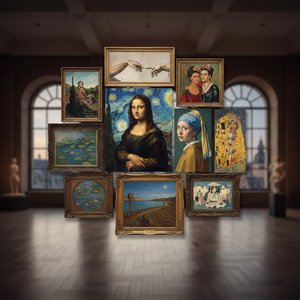
Top 10 Meesterwerken Olieverf die de Kunst voorgoed Veranderden | OriginalUniqueArt.nl
Ontdek de 10 meest legendarische olieverf meesterwerken die kunstgeschiedenis schreven! Van Van Gogh tot Rembrandt, leer over iconische technieken & emotionele impact. Vind museumkwaliteit reproducties en woondecoratie inspiratie op OriginalUniqueArt.com.
