

 Voorvertoning
 Verstuur
 Delen
Delen
 Details bekijken
 Gids
Gids

 Download
 Vergelijkbare items
 Röntgenonderzoek
 Diavoorstelling
 Statistieken
Achilles and the Centaur Chiron
 Oil On Canvas
- WallArt
- Baroque Rococo
 1746
1746 159.0 x 127.0 cm
 Galleria degli Uffizi
 Lees meer
Giclée / Kunstafdrukken
Giclée- of canvasafdruk van museumkwaliteit met een snelle productie en flexibele afwerkingsmogelijkheden. ( Bestel handgeschilderde reproductie Schakel over naar digitale afbeeldingen)




P118B €10

P118H €10

P118W €10

P438Z €10

P508JH €12

P508YH €12

P805H €10

P805Z €10

P919BZ €10

P919G €10

P919XJ €10

P959ZH €10

P968JZ €12

W106C €8

W218G €10

W218JH €8

W218Y €10

W307PJ €10

W316G €10

W316PJ €8

W316Y €10

W398PJ €8

W4111J €10

W500HY €15

W500JH €15

W692G €12

W849H €8

W940BG €15

W953PJ €8




Kies uit onze vooraf ingestelde maten die overeenkomen met de originele verhoudingen van het kunstwerk.

Voer de gewenste breedte en hoogte in, passend bij uw lijst of muur. Een afdruk kan alleen worden ingekort en nooit groter worden gemaakt dan het origineel; een formaat met andere verhoudingen zal daarom een deel van de afbeelding verliezen. Wij sturen u een digitaal mockup ter goedkeuring voordat we tot drukwerk overgaan. De afbeelding op deze pagina toont niet de werkelijke uitsnede — dit is alleen te zien op het mockup.
Wereldwijde levering () binnen 2 weken in plaats van de standaard 4/5 weken. (26 oktober)

Gratis wereldwijde expressverzending

Hoogwaardig linnen canvas

Volledige verzendverzekering

Garantie op terugbetaling van invoerrechten

Garantie op exacte kleurweergave

Retourbeleid van 100 dagen (alleen bij defecten)

100% Geld-terug-garantie

Korting bij meerdere afnames
 De optie voor glas is alleen beschikbaar bij een formaat kleiner dan 110 cm.

Achilles and the Centaur Chiron
Giclée / Kunstafdrukken
Afmetingen reproductie
-


Eindtotaal
€ 71
Pompeo Batoni’s “Achilles and the Centaur Chiron”: A Masterpiece of Baroque Narrative
Pompeo Batoni's "Achilles and the Centaur Chiron," painted in 1746, is more than just a depiction of a classical myth; it’s a profound meditation on mentorship, transformation, and the delicate balance between savagery and civilization. This monumental canvas, now housed within the Galleria degli Uffizi in Florence, immediately captivates with its dramatic lighting, rich textures, and meticulously rendered figures – hallmarks of Batoni's signature Baroque style. The scene unfolds with a palpable sense of intimacy as the young Achilles, barely a man, receives instruction from Chiron, the renowned centaur tutor, a figure steeped in both wisdom and wildness.
Batoni’s artistic approach is deeply rooted in the traditions of Bolognese Classicism, yet he skillfully infuses it with the dynamism and emotional intensity characteristic of the late Baroque. He draws inspiration from Raphael's balanced compositions and Poussin’s masterful use of light and shadow, but elevates them through a heightened sense of theatricality. The painting isn’t merely illustrating a story; it’s actively *performing* it – a carefully orchestrated tableau designed to evoke both wonder and contemplation.
The Symbolism of the Encounter
The central relationship between Achilles and Chiron is laden with symbolic weight. Chiron represents the crucible of transformation, the place where raw potential is honed into refined skill. The centaur’s role as a teacher—a figure often associated with wilderness and instinct—contrasts sharply with Achilles' burgeoning humanity. Batoni subtly emphasizes this duality through the composition: Chiron, despite his animalistic features, possesses an air of serene authority, while Achilles embodies youthful eagerness and vulnerability. The woman standing between them, shrouded in mystery, is believed to be Thetis, Achilles’ mother, acting as a witness to this pivotal moment.
Notably, the lyre that Chiron plays isn't simply an instrument; it symbolizes Apollo, the god of music and healing—a direct link to Chiron’s divine lineage. The act of teaching through music suggests a deeper connection between knowledge, harmony, and the cultivation of virtue. The arrow visible in the upper right corner could represent both Achilles’ future as a warrior and the potential for violence inherent within him – a reminder that even the most noble heroes are shaped by their experiences.
Technique and Artistic Detail
Batoni's technical mastery is immediately apparent in the painting’s exquisite detail. The fabrics of the figures—Achilles’ tunic, Chiron’s cloak—are rendered with astonishing realism, showcasing a deep understanding of texture and drapery. The artist employs *chiaroscuro* – the dramatic contrast between light and shadow – to create a sense of depth and volume, drawing the viewer's eye into the scene. The warm, golden hues of the lighting bathe the figures in an ethereal glow, enhancing their emotional impact.
Furthermore, Batoni’s use of color is particularly noteworthy. He employs a rich palette of reds, blues, and browns to create a sense of warmth and vitality. The subtle variations in tone contribute to the painting's overall harmony and visual appeal. The meticulous attention to detail extends to the background—the ancient tree, the distant landscape—which serves as a carefully constructed stage for this dramatic encounter.
A Legacy of Grandeur
"Achilles and the Centaur Chiron" stands as a testament to Batoni’s artistic genius and his ability to seamlessly blend classical ideals with Baroque drama. It's a painting that continues to resonate with viewers centuries after its creation, inviting us to contemplate themes of mentorship, transformation, and the enduring power of myth. Reproductions of this masterpiece offer an opportunity to bring this captivating scene into any space, imbuing it with a sense of history, grandeur, and timeless beauty.
Veelgestelde vragen
In welk jaar werd "Achilles and the Centaur Chiron" door Pompeo Batoni gemaakt?
"Achilles and the Centaur Chiron" door Pompeo Batoni werd gecreëerd in 1746.
In welke fase van de carrière van Pompeo Batoni valt "Achilles and the Centaur Chiron", gezien de datum?
"Achilles and the Centaur Chiron", vervaardigd in 1746, behoort tot de Mature Period van de carrière van Pompeo Batoni.
Welke sfeer straalt "Achilles and the Centaur Chiron" uit?
De algehele stemming van "Achilles and the Centaur Chiron" door Pompeo Batoni is Dramatic. De stemming beschrijft de algemene atmosfeer van het werk.
Biografie kunstenaar
Vroege Leven en Opleiding
- Geboren: Lucca, Italië (1708)
- Overleden: 1787
- Pompeo Batoni verhuisde in 1727 naar Rome.
- Hij volgde een meesterproef bij Agostino Masucci, Sebastiano Conca en/of Francesco Imperiali.
- Zijn eerste onafhankelijke opdracht kwam voort uit de regenval die Rome trof in april 1732.
- Het schilderij "De Extase van Sint Catharina van Siena" illustreert zijn academische verfijning van de laat-barokke stijl.
Artistieke Stijl en Invloeden
- Batoni's stijl putte inspiratie uit de klassieke oudheid, de Franse Rococo, het Bolognese Classicisme en kunstenaars zoals Nicolas Poussin, Claude Lorrain en in het bijzonder Rafaël.
- Hij wordt beschouwd als een voorloper van het Neoclassicisme.
- Zijn werk is te vinden in diverse musea, waaronder de Pinacoteca di Brera in Milaan, Italië.
Beroemde Werken en Opdrachten
- Maagd en Kind met Heiligen
- Een Ridder in Rome: Charles Cecil Roberts – Een gevierd portret van een Britse reiziger tegen de achtergrond van Romeinse ruïnes.
- De Triomf van Venetië
- Talrijke altaarstukken voor kerken in Italië, zoals het Museum Duomo in Siena.
- Hij was zeer gewild voor portretten, met name bij Britse reizigers op de Grand Tour, die portretten lieten maken in antieke decors.
Ontwikkeling en Historisch Belang
- Batoni werd een zeer modieuze schilder in Rome nadat zijn rivaal, Anton Raphael Mengs, in 1761 naar Spanje vertrok.
- Hij sloot vriendschap met Winckelmann en streefde naar een meer ingetogen classicisme in zijn schilderkunst.
- Zijn portretten legden de geest van het Grand Tour-tijdperk vast, wat de fascinatie voor de klassieke oudheid onder de Europese elite weerspiegelde.
- Batoni's vermogen om barokke technieken te versmelten met opkomende neoclassicistische idealen positioneerde hem als een overgangsfiguur in de Italiaanse kunstgeschiedenis.
Nalatenschap
- Pompeo Batoni overleed op 4 februari 1787 in Rome.
- Hij liet een nalatenschap na als een van de meest gerenommeerde Italiaanse schilders van zijn tijd.
- Zijn werk blijft worden bewonderd om de technische vaardigheid, elegante composities en diepgaande portrettering van individuen binnen hun historische context.

Pompeo Batoni
1708 - 1787 , Italië
Belangrijkste feiten
- Artistic Movement Or Style: Neoclassicisme
- Artists Who Influenced This Artist:
- Nicolas Poussin
- Claude Lorrain
- Rafaël
- Date Of Birth: 1708
- Date Of Death: 1787
- Full Name: Pompeo Batoni
- Nationality: Italiaans
- Notable Artworks:
- Maagd en Kind met Heiligen
- Een ridder in Rome
- De triomf van Venetië
- Place Of Birth (City And Country): Lucca, Italië
Gerelateerde artikelen
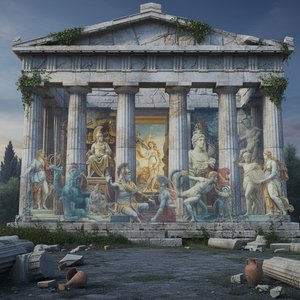
Echoes of Olympus: Mythological Narratives in Western Art Through the Ages
Explore the captivating history of mythological narratives in Western art! From ancient Greece to modern masterpieces, discover iconic artworks & symbolism. Expert analysis and high-quality reproductions at OriginalUniqueArt.

Top 10 Barok Meesterwerken: Kunstgeschiedenis voor uw Interieur | OriginalUniqueArt.nl
Ontdek de 10 meest iconische Barok meesterwerken van Caravaggio, Rembrandt & Rubens! Duik in de geschiedenis en passie achter deze klassieke schilderijen. Vind museumkwaliteit reproducties voor uw interieur op OriginalUniqueArt.com.

The Visceral Stage: Exploring Dramatic Narratives & Emotional Intensity in Baroque Art
Explore the dramatic world of Baroque art! Discover iconic masters like Caravaggio & Rembrandt, their techniques, and the movement's lasting impact. Expert insights for collectors & enthusiasts at OriginalUniqueArt.

Barokke Pracht: Kunst die Grootsheid in Huis Brengt
Ontdek de barokke pracht! Leer over de geschiedenis, kenmerken en toepassingen van deze weelderige kunststijl in uw interieur. Laat u inspireren door meesters en breng grootsheid in huis.

The Dramatic Flourish: Exploring the Baroque Movement's Enduring Legacy in Art History
Explore the dramatic world of Baroque art! Discover iconic artists like Caravaggio & Rubens, defining techniques, and its lasting impact on art history. Expert insights for collectors & enthusiasts at OriginalUniqueArt.
