
 Verstuur
 Delen
Delen
 Details bekijken
 Gids
Gids

 Download
 Vergelijkbare items
 Diavoorstelling
 Vraag & antwoord
 Statistieken
Fountain


 Lees meer
Ontvang een bestand dat klaar is voor drukwerk en de kwaliteit van het online voorbeeld ver overstijgt. Elke digitale afbeelding die wij verkopen, is afkomstig van een high-resolution master uit onze database — meestal tussen de 5.000 en 15.000 pixels breed — zodat u met vertrouwen groot kunt afdrukken, nauwkeurig kunt bijsnijden of fijne details kunt reproduceren.
Geen enkel bestand verlaat ons atelier onbewerkt. Een digitaal expert controleert de kleuren aan de hand van het originele schilderij en corrigeert deze indien nodig, om vervolgens de helderheid en details te verbeteren met professionele retoucheertechnieken — waarbij de penseelstreek en stijl van de kunstenaar altijd strikt worden gerespecteerd. Het resultaat is een afbeelding die oogt als het schilderij zelf, en niet als een gescande foto met een filter.
U keurt de afbeelding goed voordat de bestelling wordt afgerond: onze expert stuurt u binnen 72 uur een e-mail ter beoordeling. Niet tevreden? Vraag om aanpassingen of correcties, of vraag een terugbetaling aan als de kwaliteit niet aan de verwachtingen voldoet.
Dit is de kwaliteit waarop uitgevers, designstudio's, galeries en drukkerijen vertrouwen.
Digitale afbeeldingen
Download een bestand met hoge resolutie voor persoonlijke weergave, afdrukken en creatieve projecten. ( Schakel over naar print Bestel handgeschilderde reproductie)
Inbegrepen bij elke bestelling van een digitale afbeelding
Professionele digitale levering, gegarandeerd
Wanneer u kiest voor OriginalUniqueArt.com, ontvangt u niet alleen een afbeelding – u krijgt een professioneel verbeterd digitaal kunstwerk, met precisie vervaardigd en voorzien van een tevredenheidsgarantie. Dit is alles wat automatisch bij uw bestelling is inbegrepen:

Snelle levering per e-mail
Uw hoogwaardige digitale afbeeldingsbestand wordt binnen 72 uur na bestelling naar u gemaild – klaar voor direct gebruik.

AI-verbeterd digitaal bestand
Uw kunstwerk wordt professioneel geoptimaliseerd met behulp van geavanceerde AI-tools en handmatige bewerkingen, waardoor maximale details, helderheid en kleurnauwkeurigheid worden gegarandeerd.

Gratis levenslange herlevering van digitale bestanden
Je bestand per ongeluk verwijderd of kwijtgeraakt? Geen zorgen – we sturen het u op elk gewenst moment gratis opnieuw toe.

Geen invoerkosten – nooit
Geniet direct van uw kunstwerk zonder invoerrechten, belastingen of verzendkosten – digitale downloads zijn altijd belastingvrij.

Garantie op kleurgetrouwheid
Met behulp van professionele hulpmiddelen en kleurbeheer zorgen wij ervoor dat uw digitale afbeelding de originele kleuren zo nauwkeurig mogelijk weergeeft.

100 dagen tevredenheidsgarantie
Mocht u niet tevreden zijn met uw digitale afbeelding, dan passen wij deze aan of storten wij 100% terug binnen 100 dagen – zonder vragen te stellen.

100% Geld-terug-garantie
Niet tevreden? Ontvang een volledige terugbetaling binnen 100 dagen na ontvangst van uw digitale bestand – zonder vragen te stellen.

Korting bij grote bestellingen
Koop 3 afbeeldingen, bespaar 10% - Koop 5, bespaar 15% - Koop 10+, bespaar 20%. Ideaal voor creatieve projecten, galerieën en bureaus.
Pietro Tacca’s Monumental Vision: Exploring “Fountain”
The sculpture "Fountain," attributed to Pietro Tacca (1577 – 1640), stands as a testament to the artistic fervor of Florence during the twilight years of Mannerism and the burgeoning influence of Baroque aesthetics. Crafted in 1629, this monumental piece embodies Tacca’s masterful synthesis of stylistic approaches—a harmonious blend that cemented his reputation as one of the era's foremost sculptors. Situated within Piazza della Santissima Annunziata, Florence, it serves not merely as a decorative element but as a conduit to understanding the intellectual and artistic currents shaping Renaissance Italy.A Synthesis of Mannerist Elegance and Baroque Dynamism
Tacca’s formative apprenticeship under Giambologna instilled in him a profound appreciation for refined sculptural technique and compositional balance—characteristics firmly rooted in Mannerist tradition. However, Tacca swiftly embraced the dynamism and theatrical grandeur championed by Baroque artists, resulting in a sculpture that transcends stylistic boundaries. Unlike the static poses favored by earlier Mannerists, “Fountain” depicts figures engaged in active movement, conveying a sense of energy and narrative complexity. This deliberate juxtaposition reflects the broader artistic shift toward portraying emotion and drama—a hallmark of the Baroque period’s ambition to inspire awe and convey moral instruction.The Sculpture's Composition and Technique: Marble Mastery
“Fountain” showcases Tacca’s unparalleled skill in manipulating marble—a material synonymous with Florentine sculpture during this era. The sculpture is executed in Carrara marble, renowned for its purity and luminosity, allowing Tacca to achieve remarkable textural detail and tonal gradation. Careful observation reveals the sculptor's meticulous attention to surface treatment, employing techniques such as polishing and etching to accentuate contours and create subtle variations in color. Furthermore, the sculpture’s pyramidal structure—a favored compositional device during both Mannerist and Baroque periods—provides stability while simultaneously directing the viewer’s gaze upward, reinforcing the artwork’s monumental scale and conveying a sense of aspiration.Symbolism Rooted in Mythological Narrative
The sculpture's narrative draws heavily upon classical mythology, specifically referencing tales of Perseus slaying Medusa and Asclepius reviving Hippocrates—figures imbued with potent symbolic significance. The intertwined serpents represent wisdom and vigilance, guarding the sacred knowledge embodied by the central figures. Foliage symbolizes rebirth and regeneration, mirroring the mythological themes explored within the artwork. Tacca’s deliberate selection of imagery underscores the sculpture's intention to communicate profound ideas about heroism, mortality, and the pursuit of spiritual enlightenment—concepts that resonated deeply with audiences during Tacca’s lifetime.Emotional Resonance: A Legacy of Artistic Grandeur
“Fountain” transcends mere visual representation; it evokes a palpable emotional response in viewers. The sculpture's imposing presence commands attention, prompting contemplation on themes of power and beauty. Its refined craftsmanship speaks to the humanist ideals prevalent during Tacca’s time—a celebration of human intellect and artistic creativity. Today, reproductions of “Fountain” continue to inspire admiration for Tacca’s genius and serve as reminders of Florence's enduring legacy as a cradle of artistic innovation. It remains an unforgettable masterpiece, embodying the spirit of its era and captivating audiences with its timeless grandeur.Veelgestelde vragen
Wat deelt "Fountain" met het overige oeuvre van Pietro Tacca?
"Fountain" deelt met andere werken van Pietro Tacca de Baroque-stijl en de terugkerende thema's: classical roman influence, medici patronage & power, mythological narrative, allegory of control, taccia's baroque mastery, sculptural counterpoint, bronze fountain innovation, monumental civic art.
Hoe komen stroming en tijdperk samen in "Fountain" door Pietro Tacca?
In "Fountain" door Pietro Tacca ontmoet de Baroque-stroming de Early Modern-periode.
Op welke fase in de carrière van Pietro Tacca komt de datum uit 1629 van "Fountain" overeen?
"Fountain", vervaardigd in 1629, behoort tot de Mature Period van de carrière van Pietro Tacca.
Kunstenaarsbiografie
The Sculptural Legacy of Pietro Tacca
In the heart of Tuscany, where the white marble of Carrara meets the golden light of Florence, the life of Pietro Tacca unfolded as a bridge between two monumental eras of art history. Born in 1577, Tacca emerged from a lineage of craftsmen to become a defining voice in the transition from the elegant, often artificial complexities of Mannerism to the visceral, dramatic energy of the Baroque. His journey was not merely one of personal ambition but a profound evolution of form, where the controlled grace of his predecessors gave way to a new, breathing realism that captured the very essence of movement and emotion.
The foundation of Tacca’s genius was laid within the legendary workshop of Giambologna. Entering the atelier in 1592, the young sculptor became more than just an apprentice; he became a custodian of a sophisticated aesthetic language. Under Giambologna’s watchful eye, Tacca mastered the intricate art of bronze casting and the delicate balance of asymmetrical compositions. While his early works retained the stylized elegance and elongated proportions characteristic of Mannerist tradition, there was an emerging hunger in his work for something more tangible, more human, and infinitely more dynamic.
The Medici Court and the Bronze Masterpieces
Following the passing of his mentor in 1608, Tacca ascended to the prestigious position of court sculptor for the Medici Grand Dukes. This appointment was a transformative milestone, granting him the resources and the monumental scale required to execute works of immense historical significance. As the favored artist of the Florentine elite, he navigated the demands of powerful patrons with a skill that blended political prestige with artistic innovation. His ability to translate the grandeur of the Medici dynasty into permanent, bronze reality helped define the visual identity of Florence during this golden age.
One of his most enduring contributions to the city's landscape is perhaps found in his mastery of smaller-scale bronze works that possessed a life of their own. The famous Porcellino, a bronze boar that has become a beloved icon of Florentine folklore, exemplifies his ability to infuse even a single subject with charm and vitality. Beyond these charming figures, Tacca’s work on equestrian statues—such as the tribute to Ferdinand I de' Medici—demonstrated his capacity for monumental storytelling, capturing the power and authority of the ruling class through sweeping gestures and muscular tension.
A Synthesis of Drama and Realism
As Tacca’s career progressed, the influence of the Baroque style became increasingly undeniable. He moved away from the intellectualized puzzles of Mannerist sculpture toward a more direct engagement with the viewer's emotions. His later works, such as the poignant Tarquinius and Lucretia, showcase a profound command over narrative tension and psychological depth. In these pieces, the metal seems to lose its rigidity, adopting the softness of skin and the heavy drape of fabric, creating a sense of theatricality that was revolutionary for his time.
The historical significance of Pietro Tacca lies in this very synthesis of styles. He did not simply abandon the lessons of Giambologna; rather, he expanded them to accommodate a world that was beginning to crave realism and emotional resonance. His legacy is etched into the bronze and marble of Italy, representing a moment in time when art moved from the cerebral to the visceral, ensuring that the sculptural traditions of Florence would continue to pulse with life long after his death in 1640.
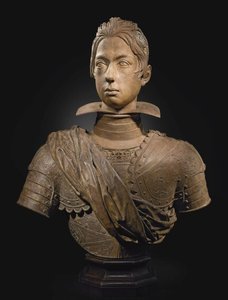
Pietro Tacca
1577 - 1640 , Italy
Belangrijkste feiten
- Full Name: Pietro Tacca
- Nationality: Italian
- Date Of Birth: 1577
- Date Of Death: 1640
- Place Of Birth: Carrara, Italy
- Notable Artworks:
- Monument of the Four Moors
- Equestrian Monument to Philip IV
- Porcellino Florence
- Artistic Movement Or Style: Baroque & Mannerism
- Artists Who Influenced This Artist: ['Giambologna']
- Artists Or Movements Influenced By This Artist: ['Louis XIV']