

 Voorvertoning
 Verstuur
 Delen
Delen
 Details bekijken
 Gids
Gids

 Download
 Vergelijkbare items
 Röntgenonderzoek
 Diavoorstelling
 Statistieken
The Tailor


 Lees meer
Giclée / Kunstafdrukken
Giclée- of canvasafdruk van museumkwaliteit met een snelle productie en flexibele afwerkingsmogelijkheden. ( Bestel handgeschilderde reproductie Schakel over naar digitale afbeeldingen)




P118B €10

P118H €10

P118W €10

P438Z €10

P508JH €12

P508YH €12

P805H €10

P805Z €10

P919BZ €10

P919G €10

P919XJ €10

P959ZH €10

P968JZ €12

W106C €8

W218G €10

W218JH €8

W218Y €10

W307PJ €10

W316G €10

W316PJ €8

W316Y €10

W398PJ €8

W4111J €10

W500HY €15

W500JH €15

W692G €12

W849H €8

W940BG €15

W953PJ €8




Kies uit onze vooraf ingestelde maten die overeenkomen met de originele verhoudingen van het kunstwerk.

Voer de gewenste breedte en hoogte in, passend bij uw lijst of muur. Een afdruk kan alleen worden ingekort en nooit groter worden gemaakt dan het origineel; een formaat met andere verhoudingen zal daarom een deel van de afbeelding verliezen. Wij sturen u een digitaal mockup ter goedkeuring voordat we tot drukwerk overgaan. De afbeelding op deze pagina toont niet de werkelijke uitsnede — dit is alleen te zien op het mockup.
Wereldwijde levering () binnen 2 weken in plaats van de standaard 4/5 weken. (25 oktober)

Gratis wereldwijde expressverzending

Hoogwaardig linnen canvas

Volledige verzendverzekering

Garantie op terugbetaling van invoerrechten

Garantie op exacte kleurweergave

Retourbeleid van 100 dagen (alleen bij defecten)

100% Geld-terug-garantie

Korting bij meerdere afnames
 De optie voor glas is alleen beschikbaar bij een formaat kleiner dan 110 cm.

The Tailor
Giclée / Kunstafdrukken
Afmetingen reproductie
-


Eindtotaal
€ 71
A Glimpse into Venetian Life: Pietro Longhi’s “The Tailor”
Pietro Longhi's "The Tailor," painted in 1741, isn’t merely a portrait; it’s a meticulously crafted window into the bustling, sophisticated world of 18th-century Venice. Often dubbed the ‘Venetian Hogarth,’ Longhi possessed a remarkable talent for capturing the everyday dramas and social nuances of his time – a departure from the grand historical narratives favored by many of his contemporaries. This particular work, housed within the Gallerie dell’Accademia in Venice, offers an intimate study of bourgeois society, revealing a keen eye for detail and a subtle, often satirical, commentary on the era's customs and values.
The scene unfolds within a richly appointed interior, characteristic of Rococo design – a style defined by its opulence, elegance, and focus on refined leisure. The composition centers around a family group, presided over by a man presumably engaged in overseeing the work of a tailor. A young girl stands beside him, while a servant attends to their needs. The figures are arranged with a deliberate formality, yet there’s an undeniable sense of relaxed intimacy, suggesting a domestic setting of considerable wealth and status. The linear precision of the architecture – the fireplace, wall paneling, and even the folds of clothing – is balanced by the organic forms of the human figures and the luxurious drapery that dominates the space.
The Art of Venetian Genre Painting
Longhi’s genius lay in his specialization in *genre* paintings—a genre largely pioneered by artists like Giuseppe Maria Crespi. Unlike the idealized portraits or mythological scenes prevalent at the time, Longhi focused on capturing ordinary life: gambling dens, fashionable salons, and the interactions of everyday Venetians. This shift reflected a broader cultural trend – a growing interest in the private sphere and the lives of the middle classes. His work provides invaluable insight into the social customs, fashion trends, and even the gossip of the time, offering a remarkably detailed portrait of Venetian society.
The painting’s technique is a testament to Longhi's mastery of oil paint. Notice the meticulous layering of colors, creating a remarkable sense of texture – from the velvet upholstery to the shimmering fabric of the tailor’s garment. The use of light is particularly effective, casting subtle shadows that add depth and volume to the figures and objects within the scene. The slightly flattened perspective, typical of portraiture during this period, prioritizes clarity of form over strict realism, allowing Longhi to convey a sense of immediacy and engagement.
Symbolism and Social Commentary
Beyond its aesthetic qualities, “The Tailor” is rich in symbolic meaning. The presence of the portrait on the wall – depicting a male ancestor – immediately establishes a lineage of wealth and status. The elaborate clothing worn by the family members signifies their social standing and access to luxury. However, Longhi doesn’t simply present a straightforward celebration of wealth; there's an underlying current of observation and perhaps even gentle critique. The slightly bewildered expression on the young girl’s face, coupled with the servant’s attentive posture, hints at the complexities of social roles and expectations within this privileged household.
The inclusion of the tailor himself is particularly noteworthy. He represents a skilled artisan – a vital part of Venetian society – yet he's presented as somewhat detached from the family's immediate concerns. This subtle positioning suggests a commentary on the relationship between labor, wealth, and social hierarchy. Furthermore, the painting’s numerous faceless figures—often masked—add another layer of intrigue, hinting at the hidden realities and unspoken conversations that likely transpired behind closed doors in this opulent setting.
A Legacy of Venetian Observation
Pietro Longhi's “The Tailor” stands as a quintessential example of Venetian genre painting – a vibrant snapshot of daily life captured with remarkable skill and insight. His work, alongside that of his contemporaries like Canaletto and Guardi, offers an unparalleled glimpse into the social fabric of 18th-century Venice. Longhi’s legacy extends beyond individual masterpieces; he fundamentally shifted the focus of Venetian painting, moving away from grand historical narratives towards a more intimate and nuanced exploration of human experience. Reproductions of this captivating work continue to resonate with art lovers today, offering a timeless reminder of the beauty and complexity of everyday life.
Veelgestelde vragen
Is er een factsheet over "The Tailor" door Pietro Longhi voor studenten?
Er is een Informatieblad pagina beschikbaar voor "The Tailor" door Pietro Longhi: een printbaar informatieblad over het kunstwerk, ontworpen voor studenten en gebruik in de klas.
Welk gevoel roepen de kleuren van "The Tailor" door Pietro Longhi op?
Het Earthy palet van "The Tailor" door Pietro Longhi vloeit prachtig samen met de Nostalgic emotionele toon. Kleur is een van de manieren waarop een kunstwerk gevoel overbrengt.
Hoe kan ik kunstwerken ontdekken die lijken op "The Tailor" door Pietro Longhi?
Op de pagina Vergelijkbare werken van "The Tailor" door Pietro Longhi vindt u gerelateerde kunstwerken.
Biografie kunstenaar
Pietro Longhi (1701-1785): A Venetian Chronicler of Daily Life
Pietro Longhi, born Pietro Falca in Venice on November 5th, 1701, wasn’t painting grand historical narratives or mythological scenes; he was capturing the quiet dramas unfolding within the city's elegant homes and bustling streets. He became renowned for his witty genre paintings – intimate glimpses into the lives of 18th-century Venetians, a departure from the prevailing artistic trends of his time. The son of Alessandro Falca, a silversmith, Longhi’s early training began under the Veronese painter Antonio Balestra, who recognized and nurtured the young artist's talent. This foundation in traditional technique would later serve as a subtle counterpoint to the innovative spirit he brought to his chosen subject matter. He adopted the surname “Longhi” upon beginning his artistic career, a symbolic shedding of his father’s trade for the pursuit of painting.Early Life and Artistic Foundations
Pietro Longhi's formative years were marked by a privileged upbringing under the tutelage of Antonio Balestra, one of Venice’s foremost painters. Balestra instilled in Longhi a deep appreciation for Venetian artistic tradition—specifically, the meticulous observation of nature and the mastery of broken brushwork and vibrant color glazes—techniques that would characterize Longhi's entire oeuvre. Unlike many artists of his era who pursued monumental historical commissions, Longhi skillfully avoided grand narratives, focusing instead on capturing the subtleties of everyday life in Venice. His father’s profession as a silversmith undoubtedly influenced his artistic sensibilities, fostering an eye for detail and craftsmanship—qualities that would prove invaluable in his later endeavors. He married Caterina Maria Rizzi in 1732, establishing a family life that provided him with inspiration and grounding amidst the whirlwind of Venetian artistic circles.From Religious Altarpieces to Genre Scenes: A Transformative Shift
Longhi’s initial artistic output reflected the expectations of his time—primarily altarpieces and religious compositions executed in accordance with established conventions. His 1732 depiction of Saint Pellegrino for San Pellegrino church exemplifies Balestra's influence, demonstrating a masterful command of Venetian painting techniques: precise brushstrokes and luminous color glazes that conveyed depth and emotion. However, it was around 1737 that Longhi embarked on a pivotal artistic journey—a deliberate move away from grand historical canvases toward the small-scale genre scenes that would solidify his legacy as Venice’s “William Hogarth.” This transition wasn't merely stylistic; it represented an engagement with the burgeoning social and cultural currents of the Enlightenment, particularly the growing fascination with bourgeois society and domestic rituals. Longhi’s decision to prioritize observation over allegory—to depict human behavior and interactions with unflinching honesty—was a radical departure from prevailing artistic trends.The Venetian Hogarth: Capturing Everyday Life with Wit and Insight
Longhi's genius lay in his ability to infuse seemingly mundane subjects with profound social commentary, mirroring the approach of William Hogarth, whom he admired greatly. Unlike Hogarth’s didactic moralizing style, Longhi’s satire possessed a subtle grace—a quiet irony that revealed contradictions within Venetian society without resorting to overt judgment. His paintings are populated by figures engaged in familiar activities—gambling parlors (*Ridotti*) filled with elegantly dressed men and women; masked balls celebrating Carnival; intimate interiors depicting domestic life—each scene meticulously rendered with remarkable detail and psychological insight. Consider *The Concert*, painted circa 1741, where Longhi portrays a gathering of Venetian nobles—a tableau vivant capturing the social dynamics of the era. The painting’s composition—characterized by shallow depth and carefully arranged figures—reflects Longhi's commitment to realism while simultaneously conveying an atmosphere of restrained elegance.A Legacy Defined by Observation and Technique
Longhi’s artistic technique was as distinctive as his subject matter. He favored small canvases, meticulously crafted with a delicate touch and an unwavering attention to detail. His interiors are bathed in soft light—a deliberate choice that enhanced the sense of intimacy and realism—and he achieved this effect through masterful glazing techniques. Longhi's ability to depict textures—the sheen of silk robes, the roughness of stone walls, the folds of drapery—added depth and authenticity to his scenes, elevating them beyond mere representation into evocative evocations of Venetian life. He skillfully blended traditional Venetian painting methods with innovative approaches to composition and color, anticipating later developments in genre art. Longhi’s influence extended far beyond Venice; he served as Director of the Academy of Drawing and Carving from 1763, shaping the artistic education of a generation of Venetian painters. His son, Alessandro Longhi, continued his father's artistic tradition, furthering Longhi’s legacy as one of Venice’s most astute observers and accomplished artists—a true chronicler of the Enlightenment age. ## Notable Works- The Tailor
- The Baptism
- Painter in his Studio
- The Concert
- The Charlatan

Pietro Longhi
1701 - 1785 , Italië
Belangrijkste feiten
- Artistic Movement Or Style: Venetiaanse schilderkunst, Rococo
- Artists Or Movements Influenced By This Artist: ['William Hogarth']
- Artists Who Influenced This Artist:
- Antonio Balestra
- Giuseppe Maria Crespi
- Date Of Birth: November 5, 1701
- Date Of Death: May 8, 1785
- Full Name: Pietro Longhi
- Nationality: Italiaans
- Notable Artworks:
- De Tailleur
- De Baptisie
- Schilder in zijn atelier
- Place Of Birth: Venice, Italy
Gerelateerde artikelen

Pietro Longhi's Venetian Scenes: A Study of Rococo Society & Domestic Life
Explore the captivating world of Pietro Longhi's Venetian scenes! Discover insightful analysis of his Rococo masterpieces & social commentary on 18th-century life. Learn about this 'Venetian Hogarth' and his lasting artistic legacy.

Top 10 Rococo Meesterwerken: Kunstgeschiedenis voor uw Interieur | OriginalUniqueArt.com
Ontdek de 10 meest iconische Rococo meesterwerken! Duik in de wereld van Fragonard, Boucher & Watteau. Leer over lieflijkheid, pastelkleuren en aristocratie. Museumkwaliteit kunst reproducties op OriginalUniqueArt.com.

Francesco Guardi: Venetian Light, Atmospheric Perspective & the Rococo to Neoclassical Transition
Explore the captivating world of Francesco Guardi, master of Venetian light and atmosphere. Discover his transition from Rococo to Neoclassicism, influence on Impressionism & investment potential with OriginalUniqueArt.
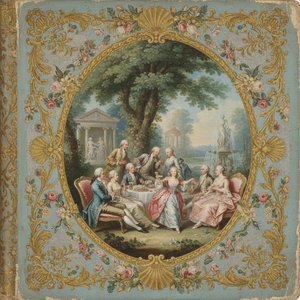
The Rococo Style: Aristocratic Leisure & the Pursuit of Delight in 18th-Century Art
Explore the opulent world of Rococo art! Discover Watteau, Boucher & Nattier's masterpieces. Expert insights for collectors seeking museum-quality reproductions and custom portraits at OriginalUniqueArt.

The Rococo Aesthetic: Opulence, Rebellion & the Pursuit of Pleasure in 18th-Century Art
Explore the opulent world of Rococo art! Discover its origins, key artists like Watteau & Boucher, and lasting influence on design. Expert insights for collectors & enthusiasts.