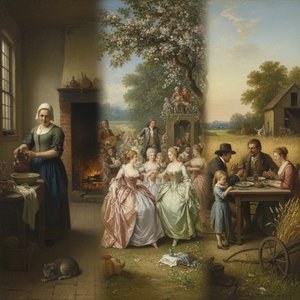
The Soothsayer
Oil
WallArt
Rococo
1750
Early Modern
60.0 x 48.0 cm
Gallerie dell’Accademia
Handgemaakte olieverfreproductie
Met de hand geschilderd in olieverf op canvas in uw gewenste maat en lijst, op bestelling gemaakt door onze kunstenaars. ( Bestel print
Koop afbeelding)
P118B $10
P118H $10
P118W $10
P438Z $10
P508JH $12
P508YH $12
P805H $10
P805Z $10
P919BZ $10
P919G $10
P919XJ $10
P959ZH $10
P968JZ $12
W106C $8
W218G $10
W218JH $8
W218Y $10
W307PJ $10
W316G $10
W316PJ $8
W316Y $10
W398PJ $8
W4111J $10
W500HY $15
W500JH $15
W692G $12
W849H $8
W940BG $15
W953PJ $8
Kies uit onze vooraf ingestelde maten die overeenkomen met de originele verhoudingen van het kunstwerk.
U kunt uw eigen afmetingen invoeren om in een specifieke lijst of ruimte te passen. Als de door u gekozen maat niet overeenkomt met de verhoudingen van het originele beeld, zullen we het kunstwerk bijsnijden of het schilderij uitbreiden met extra handgeschilderde elementen. Een digitale mockup wordt ter goedkeuring naar u verzonden voordat de productie begint.
Houd er rekening mee dat de preview op het scherm niet de werkelijke uitsnede of uitbreiding weergeeft. Alleen de mockup toont de uiteindelijke compositie nauwkeurig.
Hoewel aangepaste afmetingen mogelijk zijn, raden we aan een maat uit de vooraf gedefinieerde lijst te selecteren om de originele verhoudingen te behouden.
Na de bestelling zal het team van OriginalUniqueArt.com per e-mail contact opnemen met de klant voor instructies en een mockup-voorbeeld sturen.
Wereldwijde levering () binnen 3 tot 4 weken in plaats van de standaard 5 weken. (18 augustus). Zonder concessies aan de kwaliteit.
Gratis wereldwijde expressverzending
Hoogwaardig linnen canvas
Volledige verzendverzekering
Garantie op terugbetaling van invoerrechten
Garantie op exacte kleurweergave
Retourbeleid van 60 dagen (alleen bij defecten)
100% Geld-terug-garantie
Korting bij meerdere afnames
The Soothsayer
Druktechniek
Afmetingen reproductie
-
Eindtotaal
$ 300
Beschrijving kunstwerk
A Glimpse into Venetian Intrigue
In the heart of eighteenth-century Venice, where the mist of the canals meets the gilded splendor of aristocratic salons, Pietro Longhi captured the fleeting moments of human connection. His masterpiece, The Soothsayer, serves as a captivating window into a world of mystery and social performance. The painting presents us with a central figure, a man commanding the attention of a gathered crowd, his hand gripping a microphone—a curious, anachronistic element that invites the viewer to contemplate the intersection of prophecy and public spectacle. As he stands upon a stage, the energy of the room vibrates around him, pulling the observer into a lively gathering where every face tells a story of curiosity, skepticism, or quiet anticipation.
Longhi, often celebrated as the chronicler of Venetian daily life, eschews the grandiosity of mythological epics to focus on the intimate and the anecdotal. In this work, the composition is masterfully balanced, with nine figures scattered across the scene like notes in a visual symphony. Some lean in, drawn by the magnetism of the speaker, while others linger at the periphery, creating a sense of depth and movement. Even the presence of a small dog near the base of the frame adds a touch of domestic realism, grounding the theatricality of the event in the tangible reality of 1750s life.
Technique and the Art of Observation
The brilliance of Longhi’s technique lies in his ability to render light and texture with a subtle, painterly grace. Through delicate brushwork, he captures the sheen of silk, the soft glow of candlelight, and the varied expressions of his subjects. The artist utilizes a palette that reflects the sophisticated atmosphere of the era, employing warm tones that evoke the intimacy of an indoor salon. His mastery of genre painting allows him to transform a simple social gathering into a complex psychological study, where the interplay of light and shadow heightens the drama of the central performance.
For the discerning collector or interior designer, this piece offers more than mere decoration; it provides a narrative anchor for a room. The painting’s ability to evoke a sense of historical nostalgia makes it an exquisite choice for spaces that value elegance and conversation. Whether placed in a formal study or as a focal point in a contemporary living area, The Soothsayer brings with it the sophisticated spirit of Venice, inviting guests to linger on its details and lose themselves in the whispered secrets of the past.
A Legacy of Intimate Storytelling
To possess a reproduction of this work is to hold a fragment of history. Longhi’s departure from the traditional religious and historical themes of his contemporaries allowed him to pioneer a style that feels remarkably modern in its focus on human behavior. He understood that the true drama of life is found not in the battles of gods, but in the glances exchanged between strangers and the tension held in a silent room. This painting remains a testament to his unique vision—a blend of wit, observation, and an unparalleled ability to freeze time.

Biografie van de kunstenaar
Pietro Longhi (1701-1785): A Venetian Chronicler of Daily Life
Pietro Longhi, born Pietro Falca in Venice on November 5th, 1701, wasn’t painting grand historical narratives or mythological scenes; he was capturing the quiet dramas unfolding within the city's elegant homes and bustling streets. He became renowned for his witty genre paintings – intimate glimpses into the lives of 18th-century Venetians, a departure from the prevailing artistic trends of his time. The son of Alessandro Falca, a silversmith, Longhi’s early training began under the Veronese painter Antonio Balestra, who recognized and nurtured the young artist's talent. This foundation in traditional technique would later serve as a subtle counterpoint to the innovative spirit he brought to his chosen subject matter. He adopted the surname “Longhi” upon beginning his artistic career, a symbolic shedding of his father’s trade for the pursuit of painting.Early Life and Artistic Foundations
Pietro Longhi's formative years were marked by a privileged upbringing under the tutelage of Antonio Balestra, one of Venice’s foremost painters. Balestra instilled in Longhi a deep appreciation for Venetian artistic tradition—specifically, the meticulous observation of nature and the mastery of broken brushwork and vibrant color glazes—techniques that would characterize Longhi's entire oeuvre. Unlike many artists of his era who pursued monumental historical commissions, Longhi skillfully avoided grand narratives, focusing instead on capturing the subtleties of everyday life in Venice. His father’s profession as a silversmith undoubtedly influenced his artistic sensibilities, fostering an eye for detail and craftsmanship—qualities that would prove invaluable in his later endeavors. He married Caterina Maria Rizzi in 1732, establishing a family life that provided him with inspiration and grounding amidst the whirlwind of Venetian artistic circles.From Religious Altarpieces to Genre Scenes: A Transformative Shift
Longhi’s initial artistic output reflected the expectations of his time—primarily altarpieces and religious compositions executed in accordance with established conventions. His 1732 depiction of Saint Pellegrino for San Pellegrino church exemplifies Balestra's influence, demonstrating a masterful command of Venetian painting techniques: precise brushstrokes and luminous color glazes that conveyed depth and emotion. However, it was around 1737 that Longhi embarked on a pivotal artistic journey—a deliberate move away from grand historical canvases toward the small-scale genre scenes that would solidify his legacy as Venice’s “William Hogarth.” This transition wasn't merely stylistic; it represented an engagement with the burgeoning social and cultural currents of the Enlightenment, particularly the growing fascination with bourgeois society and domestic rituals. Longhi’s decision to prioritize observation over allegory—to depict human behavior and interactions with unflinching honesty—was a radical departure from prevailing artistic trends.The Venetian Hogarth: Capturing Everyday Life with Wit and Insight
Longhi's genius lay in his ability to infuse seemingly mundane subjects with profound social commentary, mirroring the approach of William Hogarth, whom he admired greatly. Unlike Hogarth’s didactic moralizing style, Longhi’s satire possessed a subtle grace—a quiet irony that revealed contradictions within Venetian society without resorting to overt judgment. His paintings are populated by figures engaged in familiar activities—gambling parlors (*Ridotti*) filled with elegantly dressed men and women; masked balls celebrating Carnival; intimate interiors depicting domestic life—each scene meticulously rendered with remarkable detail and psychological insight. Consider *The Concert*, painted circa 1741, where Longhi portrays a gathering of Venetian nobles—a tableau vivant capturing the social dynamics of the era. The painting’s composition—characterized by shallow depth and carefully arranged figures—reflects Longhi's commitment to realism while simultaneously conveying an atmosphere of restrained elegance.A Legacy Defined by Observation and Technique
Longhi’s artistic technique was as distinctive as his subject matter. He favored small canvases, meticulously crafted with a delicate touch and an unwavering attention to detail. His interiors are bathed in soft light—a deliberate choice that enhanced the sense of intimacy and realism—and he achieved this effect through masterful glazing techniques. Longhi's ability to depict textures—the sheen of silk robes, the roughness of stone walls, the folds of drapery—added depth and authenticity to his scenes, elevating them beyond mere representation into evocative evocations of Venetian life. He skillfully blended traditional Venetian painting methods with innovative approaches to composition and color, anticipating later developments in genre art. Longhi’s influence extended far beyond Venice; he served as Director of the Academy of Drawing and Carving from 1763, shaping the artistic education of a generation of Venetian painters. His son, Alessandro Longhi, continued his father's artistic tradition, furthering Longhi’s legacy as one of Venice’s most astute observers and accomplished artists—a true chronicler of the Enlightenment age. ## Notable Works- The Tailor
- The Baptism
- Painter in his Studio
- The Concert
- The Charlatan
Pietro Longhi
1701 - 1785 , Italië
Belangrijkste feiten
- Artistic Movement Or Style: Venetiaanse schilderkunst, Rococo
- Artists Or Movements Influenced By This Artist: ['William Hogarth']
- Artists Who Influenced This Artist:
- Antonio Balestra
- Giuseppe Maria Crespi
- Date Of Birth: November 5, 1701
- Date Of Death: May 8, 1785
- Full Name: Pietro Longhi
- Nationality: Italiaans
- Notable Artworks:
- De Tailleur
- De Baptisie
- Schilder in zijn atelier
- Place Of Birth: Venice, Italy

De optie voor glas is alleen beschikbaar bij een formaat kleiner dan 110 cm.