

 Voorvertoning
 Verstuur
 Delen
Delen
 Details bekijken
 Gids
Gids

 Download
 Vergelijkbare items
 Röntgenonderzoek
 Diavoorstelling
 Q&A
Q&A Statistieken
The Drinker


 Lees meer
Giclée / Kunstafdrukken
Giclée- of canvasafdruk van museumkwaliteit met een snelle productie en flexibele afwerkingsmogelijkheden. ( Bestel handgeschilderde reproductie Schakel over naar digitale afbeeldingen)




P118B €10

P118H €10

P118W €10

P438Z €10

P508JH €12

P508YH €12

P805H €10

P805Z €10

P919BZ €10

P919G €10

P919XJ €10

P959ZH €10

P968JZ €12

W106C €8

W218G €10

W218JH €8

W218Y €10

W307PJ €10

W316G €10

W316PJ €8

W316Y €10

W398PJ €8

W4111J €10

W500HY €15

W500JH €15

W692G €12

W849H €8

W940BG €15

W953PJ €8




Kies uit onze vooraf ingestelde maten die overeenkomen met de originele verhoudingen van het kunstwerk.

Voer de gewenste breedte en hoogte in, passend bij uw lijst of muur. Een afdruk kan alleen worden ingekort en nooit groter worden gemaakt dan het origineel; een formaat met andere verhoudingen zal daarom een deel van de afbeelding verliezen. Wij sturen u een digitaal mockup ter goedkeuring voordat we tot drukwerk overgaan. De afbeelding op deze pagina toont niet de werkelijke uitsnede — dit is alleen te zien op het mockup.
Wereldwijde levering () binnen 2 weken in plaats van de standaard 4/5 weken. (31 oktober)

Gratis wereldwijde expressverzending

Hoogwaardig linnen canvas

Volledige verzendverzekering

Garantie op terugbetaling van invoerrechten

Garantie op exacte kleurweergave

Retourbeleid van 100 dagen (alleen bij defecten)

100% Geld-terug-garantie

Korting bij meerdere afnames
 De optie voor glas is alleen beschikbaar bij een formaat kleiner dan 110 cm.

The Drinker
Giclée / Kunstafdrukken
Afmetingen reproductie
-


Eindtotaal
€ 72
A Moment Frozen in Delft Light
In the quiet corners of seventeenth-century Delft, where the soft glow of morning light often danced through open doorways, Pieter de Hooch captured a world of profound stillness. His masterpiece, "The Drinker," serves as a breathtaking window into the Dutch Golden Age, offering much more than a mere depiction of a domestic scene. It is an invitation to step into a sanctuary of peace, where the frantic pace of the outside world dissolves into the gentle rhythm of everyday life. As one gazes upon this canvas, there is an immediate sense of being present in that sun-drenched courtyard, feeling the warmth of the diffused daylight as it filters through the architecture to illuminate a scene of quiet, unhurried existence.
The composition is a masterclass in spatial storytelling and balanced restraint. De Hooch, a contemporary of the legendary Johannes Vermeer, utilizes perspective not merely as a technical tool, but as an emotional guide. The viewer’s eye is led through a carefully constructed depth of field, moving from the intimate foreground—where a man sits cradling a feline companion with tender care—toward the subtle movement of figures conversing near a doorway in the background. This layering of space creates a revolutionary sense of realism, making the courtyard feel like an extension of our own world. The presence of three cats, scattered throughout the scene, adds a layer of domestic charm and organic life, grounding the painting in the relatable, tactile reality of a middle-class home.
The Artistry of Light and Texture
Technically, "The Drinker" is a triumph of chiaroscuro and meticulous observation. De Hooch’s ability to render the interplay of light and shadow transforms a simple interior into a luminous experience. He employs thin, delicate layers of oil paint to achieve a translucent quality, allowing light to appear as if it is truly emanating from within the scene itself. One can almost feel the varied textures underfoot: the cool stone of the courtyard, the smooth wood of the chairs, and the soft, organic warmth of the cat’s fur. This dedication to material accuracy serves to heighten the painting's naturalism, making every element—from the humble dining table to the simple cup—feel significant and permanent.
For the discerning collector or interior designer, this artwork offers a unique emotional resonance that transcends time. It does not demand attention through grand, dramatic gestures; instead, it commands respect through its understated elegance and psychological nuance. The painting evokes a sense of domestic tranquility and refined sensibility, making it an ideal centerpiece for spaces designed to inspire contemplation and calm. Whether placed in a contemporary gallery or a classic study, a high-quality reproduction of "The Drinker" brings with it the timeless prestige of the Dutch masters, offering a sophisticated touch of history that celebrates the beauty found in life's most quiet, fleeting moments.
Veelgestelde vragen
Hoe populair is "The Drinker" binnen Dutch Golden Age?
"The Drinker" staat geregistreerd als Recognized onder de werken uit de Dutch Golden Age in de catalogus.
Is "The Drinker" gebleven in het geboorteland van de kunstenaar?
Nee - het kunstwerk wordt in het buitenland bewaard. Het geboorteland van Pieter de Hooch is Nederland, en het museum waar het origineel van "The Drinker" zich bevindt, ligt in France.
Bij welke kunststroming behoort "The Drinker" door Pieter de Hooch?
De kunststroming die verbonden is aan "The Drinker" door Pieter de Hooch is Dutch Golden Age. Deze classificatie plaatst het werk binnen een context van verwante kunstenaars en kunstwerken.
Biografie kunstenaar
Pieter de Hooch - Een Gouden Eeuwse Meisterwerk
Pieter Hendricksz. de Hooch (Rotterdam, geboren op 20 november 1629 – overleden na 1684) was een Nederlandse kunstschilder die een prominente plaats inneemt in de Gouden Eeuw van de Nederlandse kunstgeschiedenis. Hij staat bekend om zijn prachtige lichtgevende afbeeldingen van huizen en binnenplaatsen, waarbij hij een bijzondere aandacht schenkt aan het gebruik van natuurlijke kleuren en lichtintensiteit. Zijn stijl wordt vaak vergeleken met die van Jan Vermeer en hij oefende een belangrijke invloed uit op latere kunstenaars.
- Geboren: Rotterdam, Nederland (1629)
- Opleiding: Haarlem onder Nicolaes Berchem
- Belangrijke Samenwerkingen: Jacob Ochtervelt
Stijl en Thema’s
De Hooch's kunst wordt gekenmerkt door een ongeëvenaarde aandacht voor detail, natuurlijke kleuren en lichtintensiteit. Hij gebruikte vaak het *doorkirkjie*-techniek, waarbij hij een kijkje naar de buitenwereld binnenbracht in zijn huizeninterieurs. Deze techniek zorgde ervoor dat zijn schilderijen niet alleen een prachtige weergave waren van het huiselijke leven maar ook een gevoel voor ruimte en perspectief konden oproepen dat ongeëvenaard was.
- Kenmerken: Lichtgevende kleuren, natuurlijke perspectieven
- Techniek: Doorkirkjie-techniek
- Thema’s: Huizeninterieurs, familieleven
Bekende Werken
Een aantal van zijn meest bekende werken omvat:
- De Leeg Glas (c. 1658): Een huiskamer scène waarin een dronken militair een lege glas aanwijst aan een barmaid
- Een vrouw met een kind in een huiskamer (1658): Een intieme afbeelding van een moeder en dochter die zich in een warme huiskamer bevinden
- De Tuin van een Huise
- Een Soldatenfamilie (1660)
Deze werken zijn gekenmerkt door een prachtige lichtintensiteit en een zorgvuldige aandacht voor detail, waardoor ze een gevoel voor ruimte en perspectief oproepen dat ongeëvenaard is.
Invloed en Erfgoed
De Hooch wordt beschouwd als een pionier van het genre schilderen en hij oefende een belangrijke invloed uit op zijn tijdgenoten. Zijn stijl werd gekopieerd door vele kunstenaars en hij staat bekend om zijn prachtige lichtgevende afbeeldingen van huizen en binnenplaatsen, waarbij hij een bijzondere aandacht schenkt aan het gebruik van natuurlijke kleuren en lichtintensiteit. Hij wordt vaak gezien als een voorloper van de Nederlandse Impressionisme.
- Voorlopers: Jacob Ochtervelt
- Stijl: Een stijl die werd gekopieerd door vele kunstenaars
- Erfgoed: Een belangrijke invloed op het Nederlandse Impressionisme
Musea en Collecties
De Hooch’s werken zijn te vinden in verschillende musea, waaronder:
- Het Rijksmuseum Amsterdam
- Het Mauritshuis Den Haag
- Het Kunsthistorisches Museum Wien
Een bezoek aan deze musea biedt een prachtige kans om zijn kunstwerken te bewonderen en kennis te maken met de prachtige lichtgevende afbeeldingen van huizen en binnenplaatsen, waarbij hij een bijzondere aandacht schenkt aan het gebruik van natuurlijke kleuren en lichtintensiteit.

Pieter de Hooch
1629 - 1694 , Nederland
Belangrijkste feiten
- Artistic Movement Or Style: Dutch Gouden Eeuw
- Artists Or Movements Influenced By This Artist: ['Jan Vermeer']
- Artists Who Influenced This Artist:
- Nicolaes Berchem
- Hendrik Sorgh
- Date Of Birth: 20 december 1629
- Date Of Death: na 1683
- Full Name: Pieter Hendricksz. de Hooch
- Nationality: Nederlands
- Notable Artworks:
- Een vrouw met een kind in een kelderkamer
- De lege glas
- Een minuet
- Place Of Birth: Rotterdam, Nederland
Gerelateerde artikelen

Willem van de Velde the Elder: Master of Maritime Painting & Chronicler of the Dutch Golden Age
Discover the captivating maritime paintings of Willem van de Velde the Elder, a master chronicler of the Dutch Golden Age. Explore his unparalleled realism and lasting influence on naval art history.

Mastering Light & Shadow: A Journey Through the Dutch Golden Age's Luminous Legacy
Embark on a cultural journey through the Dutch Golden Age. Explore the masterful interplay of light and shadow in 17th-century masterpieces, from Rembrandt to Vermeer, and discover how this era of profound realism continues to inspire fine art collectors today.

Top 10 Meesterwerken van de Gouden Eeuw: Kunst voor uw interieur | OriginalUniqueArt.nl
Ontdek de 10 meesterwerken van de Gouden Eeuw! Leer over Rembrandt, Vermeer & andere Hollandse schilders. Prachtige kunst reproducties voor uw interieur. Museumkwaliteit prints op OriginalUniqueArt.com.
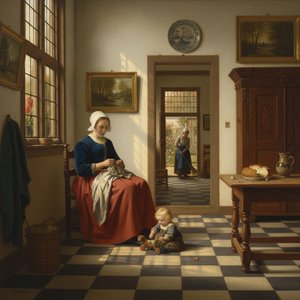
Pieter de Hooch: Illuminating Dutch Domestic Life & Golden Age Charm
Explore the captivating world of Pieter de Hooch, a master of Dutch Golden Age painting. Discover his innovative use of light, intimate domestic scenes, and lasting influence on art history. Learn more at OriginalUniqueArt.

Golden Light & Dutch Skies: The Timeless Magic of Dutch Golden Age Landscapes
Discover the breathtaking beauty of Dutch Golden Age landscapes. Explore the mastery of light, chiaroscuro, and 17th-century realism through an expert art history lens, celebrating the enduring legacy of the Dutch Masters for discerning collectors and art lovers.


