
 Voorvertoning
 Verstuur
 Delen
Delen
 Details bekijken
 Gids
Gids

 Download
 Vergelijkbare items
 Röntgenonderzoek
 Diavoorstelling
 Vraag & antwoord
 Statistieken
Spring, 1565


 Lees meer
Giclée / Kunstafdrukken
Giclée- of canvasafdruk van museumkwaliteit met een snelle productie en flexibele afwerkingsmogelijkheden. ( Bestel handgeschilderde reproductie Schakel over naar digitale afbeeldingen)




P118B €10

P118H €10

P118W €10

P438Z €10

P508JH €12

P508YH €12

P805H €10

P805Z €10

P919BZ €10

P919G €10

P919XJ €10

P959ZH €10

P968JZ €12

W106C €8

W218G €10

W218JH €8

W218Y €10

W307PJ €10

W316G €10

W316PJ €8

W316Y €10

W398PJ €8

W4111J €10

W500HY €15

W500JH €15

W692G €12

W849H €8

W940BG €15

W953PJ €8




Kies uit onze vooraf ingestelde maten die overeenkomen met de originele verhoudingen van het kunstwerk.

Voer de gewenste breedte en hoogte in, passend bij uw lijst of muur. Een afdruk kan alleen worden ingekort en nooit groter worden gemaakt dan het origineel; een formaat met andere verhoudingen zal daarom een deel van de afbeelding verliezen. Wij sturen u een digitaal mockup ter goedkeuring voordat we tot drukwerk overgaan. De afbeelding op deze pagina toont niet de werkelijke uitsnede — dit is alleen te zien op het mockup.
Wereldwijde levering () binnen 2 weken in plaats van de standaard 4/5 weken. (7 november)

Gratis wereldwijde expressverzending

Hoogwaardig linnen canvas

Volledige verzendverzekering

Garantie op terugbetaling van invoerrechten

Garantie op exacte kleurweergave

Retourbeleid van 100 dagen (alleen bij defecten)

100% Geld-terug-garantie

Korting bij meerdere afnames
 De optie voor glas is alleen beschikbaar bij een formaat kleiner dan 110 cm.

Spring, 1565
Giclée / Kunstafdrukken
Afmetingen reproductie
-


Eindtotaal
€ 72
A Snapshot of Rural Life: Pieter Bruegel’s “Spring, 1565”
Pieter Bruegel the Elder's "Spring, 1565" isn’t merely a depiction of farm work; it’s a vibrant tapestry woven with threads of observation, social commentary, and the burgeoning spirit of Northern Renaissance art. Painted in 1565, during a period of immense upheaval in Europe – religious conflict, economic shifts, and the rise of urban centers – this remarkable canvas offers a rare glimpse into the rhythms of rural life, capturing not just the physical labor but also the complex relationships between people and their environment.
The scene unfolds with an almost overwhelming sense of activity. Thirteen individuals, rendered with Bruegel’s characteristic earthy realism, are engaged in a multitude of tasks: plowing fields, planting seeds, tending to livestock, and even seemingly idle moments of rest. Cows, strategically placed throughout the landscape – some close to the foreground, others receding into the distance – serve as both practical elements of the farm and symbolic reminders of prosperity and sustenance. A solitary horse adds to the dynamic composition, its presence suggesting movement and the constant cycle of agricultural labor.
The Painter’s Palette: Technique and Style
Bruegel's mastery lies not just in his ability to depict a scene but in his nuanced approach to color and perspective. He employs a muted palette dominated by earthy greens, browns, and ochres, reflecting the natural tones of the countryside. This restrained use of color allows the details – the individual expressions on the workers’ faces, the textures of their clothing, the varied shapes of the animals – to take center stage. The artist's perspective is deliberately flattened, creating a sense of immediacy and drawing the viewer directly into the heart of the action. This technique, characteristic of Northern European painting at the time, prioritized clarity and detail over the illusionistic depth favored by Italian Renaissance masters.
Bruegel’s brushwork is remarkably loose and expressive, particularly in the depiction of the figures. He doesn't strive for photographic realism; instead, he captures the essence of his subjects – their toil, their camaraderie, and their connection to the land. The use of impasto—thickly applied paint—adds a tactile quality to the canvas, inviting us to almost feel the roughness of the soil beneath our feet.
A Window into 16th-Century Society
"Spring, 1565" is more than just a pastoral scene; it’s a subtle commentary on the social and economic realities of its time. The painting reflects the importance of agriculture in Northern Europe, where the vast majority of the population lived and worked on farms. It also hints at the tensions between rural and urban life – the farmers toiling away while the wealthy merchants and artisans prospered in burgeoning cities. The presence of the bowls filled with seeds speaks to the careful planning and foresight required for successful farming, a vital element in a society increasingly reliant on trade and exchange.
Considering Bruegel’s apprenticeship under Pieter Coecke van Aelst, it's clear that he absorbed elements of humanist thought alongside his technical training. However, Bruegel quickly developed a distinctly individual style, one characterized by its earthy realism, social observation, and often satirical undertones. “Spring, 1565” exemplifies this shift – moving beyond idealized representations to offer a grounded and honest portrayal of everyday life.
Capturing the Essence: Reproduction and Beyond
OriginalUniqueArt is proud to offer meticulously crafted hand-painted reproductions of Pieter Bruegel’s “Spring, 1565.” These reproductions strive to capture not only the visual details of the original but also its emotional resonance. Utilizing traditional oil painting techniques and employing a team of skilled artists, we ensure that each reproduction faithfully reflects Bruegel's artistic vision. Whether you are an art collector, interior designer seeking to infuse your space with historical charm, or simply an admirer of this iconic work, our reproductions provide a beautiful and authentic way to experience the enduring power of Pieter Bruegel’s masterpiece.
Veelgestelde vragen
Welk palet en welke hoofdkleur bepalen "Spring, 1565"?
"Spring, 1565" wordt gekenmerkt door een Neutrals palet met Rosy Brown (#d1b48d) als dominante kleur.
Hoe kan ik de afbeelding van "Spring, 1565" door Pieter Bruegel de Oude downloaden?
De afbeelding van "Spring, 1565" door Pieter Bruegel de Oude is te downloaden op de Downloaden-pagina van het kunstwerk: een digitale afbeelding in hoge resolutie om te downloaden.
Hoe komen stroming en tijdperk samen in "Spring, 1565" door Pieter Bruegel de Oude?
"Spring, 1565" behoort tot de Northern Renaissance-stroming en de maker ervan was werkzaam in het Renaissance-tijdperk.
Biografie kunstenaar
A Life Rooted in Renaissance Transformation
Pieter Bruegel the Elder emerged tijdens een periode van diepe verandering, een tijd waarin het artistieke landschap van Europa verschuifde van de High Renaissance idealen van Italië naar de groeiende complexiteit van Noord-Europese expressie. Geboren rond 1525 of 1526, waarschijnlijk in Breda – hoewel details over zijn vroege leven enigszins ongrijpbaar blijven – ontviel Bruegel’s jeugd aan een periode van religieuze onrust en een bloeiende handelscultuur. Hij begon zijn artistieke reis rond 1545 als leerling van Pieter Coecke van Aelst, een gerespecteerde Antwerpse schilder die bekend stond om zowel zijn kunst als zijn ontwerpen voor tapijten. Deze leerlingenperiode bood Bruegel een stevige basis in de technische vaardigheden van olieverf en tekenen, maar bovenal blootstelde het hem aan de humanistische stromingen die begonnen door te dringen tot intellectuele kringen. Van Aelst’s werkplaats was niet alleen een plaats van artistieke instructie; het was een broeinest waar traditionele technieken ontmoetten met nieuwe ideeën, waardoor Bruegel’s toekomstige visie werd gevormd.Wanderings en de Vorming van een Unieke Visie
Na zijn leerlingenperiode begon Bruegel aan uitgebreide reizen die zijn artistieke ontwikkeling onlosmakelijk zouden markeren. Tussen 1551 en 1553 reisde hij door Frankrijk, Zwitserland en Italië, waarbij hij landschappen schetsen en zich onderdompelen in verschillende culturen. Deze waren geen simpele toertreinen; het waren expedities van observatie en leren. Tijdens zijn tijd in Italië ontmoette Bruegel de werken van Renaissance-meesters, maar zijn artistieke temperament bleef toch duidelijk Noord-Europees. Hij nam hun invloed op, maar filterde deze door zijn eigen unieke gevoeligheid. De Alpen, met hun dramatische toppen en valleien, lieten een blijvende indruk achter, die de compositie-structuur en atmosferische perspectief beïnvloedden in vele van zijn latere landschappen. Na terugkeer naar Antwerpen in 1553 werd hij toegelaten als vrije meester. Na zijn tijd in Italië keerde Bruegel terug naar Antwerpen, waar hij zich vestigde en een reputatie opbouwde als een belangrijke schilder van zijn tijd. Hij werkte er samen met verschillende kunstenaars en uitgevers, wat hem toegang gaf tot een breed publiek en de mogelijkheid om zijn werk te verspreiden over heel Europa. Zijn stijl evolueerde geleidelijk, van vroege landschappen waarin hij een affiniteit toonde met de Vlaamse 16e-eeuwse landschapstraditie, naar zijn laatste werken die meer Italiaans geïnspireerd waren.Beyond Myth and Religion: A New Focus for Art
Bruegel’s ware innovatie lag in zijn onderwerpkeuze. Hij verliet opvallend de gevestigde conventies van Renaissance-schilderkunst, die vaak gericht waren op religieuze narratieven of klassieke mythologie. In plaats daarvan richtte hij zich op het alledaagse leven van gewone mensen – boeren die in velden werkten, dorpsbewoners die festivals vierden, jagers die door sneeuwige landschappen trokken. Dit was geen afwijzing van traditionele thema’s, maar een verheffing van het banale tot het niveau van hoogheidkunst. Zijn landschappen waren niet alleen achtergronden; ze waren actieve deelnemers aan de narratief, vaak doordrenkt van symboliek en een diep begrip van de kracht en schoonheid van de natuur. *De Dood des Opstandigen Engelen* (1562-1563) is bijvoorbeeld een aangrijpend visioen van menselijke mortaliteit, vol groteske beelden en een gevoel van naderend onheil. Schilderijen zoals *Boeren Wedding* bieden verrassend gedetailleerde en genuanceerde portretten van het platteland, zonder sentimentele idealisering. Hij maakte meesterlijk gebruik van chiaroscuro – het dramatische spel van licht en schaduw – om diepte, realisme en emotionele resonans te creëren in zijn composities. Zijn scènes waren niet noodzakelijkerwijs kritisch; ze waren realistische waarnemingen, die zowel de humor als de moeilijkheden vastlegden die inherent zijn aan het menselijk bestaan.Notable Works and Enduring Themes
- Landscape with the Flight into Egypt: Een serene maar subtiel symbolische weergave van de reis van het Heilig Familie, die Bruegel’s meesterschap in atmosferisch perspectief laat zien.
- The Triumph of Death: Een aangrijpend en apocalyptisch visioen van mortaliteit, vol groteske beelden en een gevoel van naderend onheil.
- Peasant Wedding: Een levendige en gedetailleerde weergave van plattelandsleven, die de drukkende energie en sociale gebruiken van een Vlaams dorp vastlegt.
- Hunters in the Snow: Deel van een serie die de seizoenen weergeeft, wordt dit iconische schilderij geëerd om zijn atmosferische schoonheid en realistische weergave van winterlandschappen.
- The Tower of Babel: Een monumentaal werk dat menselijke ambitie en goddelijke oordelen illustreert, waarbij Bruegel’s vaardigheid in het creëren van complexe composities met ingewikkelde details wordt getoond.

Pieter Bruegel de Oude
1525 - 1569 , België
Belangrijkste feiten
- Artistic Movement Or Style: Renaissance schilderkunst
- Artists Or Movements Influenced By This Artist: ['Nederlandse Gouden Eeuw']
- Artists Who Influenced This Artist: ['Hieronymus Bosch']
- Date Of Birth: c. 1525, Breda
- Date Of Death: 1569, Brussel
- Full Name: Pieter Bruegel de Oude
- Nationality: Vlaams
- Notable Artworks:
- Landschap met vlucht
- Doodstraftoren
- Boeren bruiloft
- Place Of Birth: Breda, Nederland
Gerelateerde artikelen

Pieter Bruegel the Elder: A Master of Genre, Landscape & Social Commentary
Explore the life & art of Pieter Bruegel the Elder, a pivotal figure of the Renaissance. Discover his groundbreaking genre scenes, symbolic landscapes, and lasting influence on art history. Learn more at OriginalUniqueArt.

Mastering Detail: A Guide to the Timeless Beauty and Technical Brilliance of Flemish Painting
Explore the exquisite precision of Flemish painting. From Jan van Eyck to Robert Campin, discover the revolutionary oil techniques and rich symbolism that defined the Northern Renaissance and continue to inspire fine art collectors today.

Top 25 Kunstwerken: Een Reis Door de Pracht van het Kunsthistorisches Museum, Wenen
Ontdek de 25 meest iconische kunstwerken van het Kunsthistorisches Museum, Wenen! Reis door Renaissance en Barok met Vermeer, Raphael & Rembrandt. Laat u inspireren & vind museumkwaliteit reproducties op OriginalUniqueArt.com.

Mastering Drama and Light: A Definitive Guide to the Flemish Baroque Art Movement
Explore the dramatic brilliance of the Flemish Baroque movement. Discover how masters like Peter Paul Rubens utilized chiaroscuro and dynamic composition to redefine art history through light, shadow, and unparalleled emotion.
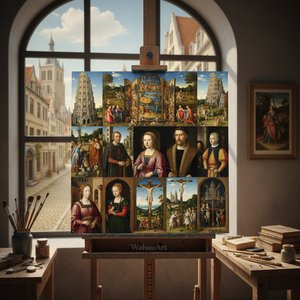
Top 10 Meesterwerken van de Noordelijke Renaissance | Kunst & Decoratie
Ontdek de 10 meest invloedrijke meesterwerken van de Noordelijke Renaissance! Van Jan van Eyck tot Pieter Bruegel, leer over hun technieken & betekenis. Vind museumkwaliteit reproducties en inspiratie voor uw interieur op OriginalUniqueArt.com.


![De Processie naar Golgotha [detail]](/media/artworks/images-thumb/32/c5/32c52a8c054c3755b769d95ed8a42796.jpg)

