
 Voorvertoning
 Verstuur
 Delen
Delen
 Details bekijken
 Gids
Gids

 Download
 Vergelijkbare items
 Röntgenonderzoek
 Diavoorstelling
 Vraag & antwoord
 Statistieken
View on the Sea

- 27.0 x 44.0 cm


 Lees meer
Giclée / Kunstafdrukken
Giclée- of canvasafdruk van museumkwaliteit met een snelle productie en flexibele afwerkingsmogelijkheden. ( Bestel handgeschilderde reproductie Schakel over naar digitale afbeeldingen)




P118B €10

P118H €10

P118W €10

P438Z €10

P508JH €12

P508YH €12

P805H €10

P805Z €10

P919BZ €10

P919G €10

P919XJ €10

P959ZH €10

P968JZ €12

W106C €8

W218G €10

W218JH €8

W218Y €10

W307PJ €10

W316G €10

W316PJ €8

W316Y €10

W398PJ €8

W4111J €10

W500HY €15

W500JH €15

W692G €12

W849H €8

W940BG €15

W953PJ €8




Kies uit onze vooraf ingestelde maten die overeenkomen met de originele verhoudingen van het kunstwerk.

Voer de gewenste breedte en hoogte in, passend bij uw lijst of muur. Een afdruk kan alleen worden ingekort en nooit groter worden gemaakt dan het origineel; een formaat met andere verhoudingen zal daarom een deel van de afbeelding verliezen. Wij sturen u een digitaal mockup ter goedkeuring voordat we tot drukwerk overgaan. De afbeelding op deze pagina toont niet de werkelijke uitsnede — dit is alleen te zien op het mockup.
Wereldwijde levering () binnen 2 weken in plaats van de standaard 4/5 weken. (5 november)

Gratis wereldwijde expressverzending

Hoogwaardig linnen canvas

Volledige verzendverzekering

Garantie op terugbetaling van invoerrechten

Garantie op exacte kleurweergave

Retourbeleid van 100 dagen (alleen bij defecten)

100% Geld-terug-garantie

Korting bij meerdere afnames
 De optie voor glas is alleen beschikbaar bij een formaat kleiner dan 110 cm.

View on the Sea
Giclée / Kunstafdrukken
Afmetingen reproductie
-


Eindtotaal
€ 72
A Vision of the Open Water: Unveiling Pierre Puget’s “View on the Sea”
Pierre Puget's "View on the Sea," created around 1670, isn’t merely a depiction of three ships navigating a hazy horizon; it’s a meticulously crafted tableau brimming with Baroque drama and an intimate understanding of human scale. Born in Marseille during a period of intense maritime activity, Puget’s life was inextricably linked to the sea – initially as a craftsman shaping the hulls of galleys, later as a celebrated sculptor, architect, and painter. This early immersion profoundly shaped his artistic vision, imbuing “View on the Sea” with an unparalleled sense of realism and emotional intensity. The drawing itself, rendered in fine pen and ink on vellum, possesses a remarkable immediacy, capturing a fleeting moment of naval preparation against a backdrop that simultaneously suggests vastness and quiet anticipation.
The composition immediately draws the eye to the central warship, dominating the scene with its imposing size and intricate rigging. Puget masterfully employs linear perspective, subtly diminishing the scale of the smaller vessels in the distance – a technique that convincingly conveys depth and the boundless expanse of the sea. The diagonal arrangement of these ships guides the viewer’s gaze across the canvas, creating a dynamic flow and reinforcing the sense of movement. Beyond mere representation, Puget sought to capture not just what he saw, but also the *feeling* of being at sea – the weight of responsibility, the potential for both glory and peril, all subtly conveyed through the posture of the ships and the atmospheric haze.
The Language of Line and Shadow: A Study in Baroque Technique
Puget’s mastery lies not only in his understanding of perspective but also in his exceptional command of line. The drawing is a testament to his meticulous technique, characterized by an astonishing level of detail achieved through the careful application of hatching and cross-hatching. These subtle variations in shading create a remarkable sense of texture – one can almost feel the roughness of the ship’s timbers, the tautness of the sails, and the shimmering surface of the water. The monochromatic palette, born from the limitations of pen and ink on vellum, paradoxically intensifies the drama; the absence of color forces the viewer to focus entirely on form, line, and light.
The lighting is remarkably soft and diffused, avoiding harsh contrasts and instead creating a sense of atmospheric depth. This deliberate choice contributes significantly to the painting’s overall mood – a blend of tranquility and latent tension. The artist's use of hatching creates an illusion of volume and form, particularly evident in the depiction of the ships’ rigging, which appears both complex and remarkably solid.
Symbolism and the Human Spirit at Sea
“View on the Sea” transcends a simple maritime scene; it’s imbued with symbolic resonance. The three ships represent not just vessels engaged in trade or warfare, but also embody the ambitions, challenges, and inherent risks associated with human endeavor. The central warship, with its imposing size and intricate details, speaks to the power of naval dominance, while the smaller boats hint at the diverse activities that sustained coastal communities. The hazy horizon suggests both the unknown possibilities of the future and the humbling vastness of nature – a potent reminder of humanity’s place within the larger world.
Furthermore, Puget's depiction of the ships’ crews—implied rather than explicitly shown—evokes a sense of human presence. The subtle gestures and postures suggest activity, anticipation, and perhaps even a touch of apprehension. This focus on the human element elevates the painting beyond mere topographical representation, transforming it into a powerful meditation on the relationship between humanity and the sea.
A Timeless Masterpiece: Reproduction and Beyond
Created over three centuries ago, “View on the Sea” remains a remarkably evocative work of art. Today, high-quality reproductions offer an accessible way to experience Puget’s genius in your own home or office. Whether adorning a grand salon or a more intimate space, this Baroque masterpiece continues to captivate and inspire with its dramatic composition, masterful technique, and profound exploration of the human spirit at sea. Consider it not just a painting, but a window into a bygone era—a testament to the enduring power of art to transport us across time and space.
Veelgestelde vragen
Is "View on the Sea" typerend voor het werk van Pierre Puget?
De terugkerende thema's van Pierre Puget omvatten baroque maritime scene, puget's dynamic brushwork, french naval influence, classical ship design, royal patronage art, religious undertones", early 17th-century style, marseille artistic legacy; "View on the Sea" richt zich op maritime, ships, sea, landscape, baroque, france, puget, vessels.
Hoe oud was Pierre Puget toen "View on the Sea" werd gemaakt?
Pierre Puget was 50 jaar oud bij het creëren van "View on the Sea" in 1670. De leeftijd is berekend op basis van het geboortejaar van de kunstenaar, 1620.
Wat zijn de werkelijke afmetingen van "View on the Sea" door Pierre Puget?
Het originele werk "View on the Sea" door Pierre Puget heeft de afmetingen 27 x 44 cm.
Biografie kunstenaar
Pierre Puget: Een leven in kunst en techniek
- Geboren: Marseille, Frankrijk (1620)
- Overleden: 1694
Vroege jaren en Italiaanse invloeden
- Leerlingwezen: Puget begon zijn carrière op veertienjarige leeftijd, waarbij hij ornamenten sneed voor galjoenen die in Marseille werden gebouwd. Deze vroege blootstelling aan vakmanschap legde de fundering voor zijn latere artistieke ambities.
- Reis naar Italië (1640): Op zoek naar nieuwe mogelijkheden reisde hij naar Italië, eerst naar Livorno en later naar Florence. Hier verfijnde hij zijn vaardigheden als houtsnijder en schilder.
- Rome en Pietro da Cortona: Een cruciaal moment kwam toen hij in Rome onder de vleugels van Pietro da Cortona werd genomen. Puget hielp mee bij het schilderen van de weelderige plafonds in het Palazzo Barberini en het Palazzo Pitti, waarbij hij de dynamiek en grandeur van de Romeinse barok absorbeerde.
- Terugkeer naar Marseille (1643): Na drie jaar in Italië keerde hij terug naar Marseille, met een verfijnd artistiek gevoel dat was gevormd door de Italiaanse meesters.
Belangrijke werken en artistieke ontwikkeling
- Vroege opdrachten: Bij zijn terugkeer ontving Puget opdrachten voor schilderijen en altaarstukken, die een evoluerende stijl toonden onder invloed van Annibale Carracci en Rubens.
- Doorbraken in de beeldhouwkunst: Hij richtte zich steeds meer op de beeldhouwkunst en creëerde werken zoals de medaillons voor de spiegel van Franse oorlogsschepen, waarmee hij een groeiende beheersing van vorm en detail toonde.
- Vaux-le-Vicomte (jaren 1660): Nicolas Fouquet gaf Puget de opdracht om Hercules te beeldhouwen voor zijn kasteel in Vaux-le-Vicomte, wat een belangrijk moment in zijn carrière markeerde en de patronage van machtige figuren illustreerde.
- Genuese periode: Na de ondergang van Fouquet verhuisde Puget naar Genua, waar hij opmerkelijke werken schiep zoals de “Hercule Gaulois” (Louvre) en beelden voor kerken zoals Santa Maria di Carignano.
- Opdrachten voor Versailles: Colbert bracht Puget terug naar Frankrijk, wat leidde tot opdrachten voor Versailles, waaronder de gevierde groepen “Milo van Croton” en “Perseus en Andromeda.” Deze werken worden gekenmerkt door hun dramatische intensiteit en expressief realisme.
Stijl en invloeden
- Barok drama: De stijl van Puget is stevig geworteld in de baroktraditie, met een nadruk op beweging, emotie en theatricaliteit.
- Klassieke inspiratie: Hoewel hij de barokke dynamiek omarmde, onthult zijn werk ook een waardering voor klassieke vormen en idealen.
- Michelangelo en Bernini: Zijn sculpturen tonen invloeden van de krachtige figuren van Michelangelo en de dynamische composities van Bernini.
- Unieke expressie: Ondanks deze invloeden ontwikkelde Puget een eigen, onderscheidende stijl die werd gekenmerkt door rauwe energie en expressieve intensiteit, waardoor hij zich onderscheidde van meer conventionele barokkunstenaars.
Nalatenschap en historische betekenis
- De brug tussen kunst en techniek: Het vermogen van Puget om artistiek talent naadloos te laten versmelten met technische vaardigheden was uniek. Zijn werk aan de scheepsbouw en fortificaties getuigt van een praktische vindingrijkheid naast zijn artistieke prestaties.
- Een gekweld genie: Théophile Gautier beschreef hem beroemd als de "melancholische keizer van de veroordeelden", wat de intensiteit en wellicht de strijd weerspiegelt die inherent waren aan zijn creatieve proces.
- Blijvende impact: De sculpturen van Puget, in het bijzonder “Milo van Croton” en “Perseus en Andromeda,” blijven iconische voorbeelden van de Franse barokke beeldhouwkunst, bewonderd om hun expressieve kracht en technische virtuositeit.
- Erkenning vandaag de dag: Zijn werk wordt wereldwijd gevierd in musea, waaronder het Louvre en het Musée des Beaux-Arts de Marseille, waarmee zijn plaats als een betekenisvol figuur in de kunstgeschiedenis is bezegeld.
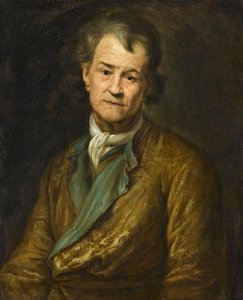
Pierre Puget
1620 - 1694 , Frankrijk
Belangrijkste feiten
- Artistic Movement Or Style: Barok
- Artists Who Influenced This Artist:
- Annibale Carracci
- Rubens
- Michelangelo
- Bernini
- Date Of Birth: 1620
- Date Of Death: 1694
- Full Name: Pierre Puget
- Nationality: Frans
- Notable Artworks:
- Hercules in rust
- De Faun terracotta
- Deur van het Hôtel de Ville
- De steniging van Sint-Pieter
- Een fregat op zee
- Place Of Birth: Marseille, Frankrijk
Gerelateerde artikelen

Pierre-Auguste Renoir's 25 Meesterwerken: Kleur, Licht & Impressionistische Pracht | OriginalUniqueArt
Ontdek de 25 mooiste schilderijen van Pierre-Auguste Renoir! Duik in de wereld van het Impressionisme, kleur en licht. Van 'Bal du moulin' tot intieme portretten – bekijk de meesterwerken & vind jouw perfecte reproductie op OriginalUniqueArt.com.

The Dramatic Flourish: Exploring the Baroque Movement's Enduring Legacy in Art History
Explore the dramatic world of Baroque art! Discover iconic artists like Caravaggio & Rubens, defining techniques, and its lasting impact on art history. Expert insights for collectors & enthusiasts at OriginalUniqueArt.

Barokke Pracht: Kunst die Grootsheid in Huis Brengt
Ontdek de barokke pracht! Leer over de geschiedenis, kenmerken en toepassingen van deze weelderige kunststijl in uw interieur. Laat u inspireren door meesters en breng grootsheid in huis.

Top 10 Barok Meesterwerken: Kunstgeschiedenis voor uw Interieur | OriginalUniqueArt.nl
Ontdek de 10 meest iconische Barok meesterwerken van Caravaggio, Rembrandt & Rubens! Duik in de geschiedenis en passie achter deze klassieke schilderijen. Vind museumkwaliteit reproducties voor uw interieur op OriginalUniqueArt.com.

Baroque Classicism: The Grandeur of Order and Drama in 17th-Century Art History
Explore the profound elegance of Baroque Classicism. Discover how 17th-century masters synthesized dramatic emotion with classical order through the lens of the Counter-Reformation and the works of legends like Carlo Maratta and Andrea Sacchi.


