
() ·
Een schilderij speciaal voor u gemaakt, met de hand
Handgemaakte olieverfreproductie
Met de hand geschilderd in olieverf op canvas in uw gewenste maat en lijst, op bestelling gemaakt door onze kunstenaars. ( Schakel over naar print Schakel over naar digitale afbeeldingen)
Biografie kunstenaar
Pierre Le Gros (1666-1719) was a leading French Baroque sculptor in Rome, renowned for his dramatic religious works for the Jesuits & Dominicans. Discover his powerful sculptures like 'Religion Overthrowing Heresy' and explore his legacy as a master
 Lees meer
vanaf ·
Hoofdstuk 1
Hoe groot moet het zijn?
Schuif om de afmetingen te wijzigen; de afbeelding aan de linkerzijde toont de lijst in de werkelijke breedte. De oorspronkelijke verhoudingen blijven behouden.
Kies uit onze vooraf ingestelde maten die overeenkomen met de originele verhoudingen van het kunstwerk.

Voer de breedte en hoogte in die u nodig heeft, passend bij uw lijst of uw muur. Omdat dit handgeschilderd is, kan de kunstenaar bij een afmeting met een andere beeldverhouding iets meer rondom het schilderij schilderen of juist iets meer weglaten — u kiest zelf. Wij sturen u een digitaal mockup ter goedkeuring voordat het schilderwerk begint. De afbeelding die op deze pagina wordt getoond, is niet het uiteindelijke resultaat — alleen de mockup geeft dit weer.
Hoofdstuk 2
Hoe moet het worden geleverd?
Kies de randen van het canvas
Kies uw lijst

Wit €1

Vervagende randen €1

Doorlopende rand €1

P118B €10

P118H €10

P118W €10

P438Z €10

P508JH €12

P508YH €12

P805H €10

P805Z €10

P919BZ €10

P919G €10

P919XJ €10

P959ZH €10

P968JZ €12

W106C €8

W218G €10

W218JH €8

W218Y €10

W307PJ €10

W316G €10

W316PJ €8

W316Y €10

W398PJ €8

W4111J €10

W500HY €15

W500JH €15

W692G €12

W849H €8

W940BG €15

W953PJ €8

H24-GOLD €30

H24-SILVER €30

H36-GOLD €45

H36-SILVER €45
Ingelijst
Lijstrand: . Totale afmetingen inclusief lijst: .
Hoofdstuk 3
Wie schildert het, en moet er iets veranderen?
Na de bestelling zal het team van OriginalUniqueArt.com per e-mail contact opnemen met de klant voor instructies en een mockup-voorbeeld verstrekken
Wereldwijde levering () binnen 3 tot 4 weken in plaats van de standaard 5 weken. (16 november). Zonder concessies aan de kwaliteit.
Hoofdstuk 4
De laatste hand aan
Een naambordje, zoals in een museum?
Details van de gegraveerde bronzen plaat
This elegant plaque features the artist's name and the title of the artwork, finely engraved for a timeless presentation.
It is made from bronze with a refined, elegant finish. The text is precisely laser-engraved for a sharp and permanent result. Measuring 9x2 cm, the plaque is compact yet easy to read. It's built to be durable and scratch-resistant, offering a professional, museum-quality look. Mounting is simple thanks to the included adhesive backing.
Details transparante acrylplaat
The plaque includes essential engraved details such as the artist's name, the title of the artwork, the date it was created, the type of media used-like oil on canvas or watercolor-a brief description of the piece, and a QR code that links to the complete artwork information.
It is crafted from clear acrylic, offering a sleek, modern appearance. The text is UV-engraved in black to ensure strong visual contrast. With a size of 10x15 cm, it ensures optimal readability. It comes equipped with two metal hooks for secure wall mounting. The plaque is designed to be weather-resistant, making it suitable for various environments, and it includes interactive features that work seamlessly with smartphone scanning.
Details zwarte acrylplaat
This elegant plaque includes engraved information such as the artist's name, the title of the artwork, the date it was created, the type of media used (like oil on canvas or watercolor), a short description of the artwork, and a QR code for quick access to more information.
The plaque itself is made from refined black acrylic with a premium finish. The text is laser-engraved in white for high contrast and readability. Its size is 10x15 cm, designed to be easy to read. It comes with two metal hooks for professional mounting. The design is sleek and fits any interior style. It is also weather-resistant and durable, with built-in digital integration for mobile compatibility.
Een beschermende vernis?
Wanneer heeft u het nodig?
Hoofdstuk 5
Uw schilderij, zoals u het heeft besteld

St Thomas
Druktechniek
Afmetingen reproductie
-

Geselecteerde topkunstenaars
Meer detail, verfijning en extra productietijd
-

Lijst voor reproductie
-
-
Voor kunstwerken of reproducties die aan één zijde groter zijn dan 105 cm (ongeveer 41 inch), wordt de lijst als een losse set verzonden. Deze methode garandeert een veilige levering en voorkomt schade tijdens het transport.
Professionele montage vereist - dit is geen doe-het-zelfproduct.
De set moet worden gemonteerd en het canvas moet worden gespannen door een ervaren professionele lijstenmaker, met gebruik van houtlijm (niet inbegrepen), een doekspanter en klemmen om de sponningen recht te houden terwijl de lijm droogt. Onjuiste montage of een ongelijkmatige spanning op het canvas kan het kunstwerk permanent beschadigen en wordt niet gedekt door onze garantie.
 Voor kunstwerken of reproducties die aan één zijde groter zijn dan 105 cm (ongeveer 41 inch), wordt de lijst als een losse set verzonden. Deze methode garandeert een veilige levering en voorkomt schade tijdens het transport.
Alle massief houten onderdelen zijn inbegrepen, nauwkeurig op maat gesneden voor montage.
Te monteren met de meegeleverde schroeven, plus houtlijm voor de hoekverbindingen, die niet wordt meegeleverd en door uw lijstenmaker moet worden aangeschaft.
Professioneel gereedschap is vereist en niet inbegrepen: een spanner voor canvas en klemmen om de latten recht te houden terwijl de lijm droogt.
Belangrijk:
De hoekverbindingen vereisen houtlijm, de latten moeten met lijmklemmen worden vastgehouden tot de lijm volledig is opgedroogd, en het spannen van het canvas op het samengestelde frame vereist een doekspanter. Geen van deze artikelen is inbegrepen in de set. Wij adviseren u om een ervaren professionele lijstenmaker te raadplegen voordat u deze maat bestelt.

Naamplaatje
-
-

Beschermende vernislaag
Glanzende vernis (versterkt de kleuren en biedt bescherming tegen licht en vocht)
-

Mijn kunstwerk aanpassen
Voorbeelden van aanpassingen: vervang het gezicht door een eigen foto; voeg een huisdier toe (bijv. vervang de kat door een hond); verwerk een verborgen boodschap in de achtergrond; wijzig het landschap of andere elementen op de achtergrond.
-

Spoedlevering
Wereldwijde levering () binnen 3 tot 4 weken in plaats van de standaard 5 weken. (16 november). Geen concessies aan de kwaliteit.
-
Spoedlevering
Wereldwijde levering naar binnen 5 weken. (23 november).
Inbegrepen
Eindtotaal
€ 267
De optie voor glas is alleen beschikbaar bij een formaat kleiner dan 110 cm.
Inbegrepen bij elke bestelling
- Gratis wereldwijde expressverzending
- Hoogwaardig linnen canvas
- Volledige verzendverzekering
- Garantie op terugbetaling van invoerrechten
- Garantie op exacte kleurweergave
- Retourbeleid van 100 dagen (alleen bij defecten)
- 100% Geld-terug-garantie
- Korting bij meerdere afnames


 Voorvertoning
 Verstuur
 Delen
Delen
 Details bekijken
 Gids
Gids

 Download
 Vergelijkbare items
 Röntgenonderzoek
 Diavoorstelling
 Vraag & antwoord
 Statistieken
In cijfers
- 1705het jaar waarin het werd geschilderd
- 29lijsten om uit te kiezen
- standaardmaten, in hun eigen verhoudingen
- 5weken om te schilderen en te leveren
Over het origineel


Pierre Le Gros
1666 - 1719, France
Snelle feiten over Pierre Le Gros
- Full Name: Pierre Le Gros
- Nationality: French
- Date Of Birth: 1666
- Date Of Death: 1719
- Place Of Birth: Paris, France
- Notable Artworks:
- Religion Overthrowing Heresy
- St Stanilas Kostka on his Deathbed
- S. Luigi Gonzaga relief
- Artistic Movement Or Style: Baroque sculpture
- Artists Who Influenced This Artist:
- Pierre Le Gros the Elder
- Gaspard Marsy
- Balthazard Marsy
- Artists Or Movements Influenced By This Artist: Roman Baroque sculptors
Biografie kunstenaar
The Dramatic Spirit of Roman Baroque
To speak of Pierre Le Gros is to invoke the very breath of High Baroque Rome—a period where art did not merely decorate space, but wrestled with divine drama itself. Though his lineage traces back to Paris, the soul of his genius was forged in the fervent crucible of Italian sculpture. He was a master whose hands seemed perpetually caught in a moment of ecstatic revelation or profound spiritual struggle. His work pulses with an almost palpable energy, capturing the dramatic tension that defined Counter-Reformation art.
While modern scholarship often refers to him by his later name, Legros, it is crucial to remember that he signed his works as Le Gros. This distinction speaks volumes about his immersion in the Roman artistic milieu; he became less a French expatriate and more an intrinsic part of Rome's sculptural narrative. His reputation soared, establishing him as the pre-eminent sculptor for nearly two decades, a towering figure whose influence shaped the religious art commissioned by powerful orders such as the Jesuits and Dominicans.
Training and Parisian Roots
Le Gros’s artistic journey began amidst a family steeped in creative endeavor. Born in Paris in 1666, his early life was marked by both loss and intense tutelage. Though tragedy struck with the passing of his mother at a tender age, he remained connected to the vibrant world of sculpture through his maternal uncles. His formal training was multifaceted; while he absorbed the craft from his father, Jean Le Pautre’s influence on his drawing skills provided an essential foundation for the detailed rendering that would characterize his later pieces.
His ambition led him to Rome, where he earned the prestigious Prix de Rome. This period of study proved transformative, renewing a vital friendship with his cousin, Pierre Lepautre. The years spent within the confines of the French Academy in Rome were fertile ground for artistic growth, even as the institution itself navigated financial turbulence due to the demands of Louis XIV’s wars. It was here, through the rigorous process of copying classical antiquity—most notably from the magnificent Vetturia sculpture—that his technical prowess was honed to an almost superhuman degree.
The Zenith of Roman Mastery
It is in Rome that Le Gros truly found his voice. His style eschewed mere academic polish for something far more visceral and emotionally charged. The "ardent drama" mentioned by art historians is not hyperbole; it is the hallmark of his genius. He possessed an unparalleled ability to imbue marble with narrative life, making stone seem capable of sudden movement or agonizing emotion. Whether depicting martyrdom, ecstasy, or divine intervention, his figures do not simply stand; they writhe, they plead, and they ascend.
His dedication to the religious commissions meant that his work was deeply intertwined with the spiritual fervor of the era. The altarpieces and devotional sculptures he created were not just art objects; they were instruments of piety designed to move the soul toward contemplation and devotion. This profound connection between technique and theology elevates his status beyond mere craftsman.
Legacy and Enduring Impact
Despite the sheer power radiating from his surviving works, Le Gros’s name sometimes fades into the background when compared to the monumental figures who followed him. Yet, his significance lies precisely in that dramatic tension—the moment just before the climax, or immediately after the peak of emotion. He carved for an age obsessed with visible spiritual fervor, and he delivered exactly what they craved: sculpture that demanded participation from the viewer.
His legacy endures as a testament to the power of Baroque emotionalism in stone. To study his work is to witness a sculptor who successfully bridged the rigorous classical training with an almost untamed, passionate spirit, forever marking him as a master whose touch was both technically impeccable and deeply, dramatically human.
Gerelateerde artikelen
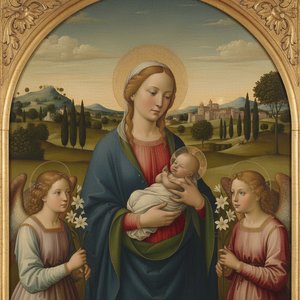
Pietro Perugino: A Renaissance Master's Legacy of Grace & Spiritual Depth
Explore the serene beauty & spiritual depth of Pietro Perugino's Renaissance masterpieces. Discover his influence on Raphael, key works like 'Baptism of Christ,' and legacy as a leading Umbrian painter.

Masterpieces of Grandeur: The Top 25 Artworks by Paolo Veronese
Step into the opulence of the Venetian Renaissance with our curated guide to the top 25 Paolo Veronese masterpieces. From grand feasts to luminous colors, explore the stories behind these timeless icons and find museum-quality reproductions. Discover all masterpieces on OriginalUniqueArt.com.

Masterpieces of Grandeur: The Top 25 Artworks by Paolo Veronese
Step into the opulence of the Venetian Renaissance with our curated guide to the top 25 Paolo Veronese masterpieces. Explore legendary tales of color, drama, and grandeur through museum-quality art reproductions for your collection. Discover all masterpieces on OriginalUniqueArt.com.