

 Verstuur
 Delen
Delen
 Details bekijken
 Gids voor studentenkunstwerken

 Download
 Vergelijkbare items
 Diavoorstelling
 Statistieken
George Sand (1804-1876)


 Lees meer
Giclée / Kunstafdrukken
Giclée- of canvasafdruk van museumkwaliteit met een snelle productie en flexibele afwerkingsmogelijkheden. ( Koop handgeschilderd kunstwerk Schakel over naar digitale afbeeldingen)




































Kies uit onze vooraf ingestelde maten die overeenkomen met de originele verhoudingen van het kunstwerk.

U kunt uw eigen afmetingen opgeven om in een specifieke lijst of ruimte te passen. Als de door u gekozen maat niet overeenkomt met de proporties van het originele kunstwerk, zullen wij de afbeelding bijsnijden of uitbreiden met een gespiegelde of effen rand. Een digitaal mockup wordt ter goedkeuring naar u verzonden voordat de productie begint.
Houd er rekening mee dat de preview op het scherm de werkelijke bijsneding of uitbreiding niet weergeeft. Alleen de mockup toont de uiteindelijke compositie nauwkeurig.
Hoewel aangepaste maten beschikbaar zijn, raden wij aan een afmeting uit de vooraf bepaalde lijst te kiezen om de originele proporties te behouden.
Wereldwijde levering () binnen 2 weken in plaats van de standaard 4/5 weken. (27 september)

Gratis wereldwijde expressverzending

Hoogwaardig linnen canvas

Volledige verzendverzekering

Garantie op terugbetaling van invoerrechten

Garantie op exacte kleurweergave

Retourbeleid van 100 dagen (alleen bij defecten)

100% Geld-terug-garantie

Korting bij meerdere afnames
 De optie voor glas is alleen beschikbaar bij een formaat kleiner dan 110 cm.

George Sand (1804-1876)
Giclée / Kunstafdrukken
Formaat reproductie
-


Totaalprijs
$ 81
A Bronze Legacy: Capturing the Spirit of George Sand
In the intimate, metallic embrace of Pierre-Jean David d’Angers’ 1833 bronze portrait, we encounter more than just a likeness; we meet the very essence of George Sand. Amandine-Aurore-Lucie Dupin, known to the world by her defiant pseudonym, was a woman who reshaped the landscape of French literature and feminist thought. Through this exquisite depiction, rendered with the precision of a master medalist, the artist invites us into a moment of profound stillness. The subject’s gaze, cast slightly downward in solemn contemplation, suggests a mind teeming with the revolutionary ideas and romantic complexities that defined her era. To behold this piece is to witness the intersection of personal strength and historical significance, making it an evocative centerpiece for any collection dedicated to the icons of the Romantic age.
The artistry of David d’Angers, a protégé of the legendary Jacques-Louis David, shines through in the meticulous execution of this work. While his training was rooted in the disciplined traditions of Neoclassicism, this portrait breathes with the emotional intensity of the burgeoning Romantic movement. The artist utilizes chiaroscuro to great effect, manipulating light and shadow across the bronze surface to create a sense of three-dimensional depth and psychological weight. Every contour of Sand’s face and every delicate fold of her drapery is articulated with a realism that feels both timeless and immediate. The choice of bronze—a medium synonymous with permanence—serves as a metaphor for Sand's enduring legacy, ensuring that her intellectual and social contributions remain etched in the collective memory of art history.
Symbolism and the Art of the Miniature
There is a captivating intimacy in the way this portrait is presented, appearing as a close-up of a bronze coin. This unique format elevates the subject from a mere person to a symbol of cultural value, much like the currency that circulates through a nation. By placing Sand’s visage upon such a monumental yet miniature stage, David d’Angers imbues her with an almost numismatic authority, suggesting that her influence is as foundational and widespread as the very coins of France. The circular composition focuses the viewer's attention entirely on her features, stripping away the distractions of the external world to highlight her inner resolve and intellectual grace.
For the discerning collector or interior designer, this reproduction offers a sophisticated touch of historical gravity. It is a piece that demands contemplation, providing a focal point that sparks conversation about female empowerment, the evolution of the written word, and the artistry of the nineteenth century. Whether placed in a sunlit study or a curated gallery space, the luminous sheen of the bronze finish and the dramatic interplay of light within the sculpture bring a sense of classical elegance and narrative depth to any environment. It is not merely a decoration, but a window into a transformative period of human history.
Biografie van de kunstenaar
A Legacy Forged in Stone: The Life and Art of Pierre-Jean David d’Angers
Born in Angers, France, in 1788, Pierre-Jean David began his artistic journey steeped in the republican fervor that would define much of his life and work. Initially apprenticed to a local wood carver – his father – young David quickly demonstrated an aptitude for sculpting that propelled him towards greater ambitions. He arrived in Paris in 1808, a city brimming with both classical tradition and revolutionary spirit, seeking tutelage under Philippe-Laurent Roland at the École des Beaux-Arts. This period was formative, grounding him in neoclassical principles while simultaneously exposing him to the burgeoning Romantic movement. A pivotal moment came in 1809 when he entered the studio of Jacques-Louis David, adopting the name “David d’Angers” not merely as a professional designation but as a conscious assertion of lineage and artistic ambition – a distinction from his celebrated master. This adoption signaled a desire to forge his own path while acknowledging the profound influence of the era's leading painter. Early struggles marked his Parisian years, yet he persevered, winning recognition with works like “Othryades” in 1810 and ultimately securing the prestigious Prix de Rome in 1811 for his sculpture "Epaminondas."Early Influences and Artistic Formation
David’s formative years were shaped by a confluence of artistic currents. His father, a skilled wood carver, instilled in him an appreciation for craftsmanship and meticulous detail – qualities that would permeate his sculptural practice throughout his career. Simultaneously, Roland at the École des Beaux-Arts imparted foundational knowledge of classical sculpture, emphasizing idealized form, harmonious proportions, and rational composition. These influences established a bedrock upon which David’s subsequent explorations of Romanticism could flourish. The arrival in Paris coincided with an explosion of artistic innovation fueled by revolutionary ideals. He absorbed the energy of this transformative period, recognizing its potential to inspire new forms of expression. His encounter with Jacques-Louis David proved particularly significant; David d’Angers consciously sought to emulate his master's stylistic prowess and intellectual rigor—a deliberate effort to transcend mere imitation and cultivate a distinctive artistic voice.The Roman Years: Classical Inspiration and Political Awakening
From 1811 to 1816, David embarked on a crucial pilgrimage to Rome – a city revered as the cradle of Western civilization and a bastion of classical learning. Under the tutelage of Antonio Canova, he honed his sculptural technique, mastering the subtleties of marble carving and embracing the aesthetic principles championed by the Neoclassical movement. However, Rome was more than just an academic destination; it served as a crucible for political awareness. The Bourbon Restoration shattered the illusions of republican idealism that had gripped France following Napoleon’s downfall—a disillusionment that fueled David’s conviction in the importance of portraying heroic figures who embodied moral virtue and civic responsibility. He diligently studied the sculptures of antiquity, absorbing their grandeur and restraint – qualities he would strive to recapture in his own works. This period solidified his commitment to classical ideals while simultaneously nurturing a burgeoning sensitivity to social and political issues.Rediscovering France: Engagement with Romanticism
David’s return to Paris in 1816 marked the beginning of a new chapter—one characterized by prolific artistic activity and engagement with the Romantic movement. He quickly established himself as a leading sculptor, securing commissions for monumental sculptures that celebrated national pride and commemorated historical events. His work on the Arc de Triomphe exemplifies his mastery of large-scale projects, demonstrating an ability to convey power and dynamism through sculpted form—a hallmark of Romantic artistic ambition. Simultaneously, he pursued portraiture with unwavering dedication, producing exquisitely detailed medallions that captured not only physical likeness but also psychological nuance—reflecting a shift toward emotional expression and subjective interpretation. His collaborations with writers like Victor Hugo and Goethe underscored his intellectual curiosity and his belief in the transformative potential of art to engage with profound philosophical questions. He championed republican ideals and actively opposed autocratic rule, aligning himself with progressive forces shaping French society during this turbulent era.A Monumental Legacy: Sculpture Beyond Neoclassicism
David’s artistic output spanned a remarkable range—from intimate portrait medallions to ambitious public monuments—establishing him as one of the most influential sculptors of his time. His sculptures—including “Wounded Philopoemen,” “La Douleur,” and “Epaminondas”—demonstrated an unparalleled ability to convey emotion and heroism through idealized form—a departure from the rigid conventions of Neoclassicism yet rooted in its foundational principles. The Pantheon frieze, commissioned for the bicentennial celebration of Voltaire’s birth, stands as a testament to his vision of civic grandeur—a monumental undertaking that embodies the spirit of Enlightenment ideals. His equestrian statue of Marshal Ney, erected in Paris during Napoleon III's reign, exemplifies his mastery of dynamic composition and sculptural technique—capturing the energy and momentum of military triumph. David’s enduring influence can be seen in countless subsequent sculptures—inspiring artists across generations to explore new expressive possibilities while upholding the legacy of classical tradition. He remains a sculptor whose work continues to resonate with audiences today—a figure who transformed the visual landscape of France and cemented his place as one of the nation's most revered artistic icons.
Pierre-Jean David D’Angers
1788 - 1856 , Frankrijk
Snelle feiten
- Artistic Movement Or Style: Neoclassicisme
- Artists Or Movements Influenced By This Artist: ['Romantiek']
- Artists Who Influenced This Artist:
- Jacques-Louis David
- Philippe-Laurent Roland
- Date Of Birth: 1788
- Date Of Death: 1856
- Full Name: Pierre Jean David d’Angers
- Nationality: Frans
- Notable Artworks:
- Wounded Philopoemen
- La Douleur
- Epaminondas
- Place Of Birth: Angers, France
Gerelateerde artikelen

Georges Seurat's Meesterwerken: 25 Iconische Schilderijen voor Kunstliefhebbers | OriginalUniqueArt
Ontdek de 25 meesterwerken van Georges Seurat! Duik in Pointillisme, Impressionisme & chromoluminarism. Bewonder 'A Sunday on La Grande Jatte' en meer. Museumkwaliteit kunst reproducties op OriginalUniqueArt.com.

Georges Braque's Top 25 Meesterwerken: Cubisme & Kunst voor uw Interieur
Ontdek de 25 meest iconische meesterwerken van Georges Braque, pionier van het Cubisme. Lees over zijn techniek, inspiratie & de impact op moderne kunst. Vind museumkwaliteit reproducties en verrijk uw interieur met OriginalUniqueArt.com!
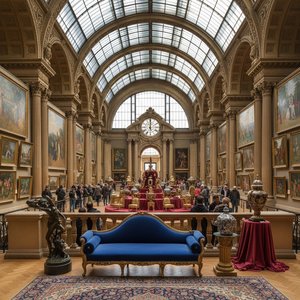
Top 25 Meesterwerken Musée d'Orsay: Kunst, Geschiedenis & Decor Inspiratie
Ontdek de top 25 meesterwerken van het Musée d'Orsay! Van Monet’s impressionisme tot Van Gogh’s emotionele kracht. Leer over kunst, geschiedenis & vind perfecte reproducties voor uw interieur op OriginalUniqueArt.com.
Top 10 Meesterwerken in Zandkleuren: Kunst voor een Warm Interieur | OriginalUniqueArt.com
Ontdek 10 beroemde schilderijen die baden in zandkleuren! Van Monet tot Rembrandt, leer de verhalen achter deze meesterwerken. Vind museumkwaliteit kunst reproducties & interieurinspiratie op OriginalUniqueArt.com.
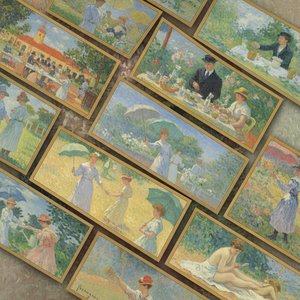
Pierre-Auguste Renoir's 25 Meesterwerken: Kleur, Licht & Impressionistische Pracht | OriginalUniqueArt
Ontdek de 25 mooiste schilderijen van Pierre-Auguste Renoir! Duik in de wereld van het Impressionisme, kleur en licht. Van 'Bal du moulin' tot intieme portretten – bekijk de meesterwerken & vind jouw perfecte reproductie op OriginalUniqueArt.com.
