

 Bekijk op ware grootte
 Verstuur
 Delen
Delen
 Details bekijken
 Gids voor studentenkunstwerken

 Download
 Vergelijkbare items
 Röntgenonderzoek
 Diavoorstelling
 Statistieken
Cardinal Richelieu
 Oil On Canvas
- WallArt
- Baroque
 1637
1637- Early Modern
 260.0 x 178.0 cm
 National Gallery
 Lees meer
Giclée / Kunstafdrukken
Giclée- of canvasafdruk van museumkwaliteit met een snelle productie en flexibele afwerkingsmogelijkheden. ( Koop handgeschilderd kunstwerk Schakel over naar digitale afbeeldingen)




P118B €10

P118H €10

P118W €10

P438Z €10

P508JH €12

P508YH €12

P805H €10

P805Z €10

P919BZ €10

P919G €10

P919XJ €10

P959ZH €10

P968JZ €12

W106C €8

W218G €10

W218JH €8

W218Y €10

W307PJ €10

W316G €10

W316PJ €8

W316Y €10

W398PJ €8

W4111J €10

W500HY €15

W500JH €15

W692G €12

W849H €8

W940BG €15

W953PJ €8




Kies uit onze vooraf ingestelde maten die overeenkomen met de originele verhoudingen van het kunstwerk.

Voer de breedte en de hoogte in die u nodig heeft, passend bij uw lijst of uw muur. Een afdruk kan alleen worden ingekort, nooit groter worden gemaakt dan het origineel, waardoor een formaat met een andere verhouding een deel van de afbeelding verliest. Wij sturen u een digitaal mockup ter goedkeuring voordat we iets drukken. De afbeelding op deze pagina toont niet de werkelijke uitsnede — dit is alleen te zien op het mockup.
Wereldwijde levering () binnen 2 weken in plaats van de standaard 4/5 weken. (25 oktober)

Gratis wereldwijde expressverzending

Hoogwaardig linnen canvas

Volledige verzendverzekering

Garantie op terugbetaling van invoerrechten

Garantie op exacte kleurweergave

Retourbeleid van 100 dagen (alleen bij defecten)

100% Geld-terug-garantie

Korting bij meerdere afnames
 De optie voor glas is alleen beschikbaar bij een formaat kleiner dan 110 cm.

Cardinal Richelieu
Giclée / Kunstafdrukken
Formaat reproductie
-


Totaalprijs
€ 71
A Vision of Power: The Majesty of Philippe de Champaigne’s Cardinal Richelieu
In the grand theater of the seventeenth century, few figures commanded as much reverence and fear as Armand Jean du Plessis, the Cardinal Richelieu. When Philippe de Champaigne set brush to canvas in 1637, he was not merely recording a likeness; he was constructing an icon of absolute authority. This masterpiece stands as a quintessential triumph of the Baroque era, a period defined by its ability to overwhelm the senses and stir the soul through dramatic tension and opulent detail. As one gazes upon the portrait, the immediate impact is one of profound gravity. The subject does not merely sit for a painter; he presides over the viewer, his presence anchored by the weight of both his office and his immense political intellect.
The technical brilliance of de Champaigne is most evident in his masterful use of chiaroscuro. By orchestrating a deliberate interplay between deep, swallowing shadows and piercing highlights, the artist sculpts Richelieu’s features with a sculptural precision that feels almost tactile. The light falls strategically across the Cardinal’s face, illuminating the determination etched into his expression, while simultaneously catching the lustrous sheen of his crimson robes. This technique creates a breathtaking sense of three-dimensionality, pulling the subject forward from the dark, enigmatic backdrop of heavy drapery and distant, shadowed foliage. It is a visual language designed to evoke awe, making the figure appear to emerge from the very fabric of history itself.
Symbolism and the Art of Presence
Every element within this composition serves a higher narrative purpose, weaving a complex web of symbolism that would have been instantly legible to the contemporary elite. The vibrant red of the Cardinal’s vestments—the famous Éminence Rouge—is far more than a display of wealth; it is a potent signifier of his high ecclesiastical rank and the fiery political influence he wielded over France. De Champaigne renders these fabrics with such meticulous care that one can almost sense the heavy, luxurious texture of the silk and velvet, a testament to the artist's Flemish-influenced training under masters like Rubens.
Beyond the tactile splendor, the composition utilizes spatial illusions to reinforce the subject's status. The subtle glimpse of an arched doorway and verdant greenery in the background suggests a world that extends far beyond the frame, hinting at the vast reach of Richelieu’s dominion. Even the way the Cardinal holds his book—a symbol of wisdom, spiritual guidance, and the intellectual rigor required to govern a nation—adds a layer of contemplative depth to his formidable persona. For the collector or the interior designer, this painting offers more than mere decoration; it provides a focal point of intellectual and historical weight, capable of anchoring a room with its commanding, regal energy.
An Enduring Legacy for the Discerning Collector
To possess a reproduction of this caliber is to invite the spirit of the French Baroque into one's personal sanctuary. The painting’s ability to balance intense realism with dramatic artifice makes it a versatile masterpiece, equally at home in a traditional library filled with leather-bound volumes or as a sophisticated statement piece in a modern, minimalist gallery setting. It captures a moment in time when art was the ultimate tool of statecraft and identity.
For those seeking to curate an environment of sophistication and depth, de Champaigne’s Cardinal Richelieu offers an unparalleled opportunity. It is a work that rewards repeated viewing, revealing new nuances in its shadows and textures with every encounter. Whether you are drawn to the historical drama of the Bourbon era or the technical mastery of seventeenth-century oil painting, this portrait remains a timeless testament to the enduring power of the human spirit and the transformative magic of fine art.
Vragen & Antwoorden
Welke nationale herkomst ligt ten grondslag aan de Baroque van "Cardinal Richelieu"?
Het Baroque-werk "Cardinal Richelieu" werd gemaakt door een kunstenaar die werd geboren in Nederland.
Waar is "Cardinal Richelieu" door Philippe De Champaigne tegenwoordig te zien?
"Cardinal Richelieu" door Philippe De Champaigne is te zien in National Gallery, London, United Kingdom. De vermelding van het museum heeft betrekking op het originele werk, niet op reproducties.
Wat is de kunsthistorische betekenis van "Cardinal Richelieu" door Philippe De Champaigne?
"Cardinal Richelieu" door Philippe De Champaigne behoort tot de Baroque-stroming, binnen de Early Modern-periode. Samen geven zij het werk zijn plaats in de kunstgeschiedenis.
Biografie van de kunstenaar
Een Leven Gekleurd door Licht en Schaduw
Philippe de Champaigne, geboren in Brussel in 1602, ontpopte zich als een sleutelfiguur binnen het Franse Baroklandschap, hoewel zijn oorsprong buiten de grenzen van het koninkrijk lag. Zijn reis begon niet in privileges, maar binnen een bescheiden gezin, waar een vroege artistieke aanleg werd gekoesterd door eerste studies onder Jacques Fouquieres, een landschapsschilder die fundamentele vaardigheden verschafte. Deze basis bleek cruciaal toen de jonge kunstenaar in 1621 naar Parijs waagde – een stad die zowel zijn aangenomen thuis zou worden als het canvas voor zijn bloeiend talent. Daar leerde hij bij Nicolas Poussin, een ontmoeting die zijn begrip van compositie en draftsmanship onuitwisbaar vormgaf. Het Palais du Luxembourg werd een vroege beproeving, aangezien de Champaigne bijdroeg aan de decoratie onder leiding van Nicolas Duchesne, een formatieve ervaring die de loop van zijn artistieke traject bepaalde. Dit was een periode van absorberende invloeden, die de basis legden voor een stijl die uiteindelijk Barokdrama zou combineren met een uniek Frans gevoel.De Penseelstreken van Macht en Vroomheid
De naam van de Champaigne werd synoniem met zowel religieuze schilderkunst als portretkunst – twee pijlers die de dominante stromingen van zijn tijd weerspiegelden. Zijn doeken waren niet louter afbeeldingen; het waren verklaringen, doordrenkt van emotionele intensiteit en een meesterlijke beheersing van clair-obscur, dat dramatische samenspel van licht en schaduw die de Barokesthetiek definieerde. Werken als Sint Hiëronimus in de Wildernis, Portret van Omer Talon, en Mozes met de Tafelen der Wet staan als getuigenissen van zijn vaardigheid, elke penseelstreek onthult een diep begrip van menselijke vorm en spiritueel gewicht. Hij beperkte zich niet tot kleinere werken; talrijke schilderijen voor Notre Dame Cathedral toonden zijn vermogen om grootschalige composities met ingewikkelde details te bedenken en uit te voeren. Het was echter zijn serie portretten van Kardinaal Richelieu die zijn plaats in de geschiedenis verankerden. Elf verschillende afbeeldingen van de machtige staatsman – elk vastleggend een ander facet van zijn autoriteit – werden in opdracht gegeven, wat niet alleen de artistieke bekwaamheid van de Champaigne weerspiegelde, maar ook een hechte relatie met een van Frankrijks meest invloedrijke figuren. Dit waren geen louter gelijkenissen; het waren zorgvuldig geconstrueerde beelden die ontworpen waren om macht en controle uit te stralen.Een Vaderlijke Figuur in de Franse Kunst
De Champaigne was niet alleen een schilder; hij was een architect van de Franse kunstwereld zelf. Als medeoprichter van de Académie royale de peinture et de sculpture speelde hij een vitale rol bij het formaliseren van artistieke opleiding en het vaststellen van normen van uitmuntendheid binnen het Koninkrijk. Deze instelling werd de hoeksteen van de Franse artistieke identiteit, die een onderscheidende stijl bevorderde die Barokdynamiek combineerde met klassieke terughoudendheid – een mix waaraan de Champaigne aanzienlijk bijdroeg. Zijn invloed reikte verder dan zijn eigen levenstijd en baande de weg voor volgende generaties Franse kunstenaars die voortbouwden op de fundamenten die hij hielp leggen. Vandaag sieren zijn werken prestigieuze musea over de hele wereld, waaronder het Louvre en Notre Dame Cathedral, waardoor zijn nalatenschap blijft inspireren tot ontzag en bewondering. De impact van zijn toewijding aan artistische strengheid is nog steeds voelbaar in het kunstonderwijs vandaag.Evoluerende Visies en Spirituele Diepten
Gedurende zijn carrière onderging de stijl van de Champaigne een subtiele maar significante evolutie. Zijn latere werken onthullen een toenemende somberheid en introspectie, met name zichtbaar in zijn religieuze schilderijen. Bijbelse scènes waren niet langer louter verhalen; ze werden voertuigen voor diepe spirituele contemplatie, doordrenkt van een gevoel van stille eerbied. Deze verschuiving werd deels beïnvloed door de theologische stromingen van het Jansenisme – een katholieke beweging die nadruk legde op goddelijke genade en menselijke onwaardigheid – die tot uiting kwam in de stemming en thematiek van enkele van zijn meest overtuigende stukken. Hij verkende thema's als nederigheid, opoffering en het zoeken naar verlossing, en creëerde beelden die resoneerden met een groeiend gevoel van religieuze ijver binnen de Franse samenleving. Zelfs in zijn portretten ontstond er een nieuw niveau van psychologische diepte, dat niet alleen uiterlijke verschijningen onthulde, maar ook het innerlijk leven van zijn onderwerpen. De artistieke reis van Philippe de Champaigne was er één van continue verfijning, culminerend in werken die spraken tot zowel het intellect als de ziel. Zijn zoon, Jean-Baptiste de Champaigne, volgde in zijn voetsporen als schilder en zette daarmee de toewijding van de familie aan artistieke inspanningen voort en verzekerde de continuïteit van hun creatieve nalatenschap.
Philippe De Champaigne
1602 - 1674 , Nederland
Snelle feiten
- Artistic Movement Or Style: Barok
- Artists Or Movements Influenced By This Artist: ['Franse School']
- Artists Who Influenced This Artist: ['Nicolas Poussin']
- Date Of Birth: 1602
- Date Of Death: 1674
- Full Name: Philippe de Champaigne
- Nationality: Frans
- Notable Artworks:
- St. Jerome in de wildernis
- Portret Omer Talon
- Moses met tabletten
- Place Of Birth: Brussel, Nederland
Gerelateerde artikelen
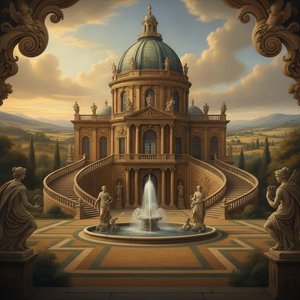
Baroque Classicism: Reconciling Drama & Order in 17th-Century Art
Explore the captivating world of Baroque Classicism! Discover its history, key artists like Caravaggio & Rubens, and defining characteristics. Expert insights & high-quality reproductions at OriginalUniqueArt.

Barok Ontrafeld: De Kracht van Licht, Drama en Emotie in de 17e-eeuwse Kunst
Ontdek de dramatiek en techniek van de Barok door experts. Duik in de wereld van licht en emotie.

Over ons
Ontdek ons verhaal! Wij brengen wereldklasse kunst in uw leven door een deskundige selectie, gepersonaliseerde creaties en gratis previews. Goedgekeurd door particulieren en bedrijven sinds 2000.

Baroque Classicism: The Grandeur of Order and Drama in 17th-Century Art History
Explore the profound elegance of Baroque Classicism. Discover how 17th-century masters synthesized dramatic emotion with classical order through the lens of the Counter-Reformation and the works of legends like Carlo Maratta and Andrea Sacchi.

Goya's Meesterwerken: 25 Iconische Schilderijen voor Kunstliefhebbers | OriginalUniqueArt
Ontdek de 25 meest iconische schilderijen van Francisco Goya! Duik in zijn Spaanse romantiek, donkere kleuren & emotionele kracht. Museumkwaliteit reproducties voor jouw interieur op OriginalUniqueArt.com.