
 Voorvertoning
 Verstuur
 Delen
Delen
 Details bekijken

 Download
 Vergelijkbare items
 Röntgenonderzoek
 Diavoorstelling
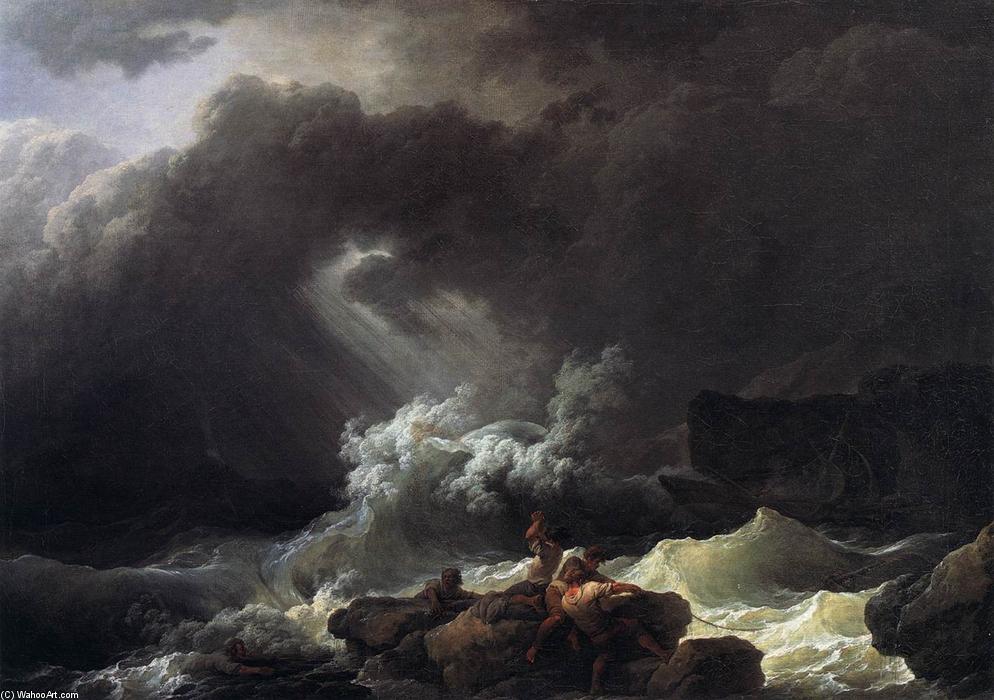
Shipwreck
 Acrylic On Canvas
- WallArt
- Baroque Painting
 1767
1767 58.0 x 81.0 cm
 Academy of Fine Arts Vienna
 Lees meer
Handgemaakte olieverfreproductie
Met de hand geschilderd in olieverf op canvas in uw gewenste maat en lijst, op bestelling gemaakt door onze kunstenaars. ( Bestel print Koop afbeelding)




P118B $10

P118H $10

P118W $10

P438Z $10

P508JH $12

P508YH $12

P805H $10

P805Z $10

P919BZ $10

P919G $10

P919XJ $10

P959ZH $10

P968JZ $12

W106C $8

W218G $10

W218JH $8

W218Y $10

W307PJ $10

W316G $10

W316PJ $8

W316Y $10

W398PJ $8

W4111J $10

W500HY $15

W500JH $15

W692G $12

W849H $8

W940BG $15

W953PJ $8




Kies uit onze vooraf ingestelde maten die overeenkomen met de originele verhoudingen van het kunstwerk.

U kunt uw eigen afmetingen invoeren om in een specifieke lijst of ruimte te passen. Als de door u gekozen maat niet overeenkomt met de verhoudingen van het originele beeld, zullen we het kunstwerk bijsnijden of het schilderij uitbreiden met extra handgeschilderde elementen. Een digitale mockup wordt ter goedkeuring naar u verzonden voordat de productie begint.
Houd er rekening mee dat de preview op het scherm niet de werkelijke uitsnede of uitbreiding weergeeft. Alleen de mockup toont de uiteindelijke compositie nauwkeurig.
Hoewel aangepaste afmetingen mogelijk zijn, raden we aan een maat uit de vooraf gedefinieerde lijst te selecteren om de originele verhoudingen te behouden.
Na de bestelling zal het team van OriginalUniqueArt.com per e-mail contact opnemen met de klant voor instructies en een mockup-voorbeeld sturen.
Wereldwijde levering () binnen 3 tot 4 weken in plaats van de standaard 5 weken. (20 augustus). Zonder concessies aan de kwaliteit.

Gratis wereldwijde expressverzending

Hoogwaardig linnen canvas

Volledige verzendverzekering

Garantie op terugbetaling van invoerrechten

Garantie op exacte kleurweergave

Retourbeleid van 60 dagen (alleen bij defecten)

100% Geld-terug-garantie

Korting bij meerdere afnames
 De optie voor glas is alleen beschikbaar bij een formaat kleiner dan 110 cm.

Shipwreck
Druktechniek
Afmetingen reproductie
-


Eindtotaal
$ 300
Beschrijving kunstwerk
A Tempestuous Vision: Philip James de Loutherbourg’s “Shipwreck”
Philip James de Loutherbourg's "Shipwreck," painted in 1793, isn’t merely a depiction of maritime disaster; it’s a visceral exploration of human vulnerability against the overwhelming power of nature. This dramatic landscape, now housed within the Southampton City Art Gallery, transcends simple realism to become a potent allegory for survival, desperation, and the precariousness of existence – themes that resonated deeply with the burgeoning Romantic movement of the late 18th century.
The painting immediately commands attention through its turbulent composition. A colossal wave, rendered in thick, swirling brushstrokes of indigo, ochre, and grey, dominates the scene, threatening to engulf a shattered vessel – the remnants of a once-proud ship now reduced to splintered wood and clinging figures. Loutherbourg masterfully employs chiaroscuro, utilizing stark contrasts between light and shadow to heighten the drama and emphasize the immediate threat. The dark, brooding sky, pregnant with impending storm, mirrors the despair etched on the faces of those struggling for survival amidst the wreckage.
The Baroque Influence & Dramatic Lighting
While firmly rooted in the Romantic sensibility, "Shipwreck" reveals a clear debt to the Baroque tradition, particularly in its theatrical use of light and shadow. Loutherbourg, who had trained under Charles-André van Loo, inherited a penchant for dramatic effects – a skill he honed not only as a painter but also as a stage designer for London’s Drury Lane Theatre. This influence is evident in the painting's heightened emotional intensity and its carefully orchestrated composition, designed to draw the viewer directly into the heart of the scene.
The figures themselves are illuminated from the left, casting long, dramatic shadows that accentuate their vulnerability and heighten the sense of urgency. Loutherbourg’s technique is particularly noteworthy in his rendering of water – not as a smooth, reflective surface, but as a chaotic, dynamic force, teeming with movement and energy. The artist's attention to detail extends to the depiction of the ship itself, meticulously rendered with a sense of both grandeur and impending doom. The use of layered textures—the rough splintered wood, the slickness of the waves, the ragged clothing of the survivors—adds considerable depth and realism to the scene.
Symbolism & The Romantic Spirit
Beyond its immediate depiction of a shipwreck, “Shipwreck” is rich in symbolic meaning. The storm represents not just a natural event but also the unpredictable forces that govern human life – fate, adversity, and the limitations of control. The survivors, huddled together on the rocks, embody the resilience of the human spirit in the face of overwhelming odds. Their desperate struggle for survival speaks to our shared vulnerability and our innate desire to endure.
The inclusion of bandits attacking the lifeboat adds another layer of complexity, suggesting a broader theme of exploitation and injustice. It’s a subtle but powerful commentary on the darker aspects of human nature – the willingness to prey upon the weak in times of crisis. This painting perfectly encapsulates the Romantic spirit's fascination with both the sublime beauty and terrifying power of the natural world, alongside its exploration of profound emotional experiences.
A Legacy of Dramatic Art
Philip James de Loutherbourg’s “Shipwreck” stands as a testament to his artistic versatility and his ability to capture the drama and intensity of human experience. It's a work that continues to resonate with viewers today, prompting reflection on our own vulnerabilities and our capacity for both despair and resilience. The painting’s enduring appeal lies in its masterful composition, its evocative use of light and shadow, and its profound exploration of timeless themes – all rendered with the skill and passion characteristic of a true Romantic artist.
Biografie van de kunstenaar
Philip James de Loutherbourg: Een Leven van Kunst, Theater en Intrige
- Geboren: Straatsburg, Frankrijk (1740)
- Overleden: 1812
Philip James de Loutherbourg, ook wel bekend als Philip Jacques de Loutherbourg, was een Frans-Britse schilder die wereldwijd werd gevierd om zijn dramatische weergaven van zeeslagen, uitgestrekte landschappen en zijn baanbrekende bijdragen aan het theaterontwerp. Zijn carrière strekte zich uit over meerdere decennia en werd gekenmerkt door een enorme artistieke veelzijdigheid, een korte maar mysterieuze duik in de occultisme en een diepgaande invloed op latere generaties kunstenaars.
Vroege Levensloop en Artistieke Opleiding
Geboren in Straatsburg in 1740, werd de vroege jeugd van Loutherbourg gevormd door zijn vader, een graveur en miniaturist. Hoewel hij aanvankelijk bestemd was voor een carrière in de kerk, liet hij dit pad varen om zich volledig aan de kunst te wijden. Zijn formele opleiding begon in Parijs onder de meesters Charles-André van Lood en Francesco Giuseppe Casanova. Loutherbourg toonde al snel een uitzonderlijk talent en verwierf erkenning op de Salon van 1763 met een landschap waarin figuren en dieren centraal stonden. Hij bleef succesvol exposeren op daaropvolgende Salons, waarbij hij lof oogstte van invloedrijke critici zoals Denis Diderot. In 1767 werd hij zelfs verkozen tot lid van de Franse Academie, een ultiem bewijs van zijn groeiende reputatie.
Carrière in Engeland: Zeeslagen, Landschappen en Theater
In 1771 verhuisde Loutherbourg naar Londen, waar hij zich razendsnel vestigde als een vooraanstaand kunstenaar. Een cruciale ontmoeting via David Garrick leidde tot belangrijke opdrachten voor decorontwerpen in het Drury Lane Theatre. Zijn theatrale innovaties waren grensverleggend, met als hoogtepunt de creatie van het Eidophusikon in 1781 – een mechanisch theater dat gebruikmaakte van perspectief en illusionistische effecten om meeslepende scènes te creëren. Deze uitvinding toonde zijn enorme vindingrijkheid aan en maakte hem tot een pionier in de theatertechnologie.
Tegelijkertijd verwierf Loutherbourg grote bekendheid met zijn historiestukken, in het bijzonder zijn indrukwekkende weergaven van zeeslagen. Zijn beroemdste werk, Lord Howe's Action, or the Glorische First of June (1795), herdenkte een belangrijke Britse overwinning en vestigde zijn naam als een leidende chroniqueur van maritieme gebeurtenissen. Hoewel zijn landschappen soms werden bekritiseerd omdat ze een tikkeltje te theatraal zouden zijn, wisten ze de schilderachtige schoonheid van het Engelse platteland perfect te vangen en de esthetische idealen van die tijd te weerspiegelen.
- Opmerkelijke Werken: Lord Howe's Action, or the Glorious First of June, The Destruction of the Armada, Coalbrookdale by Night
Een Periode van Occulte Belangen en de Latere Jaren
In een verrassende wending verliet Loutherbourg in 1789 het schilderen tijdelijk om zich te verdiepen in alchemie en het bovennatuurlijke. Hij raakte verbonden met Alessandro di Cagliostro, een beruchte figuur die bekendstond om zijn frauduleuze claims over onsterfelijkheid en occulte krachten. Loutherbourg reisde met Cagliostro mee voordat diens doodvonnis werd uitgesproken, hoewel de details van deze periode enigszins mysterieus blijven. Na publieke weerstand tegen zijn praktijken van spirituele genezing, keerde hij terug naar de schilderkunst, waarbij hij zich concentreerde op historische onderwerpen en bleef werken aan zijn landschappen en portretten.
Nalatenschap en Invloed
Philip James de Loutherbourg liet een blijvende erfenis na als een veelzijdige kunstenaar die de brug sloeg tussen historiestukken, landschapskunst en theaterontwerp. Zijn innovatieve Eidophusikon beïnvloedde latere ontwikkelingen in de toneelkunst, terwijl zijn dramatische zeeslagen de geest van een tijdperk dat werd gedefinieerd door maritieme macht vastlegden. Zijn werk is te vinden in talrijke musea wereldwijd, waaronder het National Maritime Museum en het British Museum. Hij wordt ook erkend als een inspiratiebron voor kunstenaars zoals J.M.W. Turner, wat zijn significante bijdrage aan de ontwikkeling van de Romantiek in Groot-Brittannië onderstreept.

Philip James De Loutherbourg
1740 - 1812 , Frankrijk
Belangrijkste feiten
- Artistic Movement Or Style: Romanticism
- Artists Or Movements Influenced By This Artist: ['Turner']
- Date Of Birth: 1740-10-31
- Date Of Death: 1812-03-11
- Full Name: Philip James de Loutherbourg
- Nationality: Franco-Britannisch
- Notable Artworks:
- Lord Howe's Action, or the Glorious First of June
- The Destruction of the Armada
- Coalbrookdale by Night
- Place Of Birth: Strasbourg, France
Gerelateerde artikelen

Demandes Commerciales
APS ofrece reproducciones de bellas artes y encargos personalizados desde 2004. Confían en nosotros corporaciones, hoteles y coleccionistas selectos para obras de arte de calidad museística, servicio discreto y soluciones artísticas completas. ¡Póngase en contacto con nosotros para obtener un presupuesto personalizado!

Philip James de Loutherbourg: Romantic Visions of Maritime Life & the Sublime
Explore the dramatic naval scenes & landscapes of Philip James de Loutherbourg (1740-1812), a key figure in Romantic painting. Discover his legacy, theatrical innovations & iconic works like 'The Battle of the Nile' at OriginalUniqueArt.

Goya's Meesterwerken: 25 Iconische Schilderijen voor Kunstliefhebbers | OriginalUniqueArt
Ontdek de 25 meest iconische schilderijen van Francisco Goya! Duik in zijn Spaanse romantiek, donkere kleuren & emotionele kracht. Museumkwaliteit reproducties voor jouw interieur op OriginalUniqueArt.com.
Masterpieces of Maritime Warfare: The Artistry and Intensity of Naval Combat in Historical Painting
Explore the dramatic intensity of naval combat through art history. From Romanticism to classical maritime masterpieces, discover how legendary painters captured the chaos, light, and heroism of sea battles in breathtaking oil paintings.

Over ons
Ontdek ons verhaal! Wij brengen wereldklasse kunst in uw leven door een deskundige selectie, gepersonaliseerde creaties en gratis previews. Goedgekeurd door particulieren en bedrijven sinds 2000.


