

 Voorvertoning
 Verstuur
 Delen
Delen
 Details bekijken
 Gids
Gids

 Download
 Vergelijkbare items
 Röntgenonderzoek
 Diavoorstelling
 Statistieken
Falling Leaves
 Oil On Panel
- Realism
 1895
1895- 19th Century
 80.0 x 64.0 cm
 Lees meer
Giclée / Kunstafdrukken
Giclée- of canvasafdruk van museumkwaliteit met een snelle productie en flexibele afwerkingsmogelijkheden. ( Bestel handgeschilderde reproductie Schakel over naar digitale afbeeldingen)




P118B €10

P118H €10

P118W €10

P438Z €10

P508JH €12

P508YH €12

P805H €10

P805Z €10

P919BZ €10

P919G €10

P919XJ €10

P959ZH €10

P968JZ €12

W106C €8

W218G €10

W218JH €8

W218Y €10

W307PJ €10

W316G €10

W316PJ €8

W316Y €10

W398PJ €8

W4111J €10

W500HY €15

W500JH €15

W692G €12

W849H €8

W940BG €15

W953PJ €8




Kies uit onze vooraf ingestelde maten die overeenkomen met de originele verhoudingen van het kunstwerk.

Voer de gewenste breedte en hoogte in, passend bij uw lijst of muur. Een afdruk kan alleen worden ingekort en nooit groter worden gemaakt dan het origineel; een formaat met andere verhoudingen zal daarom een deel van de afbeelding verliezen. Wij sturen u een digitaal mockup ter goedkeuring voordat we tot drukwerk overgaan. De afbeelding op deze pagina toont niet de werkelijke uitsnede — dit is alleen te zien op het mockup.
Wereldwijde levering () binnen 2 weken in plaats van de standaard 4/5 weken. (25 oktober)

Gratis wereldwijde expressverzending

Hoogwaardig linnen canvas

Volledige verzendverzekering

Garantie op terugbetaling van invoerrechten

Garantie op exacte kleurweergave

Retourbeleid van 100 dagen (alleen bij defecten)

100% Geld-terug-garantie

Korting bij meerdere afnames
 De optie voor glas is alleen beschikbaar bij een formaat kleiner dan 110 cm.

Falling Leaves
Giclée / Kunstafdrukken
Afmetingen reproductie
-


Eindtotaal
€ 71
A Moment Frozen in Time: The Serenity of Falling Leaves
In the quietude of an autumnal afternoon, Philip Alexius De László invites us into a world where time seems to decelerate. His 1895 masterpiece, Falling Leaves, is far more than a mere depiction of a woodland scene; it is a profound meditation on solitude and the gentle passage of time. The painting captures an elderly man seated at a table amidst the dappled sunlight of a forest, a figure seemingly lost in the depths of his own reflections. As the golden light filters through the canopy, it illuminates a scene that feels both intimate and expansive, pulling the viewer into a shared moment of peaceful contemplation. There is a palpable sense of stillness here, broken only by the imagined rustle of descending foliage and the distant flight of a single bird, which adds a delicate pulse of life to the tranquil atmosphere.
The composition is masterfully orchestrated to evoke a feeling of comfort and domesticity within the wildness of nature. The presence of a dining table and chairs nestled among the trees suggests a harmonious coexistence between human civilization and the natural world. This juxtaposition creates a unique emotional resonance, making the woods feel not like a daunting wilderness, but like a sanctuary for the soul. For the collector or interior designer, this piece offers a transformative quality; it possesses the rare ability to instill a sense of calm and groundedness in any space, acting as a window into a more contemplative era.
Mastery of Light and the Elegance of Technique
De László, an artist renowned for his ability to capture the essence of European aristocracy, applies his formidable skill to this landscape with breathtaking precision. Utilizing oil on panel, the artist achieves a level of textural richness and luminous detail that is difficult to replicate in other mediums. The panel support allows for fine, controlled brushwork, which is evident in the way the sunlight dances across the man's features and the delicate textures of the surrounding trees. The play of light and shadow—a hallmark of late 19th-century realism—is used here to create depth and volume, making the forest feel three-dimensional and immersive.
The color palette is a sophisticated arrangement of warm, autumnal tones that wrap the viewer in a gentle glow. De László employs subtle gradations of amber, gold, and deep earth tones to build the atmosphere, ensuring that the light feels organic rather than staged. This technical prowess ensures that every time one views a high-quality reproduction of this work, the interplay of warmth and shadow remains as captivating as it was when the paint first dried in 1895. It is this meticulous attention to the physical properties of light that elevates the painting from a simple landscape to a living, breathing environment.
A Legacy of Poetic Realism
To understand Falling Leaves, one must consider the historical context of De László’s career. Emerging from the academic traditions of Budapest and refined in the artistic hubs of Munich and Paris, the artist was a master of capturing both the physical likeness and the inner spirit of his subjects. While he is often celebrated for his grand portraits of royalty, this particular work reveals his softer, more poetic side. It reflects the late 19th-century fascination with plein air sensibilities and the Romantic movement's reverence for nature as a mirror to human emotion.
The symbolism within the piece is subtle yet deeply moving. The open book on the table serves as a metaphor for the unfolding narrative of life, while the falling leaves represent the cyclical nature of existence—the beauty found in transition and decay. For those seeking to adorn their homes with art that speaks to the enduring beauty of the natural cycle, this painting provides an incomparable focal point. It is a work that does not merely decorate a wall; it enriches the spirit, offering a perennial escape into a sun-drenched woodland where the only requirement is to sit, observe, and breathe.
Veelgestelde vragen
Hoe wordt het kleurenpalet van "Falling Leaves" door Philip Alexius De László beschreven?
De kleuren van "Falling Leaves" vormen een Earthy palet. Deze classificatie beschrijft de dominante kleurfamilies.
In welke fase van de carrière van Philip Alexius De László behoort "Falling Leaves" (1895)?
De datum uit 1895 plaatst "Falling Leaves" in de Early Period van de ontwikkeling van Philip Alexius De László.
Wat zijn de techniek en de afmetingen van "Falling Leaves" door Philip Alexius De László?
Het originele werk "Falling Leaves" door Philip Alexius De László is een Oil On Panel met de afmetingen 80 x 64 cm. Techniek en afmetingen beschrijven het originele object.
Biografie kunstenaar
Philip Alexius de László: Leven en Nalatenschap
Vroege jaren en opleiding
Philip Alexius de László, geboren als Fülöp Laub op 30 april 1869 in Boedapest, Hongarije, klom op uit bescheiden omstandigheden om een gevierd portretschilder van de Europese koninklijke families en de aristocratie te worden. Zijn ouders, Adolf en Johanna Laub, waren respectievelijk een kleermaker en een naaister van Joodse afkomst. In zijn beginjaren werkte hij als leerling-fotograaf terwijl hij zijn artistieke studies voortzette. Hij werd toegelaten tot de Nationale Academie voor Beeldende Kunsten in Boedapest, waar hij studeerde onder Bertalan Székely en Károly Lotz. Latere studies in München en Parijs verbreedden zijn artistische horizon aanzienlijk.
Artistieke ontwikkeling en invloeden
Het vroege werk van De László getuigde van een scherp oog voor detail en een groeiende beheersing van het realisme. Zijn invloeden omvatten de academische tradities die hij aan de Academie leerde, evenals de heersende trends in de portretkunst tijdens de late 19e en vroege 20e eeuw. Hij onderscheidde zich al snel door zijn vermogen om niet alleen de fysieke gelijkenis vast te leggen, maar ook de persoonlijkheid en de sociale status van zijn modellen. Een cruciaal moment kwam in 1900, toen zijn portret van Paus Leo XIII hem een gouden Grand Prix opleverde op de Internationale Tentoonstelling in Parijs, waarmee zijn internationale reputatie definitief werd gevestigd.
Carrière en grote prestaties
Na zijn succes in Parijs verhuisde De László in 1903 naar Wenen en vestigde zich vervolgens in 1907 in Londen, waar hij de rest van zijn leven zou blijven. Hij werd een zeer gewilde portrettist onder de Europese elite. Zijn cliëntèle bestond uit vorsten, edellieden, industriëlen, wetenschappers en prominente figuren uit diverse vakgebieden.
- Beroemde modellen: Sir Alfred East, Winifred Cavendish-Bentinck (Hertogin van Portland), Lady Louise Mountbatten (Koningin van Zweden), Vita Sackville-West, Paus Leo XIII, Augusta Victoria (Duitse Keizerin), Prinses Alice van Battenberg en vele anderen.
- Eretekens en erkenning: In 1909 benoemd tot lid van de Royal Victorian Order (MVO) door Edward VII. In 1912 tot de adel verheven door koning Frans Jozef I van Hongarije, waarna hij de naam “de László de Lombos” aannam.
Persoonlijk leven en uitdagingen
In 1900 trouwde De László met Lucy Madeleine Guinness, een lid van de prominente bankiersfamilie. Samen kregen zij zes kinderen en zagen zij zeventien kleinkinderen opgroeien. Na een eerdere interesse in het katholicisme bekeerde hij zich bij zijn huwelijk tot het anglicanisme. Ondanks zijn Britse staatsburgerschap en zijn gevestigde leven in Engeland, werd hij tijdens de Eerste Wereldoorlog (1917-1918) gevangengezet vanwege vermoedens rond zijn Oostenrijkse connecties, een periode van grote persoonlijke tegenspoed.
Artistieke stijl en thema's
De stijl van De László kenmerkt zich door realisme, minutieuze details en een levendig kleurenpalet. Hij was een meester in het weergeven van de texturen van stoffen, juwelen en huidtinten. Zijn portretten stralen vaak een gevoel van elegantie, verfijning en sociale status uit. Hoewel hij primair bekend staat om zijn portretkunst, creëerde hij ook landschappen en genrescènes.
Historisch belang en nalatenschap
Het werk van Philip de László biedt waardevolle inzichten in het leven en het uiterlijk van de Europese hogere samenleving tijdens de late 19e en vroege 20e eeuw. Zijn portretten fungeren als historische documenten die een specifiek tijdperk en de sociale dynamiek ervan vastleggen. Hoewel hij soms werd bekritiseerd omdat hij voornamelijk een schilder van de sociale elite was, zijn zijn technische vaardigheid en het vermogen om karakter te vangen onmiskenbaar. Zijn oeuvre bestaat uit bijna 4.000 werken, inclusief tekeningen, en er wordt momenteel gewerkt aan een catalogue raisonné. Hij overleed op 22 november 1937 in Londen, waarmee hij een blijvende erfenis achterliet als een van de belangrijkste portretschilders van zijn tijd.

Philip Alexius De László
1869 - 1937 , Hongarije
Belangrijkste feiten
- Birth Date: 1869
- Birth Place: Boedapest, Hongarije
- Death Date: 1937
- Influenced By:
- Bertalan Székely
- Károly Lotz
- Movement: Realisme, Portretkunst
- Name: Philip Alexius de László
- Nationality: Hongaars, Brits
- Notable Works:
- Portret van Paus Leo XIII
- Portretten van Europese royalty & aristocratie
Gerelateerde artikelen

The Enduring Power of Painting: A Historical & Contemporary Exploration of Form and Emotion
Explore the rich history & enduring techniques of oil painting with OriginalUniqueArt. Discover masterpieces, learn about art collecting, and find authentic handmade reproductions crafted by skilled artists.

The Enduring Legacy of Oil on Canvas: Technique, History & Aesthetic Impact
Explore the rich history & techniques of oil painting – from Renaissance masters to Impressionism. Discover pigments, layering methods, and why this timeless medium endures. Expert insights for artists & art enthusiasts.
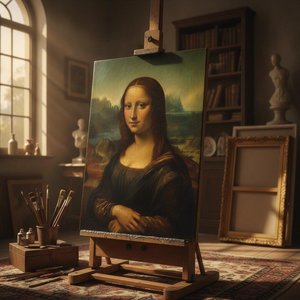
Mastering the Surface: A Historical and Technical Guide to the Art of Oil on Panel Painting
Explore the profound history and technical brilliance of oil on panel painting. From Renaissance masters to modern techniques, discover why this rigid support offers unparalleled precision and permanence for fine art lovers and collectors.

Oil on Board: A Historical Survey of Technique, Aesthetic Qualities & Enduring Appeal
Explore the rich history of oil on board painting! Discover techniques, aesthetic qualities & enduring appeal from early masters to modern practice. Expert insights for collectors and art enthusiasts.

Oil on Canvas: A Historical & Technical Exploration of a Timeless Artistic Medium
Explore the rich history & enduring techniques of oil painting on canvas. Discover the science behind its longevity, conservation practices, and contemporary relevance. Expert insights for art enthusiasts.